
Europe
F-35 debate intensifies across Germany and Europe

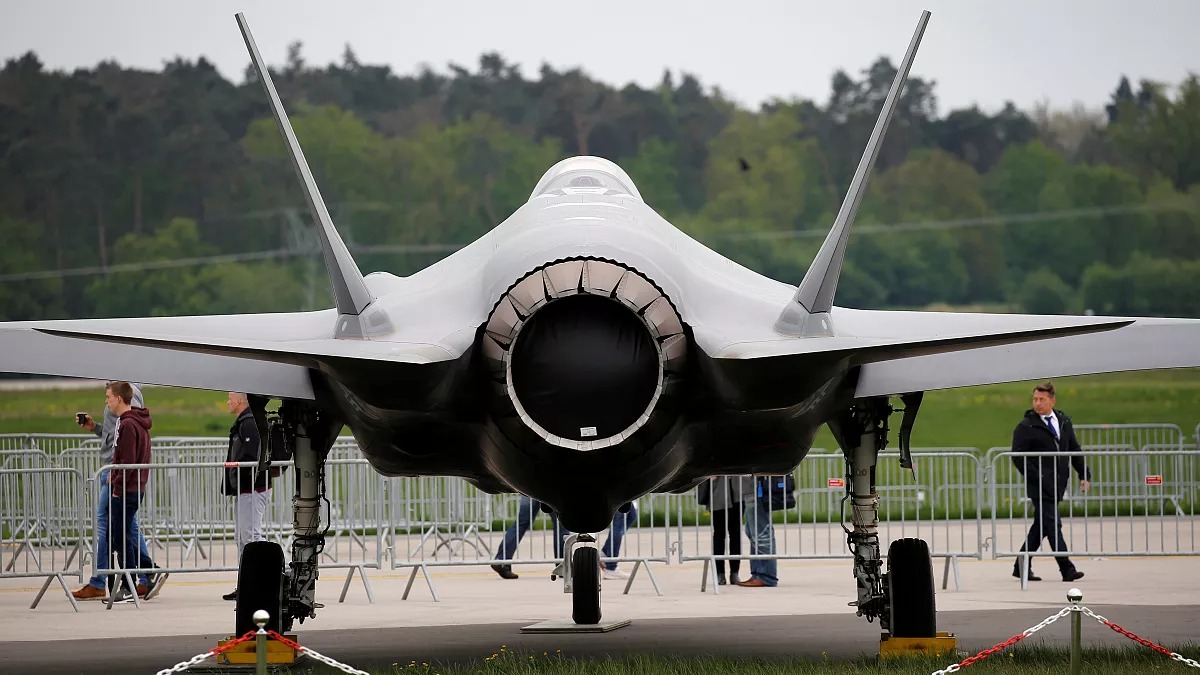
The debate over a potential withdrawal from the US F-35 fighter jet program is heating up in Germany and other European countries.
The background to this is that the jet can only be used with the approval of the US government, and restrictive provisions, for example regarding spare parts and software, make it impossible to escape dependence on the US in military operations with the F-35.
In Berlin, former “transatlanticists” in particular are pushing for withdrawal from the F-35 procurement program to achieve military independence.
Last week, a copy of the purchase agreement for the 35 F-35 fighter jets that Berlin decided to procure in March 2022 was leaked to the German magazine Stern. Details of the framework conditions for the purchase, which will cost €8.3 billion, thus emerged.
This purchase is being handled as part of the Foreign Military Sales (FMS) process, which is subject to strict rules. The F-35 purchase agreement grants Washington the authority to “terminate or suspend performance in whole or in part” without further notice “if required by the national interests of the US.” This means the US can unilaterally change the delivery time and quantity at any time. Contractual penalties are generally not provided for in the FMS procedure; legal recourse is excluded.
Once an F-35 fighter jet is delivered, no further modifications are permitted; spare parts and regularly required software updates are only available from the US manufacturer Lockheed Martin. According to the wording in the purchase agreement, “The customer is not authorized to carry out repair and maintenance work beyond the unit maintenance level.” This already guarantees that the German Air Force’s F-35s will only fly when the US administration wants them to.
Furthermore, the F-35’s basic software is kept secret. Therefore, it is impossible to check whether the jet can be influenced externally, but many assume this is possible. Data generated during operation, and especially during any mission, is collected and subsequently stored on Amazon Web Services, making it easily accessible to US authorities.
Finally, the US Foreign Assistance Act allows the US to “monitor the end-use” of the F-35 “at any time.” A “well-informed” source told the magazine Stern, claiming, “Targets, routes, indirectly tactics… US technicians are always on the plane.” An insider with “intelligence service knowledge” also explicitly confirmed this to the magazine, stating that “all mission planning is monitored in the US.”
Since last week, calls have been growing louder in Europe to avoid procuring F-35 jets if possible, or to withdraw from the agreement if a contract has already been signed. This was triggered on the one hand by the Trump administration’s decision to prohibit Ukraine from using US satellite data, and on the other hand by Washington’s continued efforts to acquire the autonomous Danish territory of Greenland.
For example, Danish conservative MP Rasmus Jarlov stated on X that he now regrets supporting Denmark’s decision to purchase 27 F-35 jets for its air force. Jarlov said, “I can imagine a situation where the US demands Greenland from Denmark and threatens to disable our weapons.” Jarlov argued that Copenhagen would then no longer be in a position to defend itself, making the purchase of US weapons “a security risk we cannot take.” He contended that Denmark will invest heavily in armaments in the coming years and should avoid American weapons wherever possible.
Some NATO countries are now considering abandoning the F-35. For example, Canada plans to withdraw from the F-35 purchase, but has already paid for 16 fighter jets due to be delivered early next year. According to Defense Minister Nuno Melo, Portugal, which previously planned to buy the US fighter jet, is also changing its mind. The French company Dassault Aviation has now offered to supply Rafale jets to the Portuguese government.
The Rafale is a fourth-generation fighter jet, unlike the fifth-generation F-35, but it is cheaper and requires no US components, thus offering independence from the US. French President Emmanuel Macron argued on March 16 that European countries should, in principle, switch from the F-35 to the Rafale; furthermore, the new Franco-Italian SAMP/T air defense system could be used instead of the US Patriot air defense system.
One challenge stems from the fact that a number of European NATO countries, such as the United Kingdom, Norway, the Netherlands, Belgium, and Italy, already possess F-35 jets. Many other countries, including officially neutral Switzerland, have placed binding orders for the aircraft.
Conflicting voices are also rising in Germany. Former “transatlanticists” in particular are distancing themselves from the F-35 procurement. Former Airbus CEO Thomas Enders, now president of the influential think tank German Council on Foreign Relations (DGAP), said last week, “Nobody needs the F-35”; Enders added that he “would be the first to cancel it under these new geopolitical conditions.” CDU foreign policy expert Roderich Kiesewetter also called for a “review of existing contracts with the US,” such as the F-35 purchase agreement, stating, “It is now absolutely essential to look for alternatives.”
Defense Minister Boris Pistorius, however, favors continuing with the F-35 purchase. One of the reasons he cites for this is nuclear sharing, whereby German Air Force fighter jets could drop US nuclear bombs in a war scenario. Observers note that dropping US nuclear bombs is already only possible on orders from Washington, making it irrelevant whether the F-35s could be paralyzed by the US as long as they are available solely for nuclear sharing. However, nuclear sharing itself is no longer considered secure.
Berlin has already transferred approximately $2.42 billion to Washington for the F-35 and has begun costly modifications at Büchel Air Base, where the US fighter jets are to be stationed.


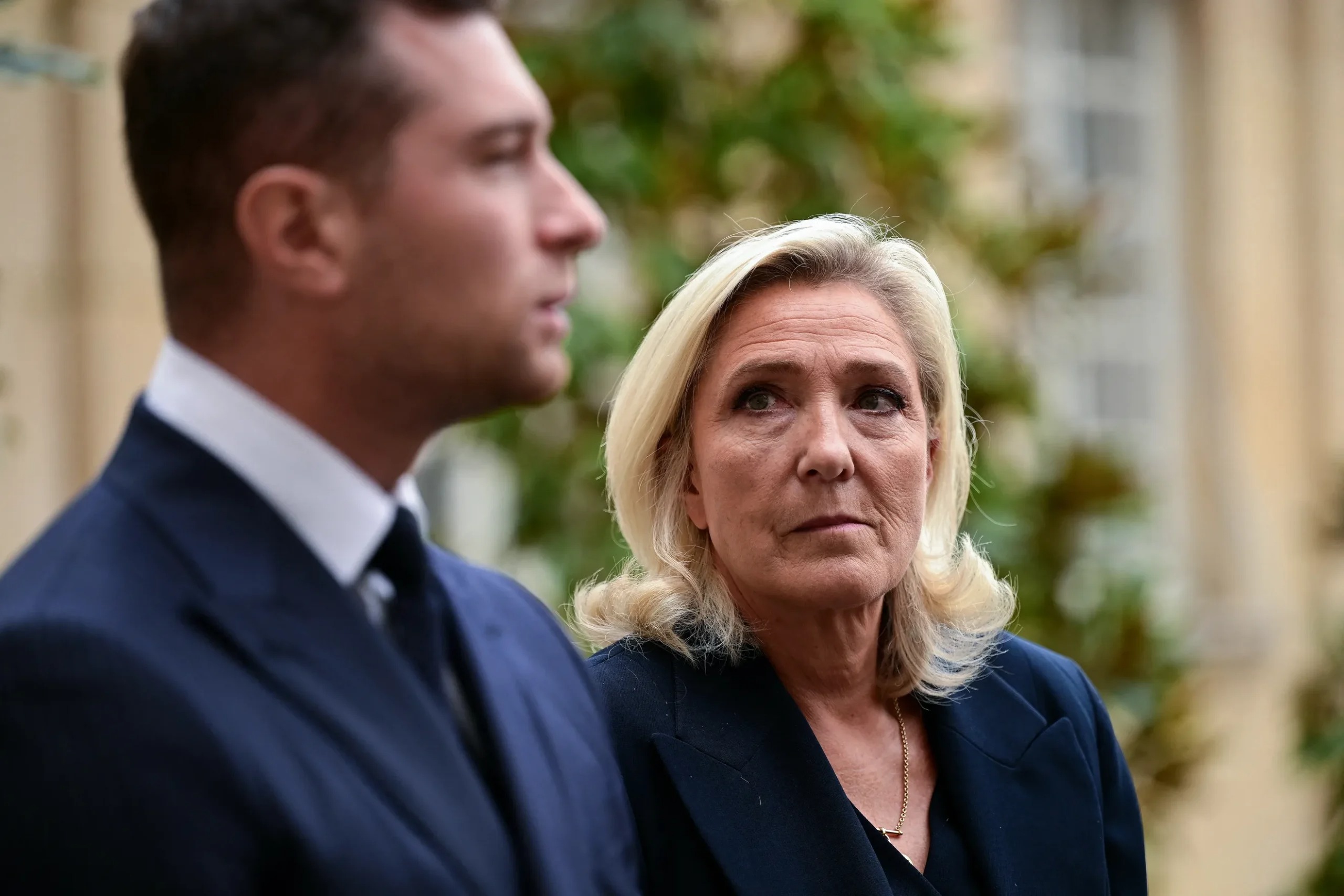
Jordan Bardella, president of France’s National Rally (RN), has been accused of voicing antisemitic views in private conversations with party members when he was 17 years old.
In a report published on Monday, investigative news website Mediapart stated that it had obtained and independently verified correspondence in which Bardella allegedly said that “Jews must dominate other peoples, crush them, and rob them,” and that “all banks are in the hands of Jews.”
Bardella strongly denied the allegations, adding that he will sue Mediapart.
Both Bardella and Marine Le Pen characterised the report as part of a wider, coordinated effort to prevent the veteran far-right politician, who currently leads in the polls, from winning next year’s election.
Bardella said:
“At a time when we have never been closer to the victory of our ideas, certain activist media outlets are ready to organise smear campaigns to destabilise the presidential campaign and attack my honour.”
The RN president said, “We can feel the first signs of an all-out war and attempts to destabilise the presidential campaign.”
Le Pen, seated beside Bardella as she spoke to reporters in the National Assembly, the lower house of the French parliament, said, “The system will do everything, even the most disgusting things, to block this momentum.”
During her attendance at a construction industry event on Monday, Le Pen described Mediapart’s report as “madness”.
The National Rally’s predecessor, the National Front, was founded by Le Pen’s father, Jean-Marie, who was convicted repeatedly of hate speech, along with Nazi collaborators.
Le Pen expelled her father from the party in 2015 after he repeated his claim that the Holocaust was a “detail” of history.
Given that Le Pen propelled Bardella’s career and placed him at the forefront of efforts to clean up the party’s image, the fallout from this latest scandal could be particularly damaging.
Too young to be associated with the party’s old guard, Bardella was seen as a fresh face who could help the party make inroads among sections of the electorate where the Le Pen name carried too many negative connotations, particularly among older voters and the Jewish community.
Since taking the helm of the National Rally in 2021, Bardella has promoted the party as a defender of France’s Jewish population, pointing to his unreserved support for Israel as evidence.
The 31-year-old Bardella travelled to Israel in 2025 after receiving an invitation from Israeli Minister of Diaspora Affairs Amichai Chikli.
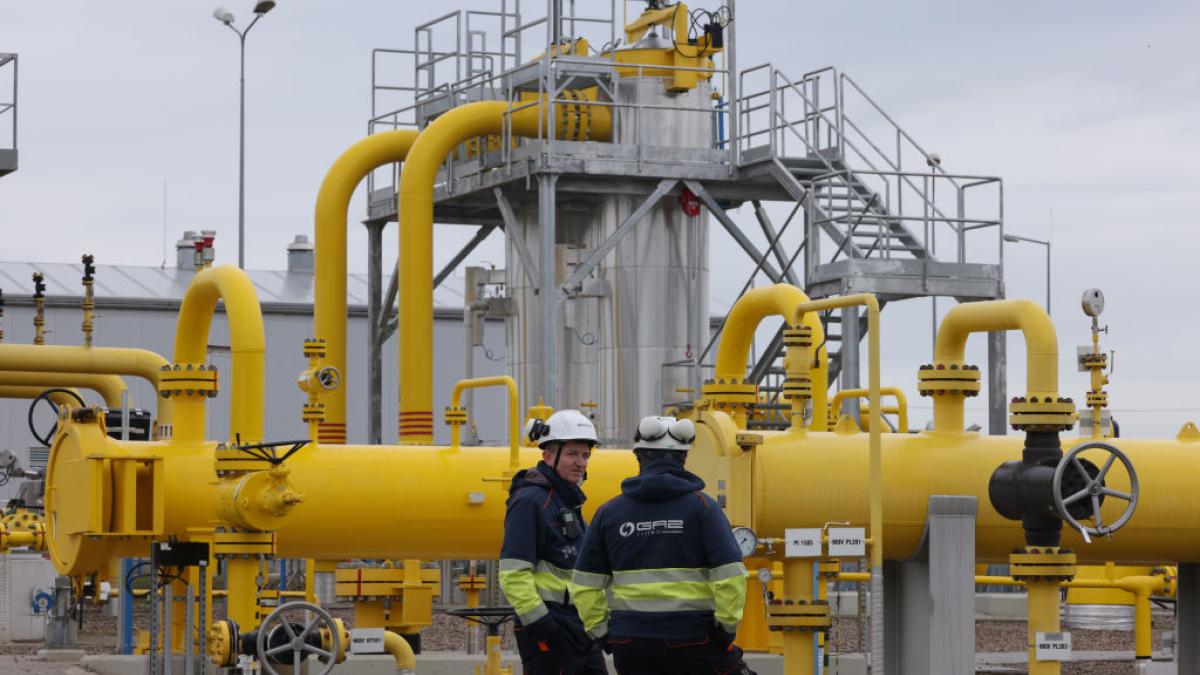
The European Union paid an additional bill of more than €100 billion during the year due to volatility in global energy markets. Despite this heavy expenditure, no increase was achieved in the volume of oil and gas supplied to the bloc.
Assessing the situation ahead of the EU Energy Ministers Meeting held in Dublin, EU Commissioner for Energy Dan Jørgensen emphasised that external dependency has reached an unsustainable point.
In his statement on 29 September, Jørgensen said: “The extra amount we paid for energy this year exceeded 100 billion euros, yet in return we did not receive a single drop more oil or a single cubic metre more gas.”
Pointing out that every rise in global prices is directly reflected on European households and industry, Jørgensen argued that the solution lies in domestic resources.
“Instead of imported, polluting, and expensive fossil fuels, we must turn to our own generated energy, to green electricity,” the commissioner said.
Energy prices in Europe surged once again due to the war with Iran, escalating concerns over navigation security in the Strait of Hormuz, and turmoil across global oil markets.
Following a new wave of attacks directed at Iran by the Washington administration, European benchmark natural gas prices in early September reached their highest level since January 2023.
Dutch gas futures rose by 5.9% to €73.95 per megawatt-hour.
This market pricing was driven by concerns ahead of the winter period that liquefied natural gas (LNG) shipments routed through the Strait of Hormuz could face prolonged disruptions.
Another development rattling the continent’s energy balances was the signals emanating from the White House. The possibility raised by US President Donald Trump of curbing diesel exports heightened anxiety in Brussels.
The EU, which meets approximately half of its diesel needs from the US, does not want this supply line severed.
Jørgensen reported that he conveyed clearly to Washington that such a step would serve the interests of neither the US nor Europe.
The EU official described US Energy Secretary Chris Wright’s distance from the export restrictions in question as a positive approach.
Stating that Europe is not currently experiencing a physical supply crisis, Jørgensen noted that they aim to minimise uncertainties as the winter season approaches.
Having turned to alternative suppliers and LNG markets to reduce its reliance on Russian resources since the outbreak of the Russia-Ukraine war, the EU continues to face high cost pressures.
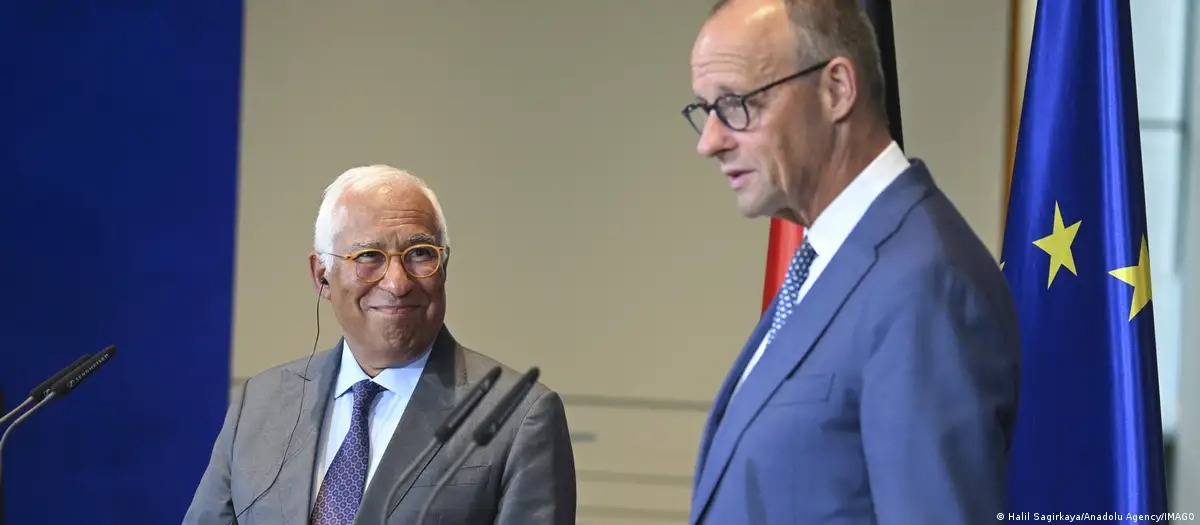
German Chancellor Friedrich Merz and the leaders of five other countries have threatened to withhold approval for the draft seven-year EU budget unless billions of euros in cuts are made as they demand.
According to the Financial Times, Merz, along with the leaders of the Netherlands, Sweden, Denmark, Austria, and Finland, signed a letter making clear that the proposed budget must be cut by billions of euros, or they will block it.
The 2028-2034 budget was prepared last year by the European Commission and requires the approval of all EU countries.
The proposed budget has been set at approximately 2 trillion euros ($2.33 trillion), and the parties involved hope to reach an agreement by the end of 2026.
The proposed sum is significantly higher than the current budget, which runs from 2021 to 2027.
Merz stated earlier this month that cuts should be implemented across all policy areas, rejecting further recourse to joint EU borrowing to plug the shortfall.
“Excessive debt threatens our sovereignty and our capacity to act,” the chancellor said, adding that governments face the “undoubtedly painful task” of setting priorities.
Arguing that a “20th-century budget” cannot resolve current challenges, the German leader called for spending in the bloc’s next budget to be shifted towards competitiveness and defence.
The EU budget is financed primarily through member state contributions. These payments are calculated either as national contributions based on gross national product or as a % linked to national VAT revenues.
As the EU’s largest economy, Germany provides the largest contribution in absolute terms.

Jordan Bardella faces antisemitism accusations over past messages

EU pays extra €100bn for energy without securing more oil or gas

Pentagon breach exposes personal records of three million people

Britain expands curbs on arms exports to Israel over Gaza risks

Germany deepens military, police, and cyber ties with Israel
-

 Europe3 days ago
European unions urge governments to scrap all Palantir deals
-

 Diplomacy3 days ago
East-West Forum in Istanbul highlights irreversible shift to multipolarity
-
 Europe1 week ago
European intelligence chiefs divide over risk of Russian attack
-

 Europe6 days ago
Emmanuel Todd says West faces collapse amid Ukraine and Iran crises
-

 Diplomacy7 days ago
East-West Forum in Istanbul to debate multipolarity and global order
-
 Middle East1 week ago
Sharaa says 7 October must not shape Israel policy on Syria
-
 America1 week ago
Republican support for Trump’s war with Iran drops sharply in polls
-

 Middle East1 week ago
Palestinian factions confront legitimacy crisis at Istanbul talks
