
Middle East
Former UN Special Rapporteur for Palestine: ‘International law is not an a la carte menu’

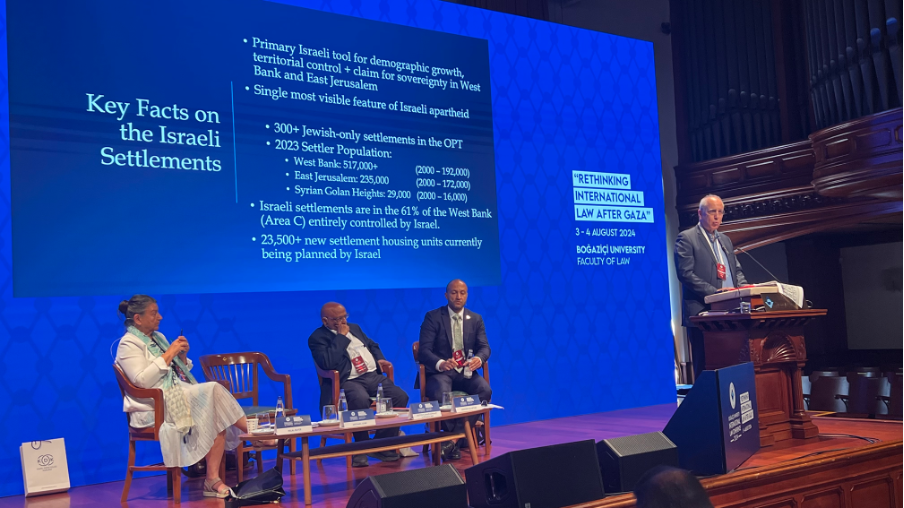
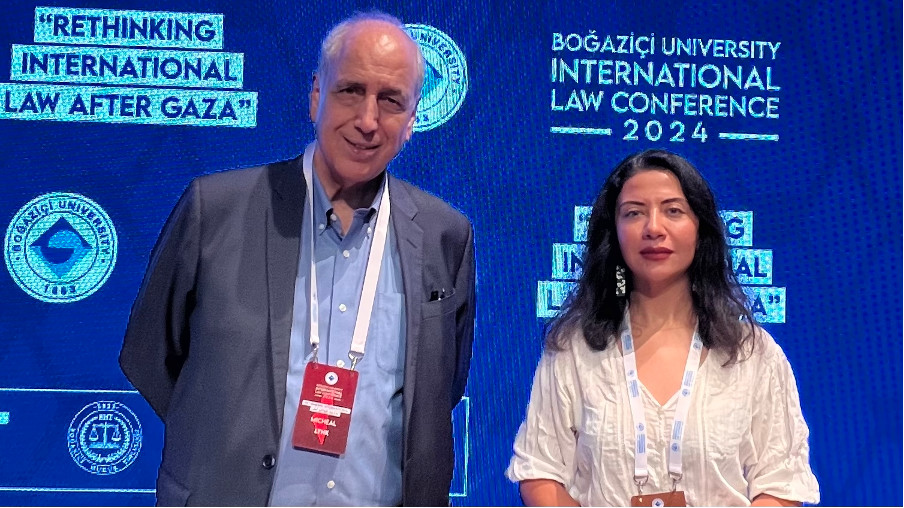
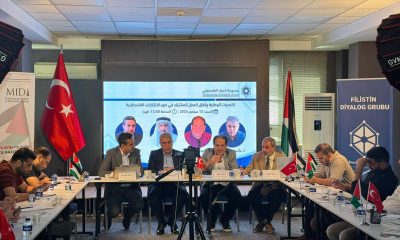
Boğaziçi University’s Faculty of Law hosted its first International Law Conference (BILC) and brought together a large number of academics and experts including Michael Lynk, the United Nation’s former Special Rapporteur for Palestine from around the world to critically examine the current international legal order, particularly in the aftermath of Israel’s invasion of Gaza and the massacre of dozens of thousand of civilians.
During the conference, Michael Lynk gave a presentation on “Israeli Settlements under the Rome Statute of the ICC” in the session titled “Occupation, Racism and Resistance” moderated by Hilal Elver, University of California. Professor, Former UN Special Rapporteur on the Right to Food along with the speakers Muthucumaraswamy Sornarajah who is the Emeritus Professor at National University of Singapore and Mohsen al-Attar, the Associate Dean and Professor at Xi’an Jiaotong-Liverpool University. Lnyk, saying that he believes in justice points out that those of us who care for Palestine can become cynical with respect to the aspirations of international law.
Linyk, hoping the absolute permissibility of any and all of us to be skeptical about international law’s pretensions underlined that it’s absolutely wrong to be cynical about international law’s possibilities and completed his presentation with a quotation from Christoph Heusgen, the former German Ambassador to the UN which is “international law is not an a la carte menu” meaning it must apply to all.
We bring the notes from the former UN Special Rapporteur for Palestine…
There is still life for international law to shape the politics
“We must not be starry-eyed about, in any country, in any system, with respect to what law can wind up achieving. I think only error is achieved through hard work, through lobbying of legislatures, through social movements, through the fervent intellectual ideas coming up and challenging what is the dominant area of thought. And that in any domestic system, and particularly including in the international system, it always is an area of great tension between law in the service of power and law in the service of justice.”
“And those of us who believe in justice, who believe in international humanitarian and human rights and criminal law, will know it always will be a struggle to widen that space, to be able to allow justice with as much oxygen as it can get, to be able to breathe and push back against the forces of power. And this has actually been a good couple of weeks, particularly with the release of the International Court of Justice’s advisory opinion two weeks ago, and obviously as we look back during the past seven months, with the release of the provisional decision by the International Court of Justice back in January, its provisional measures in March and May, and of course the announcement by the International Criminal Court’s prosecutor with respect to the application for arrest warrants as well. This ought to give us hope that there is life for international law to be able to shape the future politics.
The entire Israeli occupation is now determined by the International Court of Justice
“International law by itself would not bring the liberation of Palestine. But international law combined with a separate international resolve is what we wind up needing. And people respond, and this is, I think, what’s got to be optimistic, a brief warning when I wake up, particularly during the years that I serve as Special Rapporteur for Human Rights in the Occupied Palestinian Territory, is that international law has that possibility of being able to be pushed forward, that people respond to a framing that something is unjust, and respond even more fervently to a framing that something is illegal, as the entire Israeli occupation has now been determined by the International Court of Justice.”
The Israeli settlements tool for demographic growth in East Jerusalem and the West Bank
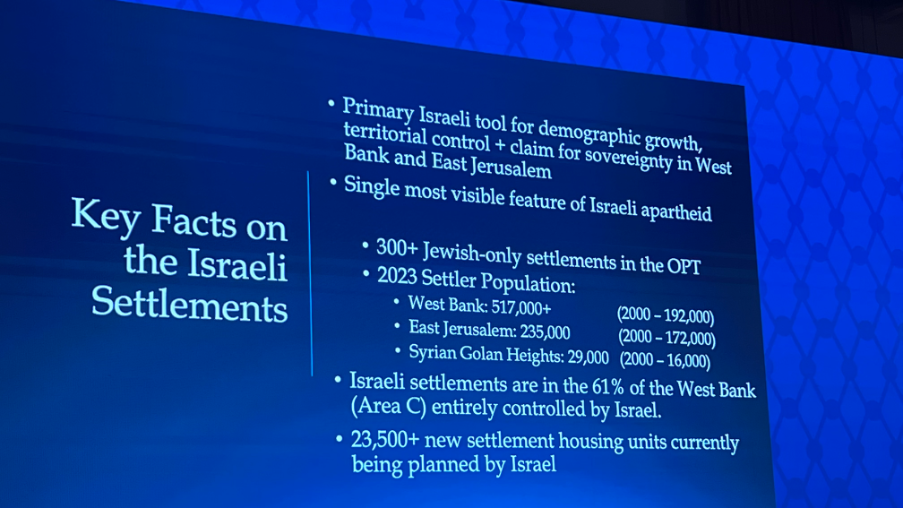
“I’m going to be looking this at one aspect of that, which is the Israeli settlements, and how international law has interplayed with this over the last 50 years, and what indeed can be done. So obviously, as we know, the Israeli settlements, which were begun in the first weeks after the June War in 1967, usually disguised as an initiative of military army bases, is the primary Israeli tool for demographic growth, territorial control, and a claim for sovereignty in East Jerusalem and the West Bank. It is, as many scholars have said over the years, to be the single most important and visible feature of Israeli apartheid, and that’s been confirmed with, I think, a close reading of the decision by the International Court of Justice two weeks ago.”
“There are now over 300 Jewish-only settlements in the West Bank and East Jerusalem. The 2023 population, I want you to compare it to the figures I have from 2000.”
“In 2023, in the West Bank alone, there are 517,000 Israeli settlers, and you can see the growth from under 200,000 in the year 2020. In East Jerusalem, where Israel had focused its settlement activities for the first 15 to 20 years of its occupation, today there are 235,000 Israeli settlers, and there were 172,000 in the year 2000. And you look at the Golan Heights, this is the population that almost doubled, from 16,000 in the year 2000 to 29,000 today.”
“And one of the startling figures, what we call the majority decision of the International Criminal Court, was that between November 2022 and October 2023, there were 24,000 settlements, 2,000 units that are currently in various stages of the planning system within Israel. And one of the big accomplishments by the current Minister of Finance, Bezalel Smotrich, who is also Minister of Settlements within the Defense Ministry, is to eliminate three of four stages of planning and approval, such that there will be only one level of approval in order for an application for settlement units to be able to be approved. 24,000 settlement units, the policy would yield at least 200,000 new settlers.”
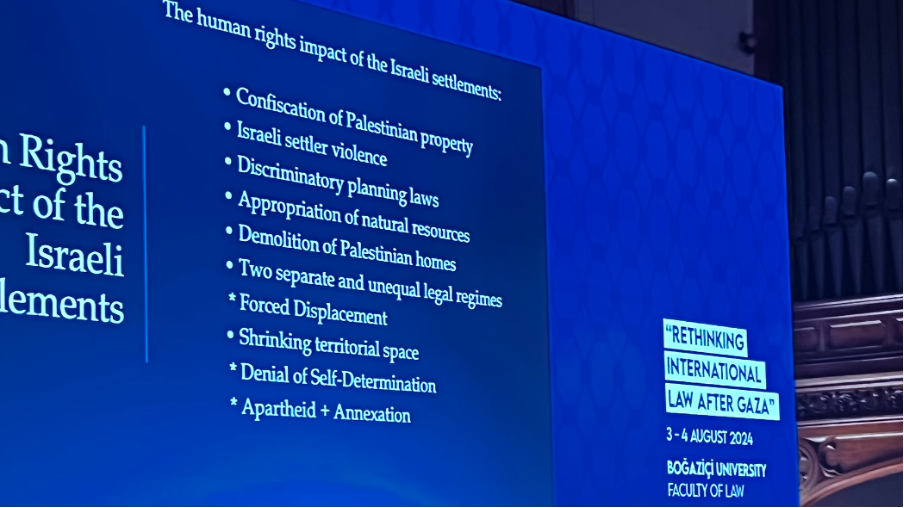
“If you read through the International Court of Justice decision, you will see how heavily, in fact almost exclusively, the court has relied on documentation provided by the United Nations Independent Commission on Inquiry, on the Non-Legitimacy Clause 9, or on the regular reports given. And much of this regional slide given above is from reports coming from the International Court of Justice, certainly from the High Commission on Human Rights. But if you look through the decision I produced two and a half weeks ago, you’ll see the heavy reliance that the United Nations has relied upon with respect to human documentation, talking about a number of issues, heavily influenced, including not only on the settlements, but eventually on the issue of racial discrimination and segregation and apartheid.”
“For example, it talked about the transfer of civilian population, and it noted that there was a status of Israel’s policy of providing incentives for the relocation of Israeli individuals and businesses into the West Bank, as well as looking at the industrial and agricultural development of settlers. With respect to confiscation and repossession of land, it is pointed out the extraordinary, I suspect, experience of more and more confiscation of land in the highlands of the West Bank, and more recently in Jordan Valley. And in fact, there is a very recent report that came out in the last month from Peace Now, which offers some of the most qualitative and reliable sources of information and statistics.”
Illegal settlements exploit natural resources, including water and minerals
“Going on, some of the other elements have to do with the exploitation of natural resources, including water, including minerals, and as we know, which is embedded in international law with respect to the control over one’s resources and the ability of the countries, as part of the right of self-determination, to be able to exploit our natural resources, that all of this is done on the wayside, with respect to control of Israel’s development, that Israel’s water carrier is, selling West Bank water that it has taken from a northern mountain aquifers and selling it back in fleeting prices, going back to the fact of the Palestinians, and that this was one of the important points that was relied upon by the court to be able to show the essence of racial segregation and apartheid, that there are, two different systems of laws operating issues on the West Bank. One, fulsome democratic, liberal for Israeli settlers, and the other, restrictive, minimal, violating international law, based on military law, three-plus percent of Palestinians living there.”
“At the other point, one of the reasons it comes to this issue has to do with the rising violence against Palestinians over the same period of time in the occupied West Bank. The killing of Palestinians saw by far most of it coming from the Israeli defense forces. It’s now only around 550 deaths over the last 10 months. And this is the highest number of deaths of Palestinians in the West Bank and the East Jerusalem since the 7,000 individuals over 25 years ago. So all of this, when the International Court concluded that the settlement policy is illegal.”
Transfer of population to occupied areas is war crime
“We know from the 1949 Convention, this was asserted. The occupying power in the court transferred parts of almost a million occupations in the territory of the Netherlands. This was put in there because of the incentive that arose during wars prior to the end of the Second World War to allow countries to be able to expand their territories and its territorial belonging which was amassed by other countries and then populated under civilian occupation in order to make the return of land possible.”
“And there is a rationale by Jean Pictet, in 1968, that union conventions were designed to prevent a crisis of international and systematical war by certain powers, which transferred portions of their own population to occupied territories for political and racial reasons or, in other words, they came and colonized these territories. Such transfers worsened the economic situation of the native population and endangered their separate existence as a race.”
“It’s a violation, a plagued violation. I’ll say that even in the international border crisis decisions a few weeks ago was the question of the war crimes.”
“The last time that the Security Council passed a resolution critical to the general on any matter was in December of 2016, in the last three weeks of the Obama administration, when they passed a resolution 2334, and it became the form of action that the Israeli government’s attempt to reflect their violation of international law. It reiterates the demand in over 40 years that Israel de-engage with its own settlement activity.”
“It calls upon all states, as it did in 1980, to distinguish the relevant means in between territories of the state of Israel and their particular block types. Just let me give you a couple of statistics with respect to this. When the UN Resolution 465 was passed in March of 1980, and I’m using only West Bank settlement figures, they’re easier to view than any of that.”
The number of Israeli settlers jumped from 12,500 in 1980 to 370,000 in 2023
“Does anybody know, as a rough guess, how many settlers were in the West Bank in 1980?
There were 12,500 settlers in the West Bank. By 1993, when the Oslo Accords were signed, there were 116,000 settlers in the West Bank. By about the year 2000, when the Camp David talks were conducted and then failed, there were 198,000 settlers in the West Bank. By 2014, when the last of the serious peace negotiations were conducted under John Kerry and then failed, there were 370,000 Israeli settlers in the West Bank.”
“In 2003, as I said, there were no settlers in the West Bank. Back in 1936, David Ben-Gurion said, and remember, 1936 was at the height of the integration of European Jews fleeing the specter of European fascism with most of the doors to the West, Russia’s door, and then North American foes. And David Ben-Gurion said, what error could not do this in the past? And we realize that 60,000 European Jewish immigrants a year who leave in 2009 means no error saved.”
“Can we not see today, almost 90 years later, that having 3 quarters of a million Israeli settlers in each Jerusalem in the West Bank, with a growth of somewhere between 25,000 and 35,000 settlers in a year, net population, means no domestic and self-determination with this group. So let’s look at this last piece here. I’m going to read this just a few pages before we send everything else to the team.”
“There are three questions at the end of it. They want the Security Council one at the beginning of the evening. And I request that the Secretary General of the United Nations report to the Security Council every three months on the implementation of the provisions of this resolution, most importantly of which is a demand that the doors immediately cease and completely cease all settlement activity. And that has been done every three months from the proper beginning.”
“There have been Security Council Generals, General Secretary, Secretary General, has delivered to the Security Council regarding Israel’s compliance with the 2354 regarding settlement activities. The March 2024 report, which is the 29th report, is the most recent one that I’ve applied to each of them online. It says the resolution calls on Israel to immediately and completely cease all settlement activity in the occupied lands, including Israel. And it would respect the new obligations. Nevertheless, settlement activities are continued and intensified. The other long warning I thought I wanted to give for each of these security reports, no such threats are created during the reported period as settlement activities continue.”
“So we have, if you like, this passive, and this specific, almost disembodied voice coming from the UN Secretary General, or which, of course, is in a digital pattern, tailored to the security council, this remains to obey resolution 2354.”
“And I won’t take you through it, but in the 1921 report, especially going forward to the UN Security Council, I applied this variant test that the periphery committee for the ICC had developed and found that Israel had violated all three aspects. And now, the definition of the authority willingness of those in official positions of power is now being enwired, who will say that the trade settlements are a form of war crime.”
“I think is a very roosting argument, such transfer is not a form of war crime that may engage individual criminal responsibility of those involved. And then, again, we’re being introduced several times to the International Court of Justice, where it’s said, and after going through an extensive review of the ICC, which is a settlement inquiry, with respect to digital settlement policy, it affirms, and in the light of the law, the ICC reaffirms that the trade settlements in the West Bank, in Jerusalem, and in the region associated with them have an established pattern of maintaining violation of international law.”
Accountability is a missing component with respect to international law
“On the question of accountability, accountability is a missing component with respect to international law. International law, without international resolve, generally emerges from below to be able to enforce the application of existing international law. And I’m very happy with respect to these.”
“These are three of the main components with respect to international law and accountability. First of all, with respect to international and international law, common argument, common law, all four of them says that the highest common comparison is with respect to security.”
“The International Committee of the Red Cross, the guardian of the Geneva Convention, has said, to ensure respect is not simply words on paper, this is a solemn, legal, binding, commitment and obligation. The states have to require the approval of international law means any serious breach of international law, and those states require international law to assist in the breach of international law.
And finally, I want you to keep Article 25 of the Charter of the United Nations in mind that the members of the United Nations agree to accept and to carry out the decisions of the United Nations.”










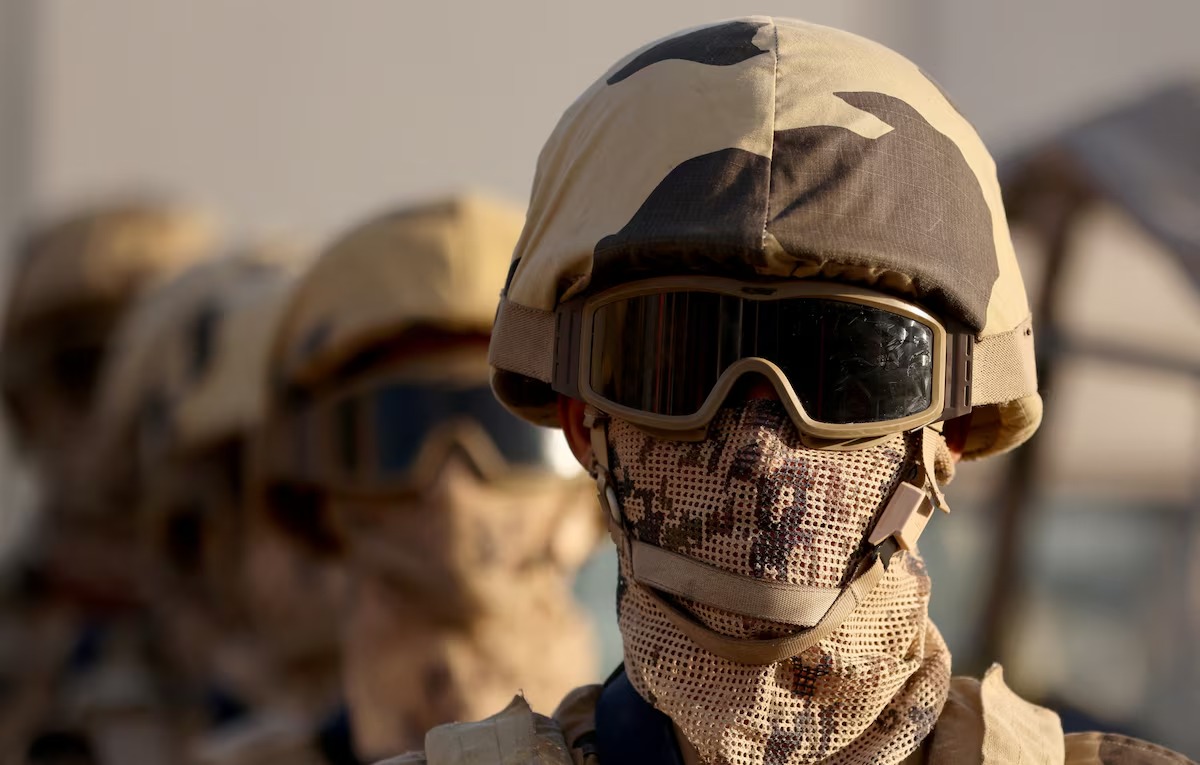
The US State Department stated that it has waived human rights conditions on more than $300 million in military aid to Egypt.
The statement emphasised that this decision was taken in consideration of Cairo’s “helpful role” since the outbreak of the war against Iran.
Egypt began receiving substantial support from the US after signing a peace treaty with Israel in 1979.
Since the late 1980s, the country has received approximately $1.3 billion annually in US military assistance.
A portion of this aid is subject to conditions related to human rights and democracy, which can be waived on national security grounds.
Withholding funds, including during the administration of former US President Joe Biden, has caused tension between Cairo and Washington in the past.
A letter dated 21 September and addressed to various congressional committees, obtained by Reuters, stated that Secretary of State Marco Rubio “decided to waive the certification requirement under the fiscal year 2025 Foreign Military Financing programme for Egypt of $320 million.”
This waiver was subsequently confirmed by the State Department.
An accompanying memorandum justifying the decision stated that this portion of military aid was “essential for counterterrorism, border security, or non-proliferation programmes, or otherwise important to the national security interests of the United States.”
The memorandum, dated 4 September and bearing Rubio’s signature, stated: “Exercising this waiver authority is critical to the US-Egypt relationship and to US national security priorities, particularly given the helpful role Egypt has played in the aftermath of Operation Epic Fury.”
“Operation Epic Fury” is the designation used by the US military for the campaign launched jointly with Israel against Iran in late February.
The State Department memorandum, whose authenticity was confirmed by two sources in Washington familiar with the letter, did not provide detailed information regarding what was termed Egypt’s “helpful role”.
The State Department’s annual decision on military aid to Egypt typically covers funds allocated for the preceding fiscal year, which ends on 30 September.
A State Department spokesperson stated that Rubio waived the certification in the interest of US national security and that the US continues to cooperate with the Egyptian government across a range of issues.
In an emailed statement, the spokesperson said: “This waiver recognizes the importance of maintaining security cooperation with Egypt at a time of significant security challenges in the region.”
The Egyptian Ministry of Foreign Affairs did not immediately comment on the matter.
The spillover effects of the Iran war have imposed a heavy toll on US security partners, including Egypt.
Owing to rising fuel prices and other disruptions, the Egyptian economy is passing through a difficult period.
Under the Biden administration, the US withheld portions of the annual military allocation on multiple occasions over Egypt’s human rights record.
In 2024, following the Hamas-led 7 October attack on Israel and the subsequent war in Gaza, the Biden administration set aside human rights conditions, disbursing the entire $1.3 billion allocation to Egypt for the first time in its tenure.
Human rights organisations have long accused Egypt, under the administration of President Abdel Fattah al-Sisi, of widespread human rights abuses, including torture and enforced disappearances.
This week, Egyptian police detained six journalists from a fact-checking and investigative media outlet, accusing them of spreading false information on behalf of the banned Muslim Brotherhood.
Egyptian authorities state that they have taken steps to address human rights issues. Sisi said stability is paramount and that the government supports human rights by working to provide for basic needs.
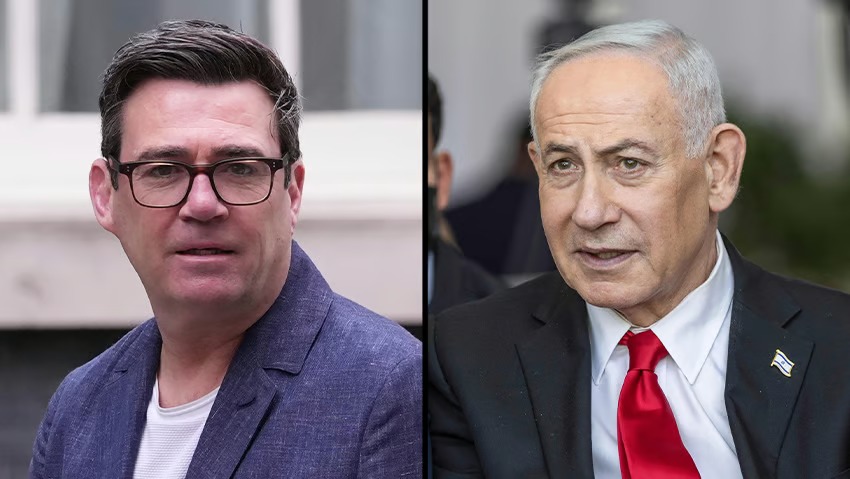
Britain has significantly broadened its military export restrictions targeting Israel, suspending or rejecting more than 80 licences for items the IDF could use in Gaza.
This figure is nearly triple the number affected when the policy was first introduced in September 2024.
United Kingdom Minister of State for the Middle East Stephen Doughty said that as part of what he described as a “tighter system” for assessing exports to Israel, more than 50 further export applications have been refused since approximately 30 licences were initially suspended.
Under the initial decision taken in September 2024, 30 of roughly 350 licences were suspended after the British government concluded there was a “clear risk” that certain military exports could be used to commit or facilitate serious violations of international humanitarian law in Gaza.
The affected equipment included components for military aircraft, drones, naval systems, and targeting gear.
Doughty said additional measures adopted this month established what he termed a “double safeguard” mechanism within the approvals process.
Export applications must now be assessed both against existing international humanitarian law criteria and in light of Britain’s position on the legality of Israel’s presence in the Palestinian territories.
“We have so far suspended or refused more than 80 licences,” Doughty said, adding that he had personally examined each licence.
Despite the wider restrictions, British-origin parts entering the international F-35 fighter jet supply chain continue to be largely exempt.
The UK government argues that preventing British-made components from entering the global F-35 pool could undermine the programme as a whole and have serious consequences for the security of the UK and its allies.
Direct exports of F-35 parts intended specifically for Israel remain suspended.
Doughty defended maintaining the supply of components via the international programme, arguing that halting it could have severe ramifications for the broader European and allied security architecture.
Foreign Affairs Committee Chair Emily Thornberry challenged this position, arguing that the issue was political rather than purely legal.
Thornberry suggested adopting an approach similar to the Dutch model, under which components entering the international supply chain could be flagged as “not intended for aircraft bound for Israel”.
The initial suspension was implemented in September 2024 by then Foreign Secretary David Lammy.
Lammy stressed at the time that the measure did not constitute an arms embargo and applied solely to items assessed as usable in military operations in Gaza.
Since then, the policy has been tightened further under Prime Minister Andy Burnham.
The expanded export restrictions follow the Burnham government’s adoption of a more confrontational policy toward the Israeli government.
Foreign Secretary Ed Miliband drew sustained applause at the Labour Party’s annual conference in Liverpool after delivering a sharp critique of the Netanyahu government’s policies and defending the decision to ban trade with Israeli settlements in the West Bank.
Accusing Israel of committing war crimes in Gaza, Miliband stated that the British government heard public outrage over the conflict, telling delegates: “We hear you. You were right.”
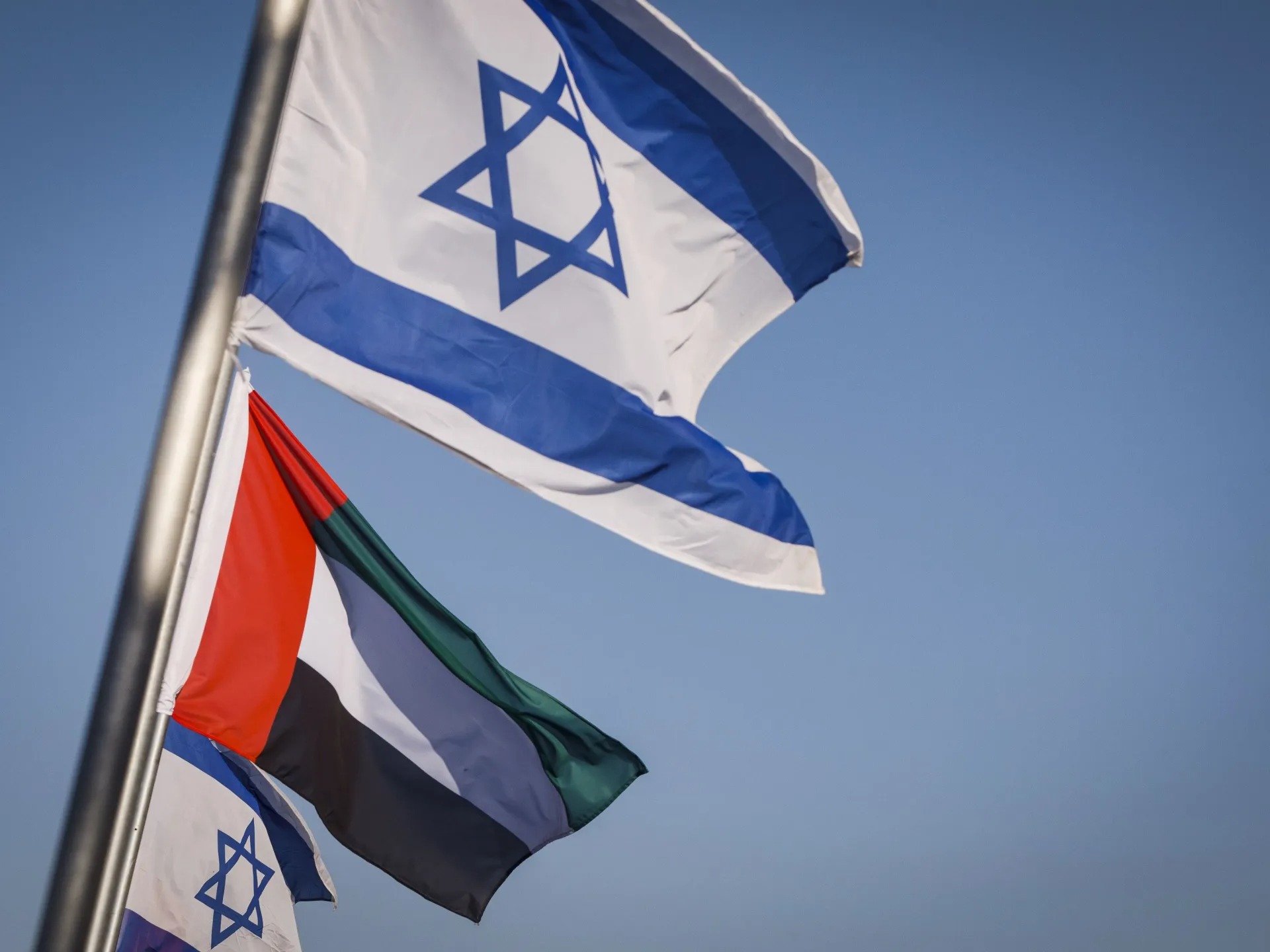
Israeli Prime Minister Benjamin Netanyahu met with representatives of Gulf and Arab nations that lack diplomatic ties with Israel, including Saudi Arabia, during his weekend visit to the United Arab Emirates.
Sources close to the gathering told the Israeli newspaper Yedioth Ahronoth on Monday that representatives from Morocco, Libya, Jordan, and Qatar also took part in the meeting.
Netanyahu made a unannounced visit to Abu Dhabi on Sunday, where he met with the country’s leader, Mohammed bin Zayed Al Nahyan.
According to Israeli media, this marked the first time the United Arab Emirates officially confirmed a visit by Netanyahu.
The meeting was arranged by Mossad Director Roman Goffman “at the request of Saudi Arabia, which asked for Israel’s assistance against Houthi attacks in the Red Sea region,” according to Yedioth Ahronoth.
The discussions addressed Iran and the Houthi militia. The newspaper added that the Arab states heard from Israel that “Israel is prepared to assist countries in the region with air defence systems, just as it aided the UAE during the conflict with Iran.”
Conflict in Yemen intensified in September when Ansarullah militiamen launched a rapid offensive that seized Yemen’s entire Red Sea coastline, including the vital maritime corridor of the Bab el-Mandeb Strait.
The Yemeni resistance also imposed a blockade on Saudi Arabia’s energy exports and staged multiple attacks against the kingdom.
Saudi Arabia reportedly sought military assistance from the US to counter Ansarullah.
Washington declined to attack the Houthis directly, but announced that it would provide intelligence and targeting support.
Reporting on the same visit, The Jerusalem Post said Netanyahu spent six hours in the UAE and that the principal subject of his discussions with MBZ was Iran.
Citing sources familiar with the matter, the newspaper added that the trip came “after Netanyahu exerted heavy pressure on the United Arab Emirates to arrange a meeting ahead of the Israeli elections on 27 October.”
Separately, the Associated Press, citing a person with direct knowledge of the meeting, reported that Netanyahu’s visit to the UAE was arranged in part to ask MBZ to deny reports that he had warned the Israeli prime minister of an impending Hamas threat prior to 7 October 2023.
According to Israeli media, Netanyahu’s office denied the AP report, issuing the following statement:
“Fake news. The visit focused solely on strengthening ties between the two countries and on regional issues.”

Germany expands North Sea military ports and plans new naval base

Musk appointed co-director of Pentagon future warfare initiative

US waives human rights terms on $320m military aid to Egypt

Putin says Russia did not start war and warns of nuclear risks

European nations unite against US pressure over strategic oil stocks
-

 Europe5 days ago
European unions urge governments to scrap all Palantir deals
-

 Diplomacy5 days ago
East-West Forum in Istanbul highlights irreversible shift to multipolarity
-

 Europe1 week ago
Emmanuel Todd says West faces collapse amid Ukraine and Iran crises
-
 Europe1 week ago
European intelligence chiefs divide over risk of Russian attack
-

 Diplomacy1 week ago
East-West Forum in Istanbul to debate multipolarity and global order
-
 Middle East1 week ago
Sharaa says 7 October must not shape Israel policy on Syria
-

 America1 week ago
Republican support for Trump’s war with Iran drops sharply in polls
-
 Middle East1 week ago
Palestinian factions confront legitimacy crisis at Istanbul talks
