
Asia
Interesting: US regresses Pakistan nukes-concern


Just days after US president Joe Biden made a surprise comment on Pakistan’s nuclear program that left the government gob-smacked, Washington now expressed “confidence” that Pakistan can secure nukes.
Mr. Biden on Thursday said Pakistan was “one of the most dangerous nations in the world” because it has “nuclear weapons without any cohesion.” However, Monday’s comment by State Department Spokesman Vedant Patel narrated a different story as he said that the US is confident of Pakistan’s commitment and its ability to secure its nuclear assets. Not only this, but Patel viewed a secure and prosperous Pakistan as critical to US interests. Two statements from one country with each are contradicting the other.
Anyways, no more details were given, but the remark was made by Mr. Biden while listing the global threats facing the US in the evolving international environment instead of a standalone threat.
The then US President Donald Trump on August of 2017 made similar statement and expressed Washington’s deep concern that nuclear weapons and materials in Pakistan could land up in the hands of terror groups. Five years have passed since 2017, but nothing such happened, amplifying the wrong perception of the Trump administration.
Pakistan strongly reacted to Biden statement
Pakistan Prime Minister, Shehbaz Sharif said that Pakistan was a responsible nuclear state and that it takes safety measures with the utmost seriousness. His Foreign Minister Bilawal Bhutto Zardari used good words in regards to Biden’s remarks in order not to hurt relations between Washington and Islamabad.
Zardari said Pakistan has met all and every international standard in accordance with the International Atomic Energy Agency in regards to safety and security of nuclear assets. But he jumped to bring under question its arch-enemy India as he said that if there is any question on nuclear security and safety then those questions should be directed to India who very recently “accidentally fired a missile into Pakistani territory.”
However, Pakistan foreign ministry expressed its disappointment and concern while summoning US Ambassador Donald Blome and called Biden’s remark not based on ground reality or facts.
Did the US help Pakistan to build nuclear weapons?
It is widely believed that the Chinese provided the nuclear blueprints to Pakistan in the 1980s, but at that time the US overlooked the Pakistani nuclear program because it badly needed Pakistani support in the fight against the Red Army in Afghanistan. The CIA had a big operating base in Pakistan during the Soviet-Afghan war, and it would be irrational to think that it had no idea about Pakistan’s nuclear activities. For the US defeating communism was a priority and everything else was put on the back burner.
Meanwhile, the US was monitoring Pakistan in order to make sure it is not building nuclear bomb from 1985 to 1999 while providing military aids to the country. Even in 1990 when the Soviet withdrew from Afghanistan, the US used the Pressler amendment to ban sale of military equipment to Pakistan, citing Pakistani nuclear program, but it was too late.
Despite the US and a number of western powers pressurizing Pakistan to not build a nuclear arsenal, the Pakistani leadership did accept their arguments as they said its nuclear arsenal was key to the security of Pakistan as long as India also had a nuclear weapon. Indeed, Pakistan surprised the US and other countries when it did its first atomic test, and it had no obligation to take permission from anyone.













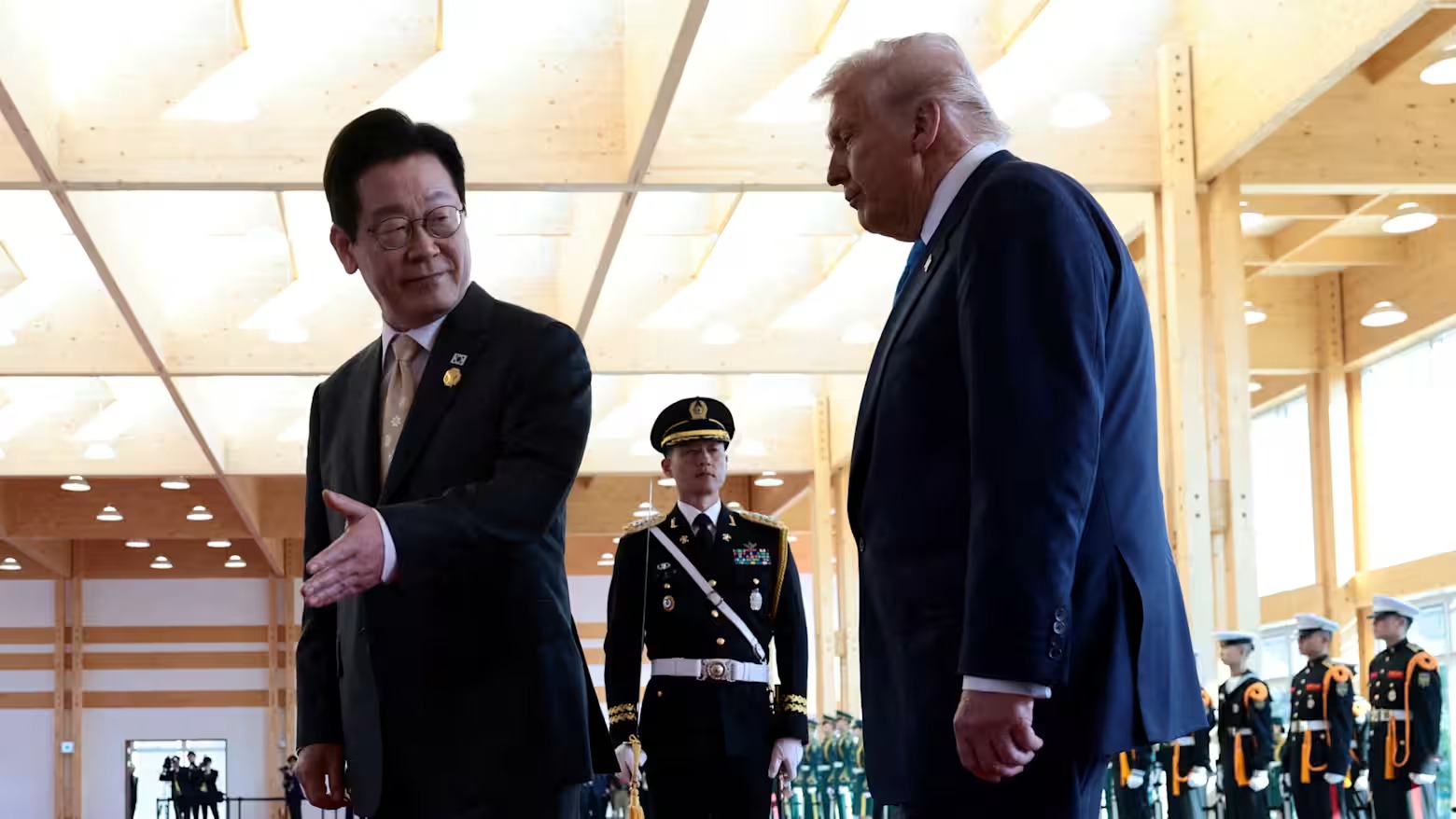
South Korea will spend $120 billion to construct eight nuclear power plants in the US under an agreement that provides for $350 billion in investments in exchange for lower tariffs.
The South Korean government also announced that Seoul and Washington will begin examining a liquefied natural gas (LNG) project in Alaska comprising a large-scale pipeline to transport natural gas from the north of the state to the south, alongside the construction of an LNG terminal for exports overseas.
Seoul stated that a decision regarding the LNG project will be made following a commercial feasibility study. However, US President Donald Trump said that South Korea would invest $54 billion in the project, pointing to an apparent lack of full coordination between the two sides on the matter.
Trade and Industry Minister Kim Jung-kwan said in a statement: “This announcement opens a new horizon of cooperation where the two countries join forces to develop joint commercial ventures in strategic areas directly linked to economic security and future sectors such as artificial intelligence, nuclear energy, and LNG.”
“We will adhere to the principle of prioritising national interests and investing solely in commercially viable projects,” Kim said.
Speaking at the White House, Trump characterised South Korea’s plans as “one of the largest energy infrastructure investments in American history”.
The announcement followed a meeting between Trump and South Korean President Lee Jae Myung roughly one year ago at the APEC Economic Leaders’ Meeting held in South Korea, where they agreed on the creation of a $350 billion investment fund.
Under that agreement, $150 billion was allocated to the shipbuilding sector and $200 billion to other sectors. In return, the US announced it would reduce tariffs imposed on goods imported from South Korea from 25% to 15%.
Under the nuclear power project, South Korea’s state-controlled utility will build two plants in the US, while Pennsylvania-based Westinghouse Electric will construct six plants.
According to the South Korean government, this will mark the first instance in which a foreign country builds its own nuclear power plants in the US.
South Korean firms are also evaluating the possibility of acquiring a stake in Westinghouse as part of negotiations over sharing profits generated by the project.
South Korea additionally announced that it will build a $22.3 billion natural gas-fired power plant in Texas with a capacity of 6,472 megawatts.
The facility will be designed to supply electricity directly to nearby data centres. The project’s first phase is targeted to begin commercial operations in 2029, with full-capacity operations slated for 2032.
Seoul also disclosed that it had agreed to allow the US to receive 50% of the profits generated by the projects until South Korea recoups all of its investments.
After South Korea fully recovers its total investment amount, 90% of the profits will go to the US.
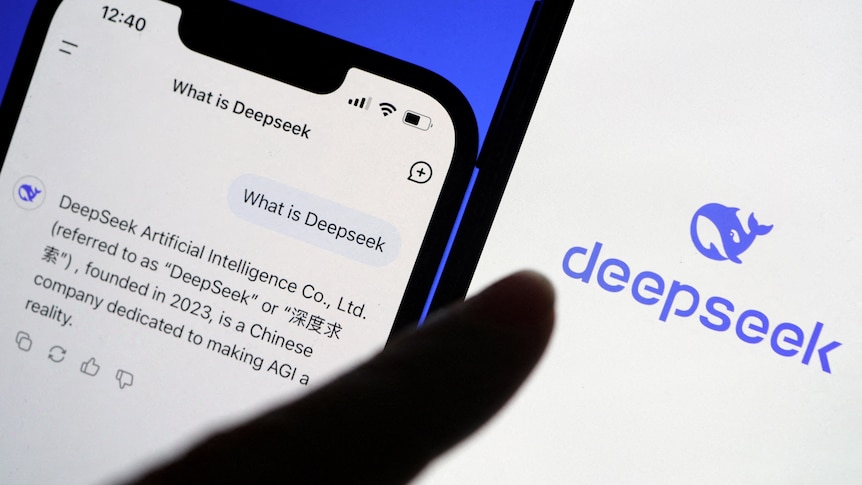
Shengyu Liu, a low-level hardware architecture and processor kernel optimisation specialist at China-based artificial intelligence organisation DeepSeek, has published an assessment addressing the existential crisis facing software developers and humanity amid the pace of AI advancement.
A senior engineer who personally coded the core attention mechanism kernels for the DeepSeek v4.1 model, Liu stated that the technology he developed with his own hands will very soon render his professional expertise redundant and has initiated the phasing out of human labour.
Arguing that AI will steer future societies either towards a communism in which productive forces are entirely emancipated or towards a dark Cyberpunk dystopia where resources are concentrated within mega tech monopolies, Liu highlighted the vital importance of the open-source software struggle for humanity.
Noting that the DeepSeek v4.1 model released a few days ago raised the capability ceiling for small-scale systems, Liu stressed that transformation across the sector is advancing at an inconceivable pace.
Recalling that the transition from initial chatbots with context lengths of only a few thousand semantic tokens to reasoning-capable contemporary models took just two years, the senior engineer observed that the emergence of autonomous agents executing complex instructions within test and execution environments spanned a period of merely one and a half years.
Stating that AI will attain the capacity for self-improvement and full integration into physically embodied systems within the next few years, Liu described the transformation this development has generated in his own field:
“AI is taking incredible strides in processor kernel design and authoring, the field for which I am responsible. Within the span of merely a year, it transformed from a modest assistant that merely scanned technical documentation, read code, and identified bugs into a master that independently reads GPU machine-language instructions and hardware-level instruction sequences directly. Using professional profiling tools, it inspects instruction latency stalls and optimises processor kernels autonomously. In the not-so-distant future, it will also acquire the ability to independently design instruction scheduling, weigh the performance of different plans, implement them, and bring them to perfection.”
Expressing pride in the success achieved by the DeepSeek v4.1 model as a concrete fruit of his own labour, Liu noted that he personally coded the system’s most critical attention mechanism components, stating that the model’s success serves as an endorsement of his craft, yet the superhuman nature of technological progress remains unstoppable.
astonishing blogpost from Shengyu Liu (刘胜与, also known as interestingLSY/intlsy), kernel engineer at DeepSeek. The first part is his personal struggle with the fact that his work is about to render his beloved craft obsolete. The second is…
well. let's just say we agree. https://t.co/1mqyOqbl2Y pic.twitter.com/sw4t4bUE0k— Teortaxes▶️ (DeepSeek 推特🐋铁粉 2023 – ∞) (@teortaxesTex) September 14, 2026
“I want to lead my own revolution”
Liu considers it a certainty that within six months to a year, AI will generate processor kernels far superior to his own.
Pointing to the rapidly widening chasm between the human mind and machine capacity, the senior engineer said: “AI can think at 300 semantic tokens per second, write a line of code in half a second, and complete an entire block of code in 20 seconds. I cannot do this. AI can continually increase model depth, thinking intensity, external tool invocation frequency, and processing parallelism; I cannot achieve this.”
Emphasising that software engineers have been drawn into a race knowingly preparing their own demise, Liu explained why he works day and night on optimisation efforts that accelerate his own obsolescence:
“Throughout history, humanity has never hesitated when it comes to self-destruction. Knowing that the more flawless the kernels I write, the faster our new model’s training and inference speeds will be, the more its capabilities will multiply, and the earlier I will be sidelined, why do I continue to optimise with all my strength? On one level, this work is like a game to me; it brings me indescribable pleasure. When I discover a new method or see the performance curve of my code rise, the thrill I feel is no different from that of a record-breaking speed enthusiast. Moreover, I feel immense pride when I outperform the official code of hardware vendors.”
Pointing to the ruthless competition on the other side of the coin, Liu stated: “Yet the primary reason is this: even if I quit today or deliberately slowed the progress of our models, other companies would continue their work and eventually eliminate me anyway. Naturally, no one wishes to see their own profession overturned; however, if this revolution is inevitable, I want the force that unseats me to originate from my own hands. In a landscape where everyone is so focused on self-destruction, I, too, am forced to join this relentless arms race.”
“The din of machines crushes the joy of craft”
Preparing for the day when AI surpasses his level of expertise, Liu noted that he will not face unemployment, but will be forced to switch domains.
Stating that his judgement, cognitive capacity, and initiative will allow him to remain at the core table of the industry, the specialist engineer observed that this adaptation entails a heavy emotional toll.
Explaining that shifting fields means abandoning an area to which he is deeply devoted, Liu described his sense of dislocation:
“Switching domains means leaving behind the hardware kernel design, coding, and optimisation work to which I have dedicated years and an ardent passion, only to become a machine operator of AI agents. In the past, my personal curiosity, my area of expertise, and industry demand were in complete harmony. Now, AI has become far more adept than I am in the exact domain of my expertise. Industry demand has shifted away from the human writing high-performance kernel code toward an operator prompting AI to produce such code more rapidly. To bow to this industry demand, I must abandon the field I love and steer toward an unknown path.”
Illustrating the transformation through the metaphor of a traditional craft, Liu continued:
“Consider, for instance, being a master sweater knitter who achieves exquisite patterns and colour harmonies. The quality of the fabric you weave is so superior that wealthy patrons from surrounding villages seek you out, earning you a good living. What is more, sitting by the window sipping tea while looking out at mountains, streams, and animals brings you deep peace as you knit in silence. Then one day, a machine is invented; you feed it only wool and a pattern template, and it knits the sweater identically to your manual craft, only far faster. Realising your competitors will easily overtake you with this tool, you begin using it yourself. Thanks to your 20 years of accumulated experience, you remain faster than your competitors even while operating the machine. Yet the elegance of those hours spent listening to the rain and working stitch by stitch is crushed and extinguished under the mechanical din of the machine. That quiet by the window will be experienced for the final time this summer. I must leave my talent behind in yesterday and become an armoured-machine driver; my hands hold more gears now, but my heart has lost its rhythm.”
“AI in the hands of the unskilled spells disaster”
Looking beyond personal sorrow to societal and pedagogical risks, Liu focused on signs of decay within the education system.
Noting that the new generation of students tends to delegate coursework assignments to AI, the veteran engineer remarked that a student who spends a few cents to have AI produce top-grade code within minutes, rather than sweating for eight hours to obtain an imperfect result, will be stripped of foundational skills.
Emphasising that this shortcut will erode vital engineering abilities such as systems building, code architecture design, abstraction, and anticipating future requirements during development, Liu expressed deep concern:
“Will this foundational engineering mindset fade into history like the skill of writing machine language in past eras, or will it retain permanent value like the capacity to grasp entire computer architectures from software down to hardware? If this comprehension continues to hold value, the situation is dire indeed. Because when an individual with weak engineering fundamentals is equipped with AI, they will produce mountains of garbage code far faster than before. This will plant countless ticking time bombs deep within software systems, driving the world toward a far more precarious, ramshackle structure liable to collapse at any moment.”
Pointing out that raw authority and power will become decisive in the future world rather than technical expertise and intellect, the senior engineer stated that only time can answer these fundamental questions.
“A binary future: Communism or a dark corporate dystopia”
Observing that humanity has arrived at a crossroads with the advancement of AI, Shengyu Liu emphasised that future society will evolve toward one of two radical poles, which he termed communism and Cyberpunk:
“With the momentum of AI, future society will probably be cast toward one of two extremes: communism or Cyberpunk 2077. In the first option, productive forces are completely unshackled, domination over the means of production is broken, and human living standards make an unprecedented leap forward. In the second option, a small tech oligopoly consolidates all resources. While a privileged elite gains access to the most advanced AI and cutting-edge technologies, ascending almost to a state of mechanical divinity, the overwhelming majority of society is left with extremely weak and constrained AIs. Upward social mobility becomes impossible; to reach a higher class, one must possess the most powerful AI, yet access to that AI requires already having been born into that class. An unbreakable cycle of exploitation is thus established.”
Openly criticising the monopolistic and closed models adopted by Western tech companies, Liu posed a pointed question:
“In a scenario where the world’s most advanced AI remains permanently monopolised by a company like Anthropic, do you believe the future will evolve toward communism or a dark Cyberpunk dystopia? Go ahead and guess.”
Stating his conviction that top-tier AI must be delivered openly, transparently, and free of charge to all humanity, the DeepSeek engineer expressed a lack of trust that actors such as Anthropic or OpenAI would uphold this mission.
Likening the possibility of Anthropic alone controlling artificial general intelligence to the catastrophe of nuclear technology falling into the hands of fascist regimes during World War II, Liu concluded with his rationale for remaining at DeepSeek:
“That is precisely why I chose to remain at DeepSeek and why I am holding the line here. We build powerful, lightning-fast AIs offered for the common good of all humanity, and we release them as open source. This is the path to pulling the world back from the brink of that dark corporate dystopia and liberating productive forces for the benefit of the people.”

Financial Times writer Ryan Avent has written that a fresh, rapid surge in China’s trade surplus could signal a new wave of the “China shock”.
Economists define the “China shock” as a spike in Chinese exports to global markets that intensifies competition for manufacturers in advanced economies and curtails employment in certain sectors.
The term gained widespread currency after China joined the World Trade Organization in 2001, accelerating the inflow of inexpensive Chinese goods into the US and other nations.
The US was the country hit hardest by the initial shockwave. Between 1999 and 2011, more than 2 million jobs were lost because domestic producers were unable to withstand the competition.
Avent argued that the effects of the initial wave are still felt across the American economy because China failed to carry out the rebalancing that the world expected.
The share of net exports in China’s gross domestic product contracted during the 2007-2019 period, allowing Western nations to focus on national security and other matters.
Avent reported that the trade surplus is now escalating rapidly once again, posing a threat to the economies of wealthy nations.
The writer pointed to the stagnation of domestic demand following the collapse of the real estate market six years ago as one cause of this surplus. Another prominent factor is the Beijing government’s channelling of massive resources into manufacturing in pursuit of self-sufficiency.
Attention was also drawn to the role of the depreciating yuan. An appreciation of the currency could require China to alter its foreign exchange interventions, reduce purchases of foreign currency and assets, and sell those assets off. That scenario could trigger currency depreciation and rising interest rates in other countries.
The Wall Street Journal also reported in the spring of 2024 on economists’ concerns regarding a potential second wave.
Experts predicted that global markets would once again be flooded with inexpensive goods, stating that China was manufacturing far beyond domestic demand to overcome its economic troubles.
Moreover, it was stressed that China is now competing in high-technology fields such as automobiles, computer chips, and complex machinery manufacturing.
Meanwhile, Vasiliy Kashin, Director of the Centre for Comprehensive European and International Studies at the Higher School of Economics (HSE) University in Moscow, told the Russian media outlet RBC that the US has imposed sanctions on the Chinese economy since the first shock period, adding that these measures would very likely tighten in the event of a fresh export wave.
According to assessments reported by the Financial Times, this new process could also shake China’s own economy. Alongside rising output, entry-level manufacturing plants across the country are turning toward automation and reducing personnel.
This trend could trigger a painful departure from labour-intensive production, leaving millions unemployed. Manufacturing activities in China that previously capitalised on cheap labour are shifting to other Southeast Asian countries.
The Beijing administration rejected allegations that its industrialisation steps pose risks to other countries. As reported by the Xinhua news agency, China’s Ministry of Commerce stressed that claims of a “China shock 2.0” are groundless. The ministry stated:
“The US and other Western countries have circulated the so-called ‘China shock 2.0’ narrative, asserting that China’s industrial development has shaken Western monopolies and narrowed growth space for Global South countries. This claim is unsupported by concrete data and is entirely unfounded.”

Germany expands North Sea military ports and plans new naval base

Musk appointed co-director of Pentagon future warfare initiative

US waives human rights terms on $320m military aid to Egypt

Putin says Russia did not start war and warns of nuclear risks

European nations unite against US pressure over strategic oil stocks
-

 Europe5 days ago
European unions urge governments to scrap all Palantir deals
-
 Diplomacy5 days ago
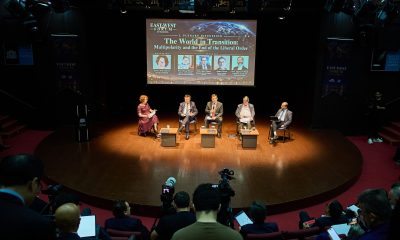
East-West Forum in Istanbul highlights irreversible shift to multipolarity
-
 Europe1 week ago
Emmanuel Todd says West faces collapse amid Ukraine and Iran crises
-

 Europe1 week ago
European intelligence chiefs divide over risk of Russian attack
-
 Diplomacy1 week ago
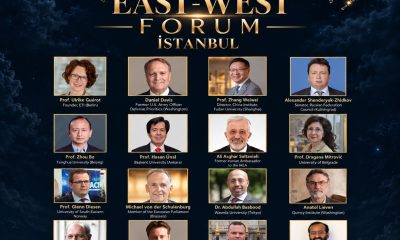
East-West Forum in Istanbul to debate multipolarity and global order
-

 Middle East1 week ago
Sharaa says 7 October must not shape Israel policy on Syria
-
 America1 week ago
Republican support for Trump’s war with Iran drops sharply in polls
-
 Middle East1 week ago
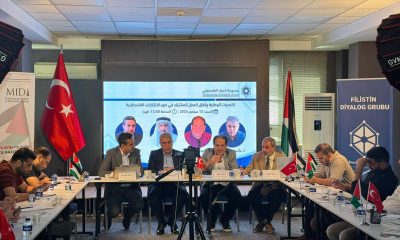
Palestinian factions confront legitimacy crisis at Istanbul talks
