
America
Trump approval rating among Republicans hits record low in new Fox News poll

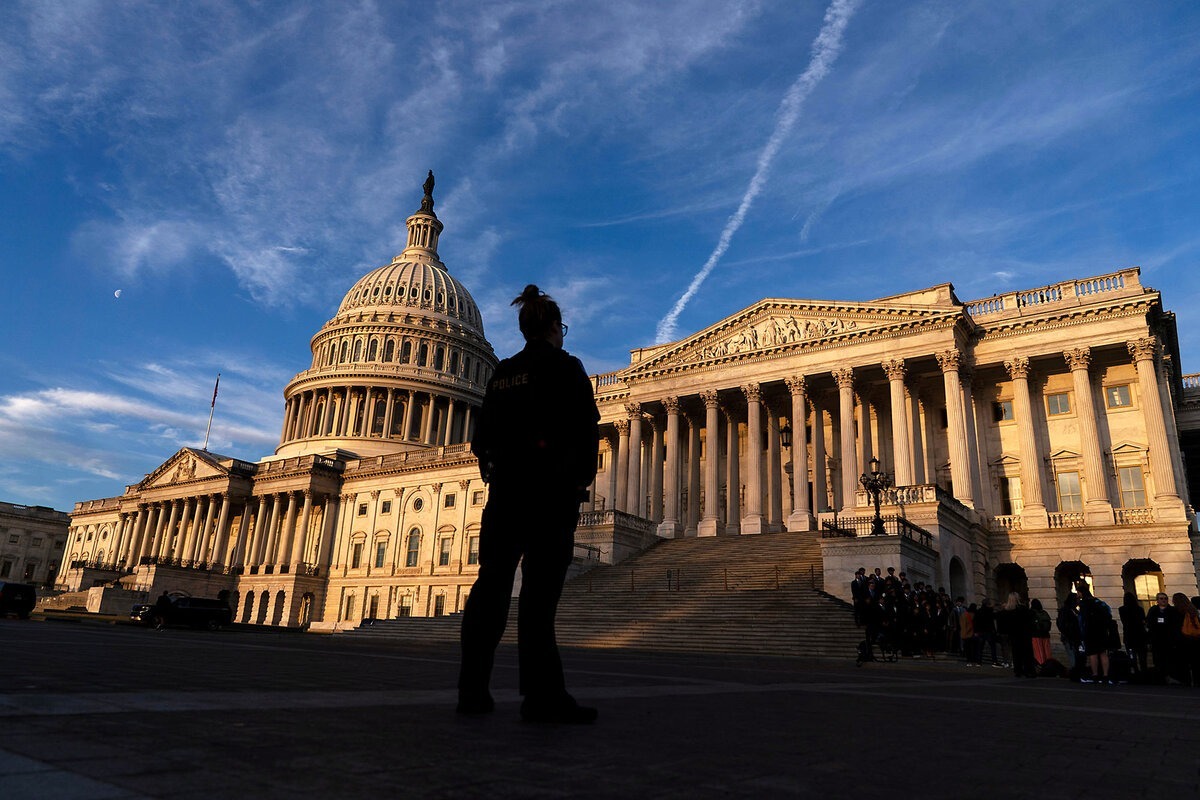
A new public opinion poll published by Fox News shows that President Donald Trump’s approval rating among Republicans has reached an all-time low, even as issues such as the cost of living, job growth, and the economy rank at the top of voters’ agendas across the country.
According to data from the Fox News poll, Trump’s approval rating among Republicans declined to 80%, marking a new low.
This rate dropped even further to 54% among Republicans who do not identify themselves with the MAGA (Make America Great Again) movement.
The approval rating for Trump among surveyed white voters and rural voters was measured at 43% in both groups.
Overall, the results indicated a weakening of support for the president across three key demographic groups that helped him secure his 2024 electoral victory.
Trump’s support among white voters showed a 6 percentage point decline. The president also lost 5 percentage points of support among white men without a college degree and 3 percentage points among Republicans.
The poll revealed that dissatisfaction with Trump’s handling of the economy has increased.
The dissatisfaction rate, which was 66% last month, rose to 71% in the May poll. This increase was driven in part by a 7 percentage point rise in the dissatisfaction rate among Republican voters.
Republican pollster Daron Shaw, who conducted the Fox News poll alongside Democratic pollster Chris Anderson, told the broadcaster, “Despite the steady and strong support of the Republican Party, there is some leakage in the president’s numbers.”
Shaw continued his assessment: “Make no mistake; this is entirely about the cost of living. Independents cut ties in 2025, and now non-MAGA Republicans and other core voter groups are wavering.”
While 51% of surveyed Republicans stated that they disapprove of Trump’s handling of inflation, this rate was recorded at 85% among independents and 96% among Democrats.
The US Department of Labor reported in data released last week that inflation rose to 3.8% over the last 12 months, and by 0.6% in April alone.
Among surveyed Republican voters, 89% expressed the belief that the US is winning the war with Iran. The share of those sharing the same view was two-thirds among independents and 56% among Democrats.
However, opposition to military intervention against Iran was seen to have grown, rising from 55% in April to 60% in May.
While negotiators have been working for weeks to draft a peace agreement, the US President stated that he aims to end the conflict in Iran “very quickly.”
The poll in question was conducted under the direction of Beacon Research between May 15 and 18, with a sample of 1,002 registered voters randomly selected from the national voter file. The study’s margin of error was announced as 3 percentage points.











At least 47 large data centre projects have been halted or cancelled across the US, as a massive $10 trillion investment wave in artificial intelligence infrastructure begins to stumble amid construction delays, rising borrowing costs, and local public pushback.
According to a report by the Financial Times, this emerging picture threatens the future of hundreds of projects while deepening investor doubts over returns on the colossal sums being spent.
Data from research firm RegLayer shows that at least 47 major data centre projects across the US have been delayed, cancelled, or brought to a complete standstill.
In an assessment published in October, analysts at financial firm Bernstein pointed out that only about 35% of the projects planned across the country can be considered realistic.
Local authorities and the bond market apply the brakes
The obstacles facing investments are not limited to technical plans. More than 1,000 localities across the US have sought to impose moratoriums or other restrictions on AI infrastructure construction this year.
The sector’s growth depends directly on whether next-generation cloud providers, often referred to as “neoclouds”, can secure financing for these giant buildouts.
However, high interest rates, inflation, and disruptions across the bond market have shaken investor confidence in the ability of companies such as OpenAI and Anthropic to generate revenues that cover their expenses.
This loss of market confidence prompted investors to rapidly exit debt securities tied to AI infrastructure companies. Shares in cloud provider CoreWeave plunged by around 25% in a single week.
Similarly, SoftBank unit SB Energy and Nvidia-backed Firmus delayed or suspended their plans to go public. OpenAI also indicated that it deferred its own initial public offering, citing safety and security reasons.
Delays hit giant Stargate project
Difficulties on the ground are directly affecting construction sites. Delays have hit several Oracle sites tied to the $500 billion Stargate project, which OpenAI is pursuing to build data centres.
These schedule slippages could grant customers the right to walk away from contracts if facilities are not completed on time, while contractors could demand additional financing.
Investments could exceed $10 trillion
Despite the mounting challenges, the volume of capital flowing into the sector remains at record levels.
Columbia Business School economist Stijn Van Nieuwerburgh calculates that US AI infrastructure spending between 2025 and 2032 could exceed $10 trillion, equivalent to roughly 3.6% of the country’s gross domestic product each year.
As investors weigh risks far more strictly, obtaining building permits for data centres and connecting facilities to the power grid have grown increasingly difficult.
In a report published in late July, the Financial Times noted that Google, Amazon, Microsoft, and Meta had collectively invested $1.1 trillion since the AI boom began in 2023.
Big tech companies plan to allocate $745 billion this year toward data centre construction, advanced chip purchases, and building computing capacity.
Returns on these investments hinge on whether OpenAI and Anthropic can generate the resources needed to cover their computing costs.
Although spending has boosted corporate revenues, particularly in the cloud sector, supply chain strain has triggered memory chip shortages, adversely affecting even players that have fallen behind in the AI race, such as Apple.

The Swiss Federal Department of Foreign Affairs has lifted a precautionary asset freeze imposed on Marleny Contreras, the wife of Venezuelan Minister of Interior, Justice and Peace Diosdado Cabello, and Jorge Arreaza, a lawmaker from the United Socialist Party of Venezuela (PSUV).
Officials described their inclusion on the sanctions list as an “error”, stating that neither individual held any assets on Swiss territory and that neither faced corruption charges.
The precautionary measure had been enacted on 5 January, two days after US forces bombed Caracas and abducted Venezuelan President Nicolás Maduro.
The government in Bern had stated that the decision was intended to prevent illicit funds from being moved out of Switzerland while potential legal investigations proceeded.
The legal measure, which will remain in force until 2030, includes a formal pledge that all funds proven to have been acquired illicitly will be returned to the Venezuelan people.
More than 40 current and former Venezuelan officials, alongside their immediate relatives and alleged associates, remain on the list.
Switzerland adds six new names to sanctions list
According to a report by Venezuelanalysis, the Swiss government added six new names to the list concurrently with the removal of Contreras and Arreaza.
Those newly listed include Álex Saab, a former special envoy of the Venezuelan government and minister of industries, alongside his business partner Álvaro Pulido.
Pulido, who was handed over by Venezuelan authorities to stand trial on money-laundering charges, appeared in a Miami court on 13 October.
Saab, who was surrendered to US agencies, also pleaded guilty to money-laundering charges and pledged to cooperate in other investigations.
The blacklist was also expanded to include lawyer José Vicente Amparan Croquer, who is accused of laundering proceeds from a $1.2 billion corruption scheme at the Venezuelan state oil company PDVSA.
Businessman Mario Enrique Bonilla Vallera, alleged to be a front for the stepsons of Nicolás Maduro, was also placed on the new sanctions list.
The Swiss authorities additionally brought the wives of two previously listed former deputy electricity ministers under the measures.
Within this framework, Milagros Coromoto Torres Morán, the wife and business partner of Nervis Villalobos, and María Consuelo Pardi Celis, the former wife of Javier Alvarado Ochoa, were added to the list.
Dialogue steps between Washington and Caracas
The Swiss move came two days after the US Department of the Treasury removed Jorge Rodríguez, the president of the Venezuelan National Assembly and the chief negotiator in the dialogue process with the opposition, from its sanctions list.
Rodríguez is the brother of interim President Delcy Rodríguez, who had herself been removed from the Specially Designated Nationals and Blocked Persons (SDN) list in April.
Jorge Rodríguez had first been sanctioned on 25 September 2018, during Donald Trump’s first presidential term.
Individual sanctions freeze the targeted persons’ assets on US territory and prohibit US citizens and companies from conducting transactions with them.
David Alandete, the White House correspondent for the Spanish newspaper ABC, characterised the assembly president’s removal from the sanctions list as a reward for cooperation in a new phase of relations between Caracas and the White House.
The decision was announced on the day that Delcy Rodríguez’s interim government and an opposition delegation led by former lawmaker Dinorah Figuera began a third round of US-backed talks in Caracas.
The talks aim to pursue the renewal process of the Supreme Tribunal of Justice (TSJ) and address political rights and guarantees.
Despite these steps, 254 individuals and entities remain on the sanctions list maintained by the US Treasury’s Office of Foreign Assets Control (OFAC).
The Trump administration also maintains sweeping coercive measures against key Venezuelan economic sectors, including oil, mining, and banking.
Since January, Washington has implemented sanctions waivers that allow certain Western companies to access Venezuelan oil and mineral resources under favourable terms.
Although the White House has authorised some US-based companies to trade with the country, export revenues are held in an account at the US Treasury, and US officials determine the volume of transfers to Caracas.
Most recently, the Trump administration issued General License 60A.
The regulation authorises humanitarian relief transactions until 21 April 2027 to address damage caused by the twin earthquakes that struck Venezuela on 24 June.
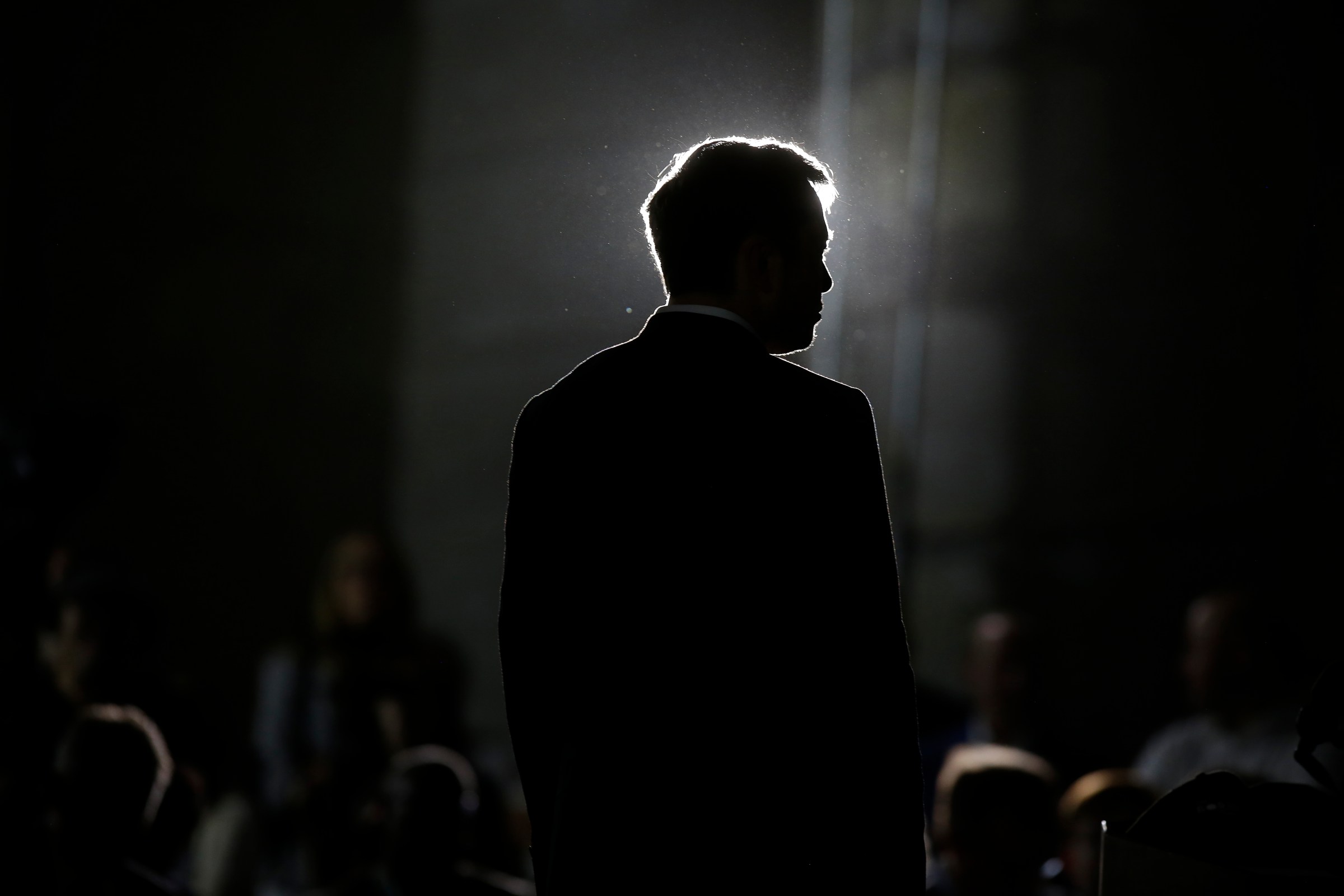
In an in-depth interview broadcast on the foreign policy and current affairs platform Harici YouTube channel, host and journalist Erman Çete spoke with Massachusetts-based author and technologist Ben Tarnoff regarding the political, economic, and ideological framework built around billionaire entrepreneur Elon Musk. Tarnoff, who is the author of Internet for the People and co-author alongside historian Quinn Slobodian of the book Muskism, offered an exhaustive analysis of how Musk’s industrial practices, corporate structures, and ideological trajectory provide a structural lens for understanding contemporary capitalism.
Çete opened the discussion by noting that Muskism explicitly evokes Henry Ford and Fordism, which served as a defining concept for the twentieth century, and asked Tarnoff to explain why the authors propose Muskism as a prospective operating system for the twenty-first century rather than terms centred on other prominent figures such as Jeff Bezos or Mark Zuckerberg.
Tarnoff explained that their intellectual departure point began with the historical analysis of Fordism, a category formulated by twentieth-century social theorists such as Antonio Gramsci to decipher the societal conditions that made mass-scale manufacturing viable.
“Well, when Quinn, my co-author and I sat down to think about how possibly writing this book, our point of departure was the concept of Fordism, which is an idea developed by a number of different theorists of the 20th century,” Tarnoff said. “Antonio Gramsci is one famous example, but there are a number of others as well. And what these theorists did was that they looked at the life and the work of the famous American industrialist Henry Ford, and they attempted to infer or extrapolate a broader social system from his ideas and practices. So they asked, not simply why did Ford become Ford? But more broadly, what kind of world is necessary for the production practices for the factories of Henry Ford to be possible?”
“An operating system for the world”
Tarnoff pointed out that Ford was regarded as an archetype of his era, embodying a configuration of industrial capitalism defined by mass assembly, high industrial wages, and institutional stabilization aimed at preserving a mass consumer market. In his view, Musk occupies an identical cultural and systemic position today.
“And Ford was at the time taken to be a representative capitalist, was someone who embodied capitalism at a particular point in time in the 20th century,” Tarnoff remarked. “Now, when you look at Musk, I think it’s fair to say that Musk also personifies or embodies where capitalism is at our particular point in history in ways that are quite comparable to the ways Henry Ford did. Incidentally, the two men have a lot of personal similarities, but even beyond that, they both seem to serve as avatars for capitalism in a particular era.”
Addressing why Musk provides a superior analytical lens compared to figures like Jeff Bezos or Peter Thiel, Tarnoff stressed Musk’s sheer systemic footprint, wealth, and unique pedagogical value.
“So my co-author and I wanted to ask, well, if we looked at the ideas and practices of Elon Musk, how he organizes his factories, how he organizes his businesses, how he accumulates as a capitalist, could we zoom out and extrapolate a broader social system, an operating system for the world, if you like, from those practices and call it Muskism?” Tarnoff explained. “He is both more powerful than those other figures. I mean he is the richest man on earth by quite a wide margin actually. But also his empire spans so many very important sectors from AI to space to the provision of internet service, to automobiles, to brain-computer interfaces and so forth, that there’s a breadth there that the other figures that are often cited don’t have. There’s a geopolitical influence that that gives him that the other figures don’t have. But finally, and this I think brings us back to Fordism: He has a pedagogical value that the others don’t have. That looking through the lens of Musk, you can learn something about how capitalism operates in the 2000s and how this phase of capitalism came to be that you can’t really do looking through the lens of a Peter Thiel or a Jeff Bezos.”
Çete then observed that while many view Musk as an anti-statist figure, especially in the wake of his involvement with the Department of Government Efficiency (DOGE), Muskism demonstrates that his empire emerged directly out of profound entanglement with the US state, citing government sponsorship of GPS, the commercial privatization of the internet, and the late 1990s dot-com bubble.
Responding to Çete’s query about the relationship between capital and public governance, Tarnoff delineated how post-Fordism, typically associated with the neoliberal era from the 1970s onwards, had historically been interpreted by the left as an era of the shrinking state marked by the surrender of sovereignty, privatization, and binding free-trade arrangements.
“What Musk shows us, and this is again his pedagogical value, is that a different kind of state has been emerging and I think has now really materialized quite vividly in the West, and particularly in the United States,” Tarnoff stated. “Which is not really a state that is diminishing its sovereignty. Not a state that is shrinking or privatizing, exactly. But something stranger is going on, which is this is a state that is fusing symbiotically with the private sector. And Musk has been an agent of this throughout his career. He is not and has never been a libertarian. He has, on the contrary, always instrumentalized the state as a source of power and profit.”
“Increasing state capacity through private means”
Tarnoff underlined that Musk’s commercial trajectory relied on the public sector as a central client and financier, noting that SpaceX emerged during the war on terror primarily as an official government contractor. Rejecting simplistic terms such as cronyism, Tarnoff argued that this dynamic constitutes a mutually reinforcing structural integration.
“It’s not about shrinking the state, as in the neoliberal imagination, but rather it is about increasing state capacity through private means,” Tarnoff asserted. “So this symbiotic integration of public and private, which Musk really embodies throughout his career, but especially in the case of SpaceX, it’s important that we understand it not as the relationship of parasitism or what some people would call crony capitalism, because Musk does, of course, gain from this interaction. He builds very large and powerful businesses from this fusion with the state, but importantly, the state also gains something from this interaction.”
Illustrating this mechanism through national security operations, Tarnoff observed: “So if you are the Pentagon or if you are one of the American intelligence services, you through SpaceX have the capacity to put satellites into space more cheaply than ever before. And that arguably enhances sovereignty, enhances state capacity understood in a particular domain. It’s not about shrinking the state so much as augmenting it through the means of private service provision.”
Çete interjected to note that the Pentagon has increasingly brought Musk into advisory capacities for future military conflicts, pointing to institutional reorganizations in defense planning and suggesting that the growing militarization of Western policy accelerates this symbiotic model.
Tarnoff confirmed this trajectory, pointing to recent public-private arrangements such as Project Meridian, which links Musk with figures like Palmer Luckey, the founder of defense technology company Anduril. Tarnoff noted that while a newer crop of Southern California startups is building autonomous drones and flexible software platforms adapted for warfare seen in conflicts like Ukraine, Musk established the blueprint long before it became fashionable.
“He was doing this again before it was cool,” Tarnoff stated. “Musk has been doing military contracting for decades at this point. So he is, if you like, the kind of old seasoned veteran of this kind of interaction and has helped open up this entire sector to startups who can compete with the legacy so-called defense primes like Lockheed and Northrop Grumman who since, you know, the Cold War if not before have dominated the business of war.”
Turning to another core concept of the book, Çete brought up “financial fabulism,” asking how Musk reconciles the necessity of constantly painting radiant, hyper-optimistic corporate narratives to maintain investor valuations with his increasingly dark, apocalyptic public rhetoric concerning the decline of Western civilization and humanity.
Tarnoff described financial fabulism as Musk’s singular talent for speculative storytelling to unlock immense capital flows, a technique honed during the 1990s dot-com era that continues to define his major commercial appeals.
“What we describe as financial fabulism is Musk’s talent in telling stories about the future in order to unlock capital from investors that he needs to fund his ventures,” Tarnoff noted. “If you look at, for instance, the SpaceX prospectus that they had to file with American regulators before going public on the stock exchange, he’s still speaking in that science fiction mode, if you like. He’s talking about data centers in space, he’s talking about factories on the moon, he’s talking about cities on Mars. This is still very much Musk as financial fabulist. And all indications are that the audience is still loving it. I mean, he’s still able to raise money on the basis of his narrative techniques.”
“His existential terror of what he describes as wokeness”
However, Tarnoff affirmed that a profoundly darker ideological horizon has consumed Musk over the past decade, shaped by two interlocking developments: his outlook on artificial intelligence and his radical political migration toward the far right.
“A darker view of the future has entered the picture over the last decade or so,” Tarnoff said. “And this has much to do with two things. One is his view of artificial intelligence. And the second, which is distinct but related, intimately related, is his political turn toward the far right and his existential terror of what he describes as wokeness and how wokeness could in fact destroy human civilization. And that is a fear that is wrapped up with this fear of AI in ways we could discuss. But these twin threats have, I think, darkened his view of the future.”
Çete connected this techno-pessimism and transhumanism to what Tarnoff and Slobodian classify as “fortress futurism,” asking how Musk’s upbringing in apartheid-era South Africa shaped an obsessive focus on absolute sovereignty, autarky, and technological containment.
Tarnoff explained that sovereignty under Muskism assumes a fundamentally antagonistic, hostile world populated by internal and external adversaries against whom one must fortify oneself, mirroring the structural mindset of apartheid South Africa’s ruling elite.
“The assumption here is one of a hostile, unstable world that is filled with enemies, filled with undesirables that you have to protect yourself from,” Tarnoff observed. “And this is a worldview that has much resonance with the worldview of apartheid South Africa. We talk about it in those terms as fortress futurism. The leadership of apartheid South Africa, where Musk was born and raised, thought of themselves correctly as embattled. They were surrounded by the Black-led decolonizing states of Southern Africa. They actually go to war with them at one point. They also are facing a hostile Black majority within the borders of their own nation that is organizing against apartheid, eventually successfully.”
To preserve its rule, the apartheid regime pursued technological shielding through imports like IBM mainframes alongside aggressive import substitution, establishing an autarkic domestic auto sector with Western corporate partners. Tarnoff argued that this siege mentality directly informs Musk’s corporate strategy of vertical integration.
“If you think about the apartheid regime as pursuing degrees of technological and economic self-reliance in order to garrison their regime, their white supremacist rule, from the enemies that it perceives everywhere, there’s actually quite a lot of resonance with Musk’s own entrepreneurial career,” Tarnoff explained. “So when he starts to build cars and rockets at SpaceX and Tesla in the 2000s, he pursues what is called vertical integration, which is an effort to own as much of the supply chain as possible.”
“Musk wants to try to build as much as possible himself, rather than relying on external suppliers,” Tarnoff added. “And this is a view of the factory as an enclave, as a fortress. The emphasis is on resilience, it’s on control. It is not importantly on global supply chains and the global circulation of commodities. And a kind of view, very kind of ’90s view of free-market globalization as a frictionless space where everything is just flying around. That’s not the Muskist view.”
Tarnoff pointed out that this fortress orientation proved extraordinarily prescient for current global shifts, as states increasingly abandon frictionless free trade in favour of protectionist industrial policy.
“For our purposes, what’s particularly interesting about this is how prescient this Muskist production model was because now look at us, we’re in 2026 and policymakers all over the world are now talking about deglobalization,” Tarnoff observed. “They’re talking about trying to reduce their reliance on global markets, whether global energy markets, global commodity markets. They’re making investments in reshoring and friendshoring and more regionalized and localized production networks so that they don’t have to rely too heavily on suppliers flung halfway across the world. So that new model, which has a lot to do with the deteriorating security situation in many parts of the world, a lot to do with this new geoeconomic mindset where economic matters are now seen as connected to national security matters in a way that they weren’t before, all of those developments are really things that Musk himself prefigured.”
“He’s selling deglobalization to all sides”
Çete pushed back by highlighting the structural contradictions within Muskism, pointing out that Tesla remains deeply reliant on manufacturing operations in Shanghai despite escalating US-China tensions, and noting the paradox of an anti-woke cultural crusade that attacks environmentalism while heading the world’s most prominent electric vehicle firm.
Tarnoff acknowledged these tensions, elaborating on how Musk originally navigated international deglobalization by commercializing national energy security across competing jurisdictions.
“When we think about Musk as an agent and a beneficiary of deglobalization, it’s important to understand that at least at that stage of his career, he’s selling deglobalization to all sides,” Tarnoff explained. “He’s selling to the Chinese, to the Europeans, to the Americans, to a number of other people, the capacity to improve their energy sovereignty, what we describe as electric autonomy: the ability to use investments in renewables to reduce one’s reliance on global oil markets, which is something the Chinese have been doing for decades.”
Tarnoff pointed out that geopolitical shocks, including the war on Iran and destabilized global energy markets, have driven regions like Southeast Asia toward renewable energy to avoid petroleum dependency. Musk capitalized on this anxiety by framing Tesla as a plug-and-play toolkit for state autonomy:
“What Musk is doing is selling different countries, different national projects, a kind of toolkit,” Tarnoff said. “He’s saying, ‘We’re going to just drop this Tesla module down in your country and this is going to accelerate your efforts to reduce your reliance on external markets by building up your renewable capacity, whether the Germans, the Chinese, or so forth.'”
However, Tarnoff emphasized that this universal sales pitch collapsed once Musk tied himself directly to Donald Trump’s political movement.
“The problem, however, is when his affiliation with Trump becomes so close, particularly in the 2024 presidential cycle, he becomes politicized in a new way,” Tarnoff observed. “And that becomes a problem for him because he can no longer present himself as a neutral salesman of this toolkit. So now if you’re the Chinese, if you’re the Germans, you might think twice about letting someone who is so closely aligned with Trump, so closely aligned with the MAGA coalition, into your country as a provisioner of high technology. I think this is one of many respects in which his politicization toward the right has harmed him financially.”
The interview next addressed ownership models. Çete cited theorist Melinda Cooper’s concept of “patrimonial capitalism,” which characterizes modern capital accumulation through tightly held, dynastic family enterprises that resist regulatory oversight, asking if Musk’s dynastic familial habits and corporate management reflect this trend.
Tarnoff offered a qualified assessment, arguing that while Musk maintains total personal authority, his structure differs radically from traditional private family firms because it is completely fused with modern public equity markets.
“Musk is someone who has managed to combine, let’s say, a high degree of personal control with integration in global financial markets,” Tarnoff said. “Both SpaceX and Tesla are publicly traded companies. They are both on indices that accelerate the purchase of their stock by pension funds around the world.”
Contrasting Musk with Henry Ford, Tarnoff noted that Ford harboured intense hostility toward Wall Street, which was mediated through his antisemitism, leading Ford to fiercely resist public listings until well after his death. Musk, by contrast, leveraged sophisticated modern financial instruments.
“Musk is not exactly a family capitalist,” Tarnoff noted. “Because so much of Musk’s empire is predicated on his ability to summon billions of dollars out of thin air by speaking to the global investor class. He relies on the Norwegian oil fund, he relies on pension funds, on big institutional investors around the world. And because of the structure of SpaceX and Tesla, because they have what is very common in Silicon Valley, which is so-called dual-class share structure where Musk controls a majority of the so-called super-voting shares, he can remain in charge. He can retain that model of kind of 19th-century entrepreneurial capitalism of the Rockefellers and the Carnegies, but he can fuse that with financialization. And that means that there’s vastly more money at his disposal.”
Building on this structural analysis, Çete remarked that Musk focuses on capturing critical infrastructure rather than traditional physical territory, marking a qualitative shift from classic twentieth-century statecraft.
Tarnoff agreed, identifying this phenomenon as the transition where “sovereignty becomes infrastructural before it is territorial.” He noted that this development extends beyond Musk to a tight network of critical enterprise firms including Palantir, Anduril, and Anthropic, upon which governments are becoming existential dependents for warfare, surveillance, and baseline governance.
“The single biggest beneficiary of DOGE was Palantir”
Çete then asked how Musk compares to venture capitalist Peter Thiel, particularly regarding their divergence on whether technology should be used to escape the state or to re-engineer its coercive apparatus to preserve social stratification.
Tarnoff drew a sharp distinction between the self-curated intellectual posturing of Thiel and the unvarnished practical operations of Musk, while revealing that Thiel’s corporate interests benefited immensely from Musk’s governmental initiatives.
“When it comes to Peter Thiel, it’s important to understand that Thiel has always liked to present himself as an intellectual,” Tarnoff noted. “These days he presents himself as a libertarian Christian theorist of the apocalypse. Thiel is someone who is interested, however provocatively and trollishly, in presenting himself in humanistic terms, as someone who has a syllabus, has a reading list, is making interventions along the lines that people who are trained in political philosophy would be able to interpret. Musk has never been that person.”
Beneath the rhetorical posturing, however, Tarnoff emphasized their institutional alignment: “Thiel, despite his many libertarian pronouncements, of course, is the co-founder of Palantir, who has, along with Musk’s SpaceX, perfected this dynamic of state symbiosis. Operationally, Thiel is just as embedded in the state as Musk is. In fact, when you look at Musk’s time at DOGE in the federal government, the single biggest beneficiary of DOGE was not actually Musk’s companies, but was Palantir. Palantir has racked up a large number of federal contracts since Trump has taken office for his second term.”
For researchers, Tarnoff argued, Musk’s refusal to engage in academic self-justification makes him an exceptionally clear object of analysis: “You actually have to do the harder work of inferring his ideas from his practices. You have to say not, you know, which philosophers is he citing this morning, but rather what kind of worldview, what kind of assumptions about human beings and their interaction with one another are implied by his production process, by him as a capitalist doing capitalism. And I think that’s ultimately a more fruitful approach.”
Moving into the geopolitical sphere, Çete asked whether Muskism possesses an intrinsically colonial or imperialist dimension, citing Musk’s public attacks on foreign governments, his hostility toward the Global South, and his infamous social media post regarding the 2019 coup against Evo Morales in lithium-rich Bolivia, in which Musk declared: “We will coup whoever we want! Deal with it.”
Tarnoff pointed out that Musk’s discourse is explicitly shaped by white ethno-nationalism and European far-right ideology, which can be observed directly on his X profile.
“There’s a strongly ethno-nationalist component,” Tarnoff asserted. “A centerpiece of that worldview and something he spends a lot of time posting about is the notion that white European civilization is under attack by immigration from non-white countries. In his view, and this is echoing the so-called Great Replacement theory that originated with the French New Right and has become very popular in far-right circles throughout the world, particularly in the United States, that this uncontrolled wave of immigration is being orchestrated by liberal establishment politicians cynically for their own benefit, because they’re going to persuade these immigrants to vote for them and as a result are channeling welfare services and generous state subsidies to these populations. And in the process white culture, white civilization is being corrupted and will ultimately be annihilated unless very stern measures are taken.”
“Embodied human viruses, computer bugs that needed to be purged”
Tarnoff pointed out that Musk has openly amplified calls for remigration and civilizational warfare even during critical corporate milestones, demonstrating that these commitments are not passing distractions.
“These measures typically involve what is described by the European far right as remigration, as the forced expulsion of not only immigrants, but people who are descended from immigrants,” Tarnoff said. “Even as the lead-up to the SpaceX IPO was happening, which was the biggest IPO in history, one might expect that Musk would be preoccupied or less inclined to post inflammatory opinions on social media. To the contrary, if you looked at his X feed during that time, you would see, among other things, him endorsing a call for a new Reconquista of Europe. So that notion of a hierarchy of humanity in which white European civilization is considered the most human and everyone else is less than human is a core feature of his worldview.”
Çete linked these ideological frameworks to a chapter in Tarnoff’s book titled “Delete and Remove,” suggesting that computational metaphors of deletion are applied directly to human populations deemed surplus or undesirable by the ruling elite.
Tarnoff confirmed that this logic guided Musk’s operational focus within federal institutions, particularly regarding border enforcement and algorithmic deportation drives under DOGE.
“This was particularly evident at DOGE, where one of the big initiatives, and certainly probably the biggest consequence of DOGE, was providing new tools for the federal government to identify undocumented people for deportation,” Tarnoff stated. “And in Musk’s language, these individuals were increasingly understood to be embodied human viruses, computer bugs that were walking around and needed to be purged from the database of the state and from the database of society.”
This computational reductionism forms the core ontology of Muskism, Tarnoff argued: “It’s very much a computer-first view of the world. It’s the understanding that what happens in the computer, what happens in the network is reality and everything else is downstream of that. So if you can change the code base, then you can change reality. He often talks about the Matrix and about reprogramming the Matrix. Reality is seen as a computer program and that if you can modify that program, you can modify reality. And in the case of undocumented immigrants, they are understood to be data out of place within this system. And just as you would in the case of ensuring the smooth functioning of an IT system, you need to identify those issues and you need to purge them.”
Concluding the interview, Çete asked whether the structural trends Musk anticipated, such as the re-engineering of the administrative state, industrial rearmament, and deglobalization, mean that Muskism represents the inevitable future of Western society.
Tarnoff cautioned against fatalism, emphasizing that Muskism should be understood as a historical convergence of forces that can be politically challenged and dismantled.
“The way we’re using Muskism is to describe an ensemble of historical forces that have converged in the person of Musk,” Tarnoff stated. “Some of those forces will likely continue to develop and evolve. When we think about deglobalization, I find it hard to believe that deglobalization would simply vanish from the historical stage if Musk were to disappear tomorrow. The same could be said about hyper-digitization of the sort that is now powering the AI boom. But I think it’s important that we’re not fatalistic about these developments. Our hope here is to give people a new way of understanding how we came to this present moment characterized by multiple overlapping crises, and how Musk provides the most useful lens for clarifying our basic contours.”
Ultimately, Tarnoff asserted, Muskism possesses a fatal analytical flaw in its mechanistic understanding of human beings, which leaves it vulnerable to organized political resistance.
“Musk and Muskism has a very weak understanding of politics,” Tarnoff concluded. “It understands human society as being configured by computers and networks. And in fact, that’s not true. That’s not how people acquire their ideological or political frames. They do so in the course of their interactions with members of their family, with co-workers, with community members. There is actually quite a lot of room for human politics. That’s in fact the only kind of politics that currently exists.”
Pointing to mounting social opposition across the country, Tarnoff closed on an optimistic note regarding democratic agency: “I think that one could find sources of social hope in a number of different places. We have right now in the United States an enormous popular revolt against data centers. This is becoming a very serious issue for the upcoming congressional elections. We also have just generally a very dim view that people have of the tech industry in general. People generally really hate these companies and really hate AI. And there is a lot of energy these days on the socialist left in the United States. The type of hierarchy of humanity that Musk has represented and advocated for is one that many Americans resolutely reject and are organizing on that basis.”

South Korea pulls part of embassy staff from Ukraine amid POW dispute

Netanyahu unveils security doctrine and regional alliance map

At least 47 major US data centre projects halted or cancelled

EU rejects US proposal to resume Russian gas flows through Ukraine

Serbian prosecutor in Trump Tower inquiry targeted by Israeli spyware
-

 Europe2 weeks ago
France and Germany urge EU market kill switch against trade threats
-
 Europe2 weeks ago
Bill to drop NATO membership goal submitted to Ukrainian parliament
-

 Europe2 weeks ago
Marine Le Pen unveils fiscal programme pledging French budget cuts
-

 Europe2 weeks ago
Berlin Left Party backs Israel’s right to exist for coalition pact
-

 Middle East2 weeks ago
CIA report warns Israel faces growing risk of civil conflict
-
 America2 weeks ago
How will Brazil’s presidential runoff work?
-

 Diplomacy2 weeks ago
Türkiye delivers Korkut air defence systems to Ukraine, report says
-
 Diplomacy2 weeks ago
The West is preparing for war not with Russia, but with its own people, French analyst Georges Kuzmanovic insists
