
Diplomacy
While the West breeds crises, Eurasia weaves peace and development, says Prof. Zhang Weiwei

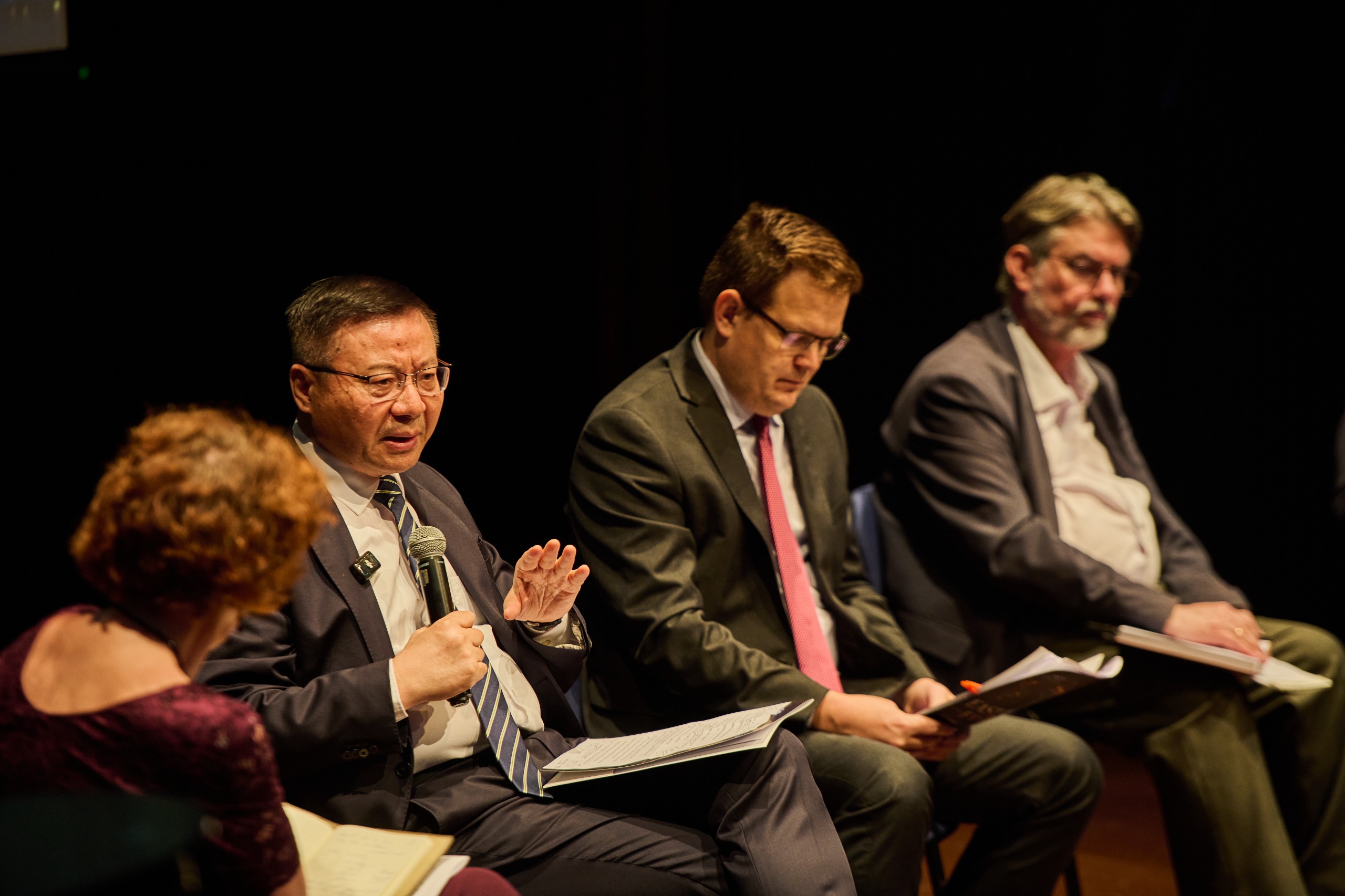
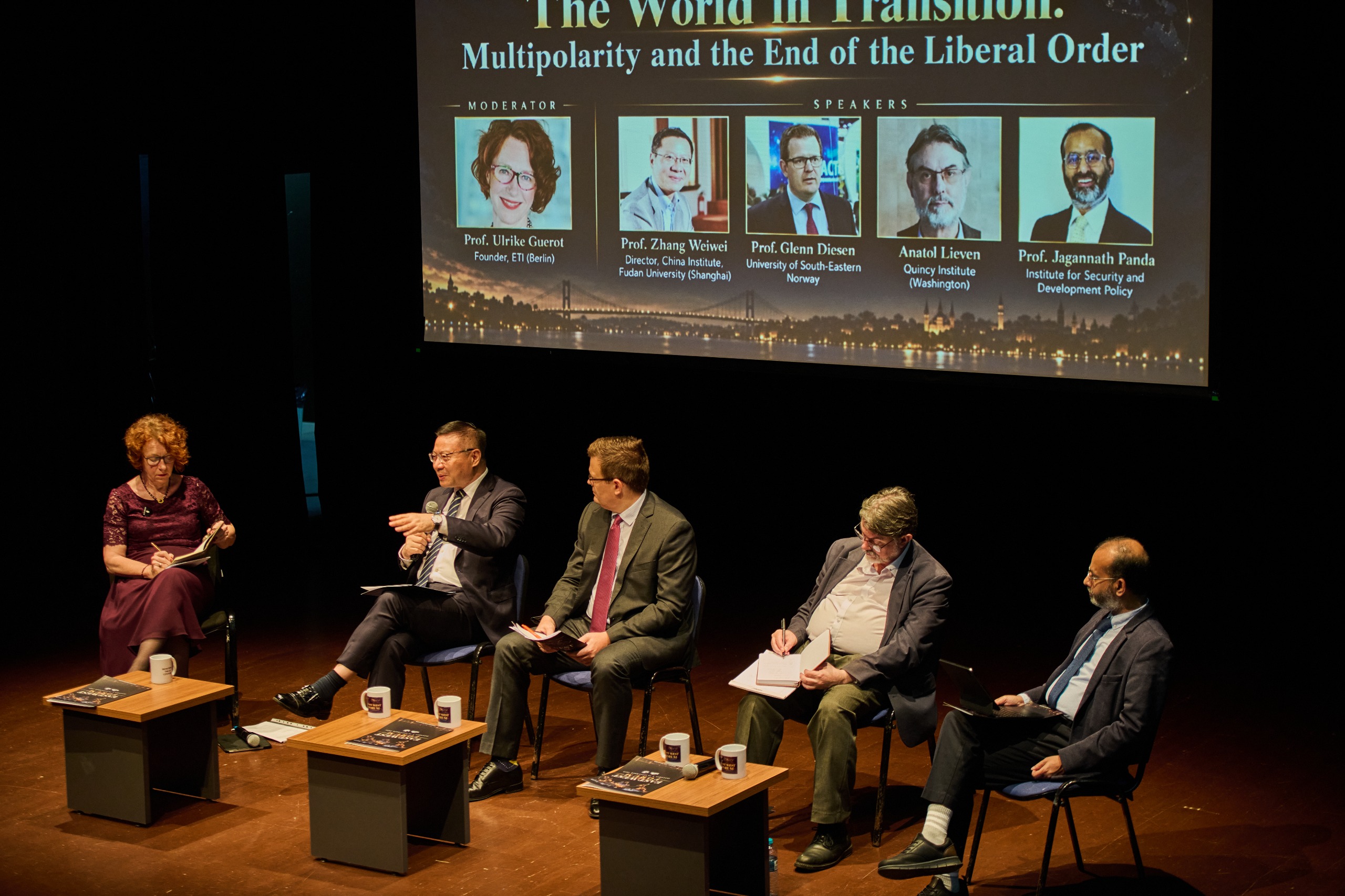
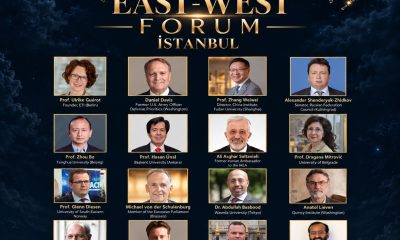
Editor’s note: Prof. Zhang Weiwei, Director of the China Institute at Fudan University and former interpreter for Deng Xiaoping, evaluated the imperatives of a multipolar world and China’s global role as a “civilization-state” at the East-West Forum held in Istanbul on September 25-26. Highlighting China’s distinct framework that integrates ancient history with modern capacity, Prof. Zhang underscored the tangible benefits that meritocracy, public order, and a peace-oriented approach deliver to global stability. In contrast to the Western posture that legitimizes military interventions and polarizes the world, he stated that frameworks such as the Shanghai Cooperation Organisation and ASEAN transform Eurasia into an arena of peace and development. Pointing out that Chinese philosophy sets the threshold for resorting to war at the highest level and centers on forging consensus out of conflict, Zhang noted that maximum restraint is exercised even in border disputes.
Well, I will try to present my view on this whole topic of the world in transition and China as a civilizational state as mentioned in the outline of the program for the conference.
As we all know, I think the world is already multipolar. If you look at the size of the GDP of four BRIC members, it’s already larger than G7; yet the multipolar world order is not yet born.
So that’s something we try to produce and shape, including our foreign East-West Forum here.
Well, here comes to the role of China. China is indeed a unique country and can make important contribution, perhaps already made very important contribution to a new global order, more fair and more just order.
How to define a civilizational state? It is an amalgam of the world’s longest continuous civilization with a super large modern state. I try to summarize this into four supers: Super large population, super large territory, super long history and super rich cultures. All these four supers, each of which is a blend of old and new, Asian and modern.
For instance, if you talk about the large population; yes, China has always been a populous country since ancient times, yet this population is very well educated.
Every year we produce more scientists and engineers than the Western countries combined. Same with this vast territory: It’s our inheritance from history, yet it’s also very modernized, connected with first-rate infrastructure, the best railway system, best highway system and best digital infrastructure. 5G into every village, no exception. Super long history, it’s also a combination of old and new.
If you look at China’s political system, if the Western system is about election, the Chinese system is about selection plus election: selection from the Chinese tradition and election we adapt from the Western tradition.
Same with super rich culture. If we talk about political culture, the most important priority in China is people’s livelihood. First, it’s very much Confucianism: Whatever you do, the state has to deliver to improve people’s livelihood, both in material terms and non-material terms.
An inaccurate analogy—very inaccurate, just for reference—would be something like dozens of Islamic nations or countries today have amalgamated into one nation with a centralized government, with a very modern economy and speaking the same language. Yes, it’s also a highly developed economy, but it’s one nation. Or another inaccurate analogy, which is not politically correct: Like the Roman Empire has continued to this day with all these different countries uniting into one and speaking Latin.
Yet in the case of China, with a very strong philosophical tradition, we treasure peace, peace above all. Most important thing; highly modern, but also from Asian tradition. This will be a kind of nation-state, a civilizational state, as I try to explain to you.
And now we look at the international order; let’s say we try to build a kind of new order much better than the one we have, from unipolarity to multipolarity. First, let’s look at the ideas or philosophies: In what way does China differ from the United States? Vastly different. For instance, if you look at the Chinese political philosophy, it’s never about “divide and rule”, it’s always about “unite and prosper”. Within China we practice this way, outside China in the world we do the same.
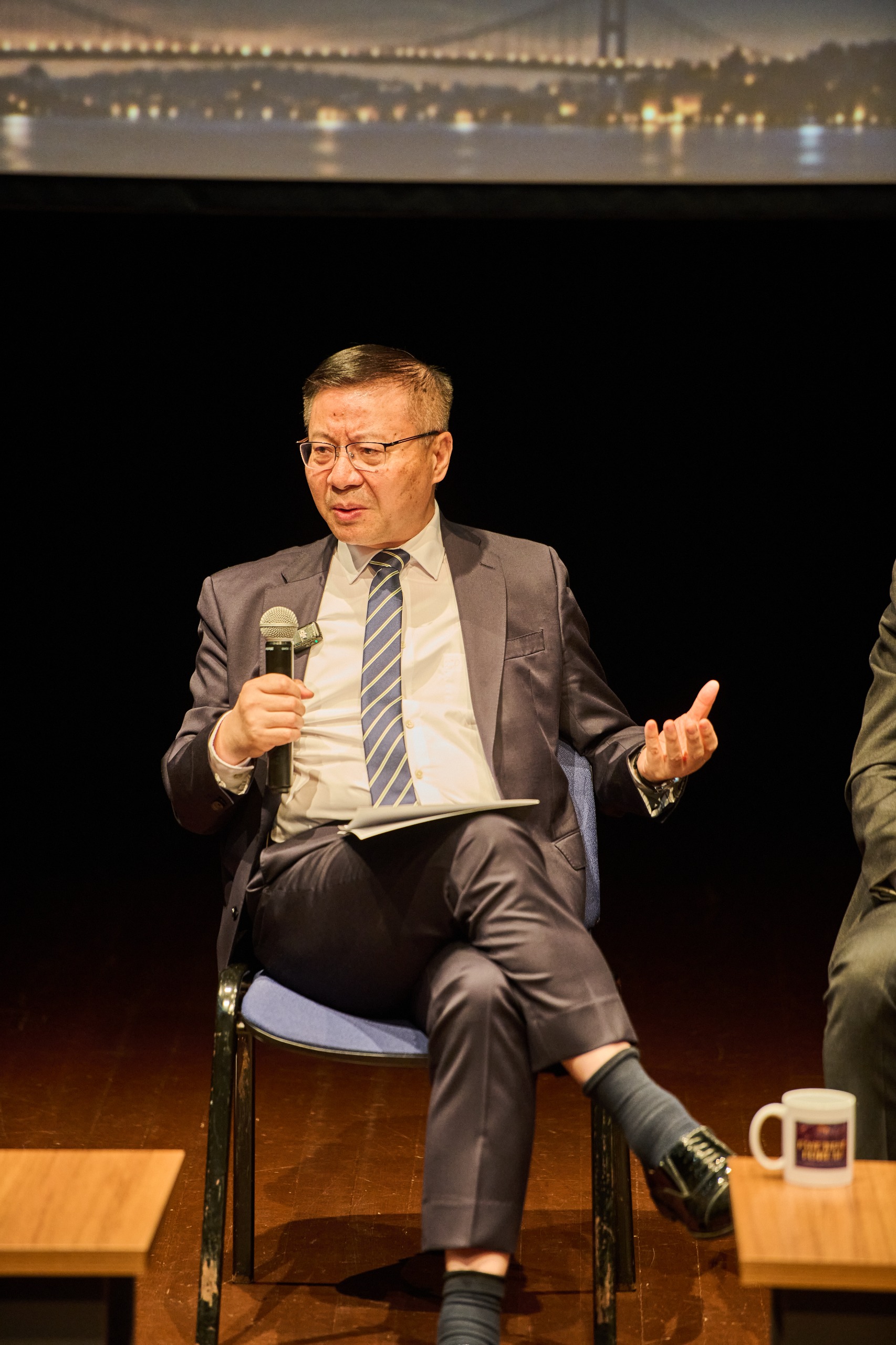
“The Chinese case is friend or potential friend”
And in terms of strategic policies for the United States or the Western philosophy in general, it’s “friend or foe”. You’re either a friend or enemy. But the Chinese case is “friend or potential friend”. In other words, you have a much longer view, longer vision as a civilizational state.
And then it’s very different from the trigger-happy United States. If you look at China’s history, China has the highest threshold for the use of force among the major powers. Of course, China has very clear red lines; this is very important. But also this is strongly influenced by Sun Tzu’s famous book The Art of War: The idea is you try to subdue your opponents or enemy without actual fighting.
So you have this philosophy, and then you have this philosophy of friend and potential friend; you can have already avoided so many wars, you can prevent a lot of wars from happening.
This is the way China handles this philosophical part. Of course, the most important thing is humanity: Humanity has won, rather than “on the table or on the menu”. This philosophy China rejects categorically; it’s very much against Chinese conscience.
Now when we talk about a shared future for mankind or one humanity, some people say it’s idealistic: How do you put this into practice, how to make this into something tangible? I was asked by an American scholar in Xiangshan Forum about this question: Why did Chinese leader Xi Jinping present this whole Global Governance Initiative at the Shanghai Cooperation Organization rather than the United Nations, a more serious forum?
I said it’s very, very simple to understand: Because the Shanghai Cooperation Organization is the embodiment of these four initiatives Xi Jinping has raised—on development, on security, on civilization, on governance. Exactly four pillars of Shanghai Cooperation; that’s my summary.
Now the Shanghai Cooperation Organization has become the world’s largest regional cooperation organization in terms of population, in terms of landmass and in terms of the results. It’s already larger in GDP than the G7.
Same with ASEAN; if you look at China’s partnership with ASEAN, it’s based on the same four pillars. As a result, China now contributes every year 30% to world economic growth; ASEAN produces roughly 7 to 8%.
With this kind of China-ASEAN cooperation, we contribute to close to 40% of global economic growth. Then you look at this whole Eurasian landmass, from Russia to Central Asia, to China, to Southeast Asia: This huge landmass has been a land of peace and development for the past five decades. It’s so important.
In many ways I say, if China had adopted the Western so-called liberal democracy system, maybe China had already produced a Donald Trump and the Third World War had already occurred. With the Chinese political system, as Professor Jeffrey Sachs said, you have the only adult in the room who can make rational decisions about the world, about China, about global affairs.
And finally, just to make a small comment on this practice: If you look at these regional organizations and what they have achieved as a result, both Central Asia and Southeast Asia were described as a “geopolitical curse” for many decades for understandable reasons—complicated geography, complicated religious traditions, complicated different political systems.
Yet today we can see with very high pride that they are geopolitical bonuses. Central Asia used to be landlocked countries; now they are land-linked. With this kind of positive note, China as a civilizational state has produced both ideas and practices for a possibly better world to come.
If you look at the opinion surveys done by reputable opinion survey agencies, what value Chinese treasure most is public order. That’s a vast country the size of 100 European countries put together; and so China hates the word “anarchic”.
So when we talk about the multipolar world order, if you look at the official language, it’s called a more just, orderly public order.
With China, ASEAN, and the Shanghai Cooperation Organization, it’s already possible to foresee—from a Chinese perspective—a future more benign, more just, and fairer international order to come.
I do want to discuss a bit about this China-Philippines case: If China were behaving like the United States, with China’s military power today we could dismantle the Philippine military force within 24 hours. But we did not do that; in whatever problems, we only use, at maximum, water cannons.
Even in our border clash with India, it’s not at all what other major powers would do; it was only fist fighting between soldiers, and then issues are being resolved gradually. At this moment the China-India leaders met each other and relations became more normalized. I hope the world will do better.
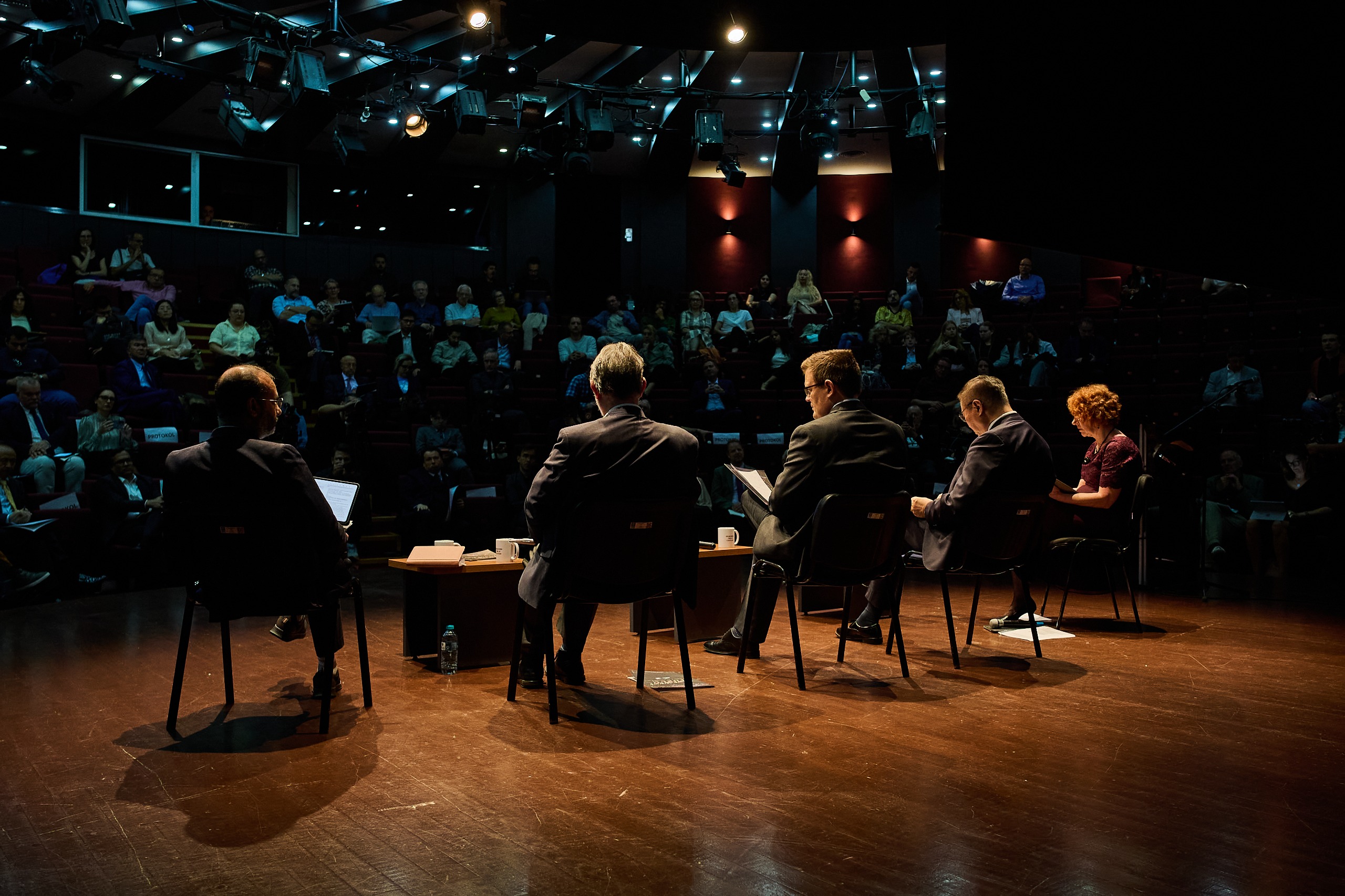
“In the Western so-called universal values, they never mention peace”
And now I want to make one or two points here. One is concerning liberal values.
If you look at Xi Jinping’s Global Governance Initiative, he mentioned what is called the common values—six of them: Peace, development, fairness, justice, democracy, and freedom. What’s most important is that peace is top on the list.
Because when you mention Western so-called universal values, they talk about human rights and democracy, but they never mention peace. In other words, the West reserves the right to use military force on Global South countries.
This is totally wrong; we don’t accept this. Peace is at the top of the list of these common values, and I think it is appreciated by most countries and most peoples in the world. Peace is number one.
And second, each civilization has its own values. But now we have the United Nations Charter, which is the broadest common denominator we can share.
When China says we should reform this current international order, we mean we should return to the United Nations Charter, which is the post-World War II arrangement that most countries accept.
With this “rules-based order”, it’s not the United Nations Charter; it’s the so-called liberal values dictated by the United States and the European countries—lieutenants of the United States—imposed on others.
Look at the Arab Spring: Millions died, hundreds of millions lost their homes and became homeless, and yet they don’t feel guilty. “We can do whatever we want because of this liberal order we promote.” We reject that categorically.
I was with Russian friends talking about the origin of the Ukrainian crisis; of course we think there is a problem with NATO’s eastward expansion. Five rounds of expansion.
I said: If you had stopped after four rounds, this crisis could have been avoided. As far as China is concerned, I don’t know why Russia tolerated five rounds of expansion; China would not even allow a single expansion into Asia.






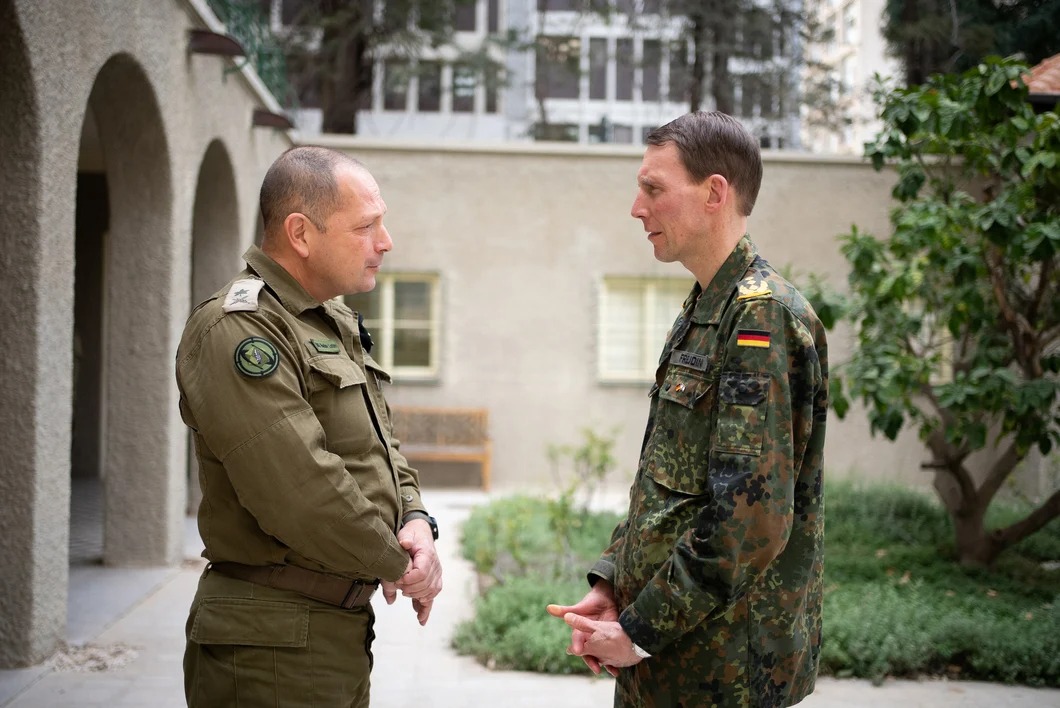
Germany is systematically expanding its cooperation with Israel in the military, police, and cybersecurity spheres.
Agreements formally signed at the beginning of this year are currently being implemented. The “Cyber Pact and Security Pact”, concluded in January, provides for closer cooperation between the respective police forces as well as the establishment of a “Cyberdome” in Germany.
Berlin hopes that security cooperation with Israel will deliver “practice-based know-how from a country with a high frequency of military operations”.
Another agreement signed in February enables a major intensification of military cooperation, with the objective of making the Bundeswehr (German Armed Forces) practically “war-ready”.
The stated aim is for Israeli ground forces to transfer capabilities and experience gained in Israel’s past and present wars to the German military.
Through its “unrivalled expertise in ground operations”, the Israel Defense Forces (IDF) is assisting the Bundeswehr in “adapting to an increasingly volatile global environment”.
“The most important partner outside NATO”
According to an analysis published by German Foreign Policy, German-Israeli military cooperation, much like collaboration in arms production, dates back to the late 1950s.
During that period, West German military personnel began training Israeli soldiers in the operation of German weapon systems delivered under a secret agreement.
Sporadic records document joint military training involving German mountain infantry from the 1980s onwards.
From 1998 onwards, exchange programmes for officer candidates were introduced alongside “regular meetings at the general staff level”.
Official German government data indicates that between 1984 and 2014, “up to 493” Israeli military personnel, including officers, took part in training and other programmes conducted by the Bundeswehr.
In return, 254 German soldiers were sent to Israel for military training programmes and exercises.
It remains uncertain whether these figures reflect the full extent of the cooperation, as military collaboration with Israel is generally kept secret, as noted in a Federal Government response to a parliamentary inquiry in the Bundestag.
Furthermore, German-Israeli cooperation is by no means limited to ground forces. Since 2017, the German Air Force has participated in multiple bilateral exchange programmes with the Israeli Air Force within the framework of the “Blue Flag” exercises.
Speaking on behalf of his service branch in 2022, the Chief of the German Air Force, Ingo Gerhartz, stated that the IDF was the military’s “most important partner outside NATO”.
IDF prepared the German military for operations
The intensification of German-Israeli military cooperation has been pursued systematically since the 1990s.
The growing proximity of bilateral ties was confirmed in 2002 by retired Lieutenant General Helmut Willmann.
Serving as Chief of the German Army from 1996 to 2001, Willmann was tasked, among other duties, with institutionalising links between his units and IDF ground forces.
Willmann argued that because the Bundeswehr was undergoing a transformation from a “peacetime military into an operationally ready force”, the German side “naturally” sought to establish “contact with armed forces that have more experience than us in this field”.
In his assessment, it was obvious to everyone that “cooperation with the Israeli military naturally provided us with professional advantages”.
In 2014, for example, a training visit to Israel by German military personnel was announced—though it took place with a delay in 2015—under which soldiers were to study urban and tunnel warfare.
The Bundeswehr underscored the armed forces’ intense interest in the “specific operational experience of the Israeli armed forces”.
Commenting on increasingly close military relations with Israel in October 2021, Colonel Juergen Haffner, the Defence Attache at the German Embassy in Tel Aviv, confirmed that “the Bundeswehr has an incredibly close interest in the IDF, and vice versa”, adding that the frequency of reciprocal visits was “incredibly high”.
War preparations continue in Europe
Today, as the Bundeswehr faces the requirement to become “war-ready” without delay, cooperation between the German armed forces and the battle-tested IDF is being further expanded.
On 20 February—eight months after Israel’s initial war of aggression against Iran and several days prior to a second wave of US-Israeli attacks on the country—Lieutenant General Christian Freuding, the current Chief of the German Army, and Major General Nadav Lotan, the Commander of the Israeli Ground Forces, signed a cooperation agreement designed to link the ground forces of both nations closely across four domains.
The plans encompass joint “training and exercises”, “joint capability development”, the “sharing of operational principles”, and “exchange programmes, especially for junior officers and officer candidates”.
Following the signing of the agreement, Freuding was reportedly briefed by Lotan on “tactical lessons learned from the current war”. Which Israeli war this referred to remained unspecified.
The report noted that, through the IDF’s “unrivalled expertise in ground operations”, it is helping the Bundeswehr “adapt to an increasingly volatile global environment”. Their cooperation was described as forming a “highly effective alliance”.
Cyber pact and security pact advance
Beyond armaments and military matters, Germany and Israel are also deepening cooperation between their law-enforcement and cybersecurity agencies.
On 11 January, German Interior Minister Alexander Dobrindt and Israeli Prime Minister Benjamin Netanyahu signed a “Cyber Pact and Security Pact” to this end.
One dimension of this agreement on “digital defence” involves measures to intensify cooperation between the police forces of both countries, which is already considered very close.
The accord also aims to advance improvements in “unmanned aerial vehicle detection and defence”, realise the “establishment of a joint artificial intelligence and cyber innovation centre”, and support “information exchange and networking regarding a Cyberdome”.
According to the Interior Ministry, this Cyberdome is a “semi-automated system for the detection, analysis, and response to cyberattacks”.
Whether “response” entails retaliatory cyberattacks against an alleged adversary remains unclear.
Overall, according to a government statement, Interior Minister Dobrindt hopes that “the exchange of information with Israel will provide practice-based know-how from a country with a high frequency of operations”.
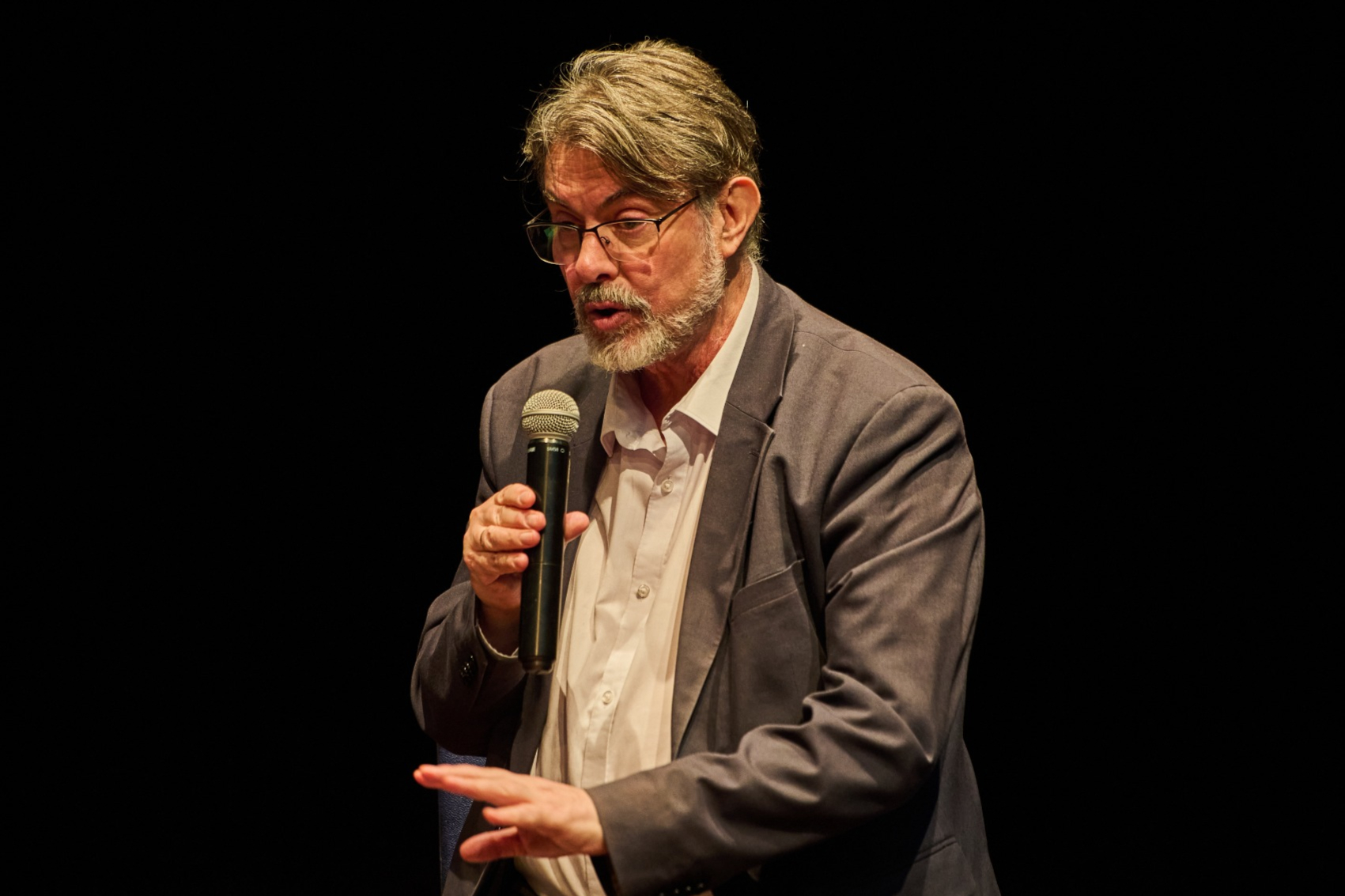
Editor’s note: Anatol Lieven, Eurasian Program Director of the Washington-based think tank Quincy Institute, made striking assessments regarding the future of the international system at the East-West Forum held in Istanbul on September 26-27. Stating that Western elites believe in the illusions they have built themselves, Lieven expressed that the “rules-based order” discourse is actually just a cover masking American hegemony. Reminding that the Cold War years were not a period of stability for the peoples of the global south, but rather experienced as a nightmare, the experienced expert emphasized that the policies pursued largely by Washington lie behind the conflicts in the Middle East and Ukraine.
***
As a Brit, I have to say I would have no objection to such a merger if it were run by King George and his descendants. The problem is that unfortunately the balance has shifted a bit since those days. Though I have to say, if you were to listen to the British establishment, you wouldn’t always realize that we live in many ways—in America above all, but in Europe too—in a weird world of illusions now. And one of the most dangerous things is that a great many people believe their own illusions. And that brings me to the infamous phrase “rules-based order,” which of course is on the one hand simply a euphemism for American global hegemony, with the Europeans as American satraps or lieutenants.
It is nonetheless a myth in which, unfortunately, a large part of the Western establishment genuinely believes; they have convinced themselves that this is true. One of the key ways in which they underpin this belief—and belief in its necessity—is to claim, and no doubt to believe, that without this American-run rules-based order (with rules made by America and broken by America whenever it sees an interest in doing so), one of two things would happen. First, that without a global ruler, the world would fall into chaos and new conflicts would break out everywhere if America were not there to suppress or mediate them. The second belief is that if the world is not ruled by the United States—once again, with Europe acting as its lieutenant—it will be ruled by China in the same way America has tried to rule the world.
If China did simply imitate America’s hegemonic policies, that would not be an advantage for anybody, including perhaps most of all the Chinese themselves. Fortunately, I see no signs that that is going to happen. Behind this also is an almost totally false picture of the supposed stability and peace preserved by the United States when it was the non-communist pole of a partially bipolar world with the Soviet Union, supposedly in what Americans—and somewhat bizarrely, Europeans too—called the “free world.” This preserved peace and stability to a considerable degree in Western Europe, but it would come as a very considerable surprise to the Koreans, the Vietnamese, the Algerians, the Arab world, Angolans, many South Americans, and so on. From their point of view, the Cold War was not a period of stability and peace; it was in many ways a nightmare. And many areas tormented by Cold War conflicts are in fact today much more peaceful and stable. Where there are really serious conflicts going on, above all in the Middle East, these are very largely the result of the policies of the United States and its local allies—and I would say that of the Ukraine War as well.
I won’t speak much about China because we have much better people to talk about that. It does seem to me undoubtedly clear that China is aiming at global economic predominance, as indeed Britain did before (though also through military means). There are no signs to me as yet that China is aiming at the kind of militarized global primacy that America has sought. And as we just heard, that is a very good thing, because if China had produced somebody like Donald Trump—or I would add, Hillary Clinton or George Bush II—the world would indeed probably have been destroyed by now. But this does not seem to be the case. Indeed, there is a case, I would say, for China playing a much more active role politically—not militarily, of course, but politically—in certain parts of the world.
Above all, I am not entirely happy with the term “multipolarity,” because if you go back to the notion of bipolarity or unipolarity, it suggests, perhaps unconsciously, that other countries have to attach themselves closely to one or other pole and have no alternative. That is still very much true in certain parts of the world, but it doesn’t seem to me that this is what most countries are aiming at, or what will be possible in the future for poles to enforce. Having spent a great deal of time in the countries of the former Soviet Union—I was in Uzbekistan in the summer—I have often heard them express their policies not in terms of multipolarity, but of a multi-vector policy: trying to maintain decent working relations with all other states, including their own neighbors.
In a unipolar, bipolar, or rigid multipolar world, subordinate countries often prioritize relations with the hegemon over their closest neighbors, sometimes even conducting regional relations through the hegemon rather than directly. That is ceasing to be the case. Countries are increasingly aiming to diversify their relations and avoid the American approach—the constant insistence that “you are with us or against us,” that you must be completely with America, and if you’re not, you are an enemy. This has been carried to grotesque extents by Donald Trump, but he is only exaggerating something we heard very often before from American leaders.
When it comes to an anarchic world—that is, a world without a ruler—it is a staple of anthropology that an anarchic system does not have to be a chaotic system. Anarchic systems can also generate their own mechanisms and traditions to resolve or minimize conflicts and pursue common aims. That is what we must hope for, not only to minimize the risk of conflict, but also because there are huge challenges that America, despite claiming to be the global hegemon for the good of humanity, has totally failed to address, and in many ways acted as an actively malignant actor—above all regarding climate change, artificial intelligence, and the protection of secure international trade.
Our anarchic system must hope for arrangements that will help us overcome this. But even if we fail, I doubt that many people around the world will look back to American primacy with much nostalgia. Thank you.
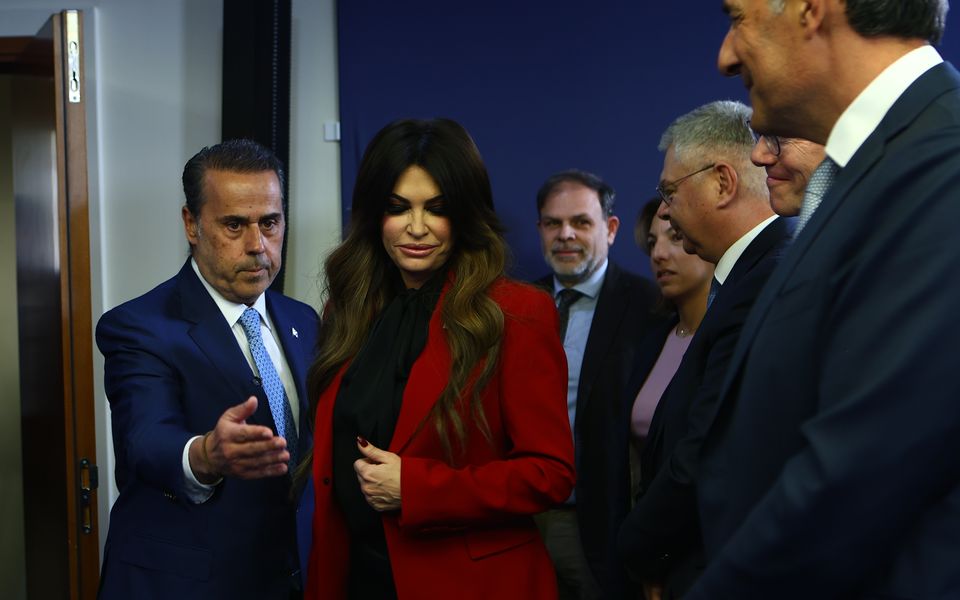
Opposition parties in Greece have demanded that the government respond to allegations raised concerning US Ambassador Kimberly Guilfoyle.
According to a report in The Wall Street Journal, the US ambassador to Greece, Guilfoyle, implied that her country played a role in the overthrow of the Romanian government and that the US could do the same in Greece.
The WSJ alleges that US Ambassador Kimberly Guilfoyle made these remarks in March during a dinner attended by Greek and American officials.
According to this account, Guilfoyle, referring to the imminent collapse of the Romanian centre-right government led by Ilie Bolojan, told Greek Energy Minister Stavros Papastavrou that the US played a role in this overthrow process and stated: “We can do this to any country we want. We can do the same here.”
According to the newspaper’s sources, Papastavrou said that the US could not change the democratically elected Greek government.
Guilfoyle’s lawyer, however, disputed the account of this exchange published in the WSJ.
The opposition PASOK party stated in a press release:
“The government, and in particular the Ministries of Foreign Affairs and Environment and Energy, are the only bodies competent to provide the necessary clarifications and evaluate the veracity of the published report. Greece is an independent and sovereign democracy and is obliged to act as such in every instance and before all parties without exception.”
The Greek Left Alliance (ELAS) stated that the alleged remarks were “unprecedented and unacceptable”, adding:
“The government neither confirms nor denies the incident; it maintains its silence. For this reason, we demand that the Mitsotakis government immediately clarify to the Greek people whether the incident in question actually took place; if it did, why it has been concealed since March; and whether the government responded to it: and how it responded.”
SYRIZA stated that the emergent allegations are “extremely serious and the government cannot remain silent…” The party said: “If true, we are faced not with a simple diplomatic incident, but with an insult to the country’s system of governance.”
SYRIZA also demanded that the government explain why it insists on supporting the Vertical Gas Corridor and “Greece becoming more dependent on American LNG.”
The Communist Party of Greece (KKE) stated that the government “bears a heavy responsibility”, particularly in light of the visit US Secretary of State Rubio is scheduled to make to Greece in a few days, which aims to further advance US plans in the region and renew the Greece-US strategic agreement.
Guilfoyle had played a significant role in promoting the Vertical Gas Corridor, a regional infrastructure project designed to transport gas from Greece via Bulgaria and Romania to Central and Eastern Europe as an alternative to Russian gas.
Greek government spokesman Pavlos Marinakis stated that this issue “was never raised” and that such conduct would not be tolerated.
Marinakis also described the relationship between Greece and the US as strategic, stressing that the partnership is based on mutual respect and shared values.
The WSJ report also examines Guilfoyle’s activities concerning American liquefied natural gas (LNG).
Guilfoyle has reportedly promoted US energy sales across South-East Europe.
A separate section of the report addresses businessman Hristos Marafatsos. Marafatsos is said to have accompanied Guilfoyle to several official meetings on behalf of the Greek construction company Aktor.
According to the report, Aktor paid Marafatsos $160,000 for lobbying activities. Marafatsos’s involvement in this process has raised suspicions regarding the mixing of private interests with diplomatic meetings.

Istanbul’s East-West Forum: A conversation the world can no longer avoid

A new world in the East, old dogmas in the West

EU wrestles with domestic content rules for ‘Made in Europe’ push

German industry lobby urges priority for growth and competitiveness

Key European allies excluded from US-led NATO meeting in Poland
-

 Europe3 days ago
European unions urge governments to scrap all Palantir deals
-
 Diplomacy3 days ago
East-West Forum in Istanbul highlights irreversible shift to multipolarity
-

 Europe6 days ago
Emmanuel Todd says West faces collapse amid Ukraine and Iran crises
-
 Europe1 week ago
European intelligence chiefs divide over risk of Russian attack
-
 America1 week ago
Republican support for Trump’s war with Iran drops sharply in polls
-
 Diplomacy1 week ago
East-West Forum in Istanbul to debate multipolarity and global order
-
 Middle East1 week ago
Sharaa says 7 October must not shape Israel policy on Syria
-
 Diplomacy1 week ago
Trump meets regional leaders as tensions over Iran and Gaza mount
