
Middle East
Who is Thomas Barrack, Trump’s diplomatic point man in Ankara and Damascus?

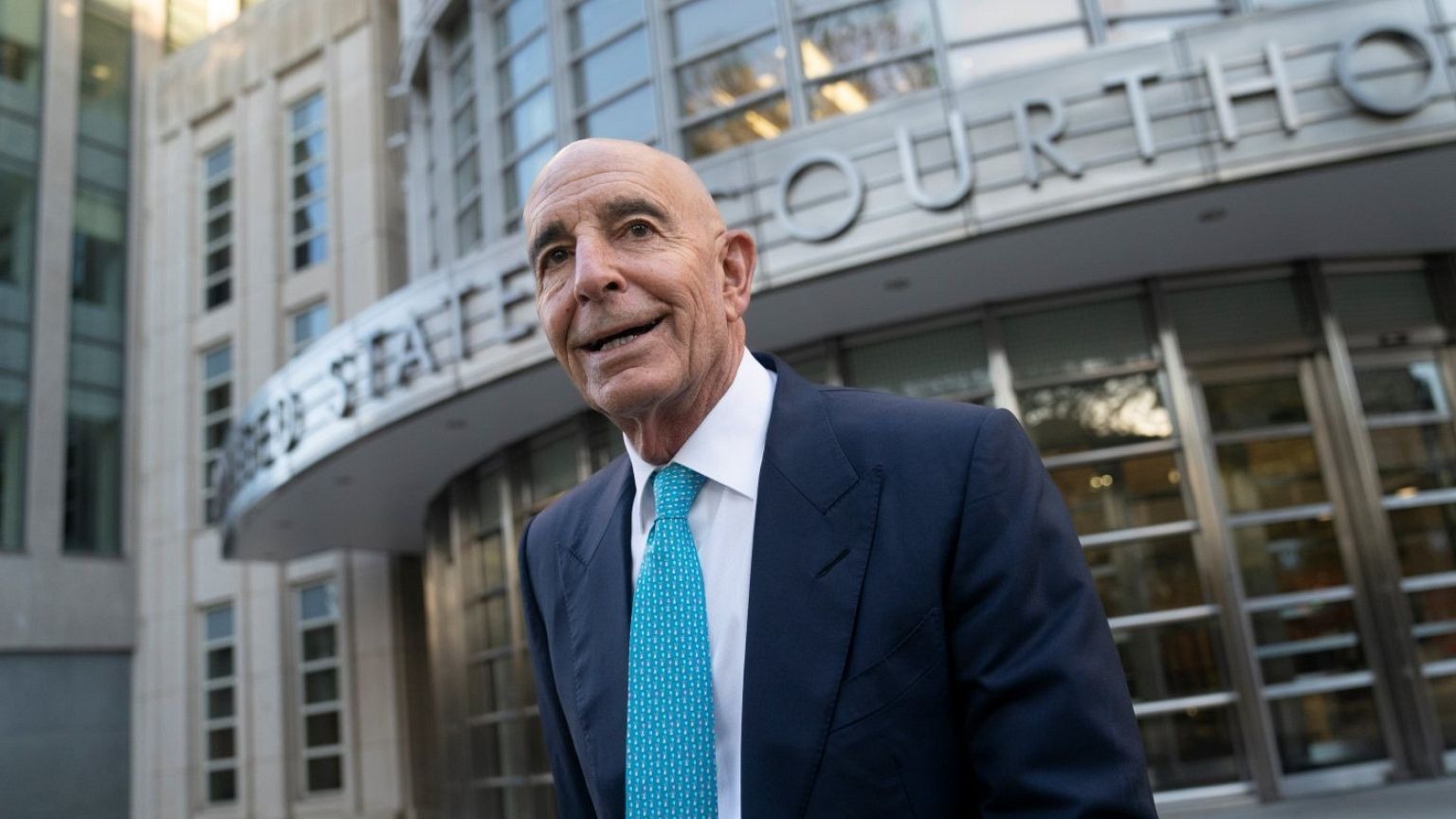
Billionaire investor Thomas J. Barrack, one of US President Donald Trump’s most trusted figures, is conducting an unconventional diplomatic mission in the Middle East with his dual role as the new US Ambassador to Ankara and Special Envoy for Syria.
Combining over forty years of experience in finance, law, and government with his deep commercial ties in the Middle East and a “personal friendship” with President Trump, Barrack has adopted a results-oriented approach he calls “event diplomacy” to reshape America’s policy in the region.
Barrack was nominated by President Trump as Ambassador to the Republic of Türkiye in March 2025, received Senate confirmation in April 2025, and officially began his duties on May 14, 2025. Shortly after this appointment, on May 23, 2025, he was also appointed as the US Special Envoy for Syria while continuing his ambassadorial role in Ankara.
A new era in Ankara: Is the F-35 and S-400 crisis being resolved?
During his tenure in Ankara, Barrack has frequently emphasized that Türkiye is a key regional actor and NATO ally that he believes has not always received the recognition it deserves. He stated that he relies on the strong personal relationship between President Trump and President Recep Tayyip Erdoğan to restore trust between the two countries.
Recounting a moment at a NATO summit where Erdoğan stood by Trump, Barrack expressed that, contrary to his public image, Trump is “actually sweet, gentle, and kind,” and that the two leaders “genuinely like each other.”
One of his most concrete diplomatic initiatives has been the commitment to resolve the crisis that began with Ankara’s acquisition of the Russian S-400 air defense system, which led to Türkiye’s removal from the F-35 program and the imposition of CAATSA sanctions. Barrack has publicly stated his belief that this dispute can be resolved by the end of 2025.
He said that Trump and Erdoğan would instruct their diplomats to find a solution and that the US Congress would also support a “smart solution.”
“All these issues that have been debated for five years; F-35s, F-16s, S-400s, sanctions, tariffs… Enough is enough,” Barrack said, calling on the parties to set these matters aside.
‘Event diplomacy’ in Damascus: Sanctions lifted, $7 billion deal signed
Barrack’s appointment as Special Envoy for Syria signaled a significant shift in Washington’s Syria policy following the fall of the Assad regime in December 2024. The Trump administration’s new policy is moving away from past “nation-building” efforts, focusing instead on lifting sanctions, economic reconstruction, and ensuring stability.
Barrack describes this approach as “event diplomacy” rather than “process diplomacy,” stating that priority is given to “actions and results.”
The first step of this policy was taken with President Trump’s decision on May 14 to “tear up the sanctions against Syria.” Immediately afterward, on May 23, the Treasury Department issued a general license lifting comprehensive sanctions against Syria and granted a 180-day waiver for sanctions under the Caesar Act.
To manage this process, Barrack met with Syria’s interim Head of State, Ahmed al-Sharaa, in Istanbul on May 24, and in Damascus on May 29 and July 9. As a concrete result of these meetings, a $7 billion energy deal was signed on May 29 between Syria and a consortium of Qatari, US, and Turkish companies.
Simultaneously, as a symbol of renewed diplomatic relations, the US Embassy residence in Damascus was reopened.
Tough topics on the table: SDF integration and Hezbollah’s disarmament
Despite progress on the economic front, significant challenges remain on issues such as the integration of military forces. Barrack is actively involved in negotiations for the integration of the Kurdish-led Syrian Democratic Forces (SDF) into the new Syrian army. However, the main point of contention is whether the SDF will remain a unified entity within the new army or if its members will be integrated individually.
Barrack acknowledged this is a “major problem,” stating that progress is being made in “baby steps” due to the necessity of building trust between the parties.
Barrack’s diplomatic efforts have also extended to Lebanon. He visited Beirut this week to receive the Lebanese government’s response to a US proposal aimed at the disarmament of Hezbollah and other armed groups. Although Barrack said he was “incredibly pleased” with the seven-page response, its details were not made public. The US proposal reportedly links the disarmament of Hezbollah to economic reforms for Lebanon and an end to Israel’s military operations in the country.
Barrack reiterated the goal of “one nation, one people, one army” for Lebanon, arguing that President Trump “does not have the patience” to continue negotiations without concrete progress.
Portrait of a real estate tycoon of Lebanese descent
Born in California on April 28, 1947, Thomas Joseph Barrack Jr. is the grandson of a Catholic family that emigrated from Zahle, Lebanon. He frequently references this heritage in his diplomatic engagements. After studying law at the University of Southern California, he began his career as a finance lawyer. In 1972, he was sent to Saudi Arabia, where he established close ties with a Saudi prince. In 1982, he was appointed Deputy Undersecretary of the Interior by President Ronald Reagan.
After his government service, Barrack returned to the finance sector and founded the global private equity firm Colony Capital in 1990, which would later become DigitalBridge. Under his leadership, the company invested over $200 billion in capital worldwide, becoming one of the world’s largest real estate investment firms. Throughout his career, he built an extensive global network of relationships, particularly with investors and governments in the Middle East.
Friendship with Trump and past legal proceedings
Barrack has a close friendship with Donald Trump that spans decades. He served as a senior advisor on Trump’s 2016 presidential campaign and, after the election, chaired the 58th Presidential Inaugural Committee, raising over $100 million in donations.
However, these close ties, particularly his connections with the UAE, also led to legal troubles. In July 2021, he was arrested on charges of acting as an unregistered agent for a foreign government. He was acquitted of all charges in November 2022. Previously, in the final days of Trump’s first term, he had benefited from a presidential pardon related to the 2019 “college admissions scandal.”








Britain has significantly broadened its military export restrictions targeting Israel, suspending or rejecting more than 80 licences for items the IDF could use in Gaza.
This figure is nearly triple the number affected when the policy was first introduced in September 2024.
United Kingdom Minister of State for the Middle East Stephen Doughty said that as part of what he described as a “tighter system” for assessing exports to Israel, more than 50 further export applications have been refused since approximately 30 licences were initially suspended.
Under the initial decision taken in September 2024, 30 of roughly 350 licences were suspended after the British government concluded there was a “clear risk” that certain military exports could be used to commit or facilitate serious violations of international humanitarian law in Gaza.
The affected equipment included components for military aircraft, drones, naval systems, and targeting gear.
Doughty said additional measures adopted this month established what he termed a “double safeguard” mechanism within the approvals process.
Export applications must now be assessed both against existing international humanitarian law criteria and in light of Britain’s position on the legality of Israel’s presence in the Palestinian territories.
“We have so far suspended or refused more than 80 licences,” Doughty said, adding that he had personally examined each licence.
Despite the wider restrictions, British-origin parts entering the international F-35 fighter jet supply chain continue to be largely exempt.
The UK government argues that preventing British-made components from entering the global F-35 pool could undermine the programme as a whole and have serious consequences for the security of the UK and its allies.
Direct exports of F-35 parts intended specifically for Israel remain suspended.
Doughty defended maintaining the supply of components via the international programme, arguing that halting it could have severe ramifications for the broader European and allied security architecture.
Foreign Affairs Committee Chair Emily Thornberry challenged this position, arguing that the issue was political rather than purely legal.
Thornberry suggested adopting an approach similar to the Dutch model, under which components entering the international supply chain could be flagged as “not intended for aircraft bound for Israel”.
The initial suspension was implemented in September 2024 by then Foreign Secretary David Lammy.
Lammy stressed at the time that the measure did not constitute an arms embargo and applied solely to items assessed as usable in military operations in Gaza.
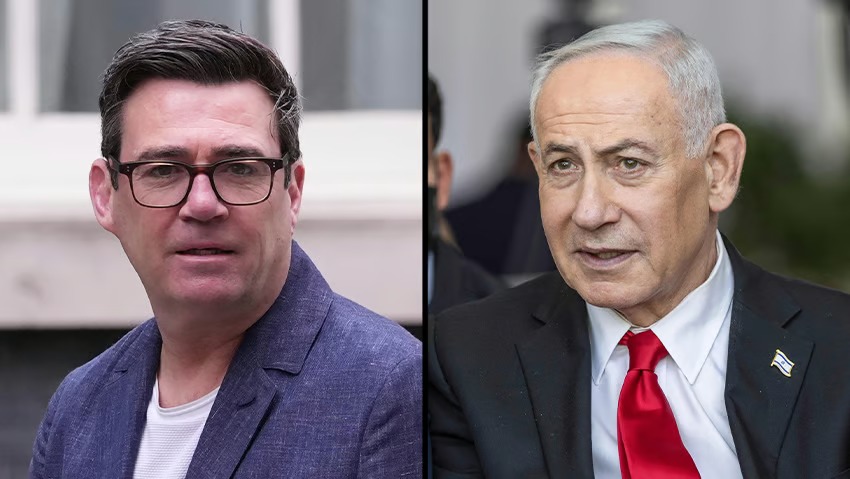
Since then, the policy has been tightened further under Prime Minister Andy Burnham.
The expanded export restrictions follow the Burnham government’s adoption of a more confrontational policy toward the Israeli government.
Foreign Secretary Ed Miliband drew sustained applause at the Labour Party’s annual conference in Liverpool after delivering a sharp critique of the Netanyahu government’s policies and defending the decision to ban trade with Israeli settlements in the West Bank.
Accusing Israel of committing war crimes in Gaza, Miliband stated that the British government heard public outrage over the conflict, telling delegates: “We hear you. You were right.”
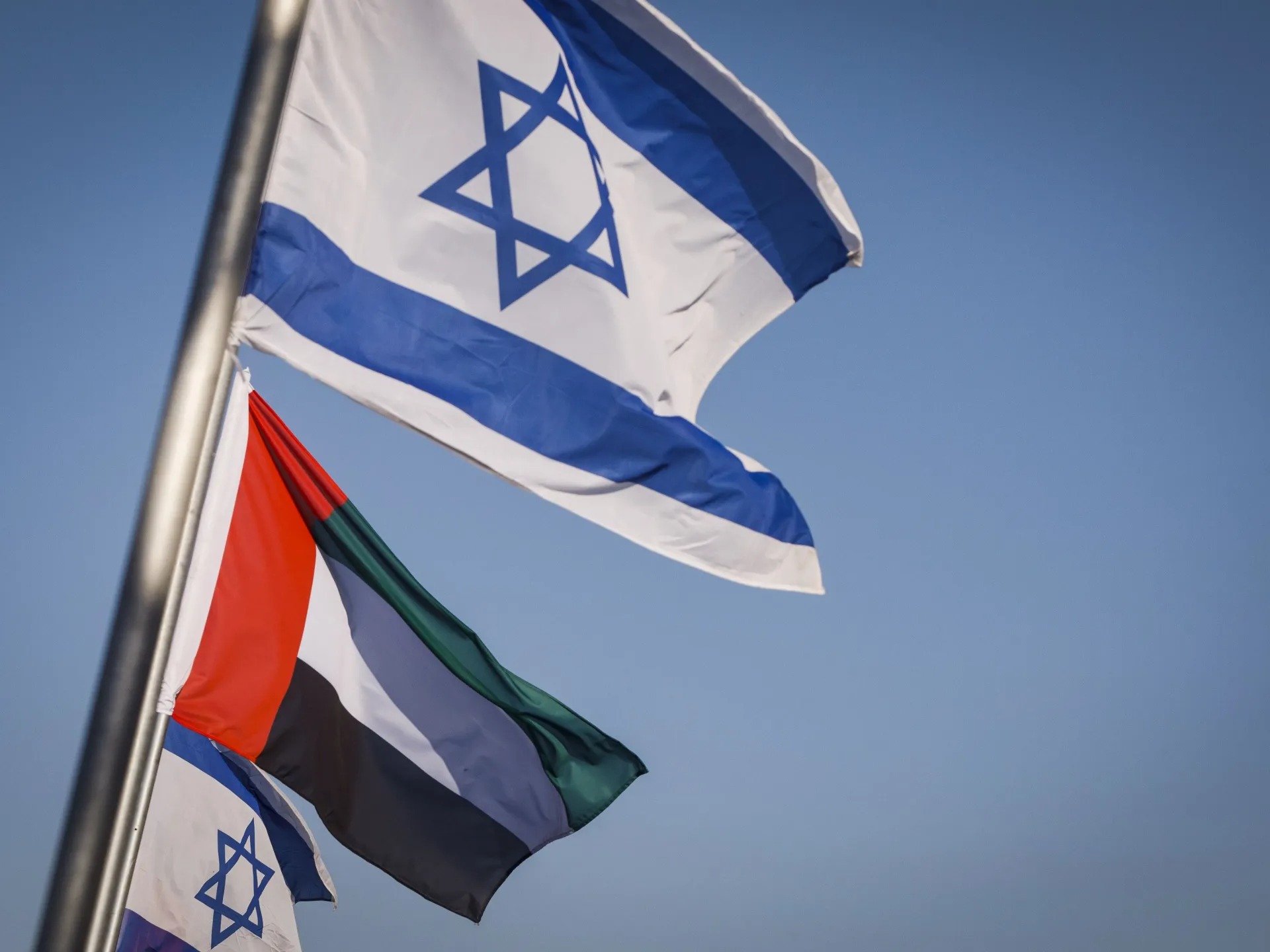
Israeli Prime Minister Benjamin Netanyahu met with representatives of Gulf and Arab nations that lack diplomatic ties with Israel, including Saudi Arabia, during his weekend visit to the United Arab Emirates.
Sources close to the gathering told the Israeli newspaper Yedioth Ahronoth on Monday that representatives from Morocco, Libya, Jordan, and Qatar also took part in the meeting.
Netanyahu made a unannounced visit to Abu Dhabi on Sunday, where he met with the country’s leader, Mohammed bin Zayed Al Nahyan.
According to Israeli media, this marked the first time the United Arab Emirates officially confirmed a visit by Netanyahu.
The meeting was arranged by Mossad Director Roman Goffman “at the request of Saudi Arabia, which asked for Israel’s assistance against Houthi attacks in the Red Sea region,” according to Yedioth Ahronoth.
The discussions addressed Iran and the Houthi militia. The newspaper added that the Arab states heard from Israel that “Israel is prepared to assist countries in the region with air defence systems, just as it aided the UAE during the conflict with Iran.”
Conflict in Yemen intensified in September when Ansarullah militiamen launched a rapid offensive that seized Yemen’s entire Red Sea coastline, including the vital maritime corridor of the Bab el-Mandeb Strait.
The Yemeni resistance also imposed a blockade on Saudi Arabia’s energy exports and staged multiple attacks against the kingdom.
Saudi Arabia reportedly sought military assistance from the US to counter Ansarullah.
Washington declined to attack the Houthis directly, but announced that it would provide intelligence and targeting support.
Reporting on the same visit, The Jerusalem Post said Netanyahu spent six hours in the UAE and that the principal subject of his discussions with MBZ was Iran.
Citing sources familiar with the matter, the newspaper added that the trip came “after Netanyahu exerted heavy pressure on the United Arab Emirates to arrange a meeting ahead of the Israeli elections on 27 October.”
Separately, the Associated Press, citing a person with direct knowledge of the meeting, reported that Netanyahu’s visit to the UAE was arranged in part to ask MBZ to deny reports that he had warned the Israeli prime minister of an impending Hamas threat prior to 7 October 2023.
According to Israeli media, Netanyahu’s office denied the AP report, issuing the following statement:
“Fake news. The visit focused solely on strengthening ties between the two countries and on regional issues.”
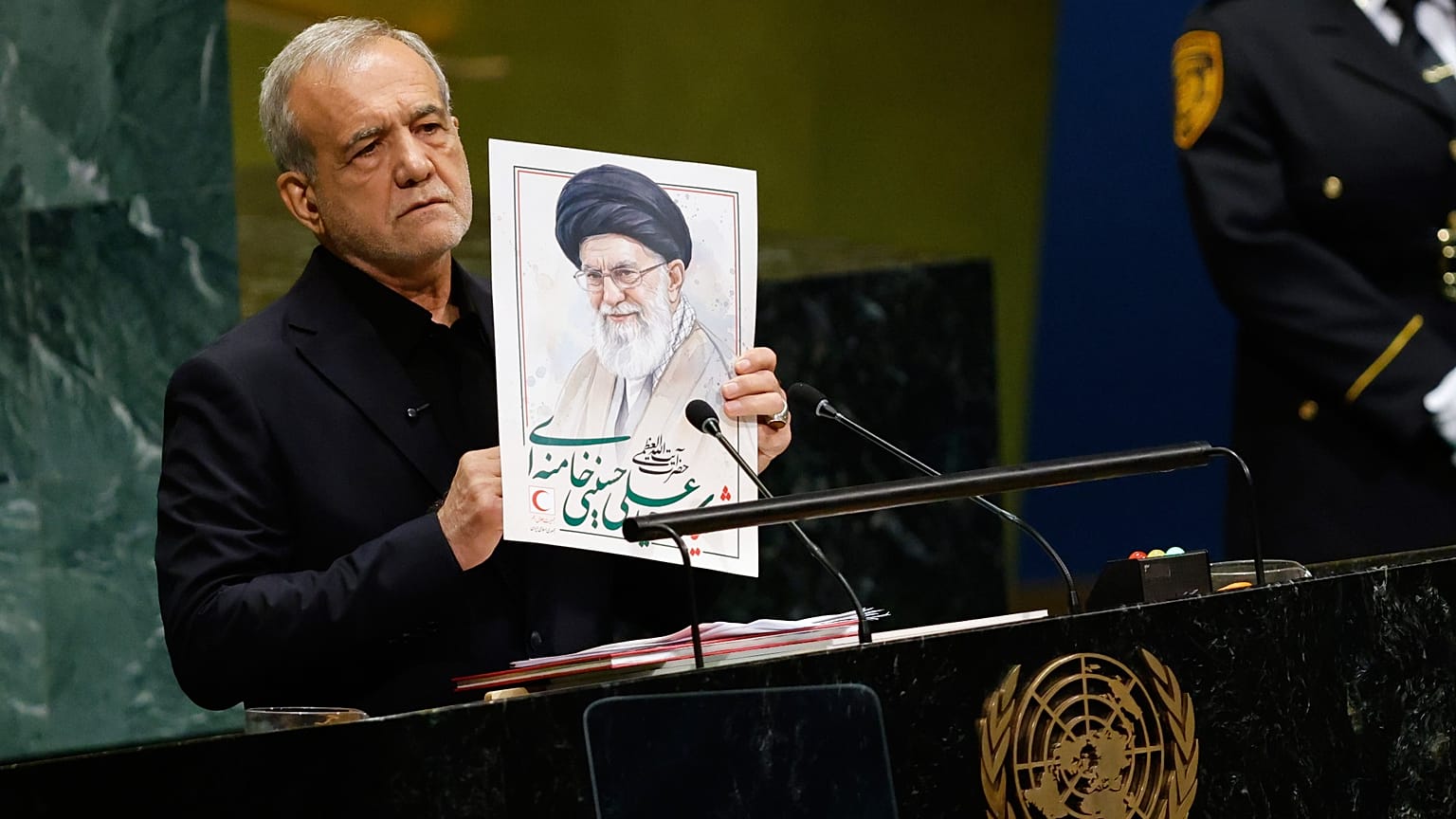
Iranian President Masoud Pezeshkian accused Western governments of applying double standards regarding nuclear weapons and regional security during his address to the United Nations General Assembly.
Stating that silence prevails over Israel’s nuclear arsenal, Pezeshkian said the Tehran administration is subjected to continuous inspections and sanctions.
Emphasising that the atomic bomb and other weapons of mass destruction in the region are under Israeli control, Pezeshkian said: “I repeat: The nuclear bomb is in Israel, the inspectors are in Iran. Israel kills, Iran is subjected to sanctions.”
Recalling that Israel is not a party to the Treaty on the Non-Proliferation of Nuclear Weapons and has shut its doors to international inspectors, the Iranian President noted that billions of dollars in weaponry continue to flow to the Tel Aviv administration regardless.
Displaying photographs from the rostrum of Iranians killed in US and Israeli bombardments, Pezeshkian said: “We are not terrorists, we are victims of terror.”
Stating that Iranian leader Ayatollah Ali Khamenei was killed on the first day of the war, Pezeshkian maintained that Tehran’s senior leadership was targeted without any legal basis or evidence.
President Pezeshkian at 81st UNGA:
I come from Iran, where the US assassinated our Leader
Follow: https://t.co/oa9JV4ikYQ pic.twitter.com/vMIFcTKUkg
— Press TV 🔻 (@PressTV) September 23, 2026
Declaring that the US military bombed the Shajara al-Tayyiba Elementary School in the city of Minab, Pezeshkian brought before the General Assembly the children killed in that attack, as well as the scientists, women, and children who died in a sports hall struck by cluster munitions in the city of Lamerd. Stating that Iran retaliated against the attacks, Pezeshkian noted that Tehran’s forces did not target civilians.
Stating that Iran does not seek regional hegemony and has not launched a war against any neighbour in the past 200 years, Pezeshkian said they developed their military capabilities for deterrence rather than offensive purposes.
Explaining that they built defence systems to show that bombing Iranian cities will not go unanswered, Pezeshkian said: “We say clearly that we will not ask permission from anyone to defend our country.”
Emphasising that the Tehran administration cannot be forced into surrender through the pressure of war, the Iranian President said the door to negotiations remains open, though they will not compromise on their right to defence.
Addressing the peaceful nature of their nuclear programme, Pezeshkian said this technology cannot remain the exclusive privilege of select nations.
Noting that nuclear energy is a vital requirement across fields ranging from medicine to agriculture, and industry to electricity generation, Pezeshkian stressed that they adhere to the principle of “neither nuclear weapons nor deprivation of nuclear knowledge”.
Stating that they do not view nuclear weapons as a security element, Pezeshkian said the issue cannot be resolved by military methods, adding that the solution lies in an agreement that protects the legitimate rights of the Iranian people and provides international guarantees for peaceful activities.
Turning to developments in the Strait of Hormuz, Pezeshkian announced that while Tehran ensures the security of the waterway, it will not remain silent if its own rights of navigation are obstructed.
Accusing Western nations of dispatching weapons to the region through the same corridor while blocking routes to Iranian vessels, Pezeshkian said the permanent deployment of foreign navies in the region will not bring maritime security.
Stating that lasting peace cannot be established in West Asia without a just resolution to the Palestinian issue, Pezeshkian said people displaced from their land and whose homes are bombed are exercising a legitimate right to self-defence, adding: “You cannot call someone a terrorist when they defend themselves.”
Stating that regional problems must be resolved without foreign intervention, Pezeshkian stressed that alliances forged with any foreign power must not be turned into a pretext for war against neighbours.
Adding that economic sanctions have turned into a mass weapon that directly strikes civilians and the poor, Pezeshkian warned that operating international law solely in the interest of the powerful will fuel global instability.
The Iranian President concluded his address to the General Assembly with the words: “Either we establish security together, or we endure insecurity together. Peace that is not for everyone is not peace; justice that does not encompass everyone is not justice.”

Middle East faces insecurity, massacres, and genocide; Iranian diplomat Soltanieh declares

The European Union’s peace project has collapsed, MEP von der Schulenburg says

Istanbul’s East-West Forum: A conversation the world can no longer avoid

A new world in the East, old dogmas in the West

EU wrestles with domestic content rules for ‘Made in Europe’ push
-

 Europe4 days ago
European unions urge governments to scrap all Palantir deals
-
 Diplomacy4 days ago
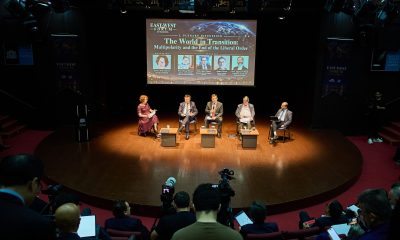
East-West Forum in Istanbul highlights irreversible shift to multipolarity
-
 Europe7 days ago
Emmanuel Todd says West faces collapse amid Ukraine and Iran crises
-
 America1 week ago
Republican support for Trump’s war with Iran drops sharply in polls
-
 Europe1 week ago
European intelligence chiefs divide over risk of Russian attack
-
 Diplomacy1 week ago
East-West Forum in Istanbul to debate multipolarity and global order
-
 Middle East1 week ago
Sharaa says 7 October must not shape Israel policy on Syria
-
 Middle East1 week ago
Palestinian factions confront legitimacy crisis at Istanbul talks
