
America
Silicon Valley eschatology — 2: For the old order of things has passed away…


“One of these creatures wrote to you once, ‘raise not that which you cannot put down.’ You were undone once before, perhaps in the same way; and now your own evil magic will undo you again. Curwen, a man cannot play beyond certain limits with nature, and every horror you have woven rises up to wipe you from the earth.”
—H. P. Lovecraft, The Case of Charles Dexter Ward
“— Then why don’t you start the experiment with him?
— Because Professor Dowell’s head is more valuable than a thousand other human heads. I started with a dog before bestowing a body upon Briquet’s head. Briquet’s head is much more valuable than the dog’s; and Dowell’s head is much more valuable than Briquet’s.
— The lives of a dog and of men are incomparable, Professor…
— In the same way as the heads of Dowell and Briquet.”
—Alexander Belyaev, Professor Dowell’s Head
Our protagonist is once again Peter Thiel. He laments our loss of excitement not for scientific discoveries, but for scientific heroism. He includes in this excitement the post-October Revolution Soviet Russia, the Soviet 1920s:
“In the late 19th, early 20th century, there was a movement in the Soviet Union in the 1920s, at the time of the Soviet Revolution, called cosmism. And the idea was that for the revolution to succeed, you had to physically resurrect all the dead people and bring them up to the age, through a combination of science and the workers.
The slogan was ‘Dead of the world, unite,’ and of course, they didn’t make that much progress on this. And then at some point, the show trials came with Stalin’s ascent to power, and the dying started to accelerate rather than decelerate.”
Let’s just say Thiel misremembers one thing: the first person to call the dead to resurrection was the cosmist Nikolai Fedorov, who passed away in 1903, long before the revolution.
Fedorov believed that death was not natural, but rather a flaw in human design, something to be overcome through technological and scientific means, just as medicine tries to cure diseases. First, death had to be understood in a new way: just as the soul continues to exist after leaving the body, we could understand death as a change in a person’s material state. Just as we have an ethical obligation to care for the sick using reason and knowledge, overcoming death and bringing the dead back to life was an ethical duty of the same kind.
The dead would return not as souls in heaven, but in material form, in this world, with all their memories and knowledge: nothing would end, and everyone and everything would continue.
Anton Vidokle and Brian Kuan Wood write the rest:
“Fedorov’s philosophy of the ‘common task’ therefore requires a total reorientation of all social relations, productive forces, economy, and politics toward a single goal: that of physical immortality and material resurrection.”(1)
However, it is true that in 1920s Soviet Russia, there were individuals and institutions linked to cosmism. The most well-known are Alexander Bogdanov, one of Lenin’s greatest adversaries, and the famous Proletkult, which he helped establish. The main research topics of cosmism included extending lifespan, resurrecting the dead, and migrating to other worlds in the universe; needless to say, science and technology played a dominant role in this research. Bogdanov, who dedicated his life to developing a “universal science” he later called Tektology, would, as fate would have it, pass away from an illness contracted during one of his blood transfusion experiments aimed at halting old age.(2)
There’s no need to get bogged down in names, but a kind of modern “cosmic anxiety” is driving scientists, politicians, philosophers, and some wealthy individuals toward the science of “immortality.” Cosmism, or its more recent version, transhumanism, perhaps stretching from Faust to the present day, leads—or at least wants to lead—to resurrecting the dead, or failing that, to postponing death, or failing that, to advancing our biological existence, something often identified with black magic, grave robbing, the forbidden alchemy of the Middle Ages, world domination, preventing Armageddon, and many other things.(3)
But here, too, there are optimists and pessimists. For example, Fedorov, as an Orthodox Christian, could argue that we should use our reason for the living and the dead to unite and establish heaven on earth. But Georges Bataille suggested that since the Sun sends more energy to the Earth than the organisms on its surface can immediately absorb, this excess energy naturally leads to surplus. If this surplus is not consumed through ecstatic festivals and collective sexual fantasies, it will be spent on violence and war. Therefore, “cosmic energy” is the reason why human culture and politics “forever oscillate between order and disorder.”(4)
Finally, we close this topic with Victory over the Sun, the futurist-mystical opera by leading figures of the Russian avant-garde Kazimir Malevich, Velimir Khlebnikov, Aleksei Kruchenykh, and Mikhail Matyushin. Boris Groys, the editor of the book on Russian cosmism we quoted, writes — and I will quote it at length without alteration:
“The work celebrated the destruction of the Sun and the transformation of the cosmos into chaos. This [destruction and chaos] was symbolized by the black square, which Malevich used for the first time for the opera’s stage design. At the beginning of the twentieth century, the reign of chaos seemed to be unavoidable because nobody believed anymore in the stability of the divine or natural order. The idea of a stable order, be it religious or rational, seemed to have lost its ontological guarantee. The new technologies were permanently displacing, outmoding, and ultimately destroying the old things, old traditions, and accustomed ways of life—and thus undermining the belief in the ‘traditional world order.’ Technological development, being subjected to the logic of progress, revealed itself as a force of chaos that did not tolerate any stable order. The future began to be seen as an enemy of both the past and the present. And precisely for this reason, the futurists celebrated the future because the future contained a promise that everything that existed in the past and still existed would be annihilated.”
We can identify the roots of the “end times” or “embracing the apocalypse” idea embodied by Thiel in the first part of this series. The enthusiasm for technology, the supposed faith in science, the idea of humanity escaping the apocalypse through technical means to become a superman, or escaping the apocalypse as a superman… Beneath this optimistic facade, a clear expectation of disaster grins. Technology becomes the sole refuge for the pessimists awaiting the apocalypse, especially the property owners. The apocalypse doesn’t necessarily have to be a giant meteor hitting the Earth or a pandemic: for instance, the arrival of “people of color” in America by the thousands is a mini-apocalypse, as are state subsidies for the poor, and even national sovereignty and taxation…
Artificial intelligence: Beyond good and evil
Let’s move toward more concrete discussions by noting that artificial intelligence (AI), the focal point of this transhumanist clamor, has created two main factions in Silicon Valley.
Elke Schwarz, a professor of political theory at Queen Mary University of London, summarizes the two factions in the Valley as follows: The first is the e/acc, or “effective accelerationists,” who argue that technology, especially AI, is a panacea for all ills; the second is a group called Effective Altruism (EA), which focuses on managing the dangers AI poses to humanity.
Venture capitalist and Trump supporter Marc Andreessen, who made headlines in 2023 with his “Techno-Optimist Manifesto,” is a prominent figure in the first group. The manifesto advocates for individuals with extraordinary abilities to build a technological utopia that will turn us into “technological supermen” and create a “far superior way of life and being.”
Andreessen’s virtual pamphlet rests on the belief that “technology is liberating.” Under the subheading “Lies,” he defines an enemy, stating, “They say technology takes our jobs, lowers our wages, increases inequality, threatens our health, ruins the environment, degrades our society, corrupts our children, impairs our humanity, threatens our future, and is on the verge of ruining everything.” He argues that our intelligence is our “natural right”; yet “they” tell us to deny our control over nature, our ability to build a better world.
Technology expands “what it means to be human,” at least Andreessen believes so. So who are the “enemies”? Anything that stands in the way of technological progress and the technologically produced utopia of abundance: statism, collectivism, socialism, bureaucracy, gerontocracy, regulation, ethics, sustainability… The list goes on.
In a February 7, 2024, Independent article, Rohan Pandey, an AI research engineer who organized an e/Acc meeting attended by about 65 people, including well-known startup founders and investors, says, “E/Acc is about realizing that our role as AI developers is perfectly aligned with, or directly emerges from, the fundamental thermodynamic will of the universe.”(5)
Supporters include Andreessen, his investor friend Garry Tan, and eccentric figures like Martin Shkreli, known as “Pharma Bro,” who has become a medical AI entrepreneur.
According to EA, however, AI is the greatest threat that could lead to the complete extinction of humanity, while also offering a path to “countless benefits and the extension of human life” on Earth, in space, or in the digital realm.
The EA faction, dubbed “doomers” by e/acc supporters, also operates with stories of apocalypse and triumph projected through technology.
The focus of this is the pursuit of AGI (Artificial General Intelligence). According to Schwarz, AGI, often adorned with spiritual terms, represents the desire to create artificial consciousness; this means an artificial creation where technology is no longer a thing but a superior being.
Schwarz also points to the logic of capital behind these factions, reminding us that both are actually competing to gain material benefit from their own ideological front:
“Both groups, however, represent two sides of the same quasi-spiritual coin, in which AI is posited as the organising principles of a future-oriented reality. Both groups are deeply embedded in the logic of venture capital and have a significant vested interest in promoting the development and proliferation of more AI and attracting more capital for their own AI ventures. Both camps are already backed by enormous amounts of capital investment and as such have a significant impact on our collective visions of the future. In doing so, both are clearly drawn to eschatological narratives that deal with secrets, the unknown, and the imaginary.”
Historically, those who could convincingly claim to possess secret knowledge about the inevitable future of humanity were the ones with greater political power. According to Schwarz, the situation is the same today, and “those with material interests understand that techno-eschatological narratives have an enormous impact.”
Thus, the narrative of freedom and liberation is actually constructed to circumvent the narrative of freedom and liberation of the oppressed. The ideology of Silicon Valley, which appears as a destructive critique, is used not so that humanity can break its chains and gather living flowers, but so that it is both chained and deprived of its imaginary flowers.(6)
Geneticizing wealth: The super-intelligent caste fantasy
Silicon Valley’s fear and rebellion are not new, as I have emphasized before. Doubts about the intelligence of the poor, workers, immigrants, “people of color,” sometimes Slavs or Jews, and at other times the Latin peoples of Southern Europe, took on a “scientific” form with the spread of racial theories in the last quarter of the 19th century, establishing the well-known racial hierarchies.
The birth of eugenics is a result of this. Although “racial hygiene” reached a level of madness in Nazism, it also rested on a “plausible” pseudo-science. A similar obsession exists in Japanese imperialism. Social fear is biologized, and Darwin’s thought is socialized.(7)
According to a recent Wall Street Journal (WSJ) report, tech entrepreneurs in Silicon Valley are actively investing in creating a “smarter” generation using advanced genetic testing and embryo selection methods. Some tech executives are paying up to $50,000 for services that predict the IQ level of their unborn children.
But the enthusiasm for creating a super-intelligent caste is, again, based on fear. The report highlights that the most unusual reason comes from a group of computer scientists known as Rationalists, who fear that artificial intelligence poses an existential risk to humanity!
The co-founder of Genomic Prediction, a company intended to create a super-intelligent wealthy caste, says this group believes that one of the ways to create safe AI is for it to be “developed by smarter people.”
The co-founder says, “Some of these people are dedicated to a long-term eugenics program aimed at creating smarter people, and smarter people will be the ones to make AI safe.”
Margaux MacColl, writing for the San Francisco Standard and having participated in these tests herself out of a “journalistic” passion, gives us more detailed information. A venture capitalist whose party she attended and his wife, who had recently given birth, had their embryos tested by Orchid, a genetic testing company that charges over $2,500 per embryo for polygenic diseases (complex diseases caused by the combined effect of many genes, such as bipolar disorder or Alzheimer’s). (Thiel was an investor in this company). The author noted that the baby looked like any other baby but had been “optimized” to the extent that genetic science allowed.
Although startups conducting polygenic tests are the newest stars of Silicon Valley, research shows that assigning a “risk score” for polygenic diseases is still a gamble, with results being “random” and “inconsistent.” Critics claim these tests offer parents a dangerous “illusion of control” by relying excessively on data from people of European descent.
In the last five years, tech leaders like Anne Wojcicki, Sam Altman, Vitalik Buterin, Elad Gil, and Alexis Ohanian have invested millions of dollars in direct-to-consumer polygenic testing startups such as Orchid, Nucleus, and Genomic Prediction.
Famous wealthy individuals who use these products include Elon Musk, Michael Phelps, Bryan Johnson, and Coinbase CEO Brian Armstrong.
“It’s not always transparent how companies calculate these scores. They claim to have a proprietary algorithm, but in reality, that algorithm is a complete black box. If these scores are not entirely accurate, consumers could make choices detrimental to their health based on false information,” says bioethicist Jacob Sherkow, a law professor at the University of Illinois Urbana-Champaign, giving a clue.
Even if companies technically test the same number of variants, they may have completely different datasets. Gabriel Lazaro-Munoz, a neuroscientist and bioethicist who researches the societal impacts of genomic science, says these datasets can be skewed toward specific races or differ in sample sizes, which can significantly affect individuals’ results across companies.
Christine Rosen, writing for Commentary, believes that these companies want to eliminate not the gene thought to cause the disease, but the baby carrying that gene.
The return of IQ and neurocastes
“In Silicon Valley, IQ is loved,” says the founder of one of these genetic testing startups.
In his book Hayek’s Bastards, Quinn Slobodian explains how the concepts of IQ and “neurocastes” became widespread in the US in the 1990s. After the dissolution of the USSR, the links between heredity and social hierarchies were re-established more firmly; the “human genome” project added fuel to the fire:
“The neurocastes produced by the knowledge economy seemed to prove both the existence of an elite and the futility of efforts to equalize outcomes through welfare, public education, or affirmative action programs they saw as the burdensome legacy of the 1960s Great Society project.”
The welfare state, affirmative action programs, planning, etc., are useless because, as “scientifically” proven, “neurocastes” exist, and intelligence differs socially (racially). These genetic traits cannot be corrected or improved by external interventions, so preaching about the “welfare state” or egalitarianism is a fool’s errand. As the highly controversial 1994 book The Bell Curve stated, castes were defined by cognitive ability, and the claim was that there was a “cognitive stratification” in the US: the more intelligent members of society were drawn from their communities into elite education and high-income employment, while the low-intelligence population continued to multiply, “encouraged by a skewed welfare system that rewarded large families.”
Slobodian points out that Silicon Valley was a center of race science in the 1960s and 1970s. For example, the founder of Stanford University was both a horse breeder and a believer in the possibility of improving the human race. Silicon Valley’s Nobel laureate physicist William Shockley was a leading proponent of “scientific racism” and advocated ideas like paying low-IQ men to be sterilized.
According to Slobodian, this resurgent “IQ racism” signaled a fundamental economic transformation:
“Like Young before them, Murray and Herrnstein after them, and countless Silicon Valley technolibertarians after them, they were looking to a future where labor would be increasingly performed by ‘cybernetic and automation control systems.’ As machines made more workers redundant, they would make the workers who designed and operated the machines all the more important. IQ racism reflected the needs of the emerging knowledge economy.”
In an article for The Guardian, Slobodian emphasizes that when manufacturing still dominated the US economy, IQ was valued as a way to measure educational outcomes, but with the emergence of the “knowledge economy” in the 1980s and 90s, knowledge workers “indisputably became the vanguard of future prosperity.”
Therefore, they want education in the US to be “more finely” structured through programs that identify gifted and talented children, take them out of public schools, and place them in intensive summer programs designed for the brilliant.
One of the products of this gifted children program is Curtis Yarvin, familiar to our readers. Yarvin, praised by J.D. Vance, was a member of Julian Stanley’s Center for Talented Youth in his youth. Continuing to advocate for the importance of IQ as a measure of human worth, Yarvin, as a representative of the “Dark Enlightenment” or “neo-reaction” movement in the late 2000s, would suggest that IQ tests could be used to disqualify voters in post-apartheid South Africa.
Peter Thiel also said in 2014 that the problem with the Republican Party was that most of its leaders had “lower IQs” compared to those in the Democratic Party.
Artificial and intelligent: A burden in existence, a wound in absence
For some, it is a kind of irony that tech billionaires praise superior human intelligence while scrambling to develop artificial general intelligence that could one day surpass it.
For example, Google co-founder Larry Page had accused Elon Musk, who so stubbornly defends human intelligence in the face of advancing technology, of being a “speciesist.”
But Musk also has a solution: he plans to upgrade our biological hardware and merge human and machine intelligence using electronic brain implants developed by his company Neuralink. With a technology we could call “human enhancement,” the tool or device goes beyond being a part or organ of human creative activity. It’s not machine-man, but man-machine that is maturing.
Slobodian questions how the obsession with IQ can be reconciled with the fact that some white-collar professions, which have been somewhat coddled for the last 30 years, will disappear while billions are spent on artificial intelligence. This is because the IQ obsession was at the heart of the “meritocracy” narrative and became a means for white-collar workers to collaborate with the “top,” to emulate them, and occasionally to climb the social ladder.
Yet, there is no irony: both artificial intelligence and the IQ obsession are tools for the devaluation of this sometimes internationalized white-collar labor.
Necromancy and profiting from mystery
The technological and philosophical transformations in Silicon Valley seem to be heavily influenced by a set of ideologies that Timnit Gebru and Émile P. Torres have defined as “TESCREAL.”
TESCREAL is an acronym for: transhumanism, extropianism, singularitarianism, cosmism, rationalism, effective altruism, and longtermism.
In an interview, Torres explains, “These polysyllabic words are a bit of a mouthful. You can think of transhumanism as the backbone of this cluster of ideologies.”
Torres suggests that all other ideologies emerge from transhumanism. In short, transhumanism is a philosophical movement that advocates for the use of advanced technologies to “enhance” and redesign humans, with the ultimate goal of creating a radically enhanced “post-human” species.
The author points out that although the public relations efforts of transhumanists focus on the potential of medical advances and the idea of conquering death, in an environment where historical levels of inequality prevail, it is an “inevitable consequence” that the dreams of transhumanism will primarily benefit the rich.
In fact, according to him, it is even possible to characterize transhumanism as an effort to “create a master race.” The pursuit of an eternal, post-human life is ambitious enough, but for the new cults of Silicon Valley, the end of our humanity is just the beginning.
As we conclude this section, let’s return to Schwarz. Our professor reminds us that, despite everything, the narrative and power of Silicon Valley are ultimately about money.
She emphasizes that the sanctification of AI as a “demigod” primarily serves those who invest capital in AI companies. Especially when we look at the logic of venture capital, it becomes clear that the “spiritual” narrative serves to bolster the financial wealth of those who invest enormous sums in startups like OpenAI (e/acc) and Anthropic (EA), with the expectation of excessive capital gains.
According to Schwarz, “To create belief in a technology is to sanctify a startup’s capacity to deliver this demigod technology, which in turn serves to elevate the value of such a company.”
Thiel, who runs one of the world’s largest venture capital funds, Founders Fund, argues in his best-selling 2014 book Zero to One: Notes on Startups, Or How to Build the Future, that to build a valuable company, one must use “existing secrets.”
In the book, he sadly notes that the general belief in secrets (and, as Schwarz relays, along with secrets, myths) has eroded. He argues that entrepreneurs should build their companies based on the power of secrets: “A great company is a conspiracy to change the world; when you share your secret, the recipient of it becomes a fellow conspirator.”
Schwarz continues:
“Claiming to hold the secret to salvation or doom is a tried and tested, highly effective narrative that draws in an ever-larger audience, willingly or not. And it ultimately comes back to a very simple but very powerful equation: money equals power. Venture capital, with its extensive lobbying power, is increasingly shaping the policy landscape in various political domains, including the military. This structure of power and influence is, at its core, built on the current variant of technological eschatology.”
Biology and genetics are just one of the gateways to the post-human. Other things also enter through the door opened by biology in the escape from the crowds, from the low-IQ, from death—in short, from Armageddon. Geographical separation goes hand in hand with racial segregation. In the next part, we will look at the escape routes of the Silicon Valley elite from the apocalypse.
(*) The reference in the title is from Revelation 21:4: “He will wipe every tear from their eyes. There will be no more death or mourning or crying or pain, for the old order of things has passed away.”
(1) Quoted from the Foreword written by the duo, see Boris Groys, Russian Cosmism, MIT Press, 2018, New York.
(2) Bogdanov is also the author of Red Star, which for some reason is presented as the “first Bolshevik utopia.” The book describes a journey to Mars and the experiences of our Russian social democrat encountering the socialism built on that planet. His explanation of the socialism built on Mars through a perfect equilibrium and almost some psycho-chemical properties of the Martians must be quite significant: Indeed, the Martians try to eliminate the “capitalist consciousness” in our Earthling hero, Leonid, with drugs. For the excellent critique of Red Star by the famous Soviet psychologist Evald Ilyenkov, see https://www.marxists.org/archive/ilyenkov/works/positive/positii.htm. We will address the idea of space travel and the colonization of space in the next part of the series.
(3) Thiel is one of the oldest and most active investors in life extension and immortality research. He funded the SENS Research Foundation, an institute dedicated to discovering the secret to eternal life, run by scientist Aubrey De Grey and Thiel’s partner Jim O’Neill (now Deputy Undersecretary at the Department of Health and Human Services). Thiel also backed the genetic startup Halcyon Molecular, which aimed to stop aging, donated $1 million to the Singularity Institute, which aims to download our consciousness into computers, and became a member of the Alcor Life Extension Foundation to have his body frozen upon death in the hope of being revived in a more advanced future. It is even claimed that he has researched the power of delaying aging by injecting himself with the blood of young people. When asked about this at a conference, he replied, “I’m not a vampire.”
(4) Alexander Chizhevsky goes even further, linking mass revolutionary movements with the movement of the Sun and also suggesting that the historical process is characterized by the succession of active and passive periods corresponding to eleven-year cycles of solar activity.
(5) Independent writer Io Dodds reports: “The second law of thermodynamics says that all the energy in a closed system will eventually diffuse into a useless state of equilibrium. The physicist Jeremy England has proposed that the cosmos is inherently biased towards forms of matter that speed up this process – such as life, which relentlessly replicates itself to consume all available energy. E/Acc generalises this new but controversial theory to claim that maximising our energy consumption is the ultimate purpose of our existence. The universe, sometimes personified as a ‘thermodynamic god’, wants us to conquer the stars and turn them into giant power plants, and all of human history has been steps towards this cosmic destiny.”
(6) Marx uses this metaphor in his Contribution to the Critique of Hegel’s Philosophy of Right: he underlines that unless the critique of religion by philosophy also turns to the critique of unholy forms, it will not mean the liberation of man from his chains, but will turn into a torture that will further intensify his suffering.
(7) It must be admitted that Darwin provided considerable support for this. On the Origin of Species, which openly relies on a Malthusian population theory, was later fiercely criticized by Marx and Engels, despite their initial enthusiasm.


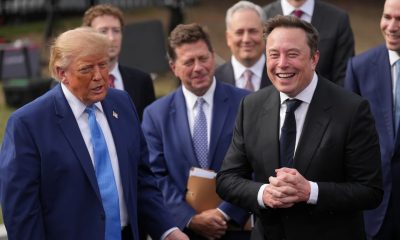





The world’s richest man, Elon Musk, has assumed the co-directorship of a Pentagon initiative focused on the future of warfare, known as “Project Meridian”.
Musk’s new role was announced by US Secretary of Defence Pete Hegseth.
Musk, who has long expressed his conviction that wars will ultimately be fought with autonomous unmanned aerial vehicles, will advise the project as co-director alongside Palmer Luckey, founder of defence start-up Anduril, and former Speaker of the House of Representatives Newt Gingrich.
In a memorandum issued at the Pentagon, Hegseth stated that the group would “examine the battlefields of the future” and “determine which weapons and technologies warfighters must employ to achieve dominance in these environments.”
During his “State of the Force” address at Marine Corps Base Quantico, Hegseth said:
“The best predictors of future conflict do not reside exclusively within the Pentagon. Obvious biases and risks arise when we task ourselves with both framing the questions and answering them.”
Hegseth stated that this initiative would commence immediately and that, following his address, he would convene with Musk, Luckey, and Gingrich at a secure location.
Project Meridian will have 120 days to “ruthlessly map the trajectory of wars, domains, and technologies”, a process that will culminate in the public disclosure of its findings alongside a classified annex.
Hegseth outlined an expansive mandate extending “from beneath the surface of the Earth to beyond the Moon.”
Rather than formulating new military strategies or policies, the panel will seek to identify “the domains we must seize and the capabilities we must master”, focusing on the effort to “discover, develop, and field” the weapons and systems that next-generation American troops may require.
The group is expected to submit a report containing recommendations to him by the end of January.
In 2024, Musk remarked: “Future wars will be entirely about drones and hypersonic missiles.” This was merely one of several similar statements he has made in recent years.
For Musk, whose oversight role at the Department of Government Efficiency (DOGE) ended in turmoil and escalated into a dispute with President Donald Trump over Trump’s spending bill, this appointment marks his formal return to government in an official capacity.
Musk and Trump ultimately reconciled, and Musk attended a meeting on artificial intelligence safety at the White House this week alongside other technology leaders.
Meridian forms part of a broader push announced by Hegseth to restructure the military around autonomous warfare and rapidly advancing technologies.
Hegseth announced the establishment of the Autonomous Warfare Command (AUTOWARCOM), a new four-star combatant command endowed with what he termed “service-like authorities” to scale autonomous and robotic capabilities across the joint force.
The Department of War will also begin phasing in new occupational frameworks across all military branches to establish specialised career tracks for what Hegseth described as “the next generation of autonomous warfighters.”
“We should have conceived an Autonomous Warfare Command a decade ago,” Hegseth said, explaining that Meridian aims to gaze far enough ahead to enable the military to anticipate the next technological shift rather than lag behind.

A cyberattack targeting the US Department of War’s personnel database has resulted in the leak of personal information belonging to approximately 3 million people.
Speaking to ABC News, a Pentagon official stated that the system accessed by unauthorised individuals contained the records of 2,760,000 living persons and 294,000 deceased individuals.
The Military Times portal, which first broke the news, had reported the number of affected individuals as approximately 4 million based on two sources. The Pentagon official subsequently conveyed different figures to ABC News.
The leak encompasses Social Security numbers and duty information belonging to military personnel and civilian employees. According to an official notification examined by Military Times, the compromised records may also include names, dates of birth, contact information, sex, race, and military occupational specialties.
The unauthorised access to the information system of the Defense Manpower Data Center (DMDC) lasted for approximately nine months, between October 2025 and 16 July 2026.
ABC News reported that the access in question was obtained by a small number of third-party users. The vulnerability was closed after it was identified.
The DMDC is considered one of the Pentagon’s primary personnel records centres. More than 60 million records belonging to active-duty personnel, reservists, civilian staff, contractors, retirees, veterans, and military family members are stored at the centre.
The Pentagon has not detected any evidence that the leaked data has been misused. Military Times reported that affected individuals were offered identity restoration and credit history monitoring services.
A similar data breach previously occurred on the Federal Bureau of Investigation’s (FBI) recruitment website, FBIJobs.gov. According to information obtained by ABC News from internal communications and sources, the FBI is considering the possibility that data belonging to its entire staff may have been stolen.
The New York Times (NYT) examined a portion of the stolen FBI records. Home addresses, telephone numbers, official email addresses, Social Security numbers, dates of birth, hiring dates, and emergency contact details for relatives were identified within these documents.
The database also contained unit designations, duty roles, and information regarding the supervisors of personnel. Some records revealed assignments within counterintelligence and counternarcotics units, as well as departments examining threats originating from Russia, China, and Iran.
Ciaran Martin, the former head of the UK National Cyber Security Centre, noted that this type of breach could directly affect the FBI’s operational capabilities.
The hacker group known as ShinyHunters had announced that it had seized medical data and security clearance records alongside files belonging to tens of thousands of active and former FBI employees.
Experts evaluating the matter for the NYT warned that this information could be used to track agents, threaten their families, or compile dossiers by foreign intelligence services.
The ShinyHunters group initially threatened to release the data unless the bureau withdrew an advisory it had published concerning the group’s attack methods.
The group later asserted that it had never intended to leak the information and characterised its action as an advertising campaign.
In a report published in May, Reuters noted that the personal data of US military personnel had been used in surveillance and attack preparations.
According to the agency, Washington’s adversaries gained the ability to pinpoint areas where troops were concentrated by exploiting commercially available location data. US lawmakers at the time criticised the Pentagon for failing to adequately protect the personal data of military personnel.

US President Donald Trump’s trade policy and the Washington administration’s push to increase Venezuelan oil imports are prompting Canada to diversify its energy exports.
According to a report by The Wall Street Journal, recent developments are accelerating Canada’s development of new oil and natural gas projects.
Steps taken by the Ottawa administration, which aspires to become an energy superpower, are seen as potentially strengthening the country’s position in global markets.
In Canada, the world’s fourth-largest oil producer and fifth-largest natural gas producer, the energy sector accounts for approximately one-fifth of total exports.
Almost all of the country’s natural gas exports and approximately 90% of its oil exports go to the US.
The newspaper writes that the trade war with Washington and the atmosphere of confrontation entered into with Iran have heightened Canada’s desire to turn to alternative markets outside the US.
Officials plan to increase shipments of oil and liquefied natural gas (LNG) to European and Asian markets.
Accelerating infrastructure investments in line with this target, Canada is also shortening approval processes. The government is prioritising the construction of an oil pipeline extending specifically to the west coast.
According to the newspaper’s estimate, if major pipeline projects are implemented, Canada’s daily oil transport capacity could rise to 6.8 million barrels by 2034.
Routes heading to the west coast will make up approximately 30% of this capacity.
The Canadian administration is simultaneously advancing LNG export projects. According to the report, these investments could allow approximately 55% of Canadian natural gas exports to be directed to markets outside the US by the early or mid-2030s.
While the government expands tax incentives for the oil and natural gas sector, the province of Alberta also plans to overhaul its royalty system.
However, the newspaper notes that implementing the new projects requires heavy investment, and the process depends on the final decisions taken by producers as well as the completion of regulatory approval processes.
The expansion of pipeline and LNG infrastructure could gradually reduce Canada’s dependence on the US market while raising its share in the global energy market.
The Canadian Prime Minister’s demand to reduce reliance on the US market had also come to the fore in July.
According to Carney’s statement, the province of Alberta submitted a plan for a pipeline spanning more than 1,000 kilometres to the west coast of British Columbia.
Targeted for completion by September 2027, the line will reach the Pacific coast by following an existing corridor through the mountainous terrain.
This shift in energy comes at a time of strained relations with the US. Donald Trump said that if Canada obtains associate member status in the European Union, he could halt trade with Europe in certain sectors and impose high tariffs.
As reported by the Associated Press, Trump characterised such a rapprochement as a “potentially hostile act”.
European Commission President Ursula von der Leyen had proposed opening the path for Canada to become the EU’s first associate member. The terms of this associate membership status, which is not defined in EU treaties, are not yet clear and require the approval of member states to enter into force.
Canada, which does not seek full membership, aims for maximum rapprochement with the EU.
Following Trump’s return to the White House, relations between Washington and Ottawa deteriorated. The Trump administration, which repeatedly called on Canada to become the “51st state” of the US, introduced additional tariffs.
In July, the US began imposing 50% tariffs on certain Canadian-origin goods.

We are no longer in 1992, the US has lost its military superiority, Ret. Lt. Col. Davis says

Germany expands North Sea military ports and plans new naval base

Musk appointed co-director of Pentagon future warfare initiative

US waives human rights terms on $320m military aid to Egypt

Putin says Russia did not start war and warns of nuclear risks
-

 Europe5 days ago
European unions urge governments to scrap all Palantir deals
-
 Diplomacy5 days ago
East-West Forum in Istanbul highlights irreversible shift to multipolarity
-

 Europe1 week ago
Emmanuel Todd says West faces collapse amid Ukraine and Iran crises
-

 Europe1 week ago
European intelligence chiefs divide over risk of Russian attack
-
 Diplomacy1 week ago
East-West Forum in Istanbul to debate multipolarity and global order
-

 Middle East1 week ago
Sharaa says 7 October must not shape Israel policy on Syria
-
 America1 week ago
Republican support for Trump’s war with Iran drops sharply in polls
-

 Middle East1 week ago
Palestinian factions confront legitimacy crisis at Istanbul talks
