
Opinion
The century-old debate on the Magic Mountain continues: Naphta or Settembrini?

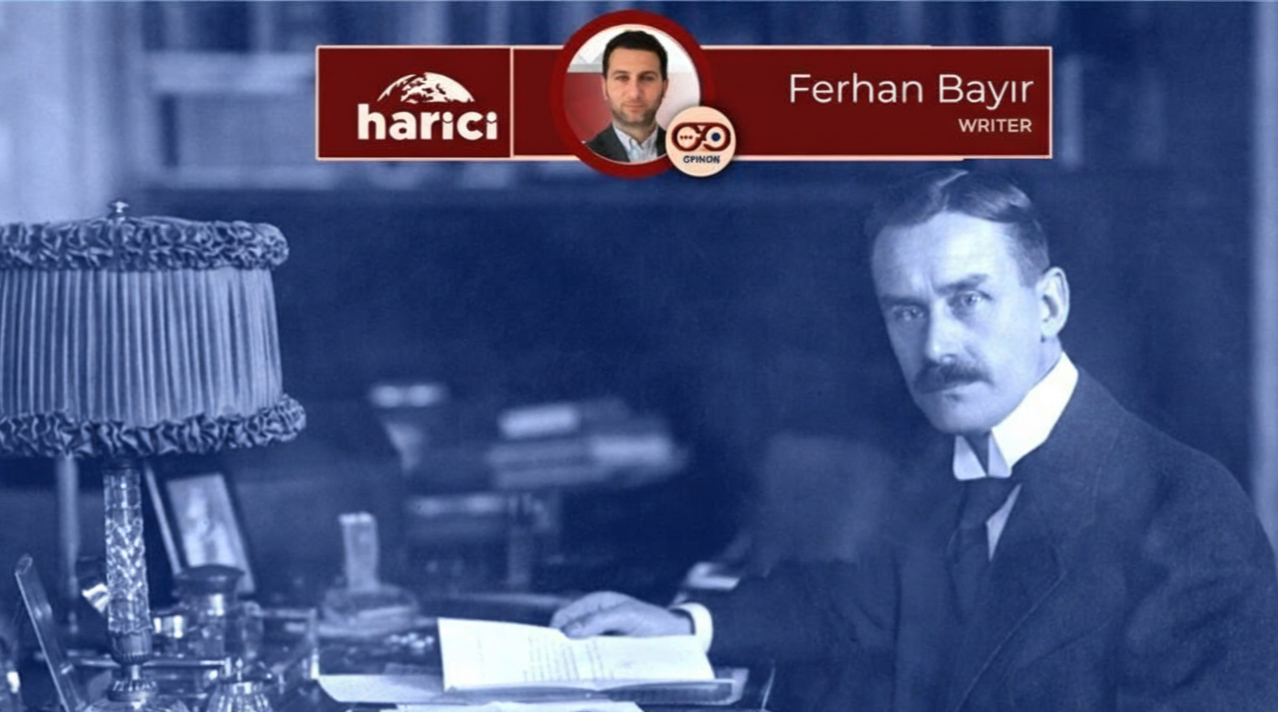
As we celebrate the 150th anniversary of the birth of Thomas Mann, the most significant author in modern German literature, Mann and the countless masterpieces he penned continue to maintain their importance and relevance.
Like every great writer, Mann, with his creative genius, clearly depicted the complex conflicts of his era in his novels, expressing his foresight on how societal contradictions would take shape.
His works, which a century ago explored the social and cultural problems of post-war Germany, have much to say today about the intellectual legacy of German intellectuals who either openly support the war against Russia or are forced to quietly approve of it.
The characters in his novel The Magic Mountain, published a century ago, who express anti-Russian sentiment and prejudices against Islam and Eastern societies, are like shadows from the past of today’s German intellectuals.
On the other hand, Mann’s journey to the East a century ago shows how even writers representing Europe’s progressive and humanist tradition shared many of the prejudices of Western conservatives.
The works of Thomas Mann, who discussed the future of Europe and reckoned with the war during the crisis of a century ago, are filled with lessons that need to be remembered in Europe’s current conditions of war and crisis.
Mann’s Impressions of Istanbul
In 1925, Thomas Mann undertook a brief journey to the East, primarily to Cairo. Apart from his impressions of Egypt, which inspired his Joseph and His Brothers series, this trip has been overlooked in even the most meticulous biographies.
There is some justification for this neglect by Mann’s biographers. Mann’s travel notes are surprisingly superficial and brief. These short notes give the reader the impression that Mann was compelled to travel out of necessity rather than his own desire.
Particularly striking are the political and sociological limitations of his perspective, in addition to the superficiality and brevity of his impressions of his visit to Istanbul. This overshadows the breadth of curiosity of the great writer who, in his literary works, described everything around him in the finest detail.
In Mann’s notes, one finds not the slightest impression of the transformation taking place in the imperial capital, which had just established a new democratic republic after a war of independence and was experiencing freedom after occupation.
Mann’s observations are reminiscent of the impressions of German travelers who visited Istanbul a century earlier: people wearing the fez, the contrast between Europeanized women and traditional women identified with the East… So much so that almost the only praise for Istanbul’s magnificence is reserved for the Hagia Sophia.
Undoubtedly, this situation has direct links to orientalist thought. Despite the full orientalist tone in Flaubert’s impressions in Voyage to the Orient, when compared to the intensity and depth of his observations, Mann’s attitude can be better described as disinterest or indifference.
However, if we consider Mann’s masterpiece The Magic Mountain, which he began writing in 1918 and published at the end of 1924, evaluating his notes on Istanbul becomes much more complex.
One of the novel’s most important characters, the humanist and representative of the Enlightenment tradition, Settembrini, states: “He approved of what was happening because a path beneficial to civilization was being followed. A general atmosphere of peace and disarmament was blowing through Europe. Democratic ideas were developing. He claimed to have learned through back channels that the Young Turks had completed their preparations for a revolutionary uprising. Türkiye was to become a constitutional nation-state—what a great victory for humanity!”
Although he did not share Settembrini’s Mediterranean optimism for the future, Mann, who defended the Weimar Republic and wanted democratic thought to take permanent root in Germany, shared these ideas.
To approach Mann’s notes on Istanbul with a broader perspective, we will critically examine Settembrini’s political position in the novel, as well as Naphta, the opposing pole who balances Settembrini’s intellectual weight, and the debate between them, which to a large extent continues today.
A Reckoning with War in The Magic Mountain
It is striking that the section where Settembrini heralds the victory of the constitutional nation-state in Türkiye is the very part where Naphta enters the novel. Until Naphta’s appearance, the political and aesthetic advice Settembrini gives to Hans and Joachim is about life and the fundamental values of European bourgeois society. In a sense, as Naphta says, “Listen to our Voltaire, our rationalist,” he repeatedly reiterates his unwavering faith in the rationality and progress of the Enlightenment.
With Naphta’s entry into the novel, the political and aesthetic debate expands by another layer and intensifies tragically. The ideological framework of the novel transcends the borders of Europe, shifting to war and, inevitably, the West-East conflict and the crisis in the international political system.
In response to Settembrini’s words about the birth of the democratic nation-state in Türkiye, Naphta cynically retorts, “The emancipation of Islam, oh how wonderful. Enlightened fanaticism—marvelous.”
It is jarring to see, in all its nakedness, the century-old intellectual roots of these words, which shocked us when we heard them from many Western intellectuals, especially after September 11.
In this context, when we read The Magic Mountain, we are captivated by the work’s relevance, like that of many masterpieces. Mann began writing the novel towards the end of World War I. The work was published before World War II.
Those who read the novel after its publication considered it a reckoning with the war, a diagnosis of the social diseases that created the war, and a critique of the intellectual climate in Europe that affirmed war.
Those who read the book after World War II, however, saw The Magic Mountain as a great writer’s profound foresight into the rising authoritarian regimes in Europe, an account told with a deep intuition for the inevitable consequences of the European bourgeois society’s illness. Thus, like every great writer, Mann was seen as a ‘prophet’ after both world wars.
Today’s conflicts in the international political system, especially after the Ukraine crisis; Europe once again coming face to face with war; the political crisis with Russia expanding into a cultural crisis, leading to the revival of historical prejudices about the West-East conflict; as well as the rise of far-right populist parties in Europe, the crisis of Western liberal democracy, the structural problems in parliamentary regimes… and many similar issues compel us to put The Magic Mountain before us again and reconsider our assessments.
The provocative prophecies of The Magic Mountain, particularly who Settembrini and Naphta represent in real life, have always been debated. Perhaps the most striking and closest analogy was made by the German writer Rüdiger Safranski. Safranski identifies Settembrini with the Kantian Ernst Cassirer and Naphta with Martin Heidegger.
In Davos, where the novel is set, just four years after its publication, Cassirer and Heidegger confronted each other at a conference in 1929. Starting from the fundamental question ‘What is man?’, they debated the core points of divergence in Western philosophy, just like Settembrini and Naphta.
It was a profound debate experienced by German intellectuals whose paths would sharply diverge after the dissolving Weimar Republic, tragically dividing them into opposing enemy camps. In this context, Mann demonstrated his foresight by presenting the irreconcilable opposing ideas on freedom, war, and Europe’s intellectual heritage that he raised in his novel.
Perhaps what led Safranski to think of such a similarity was Settembrini accusing Naphta, saying, “So you’re defending Pan-Germanism? Is that it?” This analogy becomes even more striking when one considers Heidegger’s joining the ranks of Nazism.
The anti-Russian sentiment observed in Europe today, especially in Germany, was echoed a century ago in Naphta’s words: “And I think you are a Russia enthusiast.” The ideological and cultural fractures of a century ago are still vividly felt today.
European Humanism’s Trial by War
When we think of Mann, an admirer of Tolstoy, these parts of the novel resemble the relentlessly tense and dramatic political discussions in Dostoevsky’s works. Like Dostoevsky, Mann has his characters, who express opposing views, speak with their most powerful arguments.
When powerful ideas become concentrated, they begin to collapse inward, thus revealing contradictions that even the most bombastic rhetoric cannot hide. Ideas that seem opposed and irreconcilable dramatically converge, and universal ethical principles begin to bend and warp.
The same traces can be observed in the political positioning of the characters in the novel regarding war. The soldier Joachim expresses the inevitability, and even necessity, of war with the words: “War is a necessary thing. As Moltke said, without war, the world would soon fall into decay.”
The intellectual ‘princeps scholasticorum’ [Latin: first among scholars], Naphta, at the most heated point of the discussion, ends the debate by presenting war as the sole and valid solution to all existing social problems: “Meanwhile, we are about to suffocate from the crowds; all professions are so teeming with people that soon previous wars will pale in comparison to the fights that will be fought for a piece of bread. Open spaces and green cities! The strengthening of the race! But why should it be strengthened if civilization and progress say there will be no war? War will take care of these problems and will produce solutions for both strengthening the race and reducing births.”
From the soldier to the university intellectual, war is defended on the same moral grounds. It is starkly observed how imperialist bourgeois society, when faced with a deep economic and political crisis, always brings war to the agenda, pushing humanity to the brink of disaster.
Faced with this pro-war sentiment spreading like a plague across Europe, what position does the humanist Settembrini, who advocates for peace and progress, take? Settembrini states that international peace will be established by transitioning to a system of free and equal states. However, Settembrini takes an anti-war stance based on principles and optimistic ideals rather than on facts of reality.
At this point, Mann allows Settembrini’s weak points to emerge. First and foremost, Settembrini does not see or accept the crisis into which European bourgeois society has been plunged. He considers European bourgeois society’s 18th-century progressive and revolutionary character to be immutable and universal; he cannot see that the bourgeois society he identifies with reason now possesses irrational tendencies.
The signs of why the humanist tradition was not effective in shaping public opinion against this pro-war sentiment in a Europe where war was being loudly proclaimed are hidden in these points.
Despite all his provocative religious ideas, Naphta is more realistic than Settembrini. He puts forward a self-assured conservative alternative to the crisis of capitalism. He even becomes a point of attraction for people restless from the crisis by voicing the strongest opposition to capitalism in Europe. A striking example of this is that at the end of the discussion, Hans and Joachim, although they dislike Naphta, agree with him on some issues.
Settembrini’s other contradiction is much more dramatic. Despite his anti-war, humanist stance, Settembrini also defends war at a certain point in the name of progress and freedom: “Even Voltaire approved of wars that served to spread civilization and suggested to Frederick II that he wage war on the Turks.”
As the discussion continues, Settembrini goes so far as to defend the Crusades: “Even war, my dear sir, has at times been forced to serve progress; if you recall certain events from that period you so admire, that is, the period of the Crusades, those wars, in the name of civilization, strengthened economic and commercial relations between peoples and united Westerners under a single idea.”
Undoubtedly, Settembrini’s contradictions expose the contradictions of the Enlightenment, especially the moderate Enlightenment. Montesquieu’s views, which explained the qualitative differences between civilizations with his theory of geography and climates, initiated the Enlightenment’s treatment of ideas about the East with an orientalist discourse. Many philosophers, like Voltaire, caused this orientalist view to become entrenched.
Settembrini and Naphta, who represent opposite poles and conflicting value judgments throughout the novel, tragically become identical in their views on war and the East.
As in Dostoevsky’s novels, the two opposing characters actually complete each other; the existence of one necessitates the other. Settembrini and Naphta are complementary others.
The traces of the rising pro-war sentiment in Europe extend back to the Enlightenment, and the West’s imperialist, orientalist view of the East originates from many of the Enlightenment’s ideas.
The most striking expression of this is Settembrini’s generalization of the East as a civilization of inertia, motionless, and closed to dynamism and progress, despite his enthusiastic celebration of democratic development in Türkiye: “I am a European, a Westerner. Your scale of values is perfectly suited to the East; the East detests action. Lao-Tzu teaches that between heaven and earth there is nothing so beneficial as doing nothing, and that if humanity had renounced action, complete peace and happiness would reign on earth.”
Precisely because he is a Westerner, a European, Settembrini cannot see the contradictions in his own bourgeois society. This blind spot causes him to falter in the face of rising conservative pro-war sentiment in Europe and the orientalist discourse about the East, preventing him from taking a clear stance.
It is at these points that we must examine the historical and ideological roots of why, before World War I, European intellectuals and artists—from conservatives to humanists to radical avant-gardists, with the exception of a small minority of intellectuals—took their place in the ranks of war.
The Istanbul notes of Thomas Mann, a Westerner and representative of Europe’s humanist tradition, and even Mann’s own contradictory attitude at the beginning of the war, should be discussed from this perspective.
Naphta won the century-old debate in The Magic Mountain; who is to say that Naphta won’t win the debate today as well?




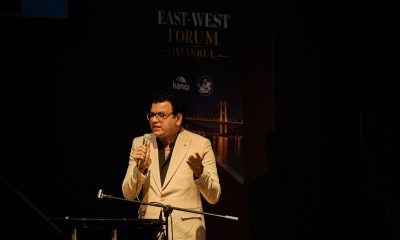






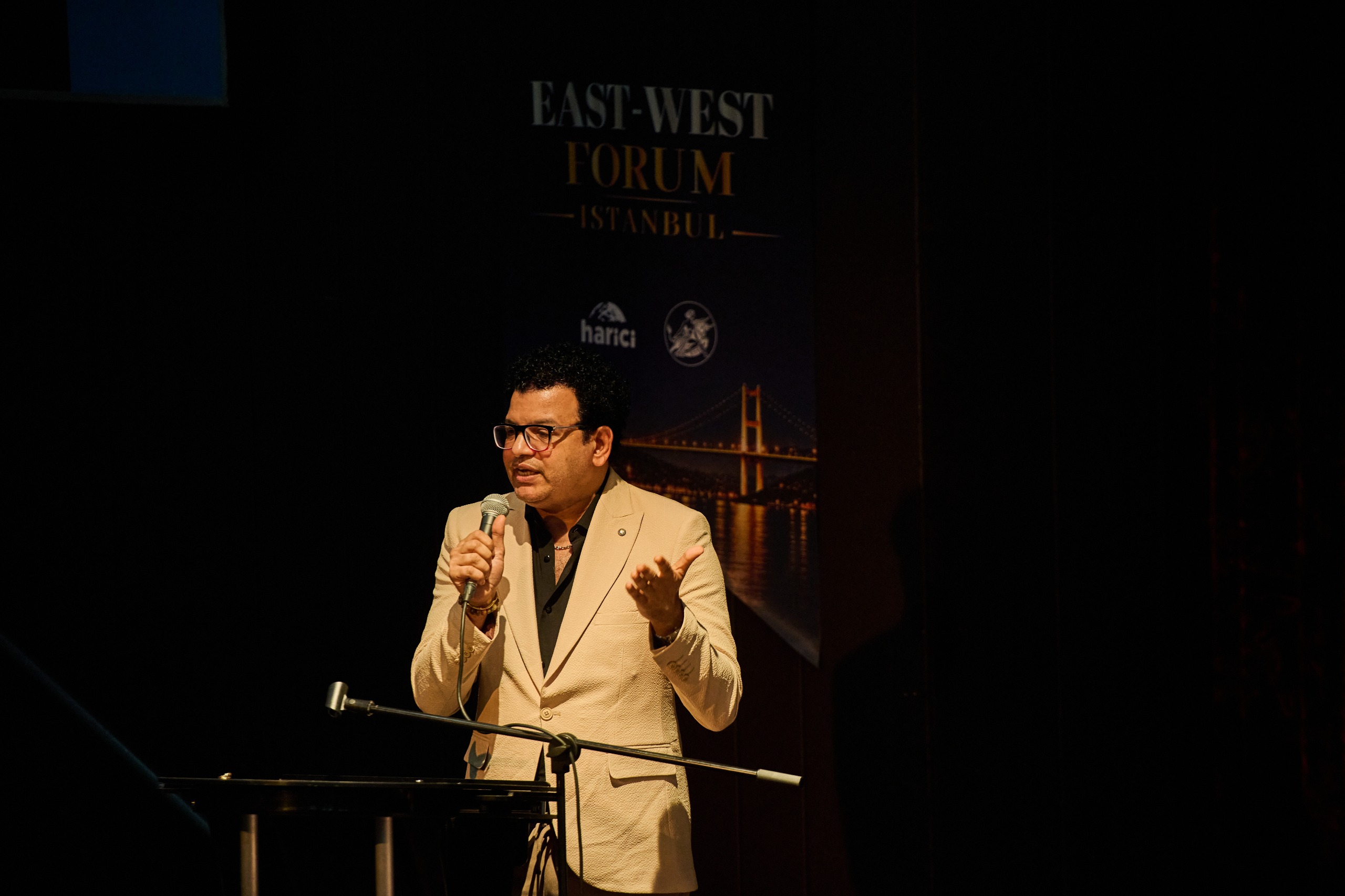
Dr. Ahmed Moustafa, Director & Founder, Asia Center for Studies & Translation, Egypt
In a city that has spent centuries translating the language of one civilization to another, the first East-West Forum arrived at a moment when the world itself seemed to have lost the vocabulary for talking across its divisions.
Held in Istanbul on Sept. 26–27 and preceded by meetings around the event, the forum brought together diplomats, academics, journalists, strategists and political thinkers from a wide range of countries. Hosted by Harici Media in partnership with the Berlin-based European Transcontinental Initiative, the gathering was conceived as an attempt to examine a world increasingly defined by competing power centers, regional wars, economic fragmentation, artificial intelligence and the erosion of confidence in institutions created after the Second World War. Harici reported that participants came from roughly 30 countries.
For us, the significance of Istanbul was not simply a matter of the speakers on the panel or the structure of the programme. Its deeper importance lay in the willingness to put difficult — and sometimes uncomfortable — questions on the table.
We would like to extend our sincere thanks and appreciation to my friend and brother, Mr. Tunç Akkoç, Founder and Editor-in-Chief of Harici Media, for his gracious invitation to a representative of the Asia Center for Studies & Translation, Egypt, to participate in the Forum as a speaker and commentator. His initiative in creating a platform where competing geopolitical narratives could meet directly deserves recognition.
In his opening remarks, Akkos stressed that the initiative was intended to establish a permanent platform where people representing different political and intellectual traditions and perspectives could meet and engage in direct dialogue.
This vision is particularly significant because the traditional language used in international relations has increasingly struggled to explain the realities of a rapidly changing world.
The Problem of Proxy Wars
During the session that discussed proxy wars in the region and ways to reach solutions to their crises, the Center put forward the view that the Middle East cannot simply be understood through the traditional map that divides the parties into “good” and “evil,” or into “responsible states” and “rogue states.”
Such terms, in our assessment, often reflect the perspective of powers that possess extensive influence over international media and financial and security institutions.
The Center particularly criticised what we see as political bias within important sectors of the Western media and some non-governmental organisations that receive Western funding. From our perspective, these institutions can, in some cases, move from being mere observers of geopolitical conflicts to becoming influential parties in the battle over the narrative and the story.
However, this view should remain open to debate and should not automatically be accepted as an absolute truth.
The more important question is not whether every Western journalist, every NGO, or every Western institution works to serve a single geopolitical agenda clearly, this is not the case, but whether the information environment itself has become so highly polarised that the public is now receiving radically different interpretations of the very same war.
In our assessment, the answer is increasingly approaching “yes.”
The problem becomes particularly clear when searching for the term “proxy wars” in the Middle East. Some of the first results focus on groups associated with Iran, including Hezbollah and the Houthis, as well as Hamas, whereas the history of regional conflicts is far more complex.
Al-Qaeda and ISIS emerged through different historical trajectories, with Anglo-Saxon support that was “created by Britain and the United States.” In environments dominated by the United States and Britain, Al-Qaeda emerged from the environment associated with Osama bin Laden and the Afghan jihad, while ISIS developed largely from Al-Qaeda in Iraq, under American sponsorship, to pursue a certain agenda in the region and advance the scenario of “creative chaos” promoted by Condoleezza Rice, the radical US Secretary of State.
At the same time, US policy toward Afghanistan during the Cold War contributed to shaping the broader environment from which some militant jihadist movements later emerged.
These distinctions matter.
Because propaganda often begins where complex historical details end.
Who Has the Right to Define a “Rogue State”?
The same problem appears in the vocabulary used to describe states.
Countries such as China, Russia, Iran and North Korea are frequently portrayed in Western strategic discourse as states challenging the existing international order.
Egypt, despite the different nature of its relationship with Washington, can also become the subject of criticism when its foreign policy does not conform to certain Western expectations.
The question is not whether these governments should be exempt from criticism. Of course not.
The deeper question is this: can the international system remain sustainable when one geopolitical camp increasingly assumes the authority to define which governments are legitimate, which movements are terrorist, which wars are defensive and which forms of resistance are acceptable?
That was one of the central questions behind our intervention in Istanbul.
The Middle East has repeatedly been presented through the lens of the “Iranian threat” as the principal strategic danger.
There is no question that Iran possesses significant military and regional capabilities, and that its policies are deeply contested by many neighbouring states. At the same time, reducing virtually every regional security problem to Tehran can obscure the interests and roles of other actors, including Israel, the United States, Gulf states, armed groups and local political forces.
The region has repeatedly paid a heavy price for simplistic interpretations of complex conflicts.
The Economics of Fear
The discussions in Istanbul also led us to a broader American question: to what extent can fear itself become a source of political and economic power?
Historically, the United States has experienced intense political campaigns shaped by perceived racial, ideological and security threats.
One does not need to accept every interpretation of this history to recognise that fear can become a factor with tangible economic consequences.
A 2020 study by Citi estimated that racial discrimination against Black Americans had cost the US economy approximately $16 trillion in lost economic output since 2000, based on an analysis of disparities in wages, education, housing and investment.
This figure demonstrates the extent of the economic losses associated with racial discrimination and exclusion. It also raises questions about the relationship between fear-based narratives concerning Black Americans, media influence, the political power of the gun lobby and the broader economic consequences of insecurity.
More importantly, however, the study highlights a fundamental point: bias and insecurity carry substantial and measurable economic costs.
The broader lesson has direct relevance to foreign policy.
When societies are continually presented with existential enemies, military spending and the expansion of security institutions become politically easier to justify.
America After Iran
In Istanbul, we also advanced the view that the United States after its confrontation with Iran in 2026 should not simply be understood through the traditional image of unlimited American power.
The conflict exposed economic and strategic vulnerabilities.
The Strait of Hormuz emerged as a major strategic pressure point for global energy markets, amid disruptions to international trade that forced governments and companies to search for alternative routes and supplies.
The consequences were reflected in oil prices and energy costs in Europe and elsewhere.
This does not mean that American power has disappeared. Rather, it suggests that military power is no longer synonymous with strategic control.
The rise of China, Russia, ASEAN, Iran and other centres of economic and diplomatic influence has made the international order increasingly complex and dispersed.
The East-West Forum itself reflected this reality, bringing together voices from Europe, Asia, the Middle East and North America while explicitly addressing multipolarity and the ongoing transformation of the global order.
America Is Changing From Within
The domestic dimension of American politics also deserves attention.
The emergence of figures such as Zohran Mamdani in New York and Abdul El-Sayed in Michigan reflects changes in the American political debate over inequality, foreign policy, healthcare, identity and the influence of established political and economic interests.
Their political trajectories should not be treated as evidence of a predetermined future for the United States.
They do, however, illustrate how issues that were once treated as peripheral including the costs of war, US policy toward Israel, economic inequality and the political influence of younger and more diverse generations have moved closer to the centre of American political debate.
This is another reason why East-West dialogue cannot remain confined to foreign ministries and military institutions.
A Dinner for Dialogue
One of the most memorable moments on the margins of the Forum was the private dinner held on the evening of Friday, September 25, hosted by H.E. Mr. Hasan Capan, Chairman of the Turkish-Chinese Friendship Foundation, and H.E. Ambassador Ersin Erçin, Vice Chairman of the Foundation, in honour of the speakers and participants.
We extend our sincere thanks and appreciation to both of them for their generosity, friendship and support.
The gathering was more than simply a dinner. It provided an opportunity for personal interaction, an exchange of ideas and the building of relationships among participants — precisely the kind of human diplomacy that formal conferences sometimes lack.
Real dialogue does not always begin behind conference podiums.
Very often, it begins around a single table.
Istanbul’s Larger Message
The first East-West Forum should be regarded as the beginning of a dialogue, not the end of a debate.
The organisers have already articulated a vision of transforming the initiative into an annual gathering in Istanbul, developing expert working groups, establishing an East-West Forum network and potentially creating a business council capable of connecting intellectual dialogue with economic cooperation.
This may ultimately prove to be one of its most important contributions.
The world that emerges from the current conflicts including the crisis surrounding the Strait of Hormuz will require more than ceasefire agreements.
It will require a new conversation about security, energy, sovereignty, development, technology and coexistence.
Istanbul is an exceptional setting for such a dialogue. One participant even proposed moving the headquarters of international organisations, including the United Nations, to Istanbul.
For centuries, the city has stood between two continents without belonging exclusively to either.
The East-West Forum can follow the same principle: not choosing one civilisation against another, but creating a space in which East and West can confront their differences without turning disagreement into permanent conflict.
For this reason, we see the Istanbul gathering as an announcement of intent.
It was not an attempt to erase differences.
It was an attempt to make dialogue possible despite them.
At a time when proxy conflicts increasingly risk evolving into direct confrontations, this may be among the most important political conversations the world can undertake today.

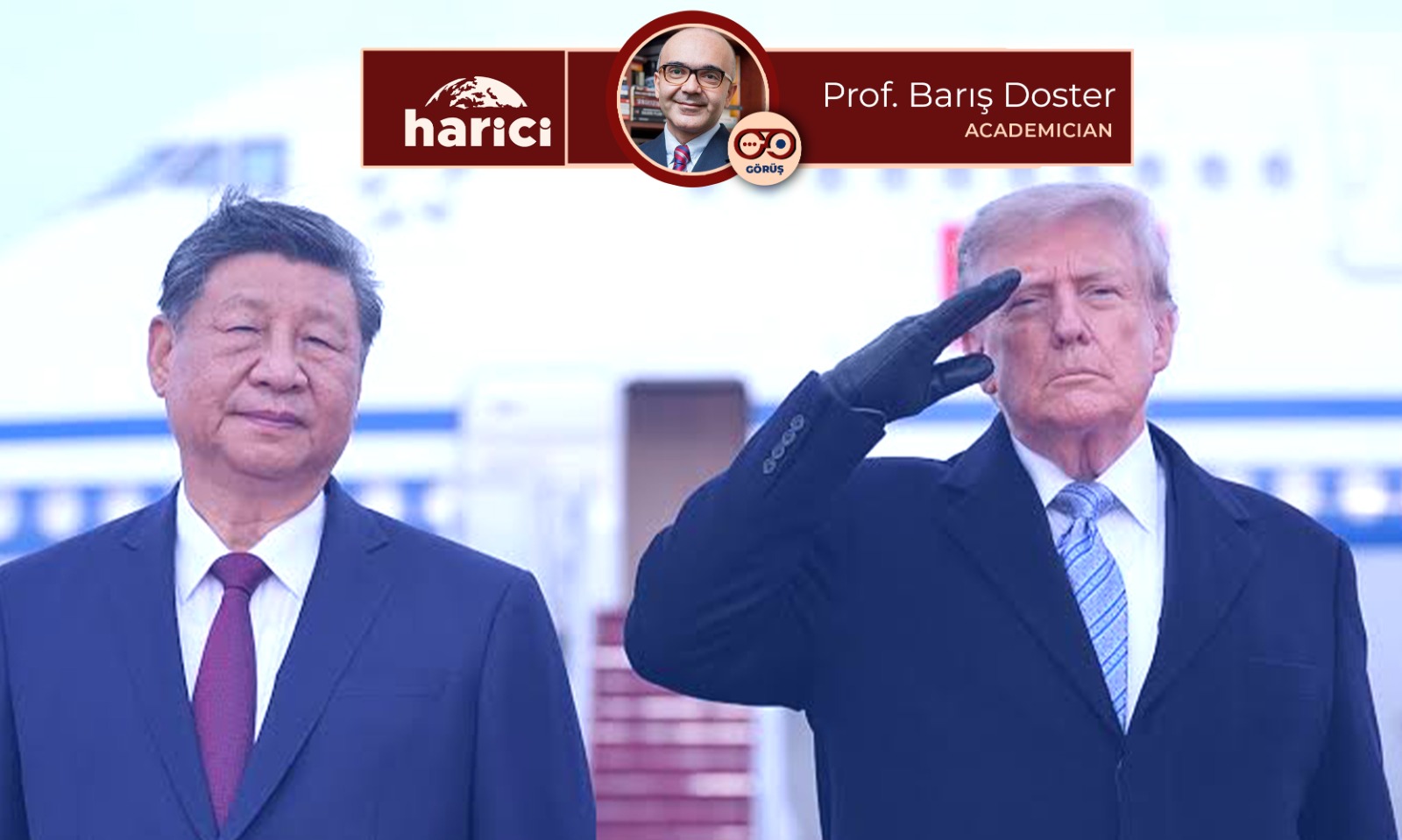
Much commentary followed the US president greeting the visiting Chinese leader at the foot of the aircraft stairs: both because a US president had not done so in many years, and because the leader he welcomed heads a state that the US defines as a competitor, an adversary, and an enemy. That photograph demonstrated that the US itself now recognizes China not merely as an economic power, but as a political, military, scientific, industrial, and technological one; yet it revealed other realities as well.
It showed that a multipolar order has arrived. It showed that the failure of the US to abide by the order whose rules it laid down and whose institutions it established has exacted a heavy toll on the US itself. It showed that the US-centric Atlantic system is unravelling. It showed that the collapse of a world order flouted, and indeed subverted, by its own rule-maker is both legitimate and inevitable. It showed that East-centred institutions, such as the Shanghai Cooperation Organisation and BRICS, enjoy an open path against Western-dominated bodies. It showed that the US regards China as a rival not merely economically, but ideologically and technologically. It showed that the US has proven unable to exercise deterrence against China, Russia, and Iran to the degree it desires.
Let us admit it: after the Cold War ended, the US assumed it could act as it pleased by bringing the European Union to its side and constantly invoking human rights, democracy, and freedom. It was mistaken. The more it spoke of a rules-based world order, of a liberal world order, the more it flouted those very rules. In the end, that order collapsed as well. The birth of a multipolar, multilateral, and multicentric world accelerated; and it was just as well. Now is the time to debate the rules, institutions, traditions, and solutions of this new order.
Yet who will conduct this debate? Who will take part in this search?
It is not right to expect this from the US; nor is it realistic. It is likewise impossible to expect it from the European Union. Europeans follow so subserviently in Washington’s wake that they refuse to consider even Russia as European, despite the fact that, alongside its Eurasian identity, millions of its citizens live across territory spanning Europe and Asia while viewing their nation as historically, politically, socially, culturally, artistically, and intellectually European. They attempt to construct a European defence and security architecture by excluding Russia, in defiance of Russia, and by harbouring hostility toward Russia. In the end, they are both mistaken and defeated.
As the new order emerges, India must also be examined under a distinct heading, alongside China and Russia. For India is a nuclear power possessing the world’s largest population and its 5th largest economy. It maintains disputes with China and Pakistan, yet enjoys good relations with Russia, the US, and Britain. It is a member of both the SCO and BRICS. On the other hand, within the Quad grouping, alongside the US, Japan, and Australia, it positions itself against China.
In summary, as an order takes shape in which the West runs out of breath while the East rises, and Atlantic institutions dissolve while those of Eurasia and the broader Global South come to the fore, we must first rid ourselves of Cold War dogmas and habits.
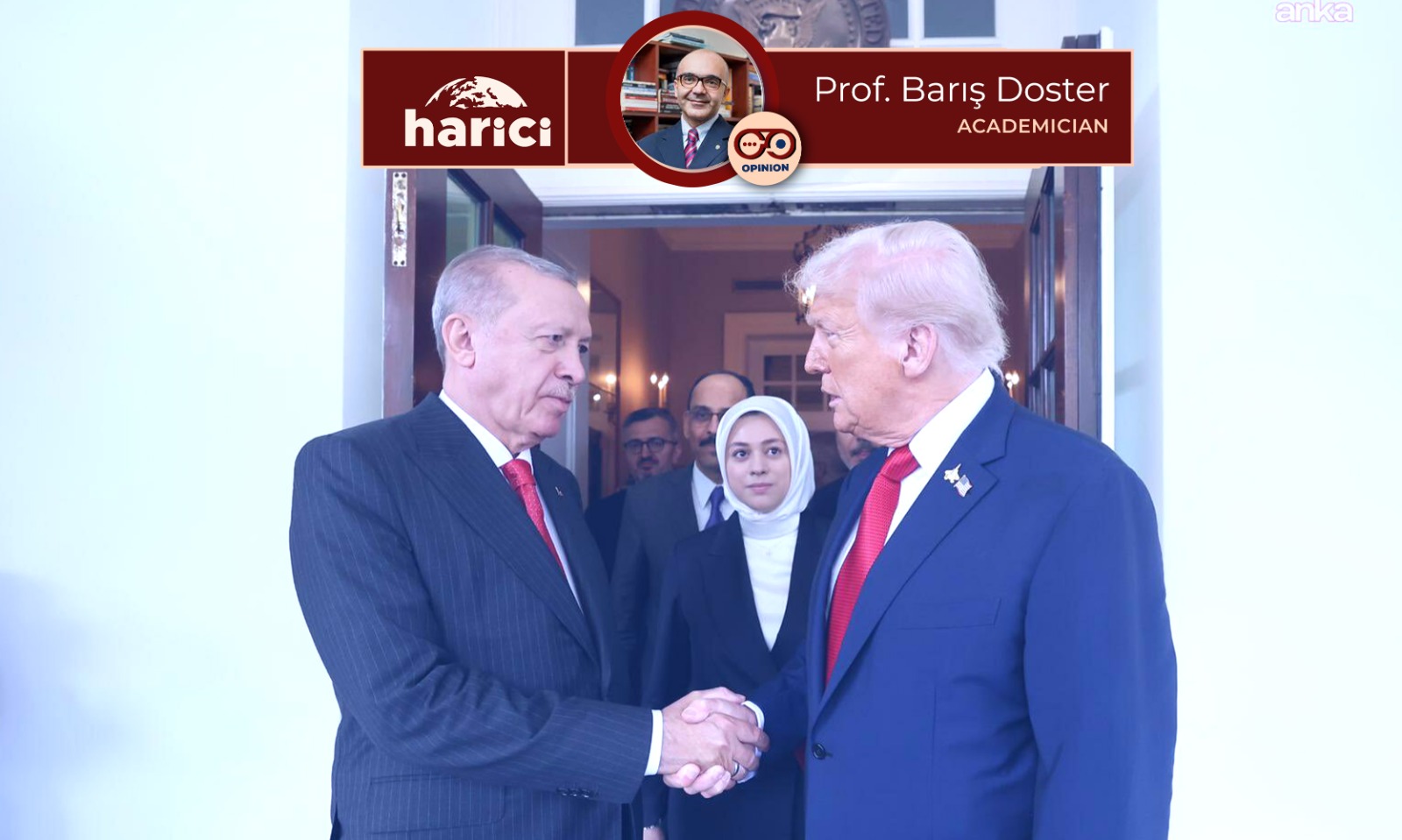
At the NATO summit held in Ankara last month, US President Donald Trump made promising remarks to Türkiye regarding the lifting of CAATSA sanctions, clearing the path for the sale of F-35 fighter jets to Türkiye, and supplying the engines required for the domestic Kaan aircraft. He has yet to keep his word.
This is quintessential Trump. He is neither a reliable nor a predictable leader. He approaches diplomacy like a merchant. In bargaining, he opens with the highest possible bid. Rather than institutional consultations, negotiations, formal diplomatic channels, and classical statecraft, he favours personal ties, bilateral encounters, and leader-to-leader diplomacy. He is notoriously erratic. A figure he praises one day, he drags through the mud the next, humiliating, scolding, and even insulting them.
US moves in the Mediterranean
Failing to honour the promises made to Türkiye, the US eased and partially lifted the arms embargo it had enforced on the Greek Cypriot Administration (GCA) since 1987 in 2020, before abolishing it entirely in 2022. Not content with this, the US signed a military cooperation agreement with the GCA in 2024 and hosted its leader at the White House. The GCA, whose path to acquiring weaponry from the US was cleared in 2024, has also recently been deepening its relations with France. Even though two British sovereign bases already exist in the southern part of Cyprus, with the US utilizing them whenever necessary, both the US and France signed separate basing agreements with the GCA. The GCA’s relations with Israel are also remarkably sound, as are those with Qatar. Meanwhile, relations between Greece and France have been exceptionally warm in recent years.
Amid all these tangible developments, Türkiye has largely relinquished its vigilance regarding the Blue Homeland. Drilling vessels and seismic survey ships have been withdrawn from the eastern Mediterranean.
The most distressing of these developments has been that four Turkic states in Central Asia (Kazakhstan, Uzbekistan, Turkmenistan, and Kyrgyzstan), none of which officially recognize the Turkish Republic of Northern Cyprus (TRNC) as a state, expanded their ties with the GCA and opened embassies in exchange for European Union financial assistance. Through this recognition, by acknowledging the Greek Cypriot Administration as the sole representative of the entire island under the name of the Republic of Cyprus, they effectively rejected the existence of the TRNC, whatever they might claim to the contrary.
Whatever anyone may say, and from whichever angle one evaluates it, the conduct of these four friendly and brotherly states cannot be explained merely by their lack of loyalty or their disregard for Türkiye’s sensitivities on this matter. Alongside this, one must acknowledge the failure of Turkish foreign policy. If Türkiye cannot convince even fellow Turkic states, let alone others, on an issue where its position is most legitimate and justified, such as Cyprus; if, far from persuading them, it cannot prevent them from cultivating relations with the GCA and opening embassies, this represents a monumental failure on the part of Turkish foreign policy.
Moreover, the failure in the Mediterranean is not confined to Cyprus. There is more.
Who is sidelining Türkiye in Syria?
Türkiye is persistently excluded from European-organized meetings on Syria. Türkiye’s views are not sought. So much so that even Qatar, our closest ally in the Arab world, on whose soil we established a military base and to whom we sold major assets, does not hesitate to take part in initiatives that exclude Türkiye from energy projects in the Eastern Mediterranean, or to cooperate with Greece and the Greek Cypriot Administration.
Much has changed in Syria since the days when Ahmet Davutoğlu, former prime minister, former foreign minister, former AKP chairman, and leader of the now-dissolved Future Party, carried away by his own momentum, declared: “Not a bird can fly in the Middle East without our knowledge”, “We know the Middle East street by street, inch by inch”, and “We are the masters, pioneers, and spokesmen of the emerging Middle East”, all while eagerly seeking to act as a subcontractor on behalf of the US. The regime has changed. The government has changed.
So let us ask: did we get what we wanted?
Israel, which most recently struck Abu al-Duhur Military Airbase east of Idlib in northern Syria; Israel, a backer of the PKK-PYD-YPG terrorist organization; Israel, which usurped Syrian land in the Golan Heights, attacking Syria and rolling in its tanks whenever it pleases; Israel, which seeks to partition Syria into four entities (Kurdish, Alawite, Arab, and Druze): Israel got what it wanted. And it continues to do so.
Does Israel, which directs scathing rhetoric at Türkiye, fortified by immense US backing and sustained by Europe’s three major powers (Germany, Britain, and France), draw this audacity solely from the imperialist powers standing behind it? Or does Türkiye’s inefficacy in the Turkic world and across the Arab sphere, alongside that backing, also embolden Israel?
In answering this question, we will arrive at a far more accurate assessment if we take into account the depth of Israel’s relations with Azerbaijan.

Germany expands North Sea military ports and plans new naval base

Musk appointed co-director of Pentagon future warfare initiative

US waives human rights terms on $320m military aid to Egypt

Putin says Russia did not start war and warns of nuclear risks

European nations unite against US pressure over strategic oil stocks
-

 Europe4 days ago
European unions urge governments to scrap all Palantir deals
-
 Diplomacy4 days ago
East-West Forum in Istanbul highlights irreversible shift to multipolarity
-
 Europe1 week ago
Emmanuel Todd says West faces collapse amid Ukraine and Iran crises
-
 Diplomacy1 week ago
East-West Forum in Istanbul to debate multipolarity and global order
-
 Middle East1 week ago
Sharaa says 7 October must not shape Israel policy on Syria
-
 Europe1 week ago
European intelligence chiefs divide over risk of Russian attack
-
 America1 week ago
Republican support for Trump’s war with Iran drops sharply in polls
-
 Middle East1 week ago
Palestinian factions confront legitimacy crisis at Istanbul talks
