
America
AI infrastructure boom risks entrenching US dollar dominance in global economy, economists warn

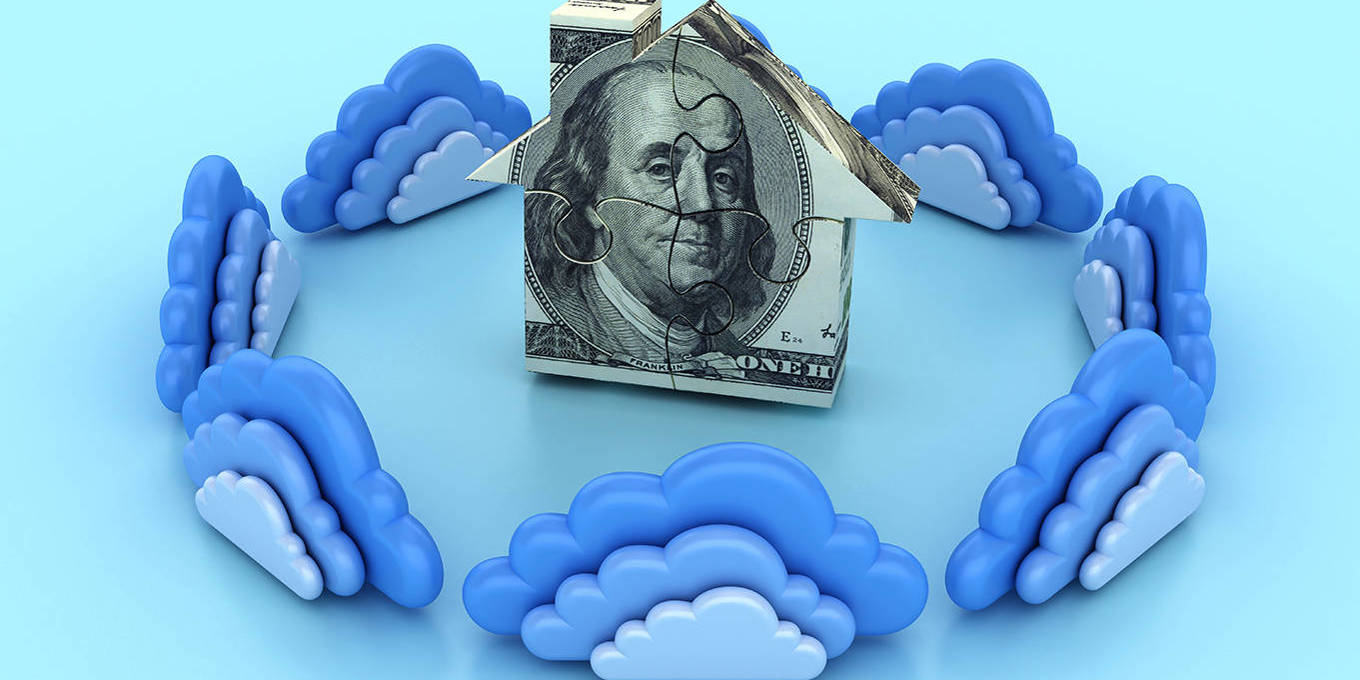
While politicians and economists debate the future of US dollar hegemony, artificial intelligence may already be reinforcing it.
Writing for Project Syndicate, Chenxu Fu and Xianguo Huang argue that immediate action is needed to address the growing influence of AI companies, cloud service providers, and payment networks, which they say are already authoring “the next chapter of international monetary history.”
“The signing of a 20-year data center lease is unlikely to be perceived as a monetary event. Even the announcement of a dollar-pegged stablecoin linked to the AI boom may not necessarily be characterized as such,” the authors write. Nevertheless, they warn that such developments are spreading rapidly, contributing to the creation of a framework in which “an input vital to the global economy is priced, paid for, and ultimately converted into dollar-denominated assets.”
Fu and Huang note that since the 1970s, the pricing of oil in US dollars has driven global demand for the currency while generating export revenues for oil producers. Pointing out that the petrodollar serves not as a mere “prophecy” but as a “template,” they write:
“This demonstrates that when production, payments, and asset recycling reinforce one another, an indispensable input can embed a currency into global markets.”
Emphasizing that artificial intelligence could trigger its own distinct version of this dynamic, the authors observe that debates over who will win the AI economy typically focus on the race to develop the most advanced models. However, they argue that the real transformation begins “when model performances converge and companies integrate AI into their daily operations.”
“At that point, just as we speak today of dollars per barrel, we may find ourselves thinking in terms of dollars per unit of compute,” Fu and Huang write.
Turning their focus to energy, the authors emphasize that data centers convert electricity into “billable computing capacity,” noting that this capacity is “now being secured years in advance.”
For instance, when Anthropic signed a 20-year lease agreement with infrastructure provider TeraWulf, the move closely resembled an industrial firm securing long-term production capacity. According to the authors, this represents “a supply-side bet that demand for compute will persist.”
Project Syndicate notes that OpenAI’s new consulting arm, Deployment Company (DeployCo), aims to address slack on the demand side by embedding engineers directly within companies to integrate AI into their workflows. “Once such systems are deployed, compute expenses will become a recurring operating expenditure,” the publication states, before turning to the currency implications:
“This brings us to the first channel that will consolidate dollar dominance. If the AI supply chain is dominated by US-linked companies and pricing is executed in dollars, global digital production will be forced to secure dollar liquidity, and the resulting revenues will largely flow into a dollar-based financial system. Unlike oil revenues, these earnings will not accumulate abroad before returning to US markets.”
Beyond visible costs, the authors argue that an invisible infrastructure is being constructed underneath: a payment network upon which autonomous trade will increasingly operate.
OpenAI’s partnership with Visa aims to build this infrastructure, pointing toward a “more programmable” future.
“If AI agents begin purchasing services, arranging logistics, and replenishing inventory with minimal human intervention, payments must be automated and machine-native,” the authors write.
According to Fu and Huang, this represents the second channel reinforcing dollar dominance. Pointing specifically to dollar-pegged stablecoins, they emphasize that these tokens could provide “the programmable settlement solution required for smart contract-based commerce.”
The announcement of Open USD—a dollar-pegged stablecoin backed by more than 140 payment, financial, and cryptocurrency companies—demonstrates that dollar-based tokens are already being positioned for this transformation.
Acknowledging that these two channels could converge over time, the authors explain that the same system enabling “agent-based commerce” via dollar-pegged stablecoins could just as easily facilitate compute payments.
Consequently, dollar-based billing would merge with stablecoin payments, effectively converting technological dependence into monetary dependence.
This infrastructure also serves an asset-recycling function, as demand for programmable dollars translates into demand for the safe assets backing them—specifically US Treasuries.
While agent-based commerce is still in its infancy, stablecoin issuers are already among the largest buyers of US Treasury bills.
According to the authors, these combined developments point to the potential emergence of an “energy-compute-dollar loop”:
“Electricity powers data centers; data centers generate compute power; compute power enables the automation of business activities, including payments supporting programmable settlement; and stablecoin reserves flow into US Treasuries. Ultimately, a self-reinforcing cycle connecting AI infrastructure, digital payments, and US financial markets will emerge.”
Fu and Huang write that it is striking how no single government appears to be steering this process.
Whereas the petrodollar was established through formal agreements, they argue that the emerging AI-driven era is largely being shaped by commercial decisions:
Cloud service providers secure land and power resources. AI companies package models into services. Payment consortia build stablecoin infrastructure. Stablecoin issuers buy US Treasury bills.
“Each step makes sense on its own; but taken together, they quietly reinforce dollar dominance,” they write.
Noting that this reality carries major implications for non-US policymakers, the authors highlight existing regional countermeasures: “For example, ASEAN+3 countries are attempting to conduct trade in local currencies, connect national payment systems, and pool reserves to hedge against dollar shortages.”
However, Fu and Huang believe that while ASEAN+3 may not be able to prevent the formation of a “self-reinforcing dollar loop,” the bloc can limit its reliance on the currency:
“The key will be to unify energy, AI, and payments under a single strategic agenda. Regional data centers powered by affordable and increasingly clean energy could expand local firms’ access to compute resources. Furthermore, developing local-currency tokenized payment systems for agentic commerce would reduce dependence on dollar systems and ensure transactions remain traceable by regulators.”
Arguing that complete technological self-sufficiency is unrealistic for non-US countries in the near term, Fu and Huang contend that “the primary objective is to participate in digital production without accepting a new layer of dollar dependence as the price of admission. After all, unlike petrodollar arrangements, the emerging AI system offers nations no seat at any summit table.”
The authors conclude:
“While policymakers and economists debate the future of dollar dominance, AI companies, cloud providers, and payment networks may already be writing it into the next chapter of international monetary history. Those hoping to shape this chapter must act now; otherwise, they risk being left off the page.”











A cyberattack targeting the US Department of War’s personnel database has resulted in the leak of personal information belonging to approximately 3 million people.
Speaking to ABC News, a Pentagon official stated that the system accessed by unauthorised individuals contained the records of 2,760,000 living persons and 294,000 deceased individuals.
The Military Times portal, which first broke the news, had reported the number of affected individuals as approximately 4 million based on two sources. The Pentagon official subsequently conveyed different figures to ABC News.
The leak encompasses Social Security numbers and duty information belonging to military personnel and civilian employees. According to an official notification examined by Military Times, the compromised records may also include names, dates of birth, contact information, sex, race, and military occupational specialties.
The unauthorised access to the information system of the Defense Manpower Data Center (DMDC) lasted for approximately nine months, between October 2025 and 16 July 2026.
ABC News reported that the access in question was obtained by a small number of third-party users. The vulnerability was closed after it was identified.
The DMDC is considered one of the Pentagon’s primary personnel records centres. More than 60 million records belonging to active-duty personnel, reservists, civilian staff, contractors, retirees, veterans, and military family members are stored at the centre.
The Pentagon has not detected any evidence that the leaked data has been misused. Military Times reported that affected individuals were offered identity restoration and credit history monitoring services.
A similar data breach previously occurred on the Federal Bureau of Investigation’s (FBI) recruitment website, FBIJobs.gov. According to information obtained by ABC News from internal communications and sources, the FBI is considering the possibility that data belonging to its entire staff may have been stolen.
The New York Times (NYT) examined a portion of the stolen FBI records. Home addresses, telephone numbers, official email addresses, Social Security numbers, dates of birth, hiring dates, and emergency contact details for relatives were identified within these documents.
The database also contained unit designations, duty roles, and information regarding the supervisors of personnel. Some records revealed assignments within counterintelligence and counternarcotics units, as well as departments examining threats originating from Russia, China, and Iran.
Ciaran Martin, the former head of the UK National Cyber Security Centre, noted that this type of breach could directly affect the FBI’s operational capabilities.
The hacker group known as ShinyHunters had announced that it had seized medical data and security clearance records alongside files belonging to tens of thousands of active and former FBI employees.
Experts evaluating the matter for the NYT warned that this information could be used to track agents, threaten their families, or compile dossiers by foreign intelligence services.
The ShinyHunters group initially threatened to release the data unless the bureau withdrew an advisory it had published concerning the group’s attack methods.
The group later asserted that it had never intended to leak the information and characterised its action as an advertising campaign.
In a report published in May, Reuters noted that the personal data of US military personnel had been used in surveillance and attack preparations.
According to the agency, Washington’s adversaries gained the ability to pinpoint areas where troops were concentrated by exploiting commercially available location data. US lawmakers at the time criticised the Pentagon for failing to adequately protect the personal data of military personnel.

US President Donald Trump’s trade policy and the Washington administration’s push to increase Venezuelan oil imports are prompting Canada to diversify its energy exports.
According to a report by The Wall Street Journal, recent developments are accelerating Canada’s development of new oil and natural gas projects.
Steps taken by the Ottawa administration, which aspires to become an energy superpower, are seen as potentially strengthening the country’s position in global markets.
In Canada, the world’s fourth-largest oil producer and fifth-largest natural gas producer, the energy sector accounts for approximately one-fifth of total exports.
Almost all of the country’s natural gas exports and approximately 90% of its oil exports go to the US.
The newspaper writes that the trade war with Washington and the atmosphere of confrontation entered into with Iran have heightened Canada’s desire to turn to alternative markets outside the US.
Officials plan to increase shipments of oil and liquefied natural gas (LNG) to European and Asian markets.
Accelerating infrastructure investments in line with this target, Canada is also shortening approval processes. The government is prioritising the construction of an oil pipeline extending specifically to the west coast.
According to the newspaper’s estimate, if major pipeline projects are implemented, Canada’s daily oil transport capacity could rise to 6.8 million barrels by 2034.
Routes heading to the west coast will make up approximately 30% of this capacity.
The Canadian administration is simultaneously advancing LNG export projects. According to the report, these investments could allow approximately 55% of Canadian natural gas exports to be directed to markets outside the US by the early or mid-2030s.
While the government expands tax incentives for the oil and natural gas sector, the province of Alberta also plans to overhaul its royalty system.
However, the newspaper notes that implementing the new projects requires heavy investment, and the process depends on the final decisions taken by producers as well as the completion of regulatory approval processes.
The expansion of pipeline and LNG infrastructure could gradually reduce Canada’s dependence on the US market while raising its share in the global energy market.
The Canadian Prime Minister’s demand to reduce reliance on the US market had also come to the fore in July.
According to Carney’s statement, the province of Alberta submitted a plan for a pipeline spanning more than 1,000 kilometres to the west coast of British Columbia.
Targeted for completion by September 2027, the line will reach the Pacific coast by following an existing corridor through the mountainous terrain.
This shift in energy comes at a time of strained relations with the US. Donald Trump said that if Canada obtains associate member status in the European Union, he could halt trade with Europe in certain sectors and impose high tariffs.
As reported by the Associated Press, Trump characterised such a rapprochement as a “potentially hostile act”.
European Commission President Ursula von der Leyen had proposed opening the path for Canada to become the EU’s first associate member. The terms of this associate membership status, which is not defined in EU treaties, are not yet clear and require the approval of member states to enter into force.
Canada, which does not seek full membership, aims for maximum rapprochement with the EU.
Following Trump’s return to the White House, relations between Washington and Ottawa deteriorated. The Trump administration, which repeatedly called on Canada to become the “51st state” of the US, introduced additional tariffs.
In July, the US began imposing 50% tariffs on certain Canadian-origin goods.
The US economy is projected to grow much faster than all other major advanced economies this year, as its domestic policies trigger difficulties across much of the globe.
According to Axios, the global economy has proved surprisingly resilient in the face of successive shocks.
The US stands out within this broader picture. A boom in artificial intelligence investment is helping the country expand far more rapidly than peer economies.
Yet this exceptional performance carries a price: more persistent inflation and interest rates that may need to stay at elevated levels for longer to rein it in.
The Organisation for Economic Co-operation and Development (OECD) projects that the US economy will expand by 2.2% this year.
That rate is roughly double the pace forecast for the eurozone, Germany, and the United Kingdom. Growth is expected to be even weaker in Japan (0.8%) and Canada (0.9%).
This growth gap is expected to persist next year. In 2027, US growth is projected to reach 2.1%, while growth across most other major advanced economies in the rest of the world is forecast to hover around 1%.
The OECD has grown more optimistic regarding the US since June, raising its growth forecast by 0.2 percentage points for 2026 and by 0.3 percentage points for 2027.
This trend contrasts with downward revisions to next year’s growth projections for the global economy overall, the eurozone, Canada, the United Kingdom, and Japan.
OECD Chief Economist Stefano Scarpetta told reporters this morning:
“The biggest risk remains the course of the conflict in the Middle East and its impact on the energy market. But there are a number of other risks, some of which appear to have become somewhat more pronounced compared to the June forecasts.”
Scarpetta highlighted rising government bond yields, the risks accompanying the AI investment boom, and the likelihood of extreme weather pushing up food prices.
According to the OECD, the boom in artificial intelligence (AI) has provided the US economy with a powerful shock absorber absent in most other economies.
Rapid growth in AI investment and manufacturing “partially offset” the economic blow dealt by the conflict in the Middle East.
Data centre and technology spending directly bolstered US growth.
The inflation outlook, meanwhile, is proving more stubborn than it appeared several months ago.
The OECD expects headline inflation in the US to fall from 3.6% this year to 2.6% next year.
However, this forecast for 2027 is half a percentage point higher than the figure projected in June.
Core inflation in the US is projected to stand at 3.3% this year, among the highest rates across leading advanced economies, before easing to 2.5% next year.
This stubborn path explains why the OECD expects the Federal Reserve to deliver one more interest-rate increase this year and anticipates rates will remain in the 4% to 4.25% range through the end of 2027.
On the other hand, the AI boom accelerating US growth is beginning to bring its own macroeconomic headwinds.
According to the OECD, long-term borrowing costs in most of these major economies are at their highest levels in at least 15 years.
The organisation argues that heavy borrowing by AI firms has contributed to pushing yields higher, which could elevate costs across the broader economy and leave markets vulnerable if AI profits fail to meet expectations.
America has contributed to making the global economic climate more challenging.
Even though its own economy has so far performed better than nearly all other countries, this resilience comes accompanied by an inflation problem that remains difficult to eliminate.

Jordan Bardella faces antisemitism accusations over past messages

EU pays extra €100bn for energy without securing more oil or gas

Pentagon breach exposes personal records of three million people

Britain expands curbs on arms exports to Israel over Gaza risks

Germany deepens military, police, and cyber ties with Israel
-

 Asia2 weeks ago
DeepSeek engineer warns AI will lead to communism or Cyberpunk
-

 America2 weeks ago
Big Tech profits from AI extinction hype, Ken Klippenstein says
-

 Europe2 days ago
European unions urge governments to scrap all Palantir deals
-

 Diplomacy2 days ago
East-West Forum in Istanbul highlights irreversible shift to multipolarity
-

 Europe1 week ago
European intelligence chiefs divide over risk of Russian attack
-

 Europe5 days ago
Emmanuel Todd says West faces collapse amid Ukraine and Iran crises
-

 Diplomacy6 days ago
East-West Forum in Istanbul to debate multipolarity and global order
-

 Middle East1 week ago
Sharaa says 7 October must not shape Israel policy on Syria
