
Middle East
A death trap under the guise of aid in Gaza: Mercenaries and CIA-linked shell companies

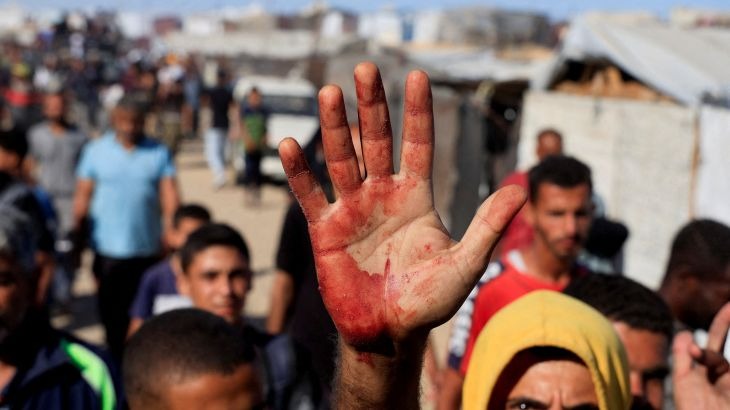
The genocide in Gaza, ongoing for 20 months and constituting the bloodiest chapter of a 77-year occupation, has entered a new phase with one of the 21st century’s most insidious methods of warfare: a mass slaughter driven by profit and ideology, concealed under the mask of humanitarian aid. At the center of this bloody mechanism are US-based private security companies, shell companies managed by former intelligence officers, and a supposed aid foundation controlled by Evangelical Zionist leaders.
North Carolina-based UG Solutions, a Wyoming-based wealth management firm’s shell company Safe Reach Solutions, and their public face, the Gaza Humanitarian Fund (GHF), are systematically luring Palestinian civilians struggling with starvation into a “death trap” under the direct supervision and cooperation of the Israeli army. Aid distribution points are deliberately established in the middle of active war zones. Thousands of unarmed civilians who come to these locations hoping to find food are either killed by fire from Israeli soldiers and American contractors or crushed to death in the ensuing chaos.
The inner workings of this bloody mechanism have been exposed through the confessions of conscientious witnesses like retired Lieutenant Colonel Anthony Aguilar, a decorated 25-year US Special Forces (Green Beret) veteran who personally served in the operation, and reports from international organizations. The picture that emerges reveals not just a series of war crimes, but also the entanglement of Evangelical Zionism, far-right ideologies, shell companies run by former CIA officials, and unchecked capital in the project to annihilate the Palestinian people.
The Evangelical-led front foundation, GHF
The Gaza Humanitarian Fund (GHF), designed as the public face of this deadly operation in Gaza, emerged like a ghost, leaving almost no digital footprint. Despite the US State Department’s incomprehensible statements defending its existence, the organization’s website long consisted of an empty “under construction” page. Although GHF presents itself as an entity providing “critical aid and support” to the people of Gaza, this statement is the exact opposite of its practice.
After the foundation’s founder and initial director, Jake Wood, resigned on May 26, 2025, just before the official launch, the person appointed to replace him revealed the project’s true purpose: Johnnie Moore.
Moore was a public relations specialist and an Evangelical leader who began his career as the Senior Vice President of Corporate Communications at the Evangelical Liberty University, founded by Jerry Falwell Sr. The public relations firm he later founded, Kairo Company, promoted itself with the slogan, “We get it done… Whatever it takes.” This “results-oriented” approach seemed to summarize the philosophy of the bloody operation conducted by GHF.
Moore’s appointment was not surprising, considering how closely GHF worked with the Israeli Coordination and Liaison Administration (COGAT) and the Israeli army. Moore had co-chaired the Evangelical advisory board for the 2016 Trump campaign, met with Saudi Crown Prince Mohammed bin Salman, and established close ties with Azerbaijani President Ilham Aliyev. However, his most notable connection was his collaboration with the US Ambassador to Israel, Mike Huckabee.
Moore’s social media account is filled with Zionist propaganda from Israeli venture capitalists, media outlets like Fox News and Breitbart, and pro-war financiers. Following the massacres at GHF’s aid distributions, which cost hundreds of Palestinian lives, Moore used language that shifted the blame to Hamas. In a social media post, hiding behind rhetoric of Christianity and peace, he used the following words:
“The principle of impartiality does not mean neutrality. There is good and evil in this world. What we are doing is good, and what Hamas is doing to these Gazans is absolute evil… If you won’t join us, at least have the courage to boycott HAMAS, not us… I can’t get these words out of my head, written to Christians tortured by the Roman Empire: ‘The God of peace will soon crush Satan under your feet.’ Romans 16:20.”
These words clearly reveal the mindset behind the operation. On June 10, 2025, the Center for Constitutional Rights sent a notice to Johnnie Moore, informing him that GHF was at “risk of legal liability for complicity in war crimes, crimes against humanity, and violations of the Genocide Convention.”
GHF’s financial infrastructure also exposes the powers behind the project. An operations summary dated May 8, 2025, states that the foundation maintained banking relationships with Truist Bank and JP Morgan Chase and had received a verbal commitment from Goldman Sachs for its Swiss-based branch. This indicates that, under the shadow of genocide accusations, global financial giants are also part of this bloody mechanism.
The operation’s muscle: Mercenaries and shell companies
The entities conducting GHF’s field operations and holding the monopoly on violence are US-based private security contractors. These firms are notable not only for their military backgrounds but also for their dubious corporate structures and the extremist ideologies of their personnel.
One of the main contractors for the operation, UG Solutions, is managed by Jameson Govoni, a former US Special Forces soldier. Govoni describes himself as a “thug from Boston” and said, “I joined the army to inflict pain on those who inflicted pain on us.” This mentality forms the basis of the company’s brutal practices in Gaza. Govoni is also the creator of a product called Alcohol Armor, founded in 2022, which promises to reduce the effects of alcohol. His story that the idea for this product came during a covert mission in Nicaragua where alcohol consumption was mandatory points to the unprofessional and reckless attitude of Govoni and his circle. His partner, Glenn Devitt, is known to have said, “We are by far the worst drinkers in the military. My stomach was pumped.”
The ideological profile of UG Solutions becomes even clearer with the personnel it deploys in the field. It was discovered that one of the team leaders providing security services at GHF’s controversial food distribution points, Johnny “Taz” Mulford, was a member of a Crusader-themed motorcycle club that declared its opposition to the “radical jihadist movement.” Mulford, a member of the biker group called Infidels, displays numerous tattoos associated with the Crusades on his Facebook account. These include the cross of the Knights Templar, the Jerusalem cross, and the number 1095, the year Pope Urban II called for the First Crusade.
According to Professor Matthew Gabriele, an expert on Crusader iconography who spoke to The Intercept, these symbols are frequently adopted by racist and far-right groups and allude to a fantastical idea of an existential war between Islam and Christianity. Gabriele stated that the date 1095 has been used symbolically by far-right extremists, from the Norwegian mass murderer Anders Breivik to the perpetrator of the New Zealand massacre, and represents a worldview in which Muslims are a “threat that must be killed.” This situation reveals the kind of mentality that is actually running an operation claiming to bring “aid” to a predominantly Muslim population.
Safe Reach Solutions: A CIA front
The other key contractor in the operation, Safe Reach Solutions (SRS), has a much darker structure. According to research by journalist Jack Poulson, SRS was actually a shell company for Two Ocean Trust LLC., a Wyoming-based “intergenerational wealth management” firm. Both companies were registered at the same address in Jackson, Wyoming.
More importantly, according to a Washington Post report, SRS was founded by Philip F. Reilly, the former chief of the CIA’s Special Activities Center. The company’s formation process was kept extremely secret despite promises of “transparency.” Its website was registered just one day before the company’s official establishment, and the site contained no information about the company’s legal name or any of its executives. The company’s incorporation documents were linked to shady intermediaries who had previously been subjects of the Panama Papers investigations. This indicates that the operation in Gaza was not only run by mercenaries but also by entities from the depths of the US intelligence world specializing in financial secrecy. A wealth management firm, led by a former CIA chief, conducting a deadly security operation in Gaza is the most blatant evidence that the project has covert and possibly illegal objectives far beyond humanitarian aid.
“A dystopian and post-apocalyptic landscape”
The person who most clearly exposed the inner workings of this complex and bloody mechanism was retired Lieutenant Colonel Anthony Aguilar, a 25-year US Special Forces (Green Beret) veteran with a Purple Heart and Bronze Star, who served in the operation himself. In interviews with both Democracy Now! and Tucker Carlson, Aguilar described in stark detail the systematic war crimes and inhumane practices he witnessed in Gaza. Defining himself not as a “mercenary” or a “whistleblower” but as a “patriotic American,” Aguilar said he was speaking out because the American people needed to know they were on the wrong side of history.
Aguilar described the devastation he encountered upon first entering Gaza as a “dystopian and post-apocalyptic landscape.” Stating that he faced a scene far worse than any war zone he had previously served in, such as Iraq, Afghanistan, or Syria, Aguilar said, “What I witnessed in Gaza can only be described as a landscape of destruction. It was the collapse of human morality. We, as the US, have become complicit in this process. We are jointly participating in the ongoing atrocities and genocide in Gaza.” Describing those who deny the claims of hunger and famine as “dehumanized,” Aguilar emphasized that what he saw was not an exaggeration but a concrete reality.
“They were designed as death traps”
Aguilar’s most shocking revelations concerned the location and operation of the aid distribution centers. He said these points were designed as “death traps,” as Senator Chris Van Hollen had also noted. Aguilar stated that these centers were deliberately set up in the middle of conflict zones where the Israeli army was conducting active offensive operations. Emphasizing that this was a clear violation of the Geneva Conventions, Aguilar said, “These points were knowingly established in conflict zones. I thought this was either complete ignorance or intentional. They were deliberately placed here.”
He also said that these centers were surrounded not by barbed wire but by razor wire, which causes serious injuries to civilians, and that this wire was specifically requested by the US contractors. He stated that this practice alone constitutes a war crime.
Aguilar explained that the violence used against unarmed civilians at the distribution points was systematic. He said that despite no attacks occurring, indiscriminate force was used to control the crowds, and there were no rules of engagement or proper response protocols. Even more alarmingly, he stated that the ammunition used was M855 armor-piercing rounds. Aguilar asked, “This round is designed to pierce armor and kill. Why would such ammunition be used against unarmed people?”
Presenting a video he personally filmed on May 29 as evidence, Aguilar showed an armed American security guard affiliated with GHF opening fire on a crowd of civilians moving away from the aid recipients. In the video, another guard next to the shooter can be heard saying, “I think you hit him!” Aguilar stated, “Unarmed, hungry people were shot at just to make them move faster. This video was filmed by me. Not Hamas, not the Gaza Ministry of Health, but me; an American,” clearly identifying the perpetrators. Aguilar confirmed that he had personally witnessed, “beyond a shadow of a doubt,” both American contractors and Israeli soldiers firing on Palestinians struggling with hunger.
An operation of deception
Aguilar revealed that the legal basis of the operation was also entirely illegal. He stated that all UG Solutions employees, including himself—meaning armed Americans—were in Israel on “tourist visas.” He said this was contrary to international law and showed that the mission was rushed, with many irregularities being overlooked.
He also demonstrated with figures that GHF’s claims about the amount of aid were a deception. Criticizing the foundation’s announcement that it had distributed 96 million meals in 65 days, Aguilar explained what this meant with a simple calculation:
“When you divide 96 million by 2.21 million, then by three meals a day, and then by 65 days, it means we provided food for only 15 of the 65 days. What happened to the other 50 days? This is not aid; this is a systematic starvation operation.”
Aguilar argued that GHF lacked the capacity to carry out this operation and that its funding should be immediately cut, with the aid process being handed back to the United Nations.
Aguilar also responded to UG Solutions’ attempts to discredit him. He noted that the company claimed to have fired him for inappropriate conduct, whereas he had resigned on June 13. He said that even after his resignation, his salary was paid, his insurance was covered, and he was urged to withdraw his resignation. “I was not fired. On the contrary, I was promoted twice, and my salary was increased twice,” said Aguilar, adding that all the evidence he possesses is original, time-stamped, and verified, and that UG Solutions even used one of his videos in its own press release.
Dissenting voices in the US
This bloody operation has sparked reactions both within the US and internationally. Human Rights Watch (HRW), in a report published on August 1, 2025, stated that Israeli forces regularly firing on Palestinian civilians struggling with hunger at aid distribution points constitutes a “war crime.”
Some members of the US Congress have also begun to speak out. House members Joaquin Castro and Sara Jacobs, along with Senators Peter Welch and Chris Van Hollen, sent a letter to UG Solutions and Safe Reach Solutions demanding an explanation of their activities in Gaza. The letter warned that the companies and their personnel could face future criminal and civil liability under laws such as the US War Crimes Act. The legislators stated that there was information indicating “your personnel… were brought to Israel on tourist visas, sent into Gaza with war materiel, and ordered by Israeli officials to use lethal force against unarmed and starving Palestinian civilians.” At least 21 US senators also wrote a letter to Secretary of State Marco Rubio, demanding that US funding for GHF be halted.









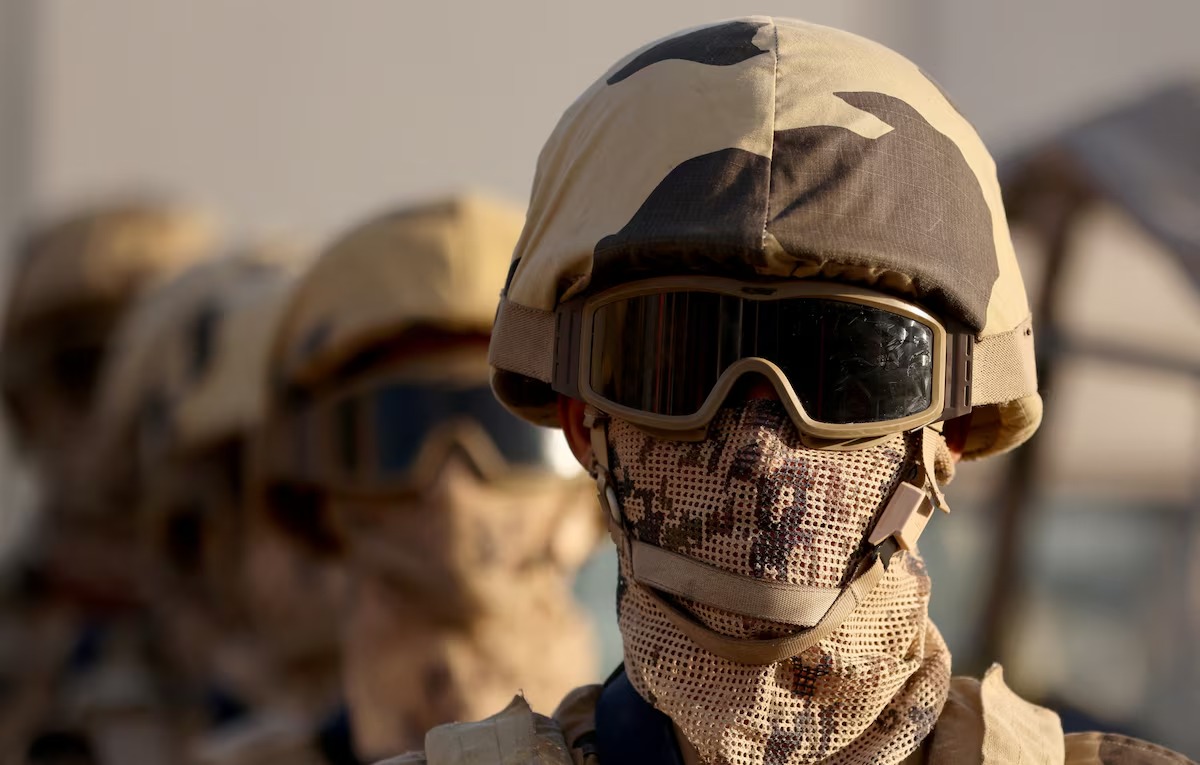
The US State Department stated that it has waived human rights conditions on more than $300 million in military aid to Egypt.
The statement emphasised that this decision was taken in consideration of Cairo’s “helpful role” since the outbreak of the war against Iran.
Egypt began receiving substantial support from the US after signing a peace treaty with Israel in 1979.
Since the late 1980s, the country has received approximately $1.3 billion annually in US military assistance.
A portion of this aid is subject to conditions related to human rights and democracy, which can be waived on national security grounds.
Withholding funds, including during the administration of former US President Joe Biden, has caused tension between Cairo and Washington in the past.
A letter dated 21 September and addressed to various congressional committees, obtained by Reuters, stated that Secretary of State Marco Rubio “decided to waive the certification requirement under the fiscal year 2025 Foreign Military Financing programme for Egypt of $320 million.”
This waiver was subsequently confirmed by the State Department.
An accompanying memorandum justifying the decision stated that this portion of military aid was “essential for counterterrorism, border security, or non-proliferation programmes, or otherwise important to the national security interests of the United States.”
The memorandum, dated 4 September and bearing Rubio’s signature, stated: “Exercising this waiver authority is critical to the US-Egypt relationship and to US national security priorities, particularly given the helpful role Egypt has played in the aftermath of Operation Epic Fury.”
“Operation Epic Fury” is the designation used by the US military for the campaign launched jointly with Israel against Iran in late February.
The State Department memorandum, whose authenticity was confirmed by two sources in Washington familiar with the letter, did not provide detailed information regarding what was termed Egypt’s “helpful role”.
The State Department’s annual decision on military aid to Egypt typically covers funds allocated for the preceding fiscal year, which ends on 30 September.
A State Department spokesperson stated that Rubio waived the certification in the interest of US national security and that the US continues to cooperate with the Egyptian government across a range of issues.
In an emailed statement, the spokesperson said: “This waiver recognizes the importance of maintaining security cooperation with Egypt at a time of significant security challenges in the region.”
The Egyptian Ministry of Foreign Affairs did not immediately comment on the matter.
The spillover effects of the Iran war have imposed a heavy toll on US security partners, including Egypt.
Owing to rising fuel prices and other disruptions, the Egyptian economy is passing through a difficult period.
Under the Biden administration, the US withheld portions of the annual military allocation on multiple occasions over Egypt’s human rights record.
In 2024, following the Hamas-led 7 October attack on Israel and the subsequent war in Gaza, the Biden administration set aside human rights conditions, disbursing the entire $1.3 billion allocation to Egypt for the first time in its tenure.
Human rights organisations have long accused Egypt, under the administration of President Abdel Fattah al-Sisi, of widespread human rights abuses, including torture and enforced disappearances.
This week, Egyptian police detained six journalists from a fact-checking and investigative media outlet, accusing them of spreading false information on behalf of the banned Muslim Brotherhood.
Egyptian authorities state that they have taken steps to address human rights issues. Sisi said stability is paramount and that the government supports human rights by working to provide for basic needs.
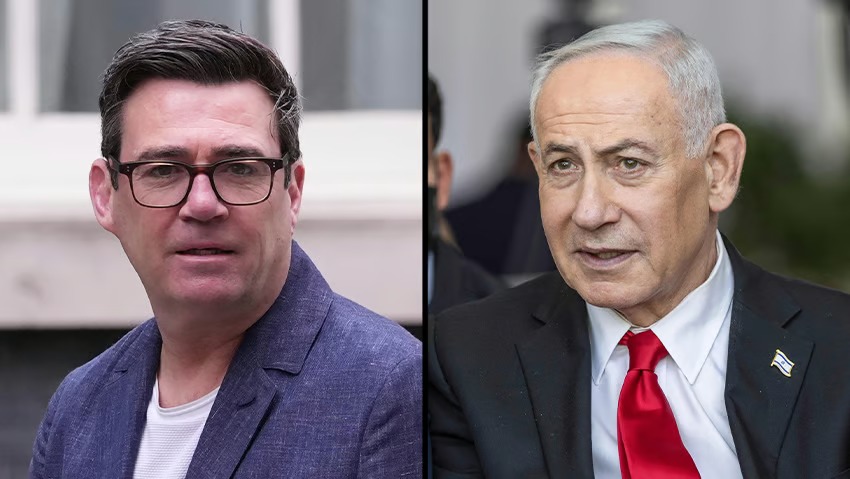
Britain has significantly broadened its military export restrictions targeting Israel, suspending or rejecting more than 80 licences for items the IDF could use in Gaza.
This figure is nearly triple the number affected when the policy was first introduced in September 2024.
United Kingdom Minister of State for the Middle East Stephen Doughty said that as part of what he described as a “tighter system” for assessing exports to Israel, more than 50 further export applications have been refused since approximately 30 licences were initially suspended.
Under the initial decision taken in September 2024, 30 of roughly 350 licences were suspended after the British government concluded there was a “clear risk” that certain military exports could be used to commit or facilitate serious violations of international humanitarian law in Gaza.
The affected equipment included components for military aircraft, drones, naval systems, and targeting gear.
Doughty said additional measures adopted this month established what he termed a “double safeguard” mechanism within the approvals process.
Export applications must now be assessed both against existing international humanitarian law criteria and in light of Britain’s position on the legality of Israel’s presence in the Palestinian territories.
“We have so far suspended or refused more than 80 licences,” Doughty said, adding that he had personally examined each licence.
Despite the wider restrictions, British-origin parts entering the international F-35 fighter jet supply chain continue to be largely exempt.
The UK government argues that preventing British-made components from entering the global F-35 pool could undermine the programme as a whole and have serious consequences for the security of the UK and its allies.
Direct exports of F-35 parts intended specifically for Israel remain suspended.
Doughty defended maintaining the supply of components via the international programme, arguing that halting it could have severe ramifications for the broader European and allied security architecture.
Foreign Affairs Committee Chair Emily Thornberry challenged this position, arguing that the issue was political rather than purely legal.
Thornberry suggested adopting an approach similar to the Dutch model, under which components entering the international supply chain could be flagged as “not intended for aircraft bound for Israel”.
The initial suspension was implemented in September 2024 by then Foreign Secretary David Lammy.
Lammy stressed at the time that the measure did not constitute an arms embargo and applied solely to items assessed as usable in military operations in Gaza.
Since then, the policy has been tightened further under Prime Minister Andy Burnham.
The expanded export restrictions follow the Burnham government’s adoption of a more confrontational policy toward the Israeli government.
Foreign Secretary Ed Miliband drew sustained applause at the Labour Party’s annual conference in Liverpool after delivering a sharp critique of the Netanyahu government’s policies and defending the decision to ban trade with Israeli settlements in the West Bank.
Accusing Israel of committing war crimes in Gaza, Miliband stated that the British government heard public outrage over the conflict, telling delegates: “We hear you. You were right.”
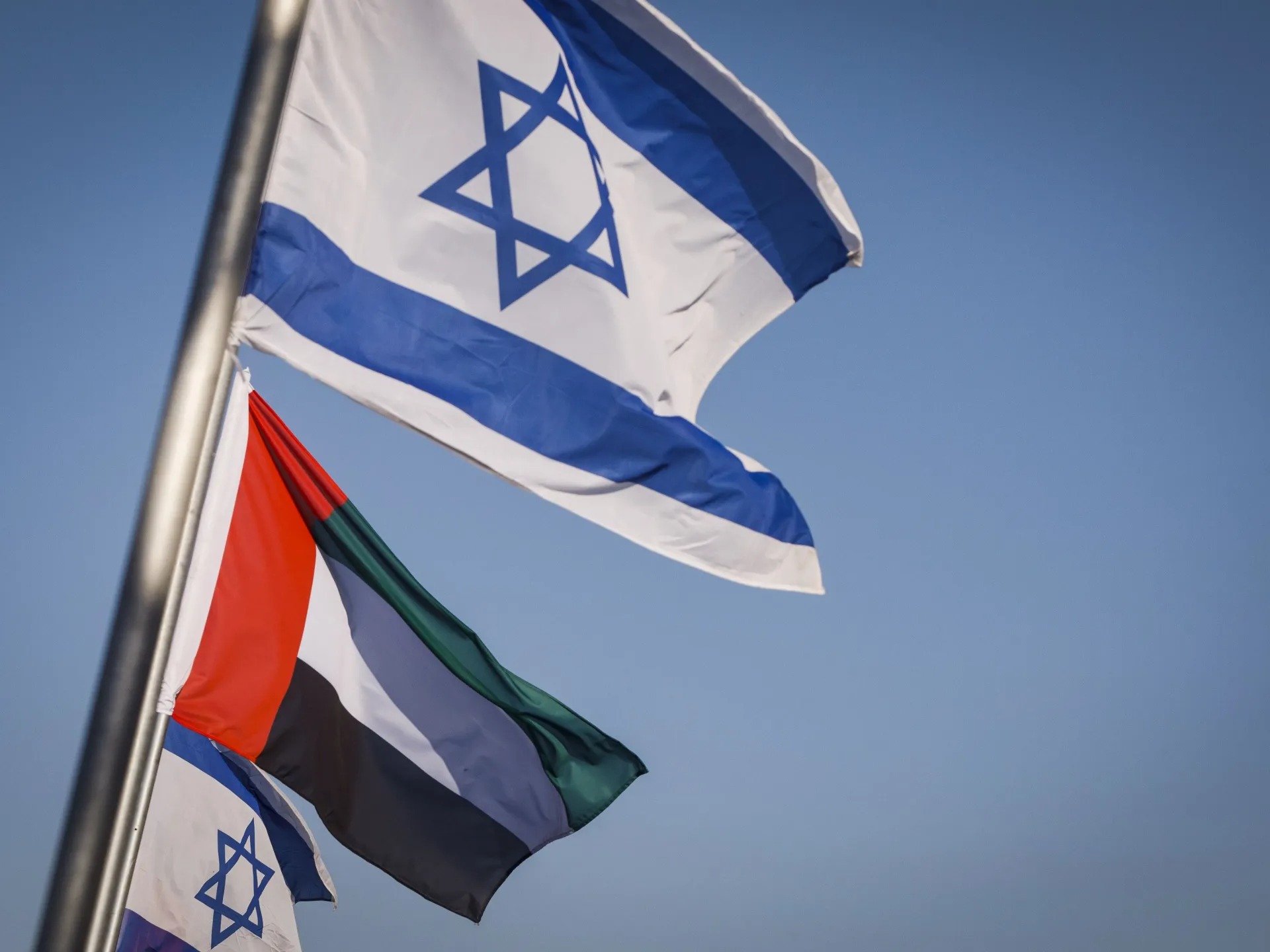
Israeli Prime Minister Benjamin Netanyahu met with representatives of Gulf and Arab nations that lack diplomatic ties with Israel, including Saudi Arabia, during his weekend visit to the United Arab Emirates.
Sources close to the gathering told the Israeli newspaper Yedioth Ahronoth on Monday that representatives from Morocco, Libya, Jordan, and Qatar also took part in the meeting.
Netanyahu made a unannounced visit to Abu Dhabi on Sunday, where he met with the country’s leader, Mohammed bin Zayed Al Nahyan.
According to Israeli media, this marked the first time the United Arab Emirates officially confirmed a visit by Netanyahu.
The meeting was arranged by Mossad Director Roman Goffman “at the request of Saudi Arabia, which asked for Israel’s assistance against Houthi attacks in the Red Sea region,” according to Yedioth Ahronoth.
The discussions addressed Iran and the Houthi militia. The newspaper added that the Arab states heard from Israel that “Israel is prepared to assist countries in the region with air defence systems, just as it aided the UAE during the conflict with Iran.”
Conflict in Yemen intensified in September when Ansarullah militiamen launched a rapid offensive that seized Yemen’s entire Red Sea coastline, including the vital maritime corridor of the Bab el-Mandeb Strait.
The Yemeni resistance also imposed a blockade on Saudi Arabia’s energy exports and staged multiple attacks against the kingdom.
Saudi Arabia reportedly sought military assistance from the US to counter Ansarullah.
Washington declined to attack the Houthis directly, but announced that it would provide intelligence and targeting support.
Reporting on the same visit, The Jerusalem Post said Netanyahu spent six hours in the UAE and that the principal subject of his discussions with MBZ was Iran.
Citing sources familiar with the matter, the newspaper added that the trip came “after Netanyahu exerted heavy pressure on the United Arab Emirates to arrange a meeting ahead of the Israeli elections on 27 October.”
Separately, the Associated Press, citing a person with direct knowledge of the meeting, reported that Netanyahu’s visit to the UAE was arranged in part to ask MBZ to deny reports that he had warned the Israeli prime minister of an impending Hamas threat prior to 7 October 2023.
According to Israeli media, Netanyahu’s office denied the AP report, issuing the following statement:
“Fake news. The visit focused solely on strengthening ties between the two countries and on regional issues.”

We are no longer in 1992, the US has lost its military superiority, Ret. Lt. Col. Davis says

Germany expands North Sea military ports and plans new naval base

Musk appointed co-director of Pentagon future warfare initiative

US waives human rights terms on $320m military aid to Egypt

Putin says Russia did not start war and warns of nuclear risks
-

 Europe6 days ago
European unions urge governments to scrap all Palantir deals
-

 Diplomacy6 days ago
East-West Forum in Istanbul highlights irreversible shift to multipolarity
-

 Europe1 week ago
Emmanuel Todd says West faces collapse amid Ukraine and Iran crises
-
 Europe2 weeks ago
European intelligence chiefs divide over risk of Russian attack
-
 Middle East2 weeks ago
Sharaa says 7 October must not shape Israel policy on Syria
-

 Diplomacy1 week ago
East-West Forum in Istanbul to debate multipolarity and global order
-
 America2 weeks ago
Republican support for Trump’s war with Iran drops sharply in polls
-

 Europe6 days ago
Rome protests AfD poster depicting South Tyrol as independent state
