
America
A utopia for property owners, a loss of sovereignty for the dispossessed

In the Financial Times dated December 7, 2025, an article describing how tech elites have begun building their own “for-profit cities” opened as follows:
“Balaji Srinivasan, the former chief technology officer of the crypto exchange Coinbase, addresses hundreds of tech workers and investors filling a dim hall in Singapore; they are all here to learn how to build an empire.
‘I think it’s fair to say,’ he says from the stage, opening his hands, ‘we have a movement in 2025.’
This was early October, and Srinivasan was organizing an event called the Network State Conference, targeting those ‘interested in founding, funding, and finding new communities.’”
We will return to the Financial Times article, but first, I must provide a refresher on Balaji Srinivasan and the Network State. While trying to recall where I remembered Srinivasan’s name from, I first turned to a long profile of Curtis Yarvin, known as “America’s only monarchist.” Indeed, this tech tycoon, along with Peter Thiel, belonged to Yarvin’s “Dark Enlightenment” circle.
Later, I recalled Quinn Slobodian’s book Crack-Up Capitalism, which I made extensive use of last summer in a series of articles examining how Silicon Valley’s wealthy are exploring escape routes from the anticipated apocalypse. A significant portion of the book’s 11th Chapter (“A Cloud Country in the Metaverse”) was dedicated to Srinivasan and his Network State project.
In summary, this was the story—embodied in the person of this Indian-American tycoon—of how the rich might not necessarily have to establish their own states in physical spaces. Through The Sovereign Individual, a bedside book for tech billionaires like Marc Andreessen and Peter Thiel, they had acquired a survival guide for the wealthy amidst the impending collapse of the welfare state: they were dazzled by the invention of disruptive microchips and their potential to “subvert the nation-state”(1). Faced with the internet, ideas of government/state that pointed to territorial sovereignty were melting away. Ultimately, a super-class composed of hyper-mobile and high-IQ individuals would emerge; they would remotely control the low-IQ, docile workforce and bury their wealth far away from states with peace of mind.
The nation-state form was “dysgenic,” meaning it caused the biologically weak to survive; it worked against the dictates of evolutionary development and the survival instinct. In the age of hypermobility, microchips and the Internet would allow evolutionary interests to break free from national constraints. The elites would no longer view national identities as meaningful—or rather, they wouldn’t need to; the “delusion” that they owed anything to their so-called fellow citizens would henceforth be something to laugh at: They would realize that their own countrymen were actually “essentially parasitic and predatory.” For sovereign individuals, there was no one they were responsible for other than themselves.
The well-known logical conclusion of this reasoning is a nostalgia for the Middle Ages; and so it was for the authors. In the new millennium, they imagined a world where sovereignties were fractured, just as they were before nation-states. Dissolution and fragmentation suited a chosen group; to them, every time a nation-state fell apart, the autonomy of sovereign individuals was encouraged.
Instead of the terrifying nature of real life, which restricts and occasionally destroys property rights, the spacious atmosphere of cyberspace was taking shape as a utopia that would protect the wealth of the rich. New lands meant new property, and the virtual world opened new doors for conquest fantasies.
This is where Srinivasan emerged as one of the most resolute representatives of this idea. He positioned his own city, which he called a “cloud country,” against Washington’s stifling laws, bureaucracy, media, and the diplomas of Harvard and Yale. Like Thiel, he was investing in Tlon, the company through which Yarvin sought to build a “new internet.”
Acknowledging that migration to physical lands would not be sustainable, Srinivasan set his mind on establishing digital communities. According to him, online relationships knew no differences of language, religion, or race, and were more inclined to foster intimacy than physical relationships. First, a virtual network would be established, then that virtual network would turn into a new city, and finally, a new country would come into existence. It’s like Minecraft: You get online, and through “crowdfunding,” you establish a new settlement anywhere in the world.
Rather than “Island” themed escapes that emphasize seclusion and self-sufficiency, Srinivasan was calling for a more “collective” establishment. Singapore and its eternal chief Lee Kuan Yew appealed to him more for this reason. Additionally, New Songdo City in South Korea, where “citizen-customers” own shares in a venture run by a private company, was also a favorite of our tech tycoon.(2)
In a famous speech at Y Combinator’s Startup School in 2013, Srinivasan conveyed his ideas to a broader audience regarding what he considered a fundamental contradiction between certain modern nation-states and innovation. In his speech, he advocated for Silicon Valley’s “ultimate exit” from the US, claiming the US was “obsolete and hostile to innovators.” In essence, he was saying: If the society you live in is broken, why not “exit” and create a new one?
Slobodian writes that Srinivasan’s “collective” vision differs only semantically from the sovereign individual of William Rees-Mogg and James Dale Davidson, authors of The Sovereign Individual:
“All three saw the same things: the possibility of exit created by a new technology; the creation of a new global caste of meritocratic specialists; and the abandonment of taxation and the regulatory state in favor of new relationships organized along the lines of a private company, and even new territories.”
Fredric Jameson’s observation in an essay on the end of history debates (“‘End of Art’ or ‘End of History’?”), noting that we are moving toward the limits of capital’s expansion possibilities in the “third stage of capitalism,” and that the “end of history” thesis rises upon an “inability to think beyond” this state, seems to be falling flat. While the cycle of capital expansion has been stumbling for a long time, it now appears to be countered by tech elites through re-territorialization—this time beyond the human and beyond space—by commodifying these realms as well.
***
In his opening speech at the Bitcoin Asia conference held in Hong Kong last August, Srinivasan said, “Just as you choose your university at 18, you will choose your country at 18, and this has already started with startup communities.”
According to a Bloomberg report, Srinivasan opened a school (The Network School) in Forest City, Malaysia, for this purpose. It is not entirely clear why he chose Forest City for the school, but advantages such as low rents and easy access to Singapore and an international airport are listed.
The report notes that officials, wanting to prevent the political repercussions of this project—which is widely mocked as a “waste of time” (or folly)—have taken a series of measures to increase its appeal, including declaring it a duty-free zone. Malaysia is reportedly promising a 0% tax rate to entice family offices, the investment vehicles of the super-rich, to move there.
The report continues:
“About 400 students, mostly entrepreneurs, came to Forest City to learn everything from coding to unconventional theories on state structure. They are building crypto projects, improving their physical fitness, and testing whether a shared ideology, not just a shared territory, can hold a community together. for those opting for a shared room, the price starts at $1,500 a month, including accommodation and meals.”
We also learn about the school’s curriculum: Product sprints and coding sessions in the mornings; in the afternoons, seminars covering topics ranging from the Meiji Restoration to Singapore’s statecraft and the mechanics of decentralized governance.
According to students speaking to Bloomberg, guest speakers provide both “deep dives into technology and ideological sermons.”
***
Let us return to the Financial Times article. Reporter Hannah Murphy reports that this idea of a “country for the rich” or startup city, considered marginal just a few years ago, is now capturing the interest of “bold entrepreneurs and aggrieved billionaires” who are increasingly drawn to the “allure of tech-friendly paradises” unbounded by old rules and regulations.
According to an open-source database shared by Srinivasan, approximately 120 “startup societies” are currently in the founding stage. A few of these have raised hundreds of millions of dollars in venture capital from funds backed by names like investors Peter Thiel and Marc Andreessen, OpenAI founder Sam Altman, and Coinbase CEO Brian Armstrong.
The article notes that Srinivasan has established a “Network School” on an artificial island near Singapore, where “techno-optimists” can live together in a hotel, perform their day jobs remotely, and learn how to build a new society. The membership and accommodation fee for what he calls “society-as-a-service” starts at $1,500 per month.
Murphy continues:
“Backers of these initiatives offer the opportunity to address all the problems they believe are causing the decline of American dynamism, from monetary policy to taxation. San Francisco, in particular, has been affected by high levels of homelessness and crime for years, causing tech workers to migrate away during Covid.”
We learn that Amjad Masad, CEO of the AI coding company Replit, says, “Young people are unhappy with stagnation, corruption, and isolation.” Masad moved Replit to Foster City last year to escape the “misery” on the streets of San Francisco. Foster City is a “master-planned” city built on marshland near Silicon Valley in the 1960s. Masad adds, “Young people clearly desire to discover new ways of living and building through technology.”
Let us pause to say a few words about the “frontier mentality” that enchants Srinivasan and tech billionaires. Frederick Jackson Turner, in his famous 1893 paper (“The Significance of the Frontier in American History”), explained American history and development primarily through the colonization of the American West. The uniqueness of American institutions lay in the settlers making the wild productive—in short, transforming the primitive political and economic conditions of the frontier into the complexity of city life. Behind American crudeness and roughness, as well as its dynamism and resourcefulness, lay this very nature of being a “frontier nation,” constantly shifting the boundary Westward, reaching new frontiers with every shift, and transforming those frontiers. Contrasting the borders of Europe, which he described as “a fortified boundary line running through dense populations,” Turner argued that the US was full of “free land,” and stated that all classes of American society participated in this drive in great numbers. “The rise of nationalism and the evolution of American political institutions,” Turner said, “were dependent on the advance of the frontier.”
Turner points out that the American frontier mentality and the role this mentality played in the New Continent opened the door to what we call “innovation” today:
“For a moment, at the frontier, the bonds of custom are broken and unrestraint is triumphant. There is no tabula rasa. The stubborn American environment is there with its imperious summons to accept its conditions; the inherited ways of doing things are also there; and yet, in spite of environment, and in spite of custom, each frontier did indeed furnish a new field of opportunity, a gate of escape from the bondage of the past; and freshness, and confidence, and scorn of older society, impatience of its restraints and its ideas, and indifference to its lessons, have accompanied the frontier.”
In his book The Network State, Srinivasan argued that the “frontier has reopened” and that thanks to advances in technology, the number of new sovereign entities will increase exponentially.
Masad says young people (but the wealthy ones) are eager to explore new ways of living through technology and the internet. This is actually a call to “frontiers” against the boredom, bureaucracy, and institutions of settled life.
In the same FT article, Patri Friedman, grandson of neoliberalism guru Milton Friedman, defines the movement’s goal as “reshaping governance for the 21st century, inspired by startups and the internet.” Friedman is the founder of Pronomos Capital, a venture firm investing in experimental cities.
He wants to run his country not as a democracy, but like a for-profit corporation. “A private venture-backed company becomes the city operator, and they [the executives] design the laws and earn revenue through a combination of rent, taxes, and service fees,” he says regarding his proposed model. He is reportedly in talks with eight countries in Africa for his “model.”
Srinivasan is even more outspoken. Based on developments in cryptocurrency technology, he writes that states should be backed by the crypto economy:
“You can found a tribe just like you found a startup. Joseph Smith of the Mormons did it. Abraham did it. Jesus did it. What I really want is something like techno-Zionism.”
In his book, Srinivasan also mentioned that Israel is a model for them. With the founding of Israel, Jews exhibited a successful example of the “God/State/Network” sequence.(3) Citing the works of Theodor Herzl as inspiration for his book, Srinivasan believes that a third pole, outside the US-China poles, will be a technologically advanced Indo-Israeli pole.
***
The proliferation of sovereignties means the disappearance of the crumbs of sovereignty held by ordinary people. The Próspera “startup city” in Honduras, which I mentioned in my article series last summer, is an example of this.
In this gated community run by a Delaware-based company, around 1,000 people live, and according to the FT, these residents “can enjoy co-working spaces, a beach resort, and a golf course.”
Reporter Murphy continues:
“In Próspera, a for-profit semi-autonomous zone, taxes are low, it has its own labor regulations, and an arbitration system hearing cases online by retired Arizona judges. Bitcoin is one of the preferred currencies.”
The rich have fled taxation, rules that rein in the labor market, and a judiciary that, albeit on paper, sometimes stands by the oppressed. There is more: Próspera’s wiping away of medical regulations, combined with themes popular in Silicon Valley circles like longevity or eternal life, has made this place a paradise for people seeking “experimental treatments.” For example, former tech entrepreneur and “bio-hacker-influencer” Bryan Johnson went there for follistatin gene therapy treatment, which is not approved in other countries.
In another Financial Times report, we learn that a wealthy bitcoin investor wants to establish his own court system within a “libertarian” community on the Caribbean island of Nevis as part of the “tech-enabled network state” movement.
Olivier Janssens’ company, South Nevis, is reportedly buying land for the “Destiny” project on Nevis. This project is the first of its kind on the island, made possible by a new “Nevisian” law. We read the rest from the news report:
“Described by the island government as a multi-billion dollar project, Destiny involves a major reshaping of the island’s southern coast, including villas and medical clinics. Speaking via video conference to a panel of residents in late November, Janssens criticized Nevis’s court system for ‘inefficiency.’ ‘If we copy this exactly, people won’t want to come here.’ Instead, he said Destiny would ‘propose our own efficient court systems for certain matters’ but ultimately ‘still comply’ with the national legal system.”
According to the report, in the summer of 2025, the St Kitts and Nevis government passed the “Special Sustainability Zones Jurisdiction Act,” allowing the government to make agreements for projects like Destiny.
Janssens is reportedly in talks with the government and announced that if the project proceeds, $50 million will be invested in Nevis’s infrastructure.
The law also includes a provision for developers to establish their own “dispute resolution services and mechanisms.” This situation has worried islanders, and many fear Destiny could become a “state within a state.”
Kelvin Daly, a member of the opposition Nevis Reform Party (NRP), said the law enabling special sustainability zones was passed “without any consultation with the public.”
Daly added, “They were very careful in using the word sustainable, because it implies something good and honest. It is a hyperbolic expression used to mean an economic zone with added benefits.”
Janssens, however, rejected the definition of a state within a state, stating that Destiny would be open to all island residents and ultimately subject to the government’s jurisdiction. Our investor, naturally, did not mention the price of the luxury homes to be built on the island. Janssens said, “I don’t trust politicians… We just say ‘Leave us alone and let us do our business,'” expressing his desire for a libertarian community and characterizing Nevis as the “host country.”
Of course, not everyone is in pursuit of new frontiers. Some are seeking to disrupt and reconstruct the internal coherence of sovereignties within existing borders. Inspired by the “charter cities” model—places with legal autonomy and fewer regulations like Singapore, Hong Kong, and Dubai—they focus on improving governance in existing cities without chasing a distinct sovereignty.
For instance, during the 2024 presidential campaign, Donald Trump promised to develop 10 regions called “charter cities” in the US to boost American innovation in light of the US-China tech race.
There is another dimension to hijacking sovereignty. In response to accusations of “techno-fascism,” Patri Friedman openly and proudly replies, “We are funding companies that will run undemocratic cities, and if you don’t like that, you shouldn’t move there.” In Africa, where he plans to build these “undemocratic cities,” what will happen to those already there? Friedman says they are looking for lands in charter cities in Africa large enough for people to live on. After fencing off these lands, they will reportedly give a “relocation bonus” to those who “don’t want to live” there to move out of the area.(4)
***
They believe that the limit of capitalist expansion coincides with the limit of the human. Here, the limit of the human is the historically determined limit of the human. Here, mechanisms of sovereignty are equated with the human, or rather, with the rabble, the low-intelligence, bureaucrats, and those trapped within national borders. Taxation, “democratic representation,” elections, unions, state subsidies, public education, and health… all go hand in hand with these and are equivalent to “welfare state socialism.”
Crossing the boundaries of the human proceeds in parallel with the opening of new spheres of commodification. The frontier mentality is an absolute loss of sovereignty for the border inhabitants who are confronted with the frontier mentality of others; or it is the “law of the jungle,” the “wild west.” In Turner’s words, the person grappling with the primitive world at the frontier is essentially a “ranger”; we could tolerate his coarseness by his transformation of primitiveness into the sophistication of complexity.
Despite the claim of the end of history, according to Jameson, a part of our mind has always tended toward the “systemic” and the prediction of the future. Anxiety about the future of their own mode of production directs the ultra-rich toward a fragmentation that will perpetuate and guarantee the loss of sovereignty for the oppressed.
***
(1) I assume the authors mean “national state” when they say “nation-state.” National states have stamped their mark on almost the entire world for several centuries as a form of territorial sovereignty containing peoples who are culturally very different and dissimilar in national characteristics; they also harbor centralized, federal, or autonomous structures. The nation-state, on the other hand, with an assumption of specific homogeneity, can only be a subset of the national state form; that is, while every nation-state is a national state, not every national state is a nation-state. For example, let alone the Union of Soviet Socialist Republics, even the Russian Federation does not come anywhere near being a nation-state. This oddity is also among the spices of the concept soup in the discussions held in the context of the recent “resolution process” in Turkey.
(2) Slobodian also draws attention to the cunning here: In the cloud city of the future, individuals would not own the land, they would only own a share/stake in the whole city. The owner of the land would be the one who developed that land (the developer). Slobodian summarizes: “The cloud city was terms and conditions rather than rights and obligations.”
(3) Srinivasan fabricates a group called “International Intermediate.” This group consists of those opposed to both “American anarchy” and “Chinese control.” Groups such as American centrists, Chinese liberals, and global technology experts are included in this group alongside India and Israel.
(4) One cannot help but think of the “transfer” idea in Zionist literature: Even before the State of Israel was established, Zionist settlers planned to deport (“transfer”) Palestinians to Jordan, Syria, or even Iraq in exchange for a certain amount of money.


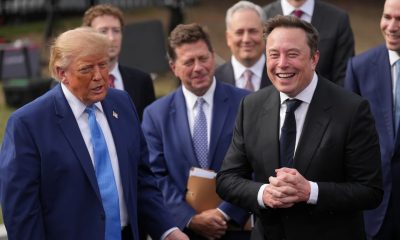







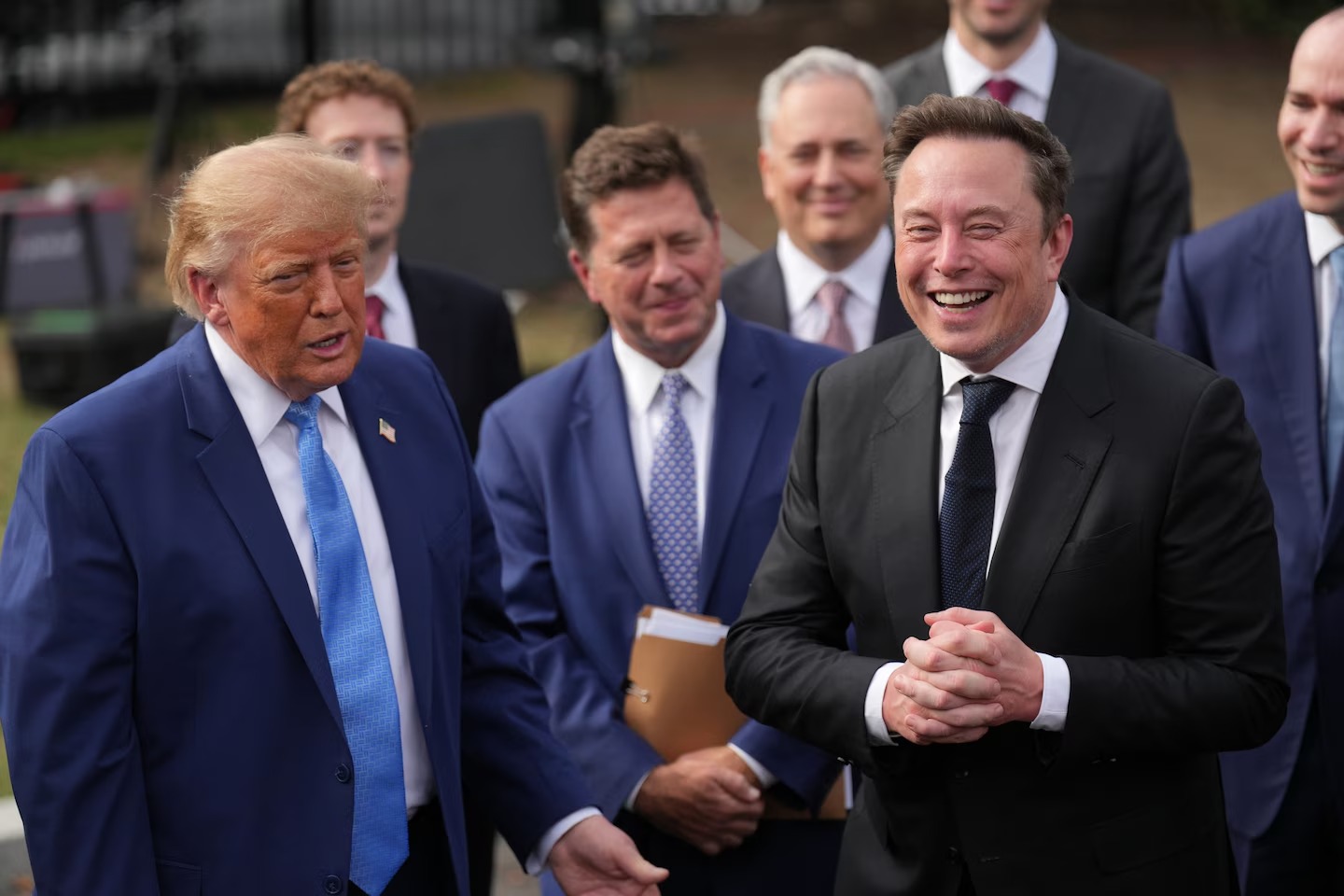
The world’s richest man, Elon Musk, has assumed the co-directorship of a Pentagon initiative focused on the future of warfare, known as “Project Meridian”.
Musk’s new role was announced by US Secretary of Defence Pete Hegseth.
Musk, who has long expressed his conviction that wars will ultimately be fought with autonomous unmanned aerial vehicles, will advise the project as co-director alongside Palmer Luckey, founder of defence start-up Anduril, and former Speaker of the House of Representatives Newt Gingrich.
In a memorandum issued at the Pentagon, Hegseth stated that the group would “examine the battlefields of the future” and “determine which weapons and technologies warfighters must employ to achieve dominance in these environments.”
During his “State of the Force” address at Marine Corps Base Quantico, Hegseth said:
“The best predictors of future conflict do not reside exclusively within the Pentagon. Obvious biases and risks arise when we task ourselves with both framing the questions and answering them.”
Hegseth stated that this initiative would commence immediately and that, following his address, he would convene with Musk, Luckey, and Gingrich at a secure location.
Project Meridian will have 120 days to “ruthlessly map the trajectory of wars, domains, and technologies”, a process that will culminate in the public disclosure of its findings alongside a classified annex.
Hegseth outlined an expansive mandate extending “from beneath the surface of the Earth to beyond the Moon.”
Rather than formulating new military strategies or policies, the panel will seek to identify “the domains we must seize and the capabilities we must master”, focusing on the effort to “discover, develop, and field” the weapons and systems that next-generation American troops may require.
The group is expected to submit a report containing recommendations to him by the end of January.
In 2024, Musk remarked: “Future wars will be entirely about drones and hypersonic missiles.” This was merely one of several similar statements he has made in recent years.
For Musk, whose oversight role at the Department of Government Efficiency (DOGE) ended in turmoil and escalated into a dispute with President Donald Trump over Trump’s spending bill, this appointment marks his formal return to government in an official capacity.
Musk and Trump ultimately reconciled, and Musk attended a meeting on artificial intelligence safety at the White House this week alongside other technology leaders.
Meridian forms part of a broader push announced by Hegseth to restructure the military around autonomous warfare and rapidly advancing technologies.
Hegseth announced the establishment of the Autonomous Warfare Command (AUTOWARCOM), a new four-star combatant command endowed with what he termed “service-like authorities” to scale autonomous and robotic capabilities across the joint force.
The Department of War will also begin phasing in new occupational frameworks across all military branches to establish specialised career tracks for what Hegseth described as “the next generation of autonomous warfighters.”
“We should have conceived an Autonomous Warfare Command a decade ago,” Hegseth said, explaining that Meridian aims to gaze far enough ahead to enable the military to anticipate the next technological shift rather than lag behind.

A cyberattack targeting the US Department of War’s personnel database has resulted in the leak of personal information belonging to approximately 3 million people.
Speaking to ABC News, a Pentagon official stated that the system accessed by unauthorised individuals contained the records of 2,760,000 living persons and 294,000 deceased individuals.
The Military Times portal, which first broke the news, had reported the number of affected individuals as approximately 4 million based on two sources. The Pentagon official subsequently conveyed different figures to ABC News.
The leak encompasses Social Security numbers and duty information belonging to military personnel and civilian employees. According to an official notification examined by Military Times, the compromised records may also include names, dates of birth, contact information, sex, race, and military occupational specialties.
The unauthorised access to the information system of the Defense Manpower Data Center (DMDC) lasted for approximately nine months, between October 2025 and 16 July 2026.
ABC News reported that the access in question was obtained by a small number of third-party users. The vulnerability was closed after it was identified.
The DMDC is considered one of the Pentagon’s primary personnel records centres. More than 60 million records belonging to active-duty personnel, reservists, civilian staff, contractors, retirees, veterans, and military family members are stored at the centre.
The Pentagon has not detected any evidence that the leaked data has been misused. Military Times reported that affected individuals were offered identity restoration and credit history monitoring services.
A similar data breach previously occurred on the Federal Bureau of Investigation’s (FBI) recruitment website, FBIJobs.gov. According to information obtained by ABC News from internal communications and sources, the FBI is considering the possibility that data belonging to its entire staff may have been stolen.
The New York Times (NYT) examined a portion of the stolen FBI records. Home addresses, telephone numbers, official email addresses, Social Security numbers, dates of birth, hiring dates, and emergency contact details for relatives were identified within these documents.
The database also contained unit designations, duty roles, and information regarding the supervisors of personnel. Some records revealed assignments within counterintelligence and counternarcotics units, as well as departments examining threats originating from Russia, China, and Iran.
Ciaran Martin, the former head of the UK National Cyber Security Centre, noted that this type of breach could directly affect the FBI’s operational capabilities.
The hacker group known as ShinyHunters had announced that it had seized medical data and security clearance records alongside files belonging to tens of thousands of active and former FBI employees.
Experts evaluating the matter for the NYT warned that this information could be used to track agents, threaten their families, or compile dossiers by foreign intelligence services.
The ShinyHunters group initially threatened to release the data unless the bureau withdrew an advisory it had published concerning the group’s attack methods.
The group later asserted that it had never intended to leak the information and characterised its action as an advertising campaign.
In a report published in May, Reuters noted that the personal data of US military personnel had been used in surveillance and attack preparations.
According to the agency, Washington’s adversaries gained the ability to pinpoint areas where troops were concentrated by exploiting commercially available location data. US lawmakers at the time criticised the Pentagon for failing to adequately protect the personal data of military personnel.

US President Donald Trump’s trade policy and the Washington administration’s push to increase Venezuelan oil imports are prompting Canada to diversify its energy exports.
According to a report by The Wall Street Journal, recent developments are accelerating Canada’s development of new oil and natural gas projects.
Steps taken by the Ottawa administration, which aspires to become an energy superpower, are seen as potentially strengthening the country’s position in global markets.
In Canada, the world’s fourth-largest oil producer and fifth-largest natural gas producer, the energy sector accounts for approximately one-fifth of total exports.
Almost all of the country’s natural gas exports and approximately 90% of its oil exports go to the US.
The newspaper writes that the trade war with Washington and the atmosphere of confrontation entered into with Iran have heightened Canada’s desire to turn to alternative markets outside the US.
Officials plan to increase shipments of oil and liquefied natural gas (LNG) to European and Asian markets.
Accelerating infrastructure investments in line with this target, Canada is also shortening approval processes. The government is prioritising the construction of an oil pipeline extending specifically to the west coast.
According to the newspaper’s estimate, if major pipeline projects are implemented, Canada’s daily oil transport capacity could rise to 6.8 million barrels by 2034.
Routes heading to the west coast will make up approximately 30% of this capacity.
The Canadian administration is simultaneously advancing LNG export projects. According to the report, these investments could allow approximately 55% of Canadian natural gas exports to be directed to markets outside the US by the early or mid-2030s.
While the government expands tax incentives for the oil and natural gas sector, the province of Alberta also plans to overhaul its royalty system.
However, the newspaper notes that implementing the new projects requires heavy investment, and the process depends on the final decisions taken by producers as well as the completion of regulatory approval processes.
The expansion of pipeline and LNG infrastructure could gradually reduce Canada’s dependence on the US market while raising its share in the global energy market.
The Canadian Prime Minister’s demand to reduce reliance on the US market had also come to the fore in July.
According to Carney’s statement, the province of Alberta submitted a plan for a pipeline spanning more than 1,000 kilometres to the west coast of British Columbia.
Targeted for completion by September 2027, the line will reach the Pacific coast by following an existing corridor through the mountainous terrain.
This shift in energy comes at a time of strained relations with the US. Donald Trump said that if Canada obtains associate member status in the European Union, he could halt trade with Europe in certain sectors and impose high tariffs.
As reported by the Associated Press, Trump characterised such a rapprochement as a “potentially hostile act”.
European Commission President Ursula von der Leyen had proposed opening the path for Canada to become the EU’s first associate member. The terms of this associate membership status, which is not defined in EU treaties, are not yet clear and require the approval of member states to enter into force.
Canada, which does not seek full membership, aims for maximum rapprochement with the EU.
Following Trump’s return to the White House, relations between Washington and Ottawa deteriorated. The Trump administration, which repeatedly called on Canada to become the “51st state” of the US, introduced additional tariffs.
In July, the US began imposing 50% tariffs on certain Canadian-origin goods.

Germany expands North Sea military ports and plans new naval base

Musk appointed co-director of Pentagon future warfare initiative

US waives human rights terms on $320m military aid to Egypt

Putin says Russia did not start war and warns of nuclear risks

European nations unite against US pressure over strategic oil stocks
-

 Europe5 days ago
European unions urge governments to scrap all Palantir deals
-
 Diplomacy5 days ago
East-West Forum in Istanbul highlights irreversible shift to multipolarity
-

 Europe1 week ago
Emmanuel Todd says West faces collapse amid Ukraine and Iran crises
-

 Europe1 week ago
European intelligence chiefs divide over risk of Russian attack
-

 Diplomacy1 week ago
East-West Forum in Istanbul to debate multipolarity and global order
-

 Middle East1 week ago
Sharaa says 7 October must not shape Israel policy on Syria
-

 America1 week ago
Republican support for Trump’s war with Iran drops sharply in polls
-

 Middle East1 week ago
Palestinian factions confront legitimacy crisis at Istanbul talks
