
Middle East
Jaish al-Adl, a next door threat to Iran

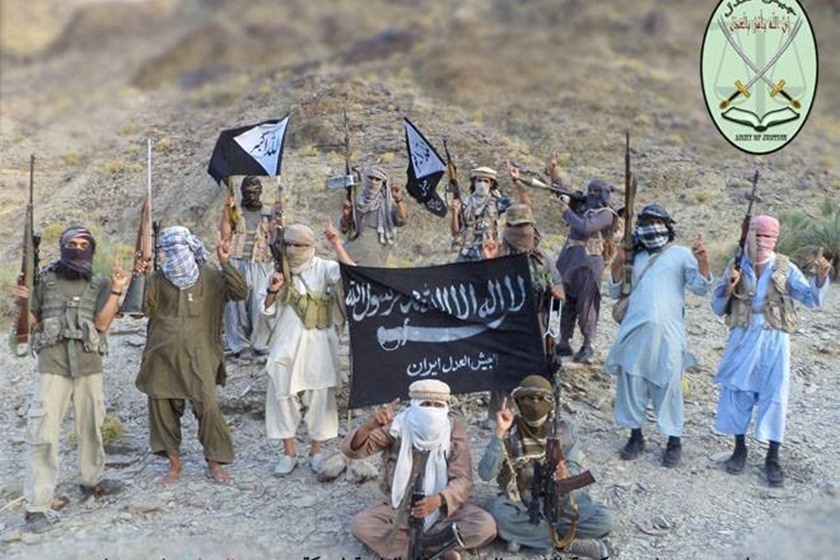
At least 11 Iranian police officers were killed in an armed attack claimed by the Jaish al-Adl group in southeastern Sistan and Baluchistan province. Iranian officials called the attack cowardly, and also said that some of the assailants involved in the attack on a police station in Rask city were killed and some others were taken into custody.
The Iranian officials did not provide further details on the identity of the detainees, but Iran’s police chief Ahmed Reza Radan has called for an urgent investigation into the attack.
In the last two years, Sistan and Baluchistan province has witnessed several attacks on security forces, and the Iranian officials blamed local terrorist groups for these attacks.
Why Jaish al-Adl is attacking Iran
It is worth mentioning that the Jaish al-Adl group has carried out several attacks against Iranian security forces in the past. Recently, militants associated with al-Adl have killed five Iranian border guards in the Sistan region. Another attack was five months ago when an unknown armed man killed two police officers in the same province. Nearly 25 other Iranian police officers received injuries.
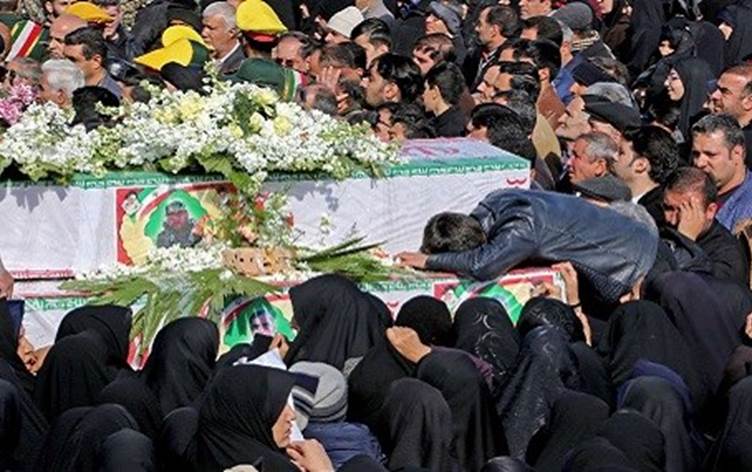
Iranian mourners gather around coffins of Revolutionary Guards during their funeral in the city of Isfahan, February 2019. (AFP)
The important point is that the fighters of Jaish al-Adl had never carried out suicide bombings or planning landmines, rather they launch direct attacks against the security posts of the Iranian forces which indicates its complexity. But somehow, it also shows the intelligence failure of the Iranian spy agency to some extent.
What is the cause for increase in Jaish al-Adl’s attack; Apparently, there are two factors that the militants of Jaish al-Adl have often targeted Iran.
- First – uncertainty in Zahedan city
Zahedan, the capital city of Sistan and Baluchistan province, has been in an almost unprecedented fever after the murder of Mahsa Amini. In 2022, Amini was killed right after she was arrested by the Iranian security forces for not wearing a proper hijab. Her death in custody for opposing mandatory hijab had sparked a wave of protests through Iran.
Meanwhile the sermons of Maulvi Abdulhamid Ismailzahi, a well-known cleric of Makki Zahedan Mosque, in defense of the “women, life, freedom” movement, which is still ongoing, made the atmosphere in Zahedan more insecure and caused the Revolutionary Guard Corps of Iran to have a wider presence in this city.
Last year, the cleric Ismailzahi also spoke openly against a police officer who sexually assaulted a Baloch girl and caused massive protests in the region.
Deadly protests in Iran
The protest was organized after Friday prayer that was also called “Bloody Friday of Zahedan” in which more than a hundred people were killed. The outspoken Ismailzahi directly accused Ayatollah Ali Khamenei, the leader of the Islamic Republic, of being involved in the killing of the protesters.
Ismailzahi’s critical sermons also caused the police to put more pressure on him and arrested his grandson Abdul Nasir and his bodyguard.
Following that, Maulvi Abdul Majid Muradzahi, a famous Sunni cleric and Ismailzahi’s advisor, was also arrested. These arrests appear more dangerous as more attention has been paid to the exclusion of Sunnis in Iran.
Sistan and Baluchistan Iran’s most deprived province
Moreover, Sistan and Baluchistan is the most deprived province of Iran, as if its continuous deprivation deliberately. What confirms this claim is Iran’s indifference to Sunni rights.
Iran’s Sunnis are not in political power, nor do they enjoy the necessary freedom to perform their religious practice. It is claimed that the Islamic Republic has a prejudiced view towards the Sunnis, especially the Baloch.
For example, most of those who are executed are Baloch from Zahedan. It may be claimed that they commit a crime, but committing a crime also has a reason: deprivation, poverty, discrimination, etc.
When the above challenges are mixed with religion, the situation becomes more inflammatory and provides space for groups that call themselves Islamists. The origin of Jaish al-Adl is also coming from this province of Iran.
Jaish al-Adl considers itself the defender of Sunnis
This group considers itself the defender of the Sunnis and the opponent of the Islamic Republic.
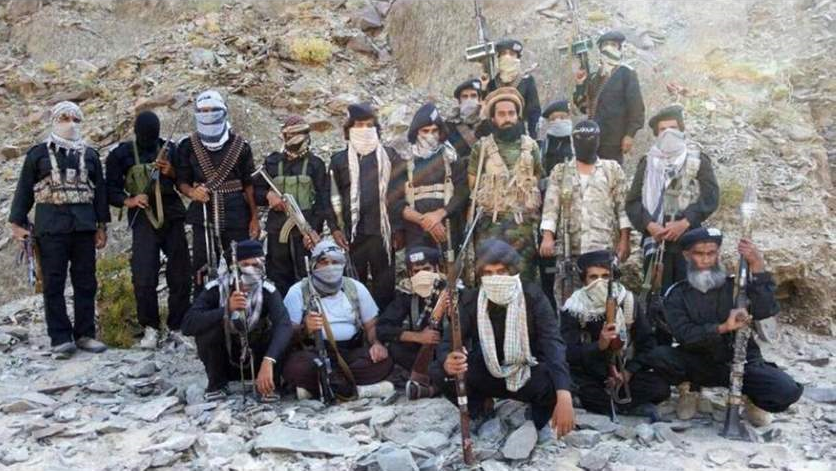
Fighters of the Jaish ul-Adl separatist group on the Iran-Pakistan border
Although Ismailzahi, the Sunni preacher of Makki Zahedan Mosque did not condemn this attack, he expressed his condolences to the families of the victims and emphasized the need to maintain the security of Sistan and Baluchistan.
It is in no way to be claimed that Ismailzahi is happy about the attack, but at least he wants to tells the Iranian government that the discriminatory treatment of the Baloch and the narrowing of the encirclement ring and the killing of the protestors have consequences, no matter which group has been carried out the attacks.
- 2- The return of the Taliban to power
Taliban and Jaish al-Adl have two things in common – both are Sunni and their base of operations is in Pakistan. The Taliban’s return to power, heralded as a victory against NATO, has emboldened other extremist armed groups.
For example, Khaled Meshaal, a member of the Hamas leadership, said during his interview with Al-Arabiya TV after the October 7 attack that the US was defeated by the Taliban and Israel will be defeated by Hamas. It follows from this statement that Hamas may be influenced by the Taliban’s return to power, and made its mind to attack Israel to destroy its regime.
Jaish al-Adl, which has strong ties with the Taliban, is not satisfied with anything less than victory. For example, Rahmatullah Nabil, former head of National Directorate of Security of the former government, claimed that two years ago Pakistan had sent 600 Jaish al-Adl fighters to help the Taliban in Nimroz, Farah and Herat provinces.
Pakistan harboring Jaish e-Adl fighters
Nabil recently also claimed that the Taliban had overthrown Nimroz province with the help of Jaish al-Adl. In the beginning of this year, an Iranian newspaper claimed that the Taliban have entrusted the responsibility of the provinces of Nimroz, Farah and Herat to Jaish al-Adl. However, there is no clear indication or report that now Jaish al-Adl has been controlling these provinces, but it delivers a clear sign on the depth of the relationship between Taliban and Jaish al-Adl.
It would not be wise to claim that the Taliban armed Jaish al-Adl fighters and encouraged them to attack Iranian soil, but at the same time it is important to put a glance over the relationship between Iran and Taliban which is now not so good. Apparently, Taliban use Jaish al-Adl as a tool to pressure against Tehran as it used Tehreek-e-Taliban Pakistan (TTP) against Islamabad. Apart from this, the presence of Taliban in Afghanistan also gives strength to Jaish al-Adl to attack Iran.
Foreign countries supporting Jaish al-Adl
If the claims of the Iranian government are investigated, other factors such as the involvement of the United States, UK, Saudi Arabia and the United Arab Emirates can also be considered effective. Tehran accuses these four countries of supporting Jaish al-Adl.
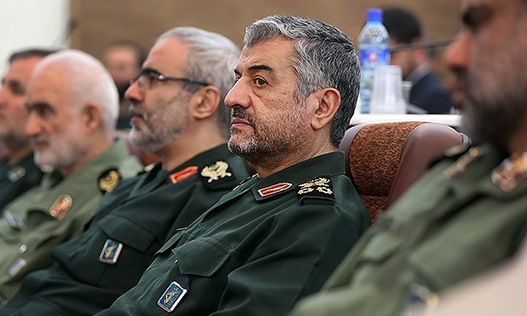
Iran’s Islamic Revolutionary Guard Corps (IRGC) Commander-in-Chief Mohammad Ali Jafari.
Iran has recently claimed that Saudi Arabia and the UAE are providing financial support to Jaish al-Adl. For instance, IRGC commander-in-Chief Mohammad Ali Jafari, in response to the killing of several Iranian soldiers in an attack carried out by the fighters of Jaish al-Adl, requested former Iran President Hassan Rouhani to let the IRGC take revenge on Riyadh and Abu Dhabi. Such a statement shows Tehran’s suspicions towards those two countries to support Jaish al-Adl.
Moreover, in February 2019, Jafari had warned Pakistan to crack down on the armed group of Jaish al-Adl following a suiciding attack in the border province of Sistan Baluchistan that killed 27 members of the elite security forces. At that time, Jafari said that if Pakistan fails to punish them, Iran will do so based on international law and will retaliate against the terrorists.












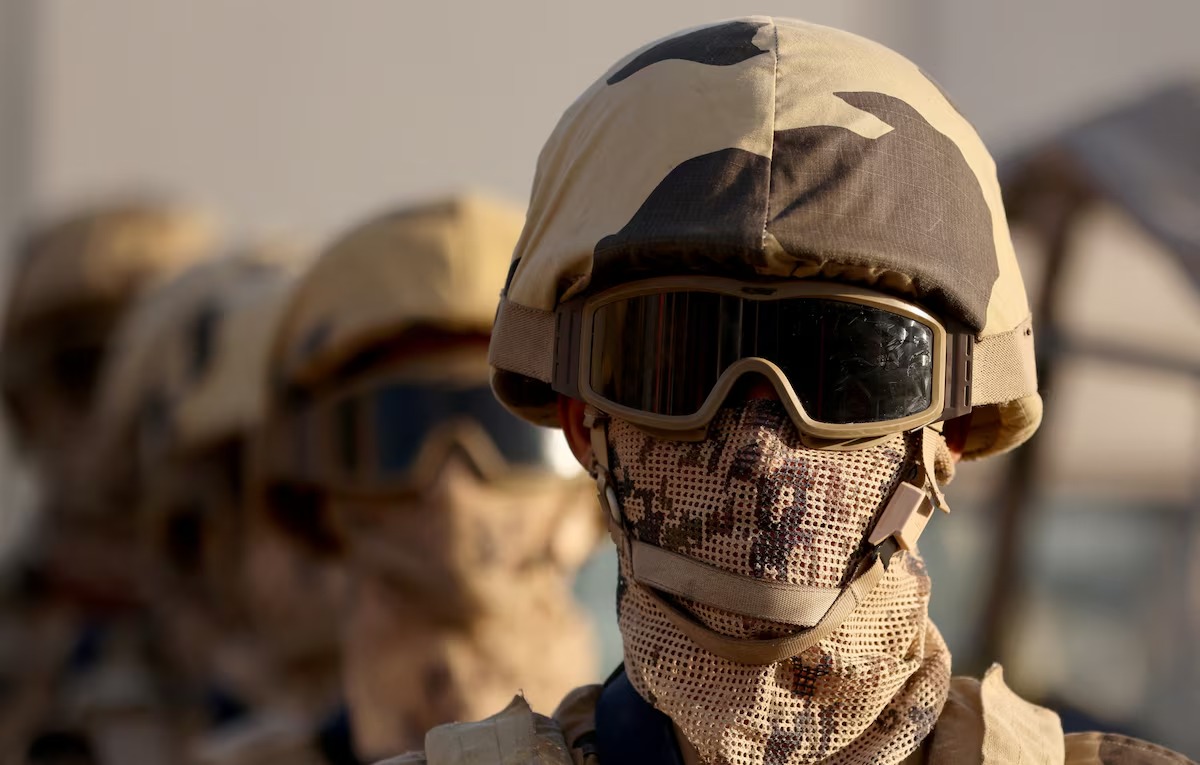
The US State Department stated that it has waived human rights conditions on more than $300 million in military aid to Egypt.
The statement emphasised that this decision was taken in consideration of Cairo’s “helpful role” since the outbreak of the war against Iran.
Egypt began receiving substantial support from the US after signing a peace treaty with Israel in 1979.
Since the late 1980s, the country has received approximately $1.3 billion annually in US military assistance.
A portion of this aid is subject to conditions related to human rights and democracy, which can be waived on national security grounds.
Withholding funds, including during the administration of former US President Joe Biden, has caused tension between Cairo and Washington in the past.
A letter dated 21 September and addressed to various congressional committees, obtained by Reuters, stated that Secretary of State Marco Rubio “decided to waive the certification requirement under the fiscal year 2025 Foreign Military Financing programme for Egypt of $320 million.”
This waiver was subsequently confirmed by the State Department.
An accompanying memorandum justifying the decision stated that this portion of military aid was “essential for counterterrorism, border security, or non-proliferation programmes, or otherwise important to the national security interests of the United States.”
The memorandum, dated 4 September and bearing Rubio’s signature, stated: “Exercising this waiver authority is critical to the US-Egypt relationship and to US national security priorities, particularly given the helpful role Egypt has played in the aftermath of Operation Epic Fury.”
“Operation Epic Fury” is the designation used by the US military for the campaign launched jointly with Israel against Iran in late February.
The State Department memorandum, whose authenticity was confirmed by two sources in Washington familiar with the letter, did not provide detailed information regarding what was termed Egypt’s “helpful role”.
The State Department’s annual decision on military aid to Egypt typically covers funds allocated for the preceding fiscal year, which ends on 30 September.
A State Department spokesperson stated that Rubio waived the certification in the interest of US national security and that the US continues to cooperate with the Egyptian government across a range of issues.
In an emailed statement, the spokesperson said: “This waiver recognizes the importance of maintaining security cooperation with Egypt at a time of significant security challenges in the region.”
The Egyptian Ministry of Foreign Affairs did not immediately comment on the matter.
The spillover effects of the Iran war have imposed a heavy toll on US security partners, including Egypt.
Owing to rising fuel prices and other disruptions, the Egyptian economy is passing through a difficult period.
Under the Biden administration, the US withheld portions of the annual military allocation on multiple occasions over Egypt’s human rights record.
In 2024, following the Hamas-led 7 October attack on Israel and the subsequent war in Gaza, the Biden administration set aside human rights conditions, disbursing the entire $1.3 billion allocation to Egypt for the first time in its tenure.
Human rights organisations have long accused Egypt, under the administration of President Abdel Fattah al-Sisi, of widespread human rights abuses, including torture and enforced disappearances.
This week, Egyptian police detained six journalists from a fact-checking and investigative media outlet, accusing them of spreading false information on behalf of the banned Muslim Brotherhood.
Egyptian authorities state that they have taken steps to address human rights issues. Sisi said stability is paramount and that the government supports human rights by working to provide for basic needs.
Britain has significantly broadened its military export restrictions targeting Israel, suspending or rejecting more than 80 licences for items the IDF could use in Gaza.
This figure is nearly triple the number affected when the policy was first introduced in September 2024.
United Kingdom Minister of State for the Middle East Stephen Doughty said that as part of what he described as a “tighter system” for assessing exports to Israel, more than 50 further export applications have been refused since approximately 30 licences were initially suspended.
Under the initial decision taken in September 2024, 30 of roughly 350 licences were suspended after the British government concluded there was a “clear risk” that certain military exports could be used to commit or facilitate serious violations of international humanitarian law in Gaza.
The affected equipment included components for military aircraft, drones, naval systems, and targeting gear.
Doughty said additional measures adopted this month established what he termed a “double safeguard” mechanism within the approvals process.
Export applications must now be assessed both against existing international humanitarian law criteria and in light of Britain’s position on the legality of Israel’s presence in the Palestinian territories.
“We have so far suspended or refused more than 80 licences,” Doughty said, adding that he had personally examined each licence.
Despite the wider restrictions, British-origin parts entering the international F-35 fighter jet supply chain continue to be largely exempt.
The UK government argues that preventing British-made components from entering the global F-35 pool could undermine the programme as a whole and have serious consequences for the security of the UK and its allies.
Direct exports of F-35 parts intended specifically for Israel remain suspended.
Doughty defended maintaining the supply of components via the international programme, arguing that halting it could have severe ramifications for the broader European and allied security architecture.
Foreign Affairs Committee Chair Emily Thornberry challenged this position, arguing that the issue was political rather than purely legal.
Thornberry suggested adopting an approach similar to the Dutch model, under which components entering the international supply chain could be flagged as “not intended for aircraft bound for Israel”.
The initial suspension was implemented in September 2024 by then Foreign Secretary David Lammy.
Lammy stressed at the time that the measure did not constitute an arms embargo and applied solely to items assessed as usable in military operations in Gaza.
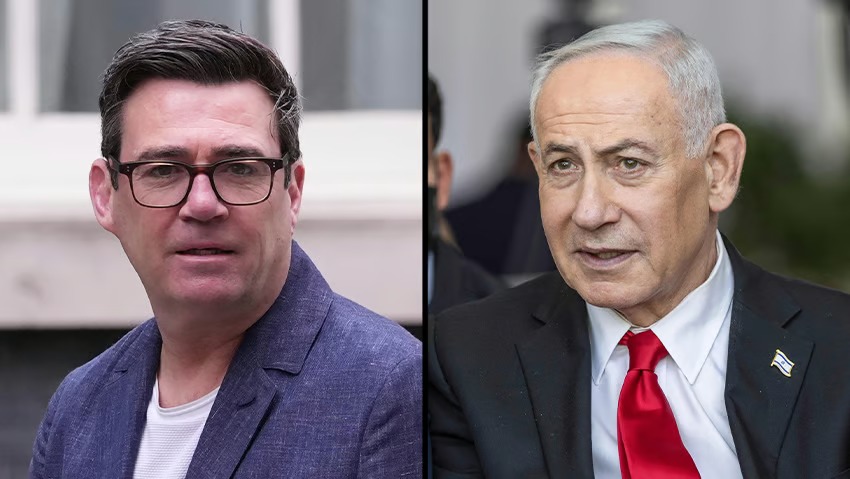
Since then, the policy has been tightened further under Prime Minister Andy Burnham.
The expanded export restrictions follow the Burnham government’s adoption of a more confrontational policy toward the Israeli government.
Foreign Secretary Ed Miliband drew sustained applause at the Labour Party’s annual conference in Liverpool after delivering a sharp critique of the Netanyahu government’s policies and defending the decision to ban trade with Israeli settlements in the West Bank.
Accusing Israel of committing war crimes in Gaza, Miliband stated that the British government heard public outrage over the conflict, telling delegates: “We hear you. You were right.”
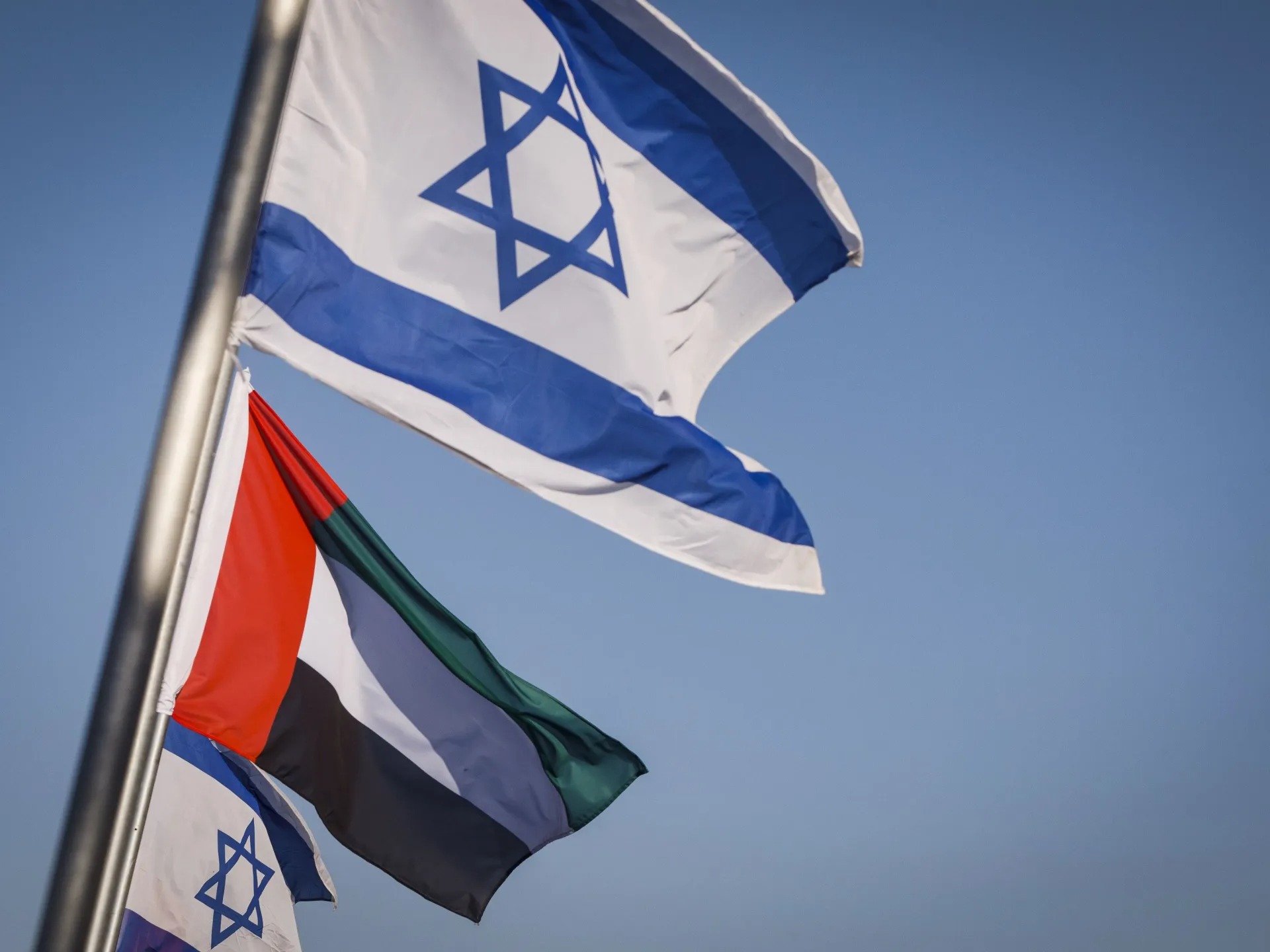
Israeli Prime Minister Benjamin Netanyahu met with representatives of Gulf and Arab nations that lack diplomatic ties with Israel, including Saudi Arabia, during his weekend visit to the United Arab Emirates.
Sources close to the gathering told the Israeli newspaper Yedioth Ahronoth on Monday that representatives from Morocco, Libya, Jordan, and Qatar also took part in the meeting.
Netanyahu made a unannounced visit to Abu Dhabi on Sunday, where he met with the country’s leader, Mohammed bin Zayed Al Nahyan.
According to Israeli media, this marked the first time the United Arab Emirates officially confirmed a visit by Netanyahu.
The meeting was arranged by Mossad Director Roman Goffman “at the request of Saudi Arabia, which asked for Israel’s assistance against Houthi attacks in the Red Sea region,” according to Yedioth Ahronoth.
The discussions addressed Iran and the Houthi militia. The newspaper added that the Arab states heard from Israel that “Israel is prepared to assist countries in the region with air defence systems, just as it aided the UAE during the conflict with Iran.”
Conflict in Yemen intensified in September when Ansarullah militiamen launched a rapid offensive that seized Yemen’s entire Red Sea coastline, including the vital maritime corridor of the Bab el-Mandeb Strait.
The Yemeni resistance also imposed a blockade on Saudi Arabia’s energy exports and staged multiple attacks against the kingdom.
Saudi Arabia reportedly sought military assistance from the US to counter Ansarullah.
Washington declined to attack the Houthis directly, but announced that it would provide intelligence and targeting support.
Reporting on the same visit, The Jerusalem Post said Netanyahu spent six hours in the UAE and that the principal subject of his discussions with MBZ was Iran.
Citing sources familiar with the matter, the newspaper added that the trip came “after Netanyahu exerted heavy pressure on the United Arab Emirates to arrange a meeting ahead of the Israeli elections on 27 October.”
Separately, the Associated Press, citing a person with direct knowledge of the meeting, reported that Netanyahu’s visit to the UAE was arranged in part to ask MBZ to deny reports that he had warned the Israeli prime minister of an impending Hamas threat prior to 7 October 2023.
According to Israeli media, Netanyahu’s office denied the AP report, issuing the following statement:
“Fake news. The visit focused solely on strengthening ties between the two countries and on regional issues.”

Germany expands North Sea military ports and plans new naval base

Musk appointed co-director of Pentagon future warfare initiative

US waives human rights terms on $320m military aid to Egypt

Putin says Russia did not start war and warns of nuclear risks

European nations unite against US pressure over strategic oil stocks
-

 Europe5 days ago
European unions urge governments to scrap all Palantir deals
-

 Diplomacy5 days ago
East-West Forum in Istanbul highlights irreversible shift to multipolarity
-

 Europe1 week ago
Emmanuel Todd says West faces collapse amid Ukraine and Iran crises
-
 Europe1 week ago
European intelligence chiefs divide over risk of Russian attack
-

 Diplomacy1 week ago
East-West Forum in Istanbul to debate multipolarity and global order
-
 Middle East1 week ago
Sharaa says 7 October must not shape Israel policy on Syria
-

 America1 week ago
Republican support for Trump’s war with Iran drops sharply in polls
-
 Middle East1 week ago
Palestinian factions confront legitimacy crisis at Istanbul talks
