
Europe
New MI6 chief’s grandfather was a Nazi collaborator known as ‘The Butcher’

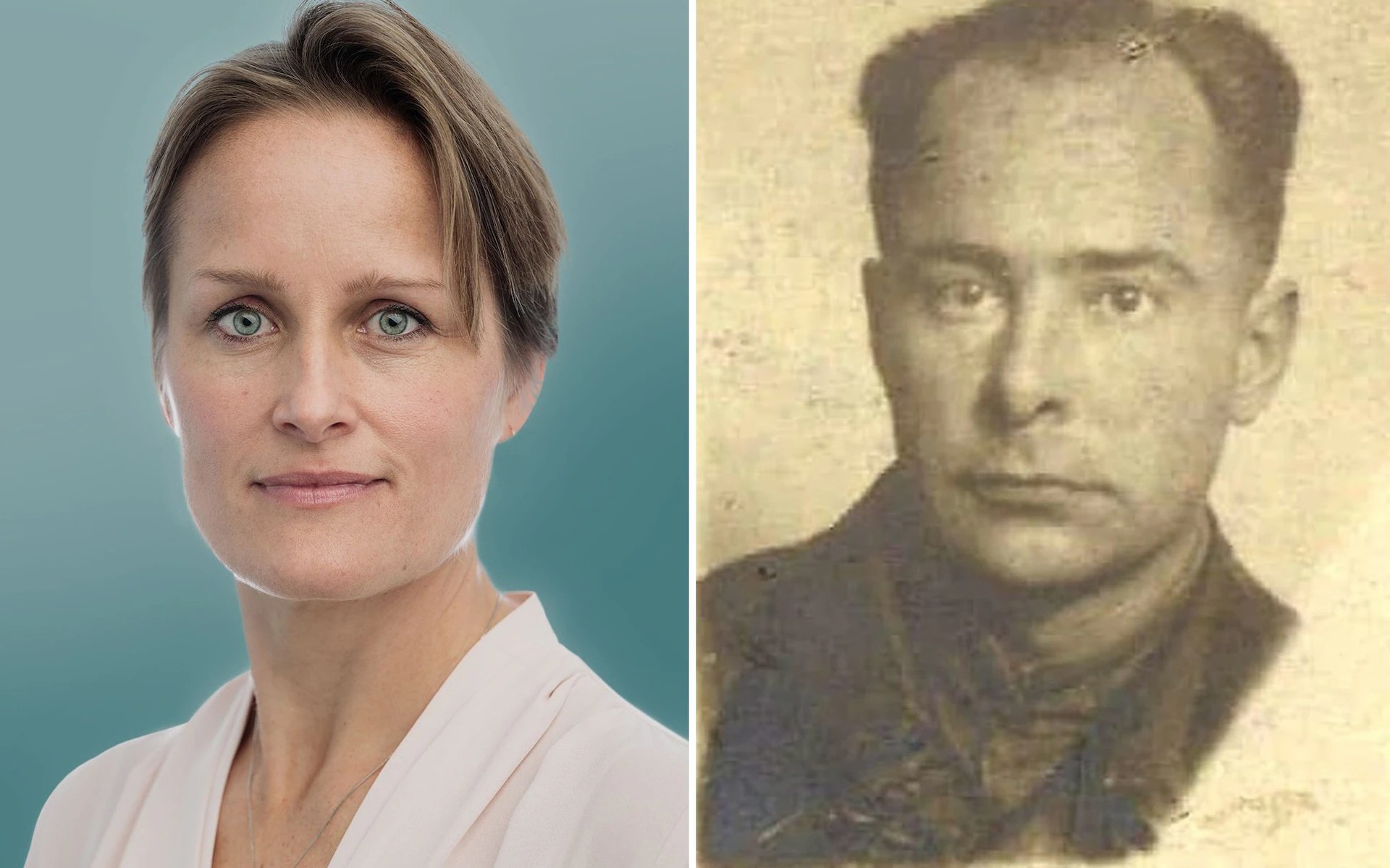
The grandfather of the new head of MI6 was reportedly a Nazi spy known as “The Butcher” in German-occupied Chernihiv.
Blaise Metreweli was appointed earlier this month as the first female spy chief in the 116-year history of the Secret Intelligence Service (MI6).
According to documents cited by the Daily Mail, Metreweli’s grandfather, Constantine Dobrowolski, was a Nazi collaborator who boasted of killing Jews.
The newspaper reports that Dobrowolski, a Ukrainian, defected from the Red Army to become a chief informant for the Nazis and Adolf Hitler in the Chernihiv region.
Metreweli, 47, never knew her grandfather. He remained in Nazi-occupied Ukraine when his family fled in 1943 as the Red Army liberated the area.
Documents found in German archives reveal that Dobrowolski was known to the Nazis as “Agent No. 30.”
At one point, the Soviet Union placed a 50,000-ruble bounty on Dobrowolski’s head (approximately £200,000 today), labeling him “the greatest enemy of the Ukrainian people.”
According to the newspaper, Dobrowolski sought revenge against Russia for killing his family and confiscating their property during the 1917 revolution.
One file reportedly contains a handwritten letter from Dobrowolski to his Nazi superiors, signed “Heil Hitler.”
In another file, he is said to have boasted that he “personally participated in the destruction of the Jews” and had killed hundreds of Ukrainian soldiers.
A spokesperson for the Foreign, Commonwealth & Development Office commented on the allegations, stating, “Blaise Metreweli did not know and had never met her father’s father. Blaise’s ancestors are characterized by conflict and division, and like many with Eastern European roots, she has a history that is only partially understood.”
The spokesperson suggested that it is “precisely this complex heritage” that “contributes to Blaise’s determination to prevent conflict and protect the British people from the modern threats of hostile states” as the next head of MI6.
Metreweli grew up abroad before studying anthropology at Cambridge, where she was part of the winning team in the 1997 Boat Race.
Joining MI6 in 1999, Metreweli served for two decades in Europe and the Middle East.
Metreweli currently holds the position of “Q,” the head of the technical section of MI6, made famous by the James Bond films.










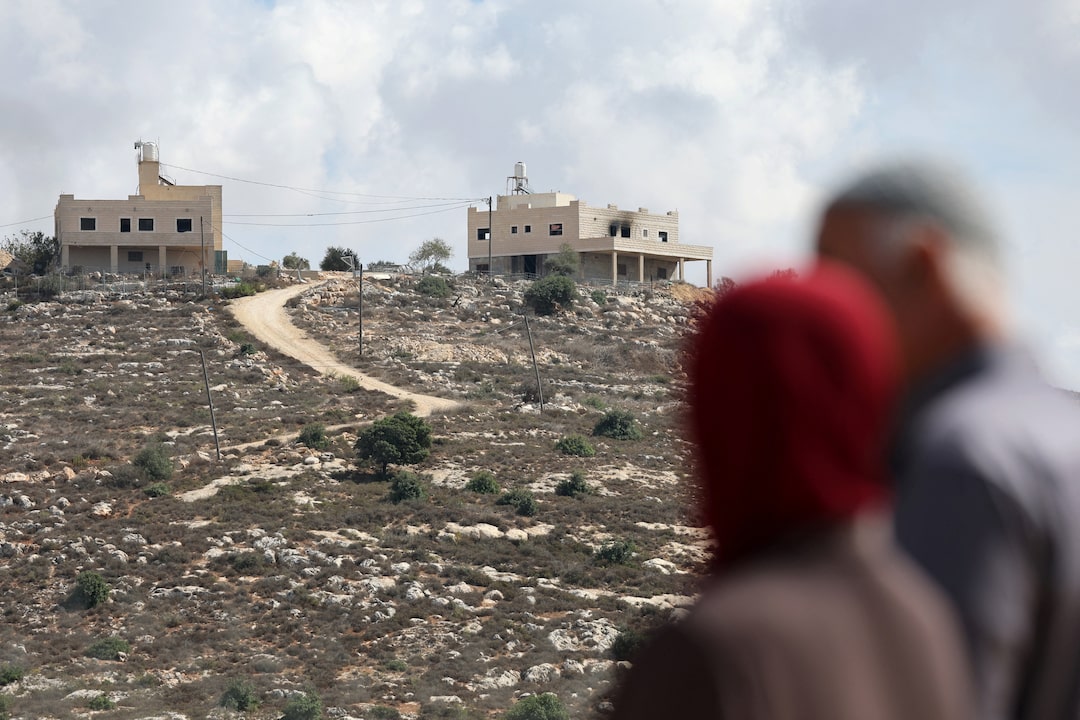
More than 500 former European ministers and diplomats, including four former prime ministers, have called on the European Union to urgently impose sanctions against Israeli settlement policies. Warning that the E1 project would extinguish a two-state solution, the signatories demanded a ban on trade with illegal settlements and binding steps at the EU Foreign Affairs Council meeting on 12 October.
More than 500 former European ministers, ambassadors, and senior officials, including four former prime ministers, have called on the European Union (EU) to take urgent measures against the expansion of Israeli settlements in Palestinian territories.
The signatories warned that it is merely a matter of time before the Israeli government announces construction tenders for the first phase of the E1 settlement project, which would bisect the West Bank and eliminate the possibility of a two-state solution.
Sanctions on financial bodies and trade ban demand
Addressing the European Commission, the senior diplomats and politicians demanded that sanctions be proposed without delay against all financial institutions and service providers supporting illegal settlements, above all E1.
The initiative text called for the presentation of legislative proposals that would prevent trade between the EU and these settlements. The signatories also requested the progression of long-stalled drafts stipulating the suspension of trade provisions in the EU-Israel Association Agreement. The initiative stressed that decisions must be taken at the EU Foreign Affairs Council meeting on 12 October.
“Time for the EU and member states to act”
Attention was drawn to the requirement that EU bodies and member state governments act in accordance with their clear obligations under the founding treaties of the EU and international law.
The statement noted that internal EU divisions resulting from the stances of Germany, Italy, and other countries blocking the adoption of joint measures must be overcome.
The call for urgent action pointed to ongoing civilian casualties and severe humanitarian conditions in Gaza, accompanied by inadequate aid deliveries and reconstruction activities that have ground to a halt, as well as escalating settler violence, land seizures, and the relentless displacement of Palestinians in the West Bank.
The statement concluded: “The time for the EU and its member states to act is definitely now.”
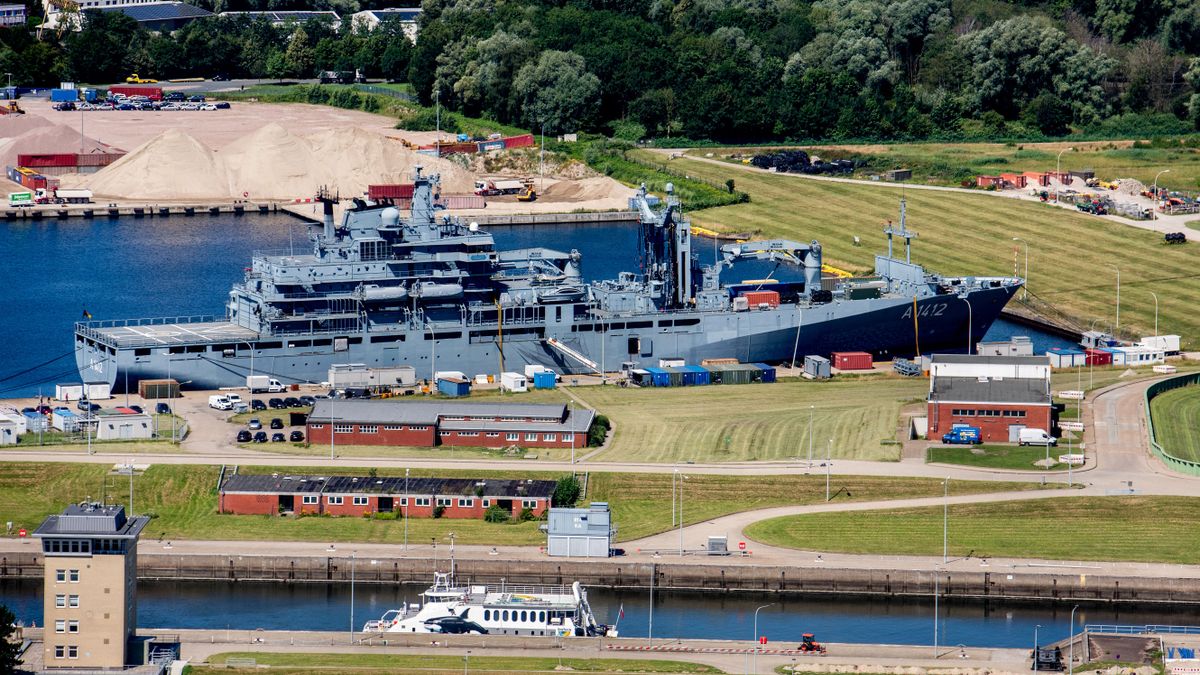
With the transformation of the port of Bremerhaven into a high-capacity military hub and the prospective establishment of a fifth German naval base in Emden, the federal government is accelerating the militarisation of the German coastline.
According to German Foreign Policy, the logistics infrastructure in Bremerhaven will be modernised and expanded to unload massive volumes of weapons and ammunition as quickly as possible and transport them onward to potential battlefields in Eastern Europe.
This is set out in a memorandum of understanding signed this week between the Ministry of Defence and municipal authorities in Bremen.
The federal government is providing up to 1.35 billion euros for this purpose, while the federal state of Bremen is contributing more than 212 million euros.
Bremen has the highest poverty risk and the highest child poverty rate of any federal state in the country.
The allocation of hundreds of millions of euros to expand military logistics rather than tackle poverty is also supported by senators from the Left Party (Die Linke) who sit in the state government.
Modernisation intensifies in Bremerhaven
Bremerhaven, Germany’s second-largest port in maritime freight handling behind Hamburg and ahead of Wilhelmshaven, is regarded as ideal for handling military cargo.
The port possesses significant capacity for offloading not only containers but also vehicles, alongside heavy-lift areas capable of handling even heavy military hardware such as main battle tanks. Moreover, because it can be accessed without passing through locks, access is substantially easier and faster.
Finally, it has good links to roads and particularly to railways, which is vital for the rapid transport of weapons and ammunition in the event of a crisis or war.
The port’s particular suitability as a military transshipment hub also stems from its history: it has been used by US forces since the end of the Second World War.
During the Cold War, it served as the central transshipment port in the Federal Republic of Germany and was expanded accordingly.
After 1990, it lost its significance for the US; however, with the escalation of the conflict in Ukraine, the US presence increased once more.
US activity escalated initially under exercises such as Defender Europe 2020 and subsequently from 2022 onwards in the context of the war in Ukraine.
As early as 2023, experts noted that Bremerhaven was operating as “an arms hub just like in the old days”.
Ports optimised for military logistics
The federal government is currently working to further increase the port’s military logistics capacity.
For instance, harbor basins will reportedly be dredged, and road and rail connections will be expanded.
Container facilities will be modernised and adapted to carry heavier loads.
This applies to both cranes and storage areas, with plans also in place to expand these storage areas into new zones.
A spokesperson for the port operating company Bremenports was quoted as saying: “The efficient transport of military hardware is no longer limited to tanks alone.”
Today, weapons and ammunition are also delivered in containers, which would need to be rapidly unloaded and forwarded in the event of war.
To ensure this, plans are also being made to build a new railway swing bridge at the Kaiserhafen. According to reports, the existing bridge is described as a “bottleneck” that slows down the movement of military equipment unnecessarily.
In addition, the heavy focus on military logistics demands costly security measures.
For example, not only will new fencing and privacy screens be erected, but drone defence systems will also be installed and cybersecurity measures implemented.
Left Party senators back armaments
The federal government is allocating approximately 1.35 billion euros through 2031 to optimise military logistics in Bremerhaven and, in conjunction with this, adapt Bremen Airport more effectively to the needs of the Bundeswehr.
According to the Mayor of Bremen, Andreas Bovenschulte, this represents the largest grant the German government has ever provided for a project in the federal state of Bremen.
The state of Bremen is contributing an additional 212 million euros to the “Bremerhaven 2031 Deployment Hub” project.
While large sums are being funnelled from Bremen’s state budget into war preparations in this manner, approximately 25.9% of the state’s population was classified as at risk of poverty in 2024, with 28.6% of all children living in poverty.
This makes Bremen the federal state with the highest poverty risk and the highest rate of child poverty.
Approval for funding military logistics in Bremerhaven with hundreds of millions of euros from the state budget also came from two Bremen senators belonging to the Left Party.
The Left Party’s Senator for Economic Affairs and Ports, Kristina Vogt, praised the “pragmatism” of “improving our infrastructure, which is already used for civilian purposes, for military ends” rather than constructing new facilities.
North Sea joins Baltic Sea militarisation
With the expansion of the Bremerhaven military hub, the militarisation of Germany’s coasts is progressing.
Until now, the focal point of Germany’s naval infrastructure has been the Baltic Sea coast. This was partly because during the Cold War, the naval activities of the Federal Republic of Germany were directed against the Soviet Union and Warsaw Pact states.
Alongside several training facilities, the German Navy primarily operates three major naval bases here, situated in Eckernfoerde, Kiel, and Rostock-Warnemuende, as well as the Naval Command based in Rostock.
In the North Sea, these are complemented by the naval base in Wilhelmshaven and the Naval Air Command at Nordholz near Cuxhaven.
The Naval Air Command is the third major unit of the German Navy, alongside Flotilla 1 based in Kiel and Flotilla 2 based in Wilhelmshaven.
At present, approximately 16,000 soldiers and 1,800 civilian staff from the Bundeswehr are stationed at the Navy’s main bases and various smaller installations.
As in other branches of the armed forces, the German Navy aims to expand its personnel numbers.
Germany’s fifth naval base to be built
In addition to the four existing naval bases and the Bremerhaven military hub, the federal government plans shortly to announce the construction of a fifth naval base, also located on the North Sea.
According to reports, Emden has been selected as the site for the base. Defence Minister Boris Pistorius and Lower Saxony’s State Minister Olaf Lies are scheduled to outline the next steps regarding a potential new naval base there on Monday.
Emden previously hosted a naval base during the Cold War, but the facility was closed in 1997.
According to reports, one argument in Emden’s favour is that it holds the largest unused area among Lower Saxony’s North Sea ports.
Discussions have been ongoing for some time over how to utilise this disused land reasonably, although these debates previously centred on civilian use.
According to the German Navy’s plans, the new naval base will accommodate seven frigates, ten minesweepers, and ten tugs, alongside a four-digit number of Bundeswehr soldiers and civilian personnel.
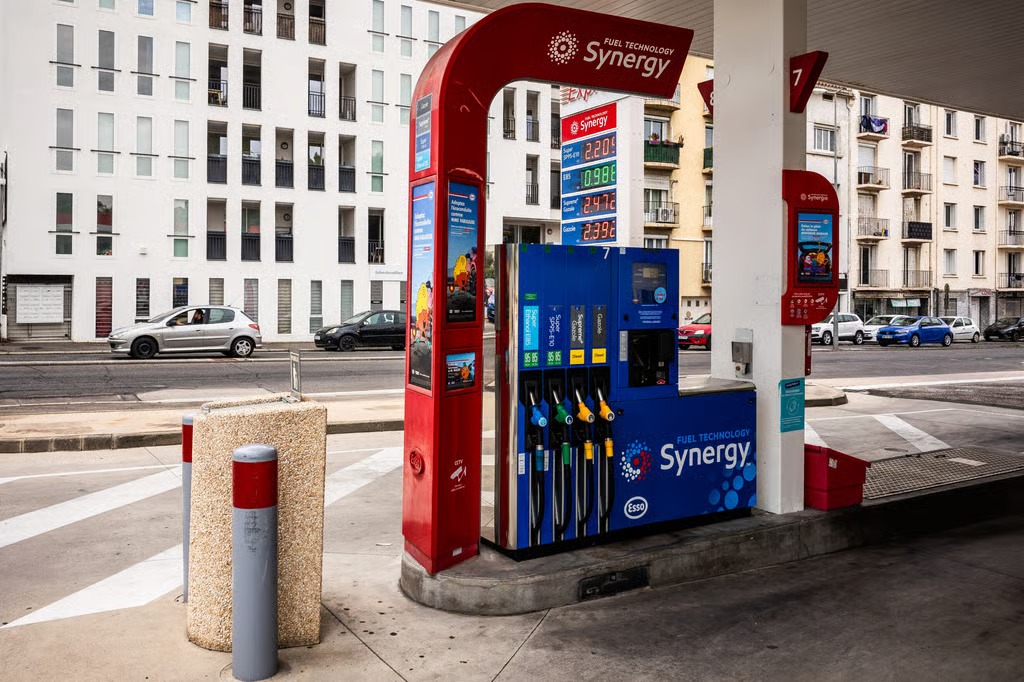
Five European countries have agreed to respond with “one voice” to mounting pressure from the US government to release their oil reserves.
Three European officials told Politico that France, Germany, Britain, Italy, Ireland, and the European Commission participated in talks to determine how to respond to pressure from Washington to draw down their oil reserves or face a ban on US diesel exports.
Two of these sources stated that all of these countries were placed under covert pressure by the US to run down their oil reserves or face a ban on diesel exports from the US.
According to the sources, these countries, together with the EU executive, agreed on three points: responding to the pressure with a “coordinated voice”, ensuring that “any decision on releasing stocks is brought to the IEA [International Energy Agency] level”, and seeking to “de-escalate tension in talks with the US”.
The Paris-based IEA coordinates energy policy among wealthy countries and oversaw the release of oil reserves earlier this year following the closure of the Strait of Hormuz.
One of the sources said the objective was to “de-escalate”:
“Being somewhat firm yet positive in communication… When you are facing a hungry lion, you do not necessarily have to play dirty with it.”
The source added that a wider group of countries, some of which have faced pressure from the Trump administration, would discuss how to react at a meeting scheduled for Friday.
Politico previously reported that US Energy Secretary Chris Wright had demanded the release of oil reserves into the market as an alternative to an export ban on which the EU heavily relies.
As a consequence of the wars in Ukraine and Iran, diesel prices in the US are soaring, placing significant pressure on US President Donald Trump to lower prices ahead of critical midterm elections.
The president is not ruling out an export ban, despite fierce opposition from the US oil industry.
Regarding the export ban, Trump said at an Oval Office event: “I am considering it. I speak to [Energy Secretary] Chris [Wright] and [Interior Secretary] Doug [Burgum] about this often. They think it would help diesel prices, but it could also raise the prices of other products.”

Over 500 former European diplomats urge EU sanctions on Israel

Russian Senator Shenderyuk-Zhidkov speaks at the East-West Forum: “Türkiye should be an independent pole”

We are no longer in 1992, the US has lost its military superiority, Ret. Lt. Col. Davis says

Germany expands North Sea military ports and plans new naval base

Musk appointed co-director of Pentagon future warfare initiative
-
 Diplomacy6 days ago
East-West Forum in Istanbul highlights irreversible shift to multipolarity
-

 Europe6 days ago
European unions urge governments to scrap all Palantir deals
-

 Europe1 week ago
Emmanuel Todd says West faces collapse amid Ukraine and Iran crises
-

 Diplomacy1 week ago
East-West Forum in Istanbul to debate multipolarity and global order
-
 Europe2 weeks ago
European intelligence chiefs divide over risk of Russian attack
-
 Middle East2 weeks ago
Sharaa says 7 October must not shape Israel policy on Syria
-
 America2 weeks ago
Republican support for Trump’s war with Iran drops sharply in polls
-
 Europe6 days ago
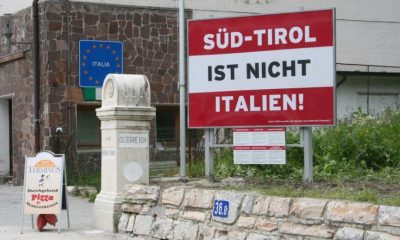
Rome protests AfD poster depicting South Tyrol as independent state
