
Europe
Poland military spending surge threatens EU peak budget deficit

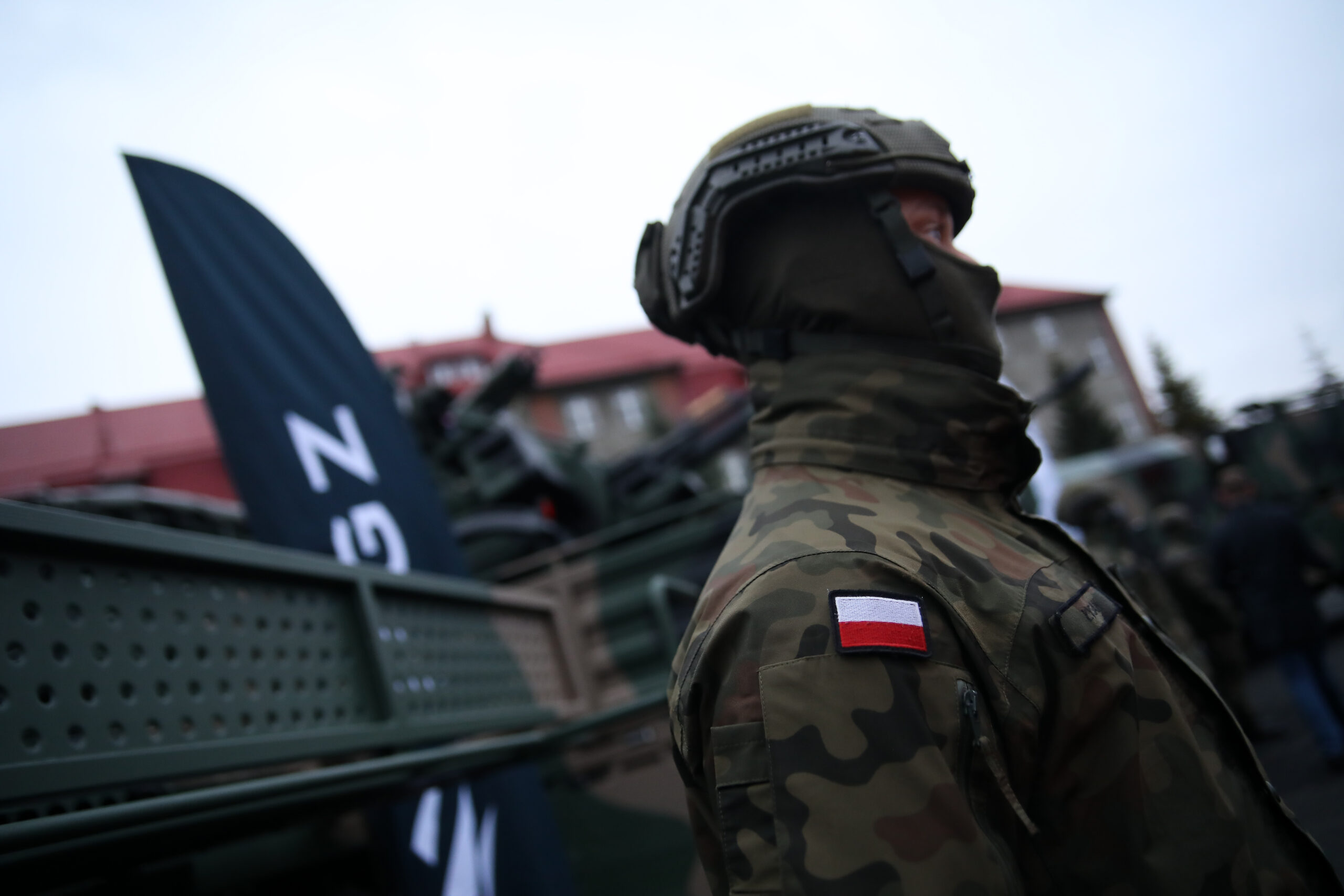
Military spending in Poland, having more than doubled over the past five years to reach $53 billion, is triggering severe budget deficits and fiscal risks across the national economy.
According to a report by the British newspaper The Guardian, based on interviews with officials, arms manufacturers, and economists, the Warsaw administration aims to drive growth by channelling its defence budget into domestic production, yet the accelerating arms drive is straining public finances.
The country’s defence spending has risen from 2.2% to 4.8% of gross domestic product (GDP) within the past five years.
Reaching $53 billion by 2026, this figure has elevated Poland to the position of the fourth-largest military spender in the European Union (EU), behind Germany, France, and Italy.
The Warsaw administration is attempting to bring manufacturing onto domestic soil to diminish import reliance. A new facility built by missile systems manufacturer MBDA in Czosnow, north of the capital Warsaw, stands among the tangible examples of this initiative.
Speaking about the factory, which has risen on land that was a cornfield until two years ago, MBDA Polska managing director and former British marine Jim Price said: “Everyone had to move twice as fast to meet Poland’s needs.”
Poland also secured the largest financing share under the European Union’s concessional defence loan programme SAFE, receiving approximately 44 billion euros.
The government plans to direct nearly 90% of these resources to domestic companies led by the state-owned defence industry group Polska Grupa Zbrojeniowa.
Despite this, a significant portion of Poland’s defence budget continues to flow abroad. Warsaw is purchasing Patriot air defence systems, Abrams tanks, and F-35 fighter aircraft from the US.
Foreign companies, meanwhile, are integrating into Polish industry through joint production projects. The British company Babcock is participating in the construction of Miecznik frigates at the Gdynia shipyard, while BAE Systems is setting up an artillery production facility near Katowice.
Artillery shell production is also being expanded rapidly. Poland, which was able to manufacture only 5,000 units of 155 mm artillery shells annually in 2023, aims to raise this figure to 30,000 in 2026, and to 200,000 within the following two years.
Prime Minister Donald Tusk, assessing the existing capacity, said: “More than this is expended in a single day on the Russia-Ukraine front.” The Warsaw administration plans to establish three more factories to expand ammunition output.
However, the rapid increase in military expenditure is rattling the budgetary balance. In the draft budget for next year, the budget deficit is projected to reach 7.1% of GDP. This ratio could make Poland the country with the highest budget deficit in the EU.
The European Commission’s May forecast indicated that the deficit would stand at 6.3% in 2027.
The Commission expects the country’s public debt to climb from 59.7% in 2025 to 68.3% in 2027, driven in part by defence investments.
International credit rating agency Moody’s downgraded Poland’s credit rating from A2 to A3 in September, citing persistently high deficits, a growing interest burden, and rising public debt.
The agency pointed out that defence, healthcare, public investments, and social commitments prevent the narrowing of the budget deficit.
ING economist Leszek Kąsek assessed the current situation: “This path is not sustainable. It is necessary to question whether Poland can maintain its growth rate and whether politicians are prepared to correct the course.”
Financing the military has turned into political friction between President Karol Nawrocki and the Tusk government.
Nawrocki vetoed legislation linked to the SAFE loans. Nawrocki’s supporters proposed that rearmament should be financed by selling part of the gold reserves.
Finance Minister Andrzej Domański described this proposal as a “fantasy” and announced that the government will continue its struggle to access European loans.







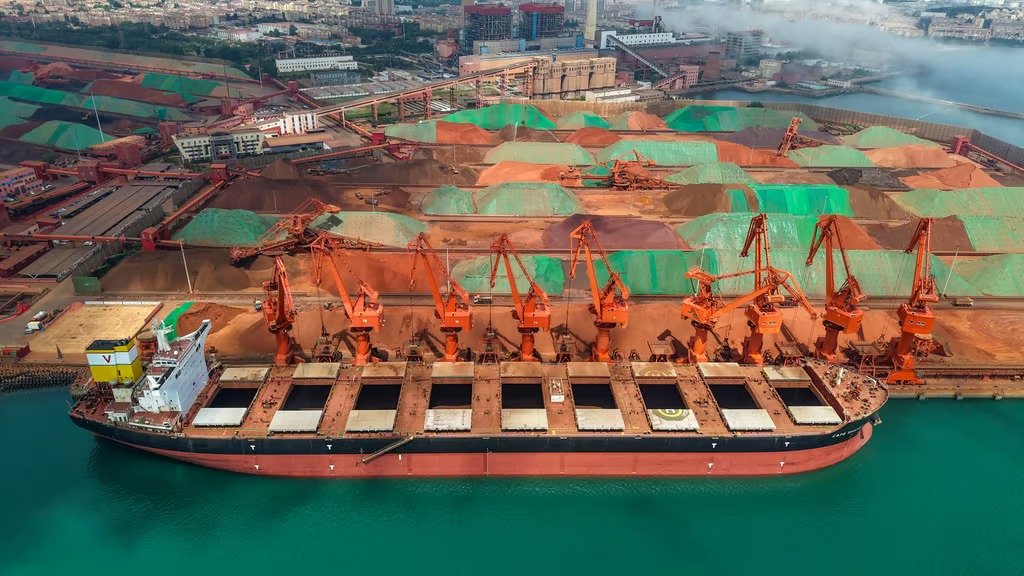
German companies are seeking to stockpile critical raw materials against the possibility that trade talks between the EU and China next month will end without agreement.
EU Trade Commissioner Maroš Šefčovič will travel to Beijing on 8-9 October to seek a breakthrough in negotiations aimed at reducing the EU’s record trade deficit with China.
Šefčovič warned that Brussels would restrict access for Chinese goods if no agreement is reached.
The risk that Beijing could retaliate by introducing new export restrictions on rare earth elements and other critical raw materials has unsettled the business community.
According to an announcement from Washington, China agreed on Wednesday to extend the suspension of a series of additional rare earth export controls for a further two months, carrying it into January.
“We are essentially trying to project power we do not possess. When doing business with certain partners, you have to assess your own position realistically,” said Matthias Rüth, chief executive of Frankfurt-based trading house Tradium, who has worked with rare earths and other technology metals for more than 25 years.
A German industry official, speaking on condition of anonymity because of the sensitivity of the issue, said companies were “very worried” and warned that manufacturing could grind to a halt:
“Companies are panicking right now and stockpiling. Some started quite early and now have several months of supplies in their inventories. But for the majority, that is not the case.”
Another industry official, who also spoke on condition of anonymity, concurred with those remarks, adding: “Tightening export controls would hit the sector hard. The situation is extremely tense.”
Export controls imposed by China in April last year on seven rare earth elements triggered acute shortages, forcing carmakers in Europe to halt several production lines while factories across other sectors lowered capacity utilization rates.
Beijing announced a further expansion of its controls on rare earth elements last October.
Those measures included restrictions on additional elements and on the technology used in their processing.
The measures were suspended for one year as part of a trade truce agreed with Washington.
Treasury Secretary Scott Bessent said on Wednesday, ahead of summit talks between President Donald Trump and Xi Jinping, that the moratorium had been extended to 10 January.
The EU is seeking to narrow a daily trade deficit of 1 billion euros with Asia’s largest economy, but to achieve that it must persuade Beijing either to import more EU goods or to curb its own exports.
In theory, this would be welcome news for Germany, the bloc’s manufacturing powerhouse, which competes with China across the automotive, machinery, and chemicals sectors.
Companies across Germany’s industrial heartlands continue to announce plant closures, citing both international competition and elevated energy costs.
Yet executives emphasize that their businesses remain inextricably tied to Chinese supply chains, including for the rare earth elements used in electric vehicles, wind turbines, data centres, and weapons systems.
Around 60% of rare earth mining and 90% of refining operations take place in China.
According to a report by the International Energy Agency, Europe and the US are the regions most exposed to Chinese export restrictions, facing potential direct losses exceeding 1.5 trillion dollars if Beijing’s rare earth export controls are fully enforced.
Bloomberg reported that Chinese exports of rare earth magnets to the US fell by roughly 20% in August compared with the previous month.
Siobhan McGarry, the European Commission’s spokesperson for industrial policy, argued that the EU has reduced its vulnerability to supply disruptions since last year’s rare earths crisis:
“If something happens tomorrow; such as export restrictions; we now have much greater awareness of where our alternative sources of supply lie. We have considerably more partnerships with other countries that require the same materials. That does not mean an export restriction would have no impact, but I believe we are now far better prepared.”
Commission President Ursula von der Leyen announced a new initiative to procure and stockpile critical minerals during her annual State of the EU address last week.
Canadian Prime Minister Mark Carney, who was in Strasbourg for the event, said his resource-rich country aimed to cooperate on critical minerals while deepening its alliance with the EU.
Despite strains with traditional allies, the US is also pursuing cooperation. In February, the Trump administration proposed a trilateral partnership among the US, the EU, and Japan under an international trade platform to break China’s dominance over key raw materials. Washington is preparing a draft text that it plans to submit to partners in the coming months.
Brussels has set 2030 targets to extract 10% of the EU’s annual consumption of strategic raw materials within its own territory and to process 40% domestically.
It has also designated 60 strategic projects, enabling them to secure faster permitting and financing.
Signs of progress have begun to emerge. Last year, a facility owned by chemicals group Solvay started producing neodymium and praseodymium, which are used in permanent magnets.
It is scheduled to begin separating dysprosium and terbium later this autumn.
Performance Materials, an Estonian company, began shipments of permanent magnets this month.
In Germany, an industry initiative led by carmaker BMW aims to establish a critical minerals trading hub to pool demand and execute joint purchases, hoping thereby to gain greater market leverage.
The Commission is also working on new rules to encourage, or even mandate, that industry diversify material sourcing beyond China, and to create a market for European critical mineral production. Šefčovič plans to present the proposal in early December.
Despite the tense environment, German policymakers are urging Europe to remain calm.
Tobias Winkler, a Bavarian lawmaker from the CSU, the sister party of Chancellor Friedrich Merz’s CDU, who focuses on the geopolitics of critical raw materials, said:
“It is important to negotiate professionally as equal partners and to place the available instruments on the table. China is also unlikely to have an interest in a trade conflict, especially if it places additional burdens on its already struggling domestic economy.”
Winkler observed that meaningfully reducing Europe’s dependencies would take years, adding: “Until then, we will need other measures to preserve market stability and ensure security of supply.”
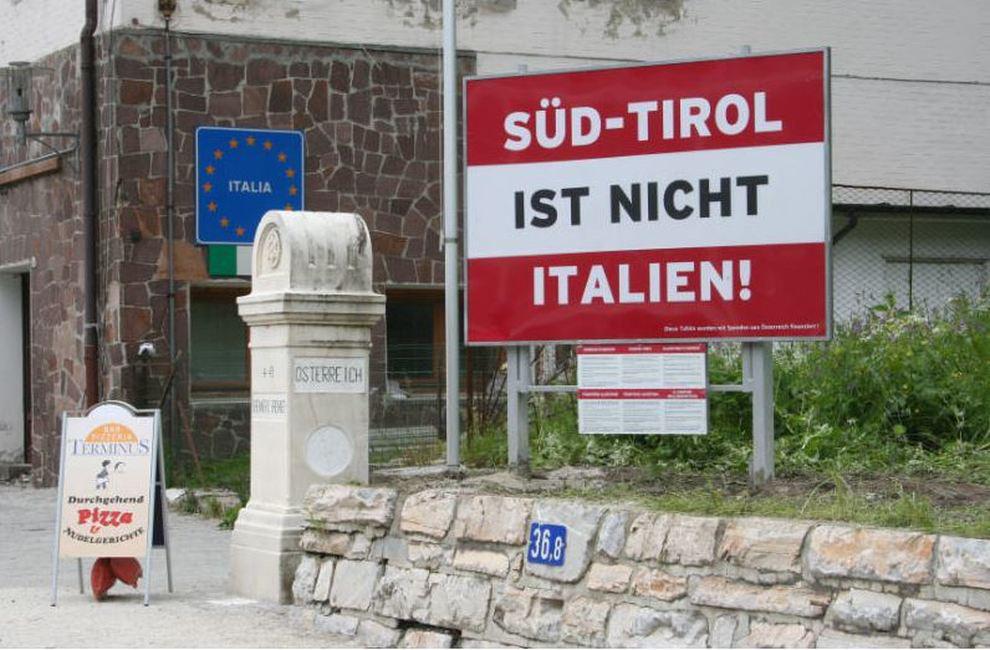
A diplomatic crisis has broken out with the Italian government after Alternative for Germany (AfD) organised a gathering for the German-speaking community in South Tyrol, an autonomous province belonging to Italy.
A group of AfD lawmakers held a meeting in Berlin last Wednesday to commemorate the 80th anniversary of the signing of an agreement guaranteeing the rights of the German-speaking population residing in the region, which is known in German as “Südtirol”.
The diplomatic rift with Rome emerged after promotional posters depicted this Italian province as an independent state.
Italian Foreign Minister Antonio Tajani announced that he would seek a formal explanation from the Bundestag, noting that the gathering took place inside the federal parliament building.
In an interview with the newspaper Corriere della Sera, Tajani criticised the Bundestag event by arguing that the 1946 agreements had “nothing to do” with Germany. He accused the AfD of being an “anti-Italian” party, adding:
“The poster is very clear: there is a map where South Tyrol is shown as a separate, independent state. In other words, the AfD supports and encourages South Tyrol’s secession from Italy. This is a very serious matter.”
Representatives of Prime Minister Giorgia Meloni’s party, Brothers of Italy (FdI), echoed his remarks.
The European Parliament delegation of Tajani’s own party, Forza Italia (FI), also announced that it would file an official complaint with the European Commission.
In a press release, FI Members of the European Parliament said: “South Tyrol is an integral part of the Italian Republic, and its territorial status is not open to debate.” They also described recent statements on the issue by certain AfD figures as “serious” and “unacceptable”.
These statements referred to Jean-Pascal Hohm, the head of the AfD’s youth wing, who attended a gathering held in South Tyrol by the separatist group Süd-Tiroler Freiheit (STF).
Speeches delivered during that event questioned the region’s Italian identity and praised as “freedom fighters” members of the STF who were responsible for roughly 350 attacks in the 1950s and 1960s.
During the event, Hohm stated: “Your struggle is a touchstone for identity struggles and self-determination.” Like the AfD, the STF is “anti-European” and advocates for “remigration”.
Indeed, the chairwoman of the STF’s youth wing, Melanie Mair, also attended an AfD youth congress led by Hohm. Founded in 2008, the STF secured 10.9% of the vote in the most recent provincial elections held in 2023.
Opinion polls indicate that the STF holds a 14% share of voting intentions, a figure that would make it the second-largest political force in the region after the moderate regionalist South Tyrolean People’s Party (SVP), led by provincial governor Arno Kompatscher.
According to Kompatscher, the AfD’s interference in South Tyrol’s politics recalls a “very dark period when the National Socialists and the Fascists, Hitler and Mussolini, reached an agreement on the future” of the territory.
On the other hand, AfD Member of the European Parliament Marc Jongen dismissed as “nonsense” the claims that his party wanted Germany to annex South Tyrol, stressing that the province historically belonged to Austria rather than Germany.
Jongen delivered these remarks at an event hosted by National Future, Italy’s new right-wing party founded by retired general Roberto Vannacci, which sits as an ally of the AfD in the European Parliament.
South Tyrol, also known as Alto Adige, is situated in northeastern Italy at the foothills of the Alps.
Having come under Rome’s control in 1920 following the defeat of the Austro-Hungarian Empire in the First World War, the territory was subjected to forced Italianisation during the fascist era.
Following decades of protests demanding reunification with Vienna, the region’s approximately 540,000 residents, 69% of whom speak German as their mother tongue, now enjoy wide-ranging autonomy.
A coalition of trade unions and civil society organisations is demanding that European governments and institutions terminate all contracts with Palantir.
Palantir has long been a controversial company, with co-founder Peter Thiel and CEO Alex Karp publicly voicing their views on political matters.
Applications of the company’s technologies also actively raise concerns, with its clients including police forces, militaries, and immigration authorities.
On Monday, groups from 30 countries and across the European level argued in an open letter that there should be no place for Palantir in a “democratic Europe”.
The letter highlighted the company’s provision of technology to US immigration authorities and Karp’s strong support for Israel, which faces a genocide case before the International Court of Justice.
The organisations also warned that Europe’s heavy dependence on a single US company poses a risk to its sovereignty:
“The company’s proximity to Trump’s American nationalist administration makes this dependence irrational, as the president has demonstrated a great willingness to weaponise US economic and trade relations.”
The letter calls on governments and institutions to terminate all existing contracts with Palantir, bar the company from future contracts, and develop alternative solutions.
They are also urging investors, such as pension funds, to divest from their Palantir shares.
Palantir has built relationships with many European governments over the years. For example, French security services signed a contract following the 2015 Paris attacks.
Other governments turned to the company’s specialised solutions for the healthcare sector during the Covid-19 pandemic, while NATO approved Palantir’s military software for its own use this summer.
Nevertheless, in recent times, political disputes and anxieties surrounding Europe’s technological reliance on the US appear to have begun affecting Karp’s firm as well.
Numerous European companies, from Britain’s Quantexa to Ireland’s Siren and Octostar, are competing to position themselves as independent rivals to Palantir.
This month, French technology giant Thales also unveiled an alternative to Palantir’s military software.
French security services are likewise preparing to replace Palantir by opting for local competitor Chapsvision, the strongest European rival to emerge so far in the civilian domain.
Silvano Sansoni, CEO of the Paris-based firm of more than 1,000 employees, recently spoke to Euractiv about expansion efforts into Germany, where regional governments are actively debating their existing ties with the US giant.
In recent months, Palantir has also faced criticism over the amount of tax it pays in Europe.

German industry stockpiles critical minerals before EU-China talks

Poland military spending surge threatens EU peak budget deficit

Rome protests AfD poster depicting South Tyrol as independent state

European unions urge governments to scrap all Palantir deals

East-West Forum in Istanbul warns multipolarity is now irreversible
-
 America2 weeks ago
Milanovic declares global neoliberalism dead, warns of plutocracy
-

 Asia2 weeks ago
DeepSeek engineer warns AI will lead to communism or Cyberpunk
-
 America2 weeks ago
Big Tech profits from AI extinction hype, Ken Klippenstein says
-
 Europe2 weeks ago
UK faces £258bn infrastructure gap as commission urges private funds
-
 Middle East2 weeks ago
Saudi exportable crude stocks risk depletion within a week
-
 Middle East2 weeks ago
Iran used Chinese satellite imagery in deadly US base attack: report
-

 Europe2 weeks ago
Wolfgang Streeck links German polycrisis to capitalism and AfD rise
-
 Diplomacy2 weeks ago
Allies step back from US as default partner across assets and defence
