
Europe
Von der Leyen unveils €2 trillion EU budget plan for 2028-2034

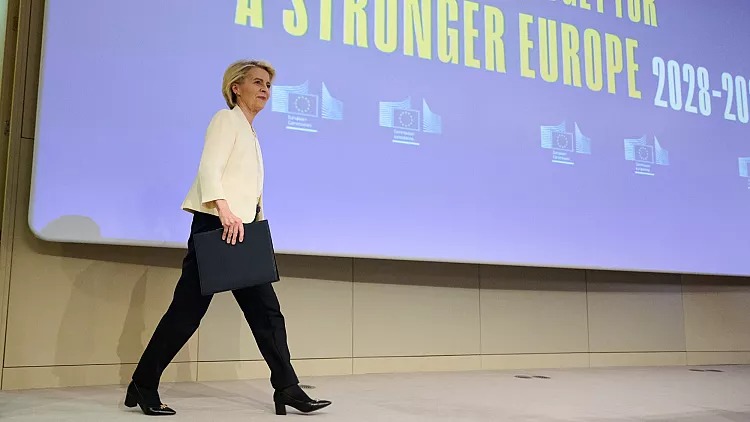
European Commission President Ursula von der Leyen has presented a record-breaking long-term budget plan, announcing that the 2028-2034 budget will be €2 trillion.
As announced by von der Leyen in Brussels yesterday, the EU budget for 2028-2034 (the Multiannual Financial Framework) will reach approximately €2 trillion. This figure represents 1.26% of the EU’s gross domestic product (GDP), significantly more than the 1.1% of GDP allocated by Brussels for 2021-2027.
“This budget is more strategic, more flexible, and more transparent. We are investing more in our capacity to react and in our independence,” the European Commission President stated on Wednesday afternoon.
Von der Leyen’s plan reshapes the budget’s structure around three main pillars: €865 billion for agriculture, fisheries, cohesion, and social policy; €410 billion for competitiveness, including research and innovation; and €200 billion for external actions, of which €100 billion is allocated to Ukraine.
Although direct contributions from member states will cover most of the budget, von der Leyen also envisions introducing new EU-wide taxes on electronic waste, tobacco, and the revenues of large corporations so that Brussels can generate additional income on its own.
The main plan is to consolidate the EU’s central spending into three main budget lines. This will allow the Commission to respond more quickly to crises and conflicts, but also to control member states more than before under headings such as the “rule of law.”
The Commission also plans to establish a “Global Europe Fund” for an ambitious global policy.
The plans to radically change the structure of the EU budget are explained by the European Commission’s desire to act more “flexibly and effectively” in the future, while also allocating more funds for foreign policy activities and the improvement of member states’ defense capabilities.
Agriculture and cohesion funds are being merged
According to the Commission’s statement, approximately 90% of expenditures are typically fixed in the multiannual financial framework. The multiannual financial framework determines the EU’s seven-year spending; this long period was chosen to avoid having to enter into lengthy budget negotiations every year.
According to Brussels, this framework should be designed in the future so that the Commission can draw on more comprehensive resources in the event of a crisis or war, and for this purpose, the current budget structure will need to be changed.
This structure allocated about one-third of spending to farmers and another third to regions. The official purpose of the share allocated to regions was to bring the standard of living in the EU’s poor regions up to the level of more prosperous regions. There were also numerous small EU programs for different purposes.
Now, the Common Agricultural Policy (CAP), which covers subsidies to farmers, and the cohesion funds are being merged and will cease to be separate entities, both being grouped under the first pillar, National and Regional Partnerships, worth a total of €865 billion.
The two budget items appear to be significantly downsized compared to the current budget, where CAP and cohesion funds account for more than 60% of allocations.
A new approach is now planned. According to this approach, funds for farmers and regions will be combined in a previously non-existent budget item called “European social model and quality of life.”
Tensions will rise between the ‘poor’ south and the ‘rich’ north
On Wednesday, various figures regarding the exact volume of this budget circulated after clearly contradictory information was leaked from the Commission meeting, which lasted much longer than planned, into the afternoon.
According to the latest information, €865 billion—almost half of the total budget that Ursula von der Leyen wants to increase to €2 trillion—has been allocated to this budget item.
Unlike in the past, this money will be transferred directly to the member states, which will sign “national and regional partnership agreements” with the Commission. In these agreements, member states will set targets for their spending and commit to making “reforms.”
The deep cut will be the scene of a fierce debate between the southern countries, which are anxiously watching for any reaction from the agricultural sector, and the eastern countries, which are dependent on cohesion policy to close the gap with wealthier member states.
At the same time, this reduction will be welcomed by the western and northern countries, which have consistently argued for a greater focus on today’s priorities, such as climate action, defense, security, research, innovation, and advanced technologies.
According to the announcement, these reforms may particularly relate to the protection of the “rule of law.” Under this rhetoric, the EU has been “disciplining” governments with which it has fallen into contradiction for years, such as Viktor Orbán’s in Hungary.
Brussels’ control is increasing
In addition to the massive fund for farmers and regions, the European Commission is planning a new budget item: the European Competitiveness Fund (ECF).
This fund will bring together more than a dozen previously independent programs. The Commission officially states that it wants to reduce “complexity” and “bureaucracy.”
At least initially, the supervision of the ECF was planned to be delegated to the Commission. This would have given the Commission more flexibility to use the funds at its discretion and to distribute them more effectively, for example, in the event of new crises and conflicts.
On Wednesday, a figure of €410 billion was circulating, slightly less than initially planned. However, the ECF has faced serious criticism, especially from the European Parliament (EP), from those who feel deprived of their say and thus their authority, as with the agricultural and regional budgets.
The ‘Global Europe Fund’ will tie non-EU countries to the EU
In addition to these two budget items, the European Commission’s budget plan includes a third item, currently called the “Global Europe Fund.”
This fund was created to bring together programs affecting countries outside the EU. This will allow the Commission to use funds for the EU’s global influence policy in a more targeted way than before.
The programs of the Global Europe Fund will be strictly separated by region, and according to preliminary statements, this will make it much easier to “use development cooperation as a tool of EU foreign policy.”
The size of the Global Europe Fund was announced yesterday as approximately €200 billion. In addition to the official budget, a Ukraine fund is also planned, which von der Leyen wants to equip with about €100 billion.
Tax protests from the German business community
The restructuring of EU spending is accompanied by a restructuring of revenues. This figure is also higher than before, as debt repayments of between €25 billion and €30 billion will be made each year from 2028.
Von der Leyen has already shelved the plan to use revenue from a possible new digital tax on US digital giants to consider the fundamental interests of the Trump administration. Instead, she wants to tax unused electronic waste and take a share of national tobacco taxes.
In addition, a tax is planned for EU-based companies with an annual revenue of over €100 million. This is already causing strong protests from the German business community, particularly because a large proportion of the affected companies (up to 40% according to some estimates) are based in Germany.
Observers predict that the draft budget will cause serious disagreements in the EU for at least two years and will further exacerbate existing differences.


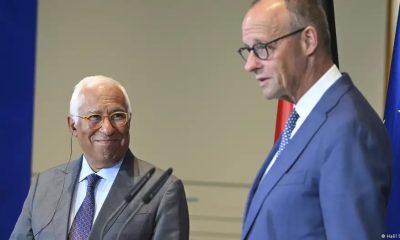



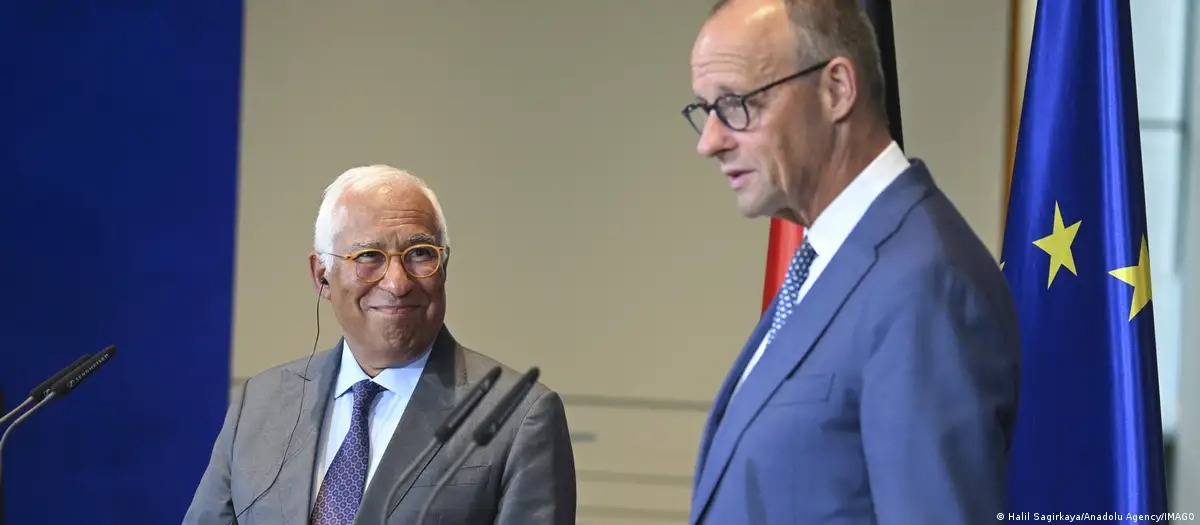
German Chancellor Friedrich Merz and the leaders of five other countries have threatened to withhold approval for the draft seven-year EU budget unless billions of euros in cuts are made as they demand.
According to the Financial Times, Merz, along with the leaders of the Netherlands, Sweden, Denmark, Austria, and Finland, signed a letter making clear that the proposed budget must be cut by billions of euros, or they will block it.
The 2028-2034 budget was prepared last year by the European Commission and requires the approval of all EU countries.
The proposed budget has been set at approximately 2 trillion euros ($2.33 trillion), and the parties involved hope to reach an agreement by the end of 2026.
The proposed sum is significantly higher than the current budget, which runs from 2021 to 2027.
Merz stated earlier this month that cuts should be implemented across all policy areas, rejecting further recourse to joint EU borrowing to plug the shortfall.
“Excessive debt threatens our sovereignty and our capacity to act,” the chancellor said, adding that governments face the “undoubtedly painful task” of setting priorities.
Arguing that a “20th-century budget” cannot resolve current challenges, the German leader called for spending in the bloc’s next budget to be shifted towards competitiveness and defence.
The EU budget is financed primarily through member state contributions. These payments are calculated either as national contributions based on gross national product or as a % linked to national VAT revenues.
As the EU’s largest economy, Germany provides the largest contribution in absolute terms.
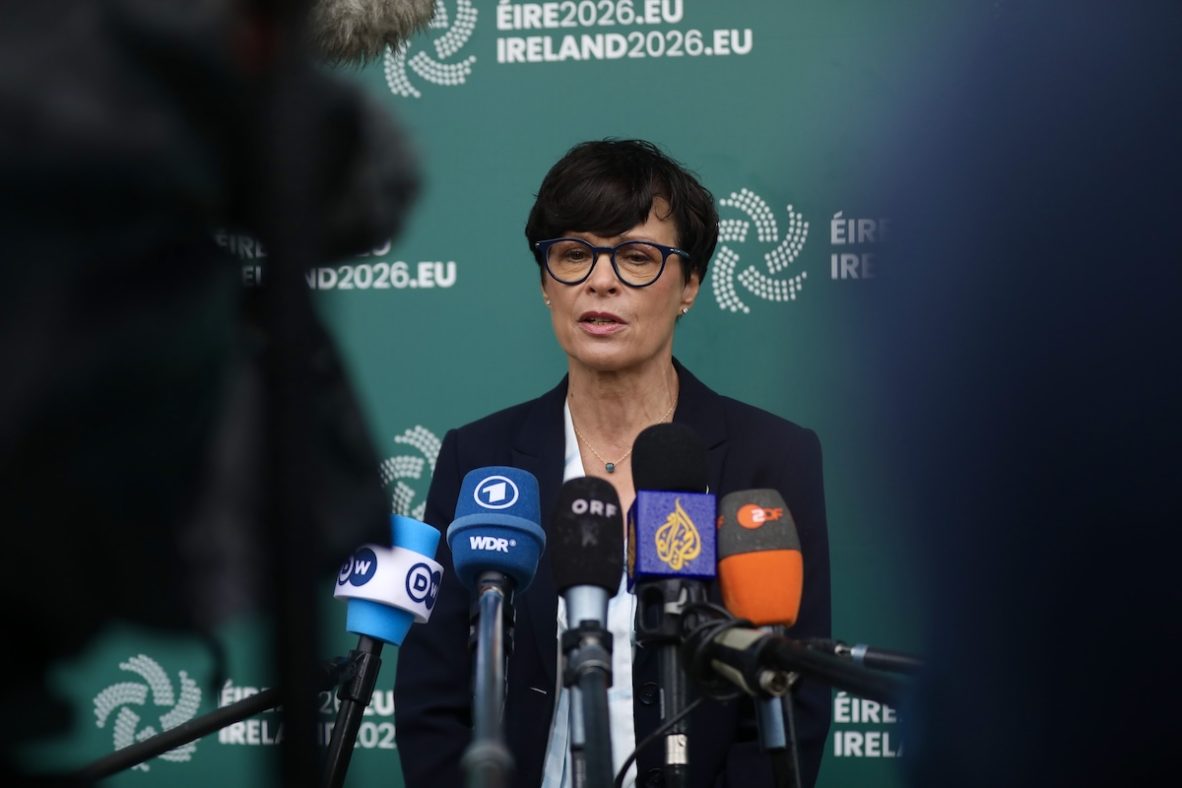
The European Commission is seeking a radical overhaul of decision-making in the EU enlargement process in order to bypass national veto rights.
Commission President Ursula von der Leyen will present a plan next week for the biggest change to the EU’s internal operations in decades, making a major announcement on how to prepare for a larger bloc of more than 30 members.
In doing so, von der Leyen will not make any changes to the Lisbon EU Treaty.
Two internal draft documents from the long-delayed enlargement strategy, examined by Rapporteur, propose using legal passerelle clauses to eliminate the requirement for unanimity among the 27 member states at multiple intermediate stages of candidate countries’ accession paths.
One of the documents, which will form the basis of the Commission president’s plan next week, states that the EU must become capable of acting with less consensus:
“Consensus strengthens political ownership and democratic legitimacy. But it can delay or prevent timely decisions in areas where the Union needs most to act.”
This measure: which itself requires unanimity: could significantly accelerate the accession processes of countries such as Ukraine, Montenegro, and North Macedonia, which have been struggling with blockades by a small number of EU members.
It is also likely to face resistance from existing member states wary of losing their veto power.
Nevertheless, the draft provides for an “emergency brake” that a government could trigger if it considers that “vital national interests” are under threat.
The Commission proposes applying the lower threshold of qualified majority voting: 15 countries representing two-thirds of the bloc’s population: across a wider spectrum of policy, including sanctions, human rights, defence and security, and tax evasion.
“As the Union enlarges, the risk of decisions being delayed or blocked will inevitably increase,” the internal document states.
To this end, the Commission will “prepare a work programme for the use of passerelle clauses.”
“Passerelle clauses” are transition provisions in the EU treaties that permit voting rules in specific policy areas to be changed permanently from unanimity, where all countries can exercise a national veto, to qualified majority voting.
However, with no indication that the EU will abandon the requirement for unanimity at the very beginning and at the end of a candidate country’s accession process, radical changes to EU decision-making will encounter obstacles.
Another contentious proposal would mean that only two-thirds of EU countries could appoint a European Commissioner once the bloc expands.
Under the current 27-member bloc, nine countries would be forced to relinquish their right to send a representative to Brussels.
This prospect is expected to unsettle smaller member states, which have historically argued that their influence in Brussels diminishes as the bloc expands.
Ireland, having lost a referendum in 2008, secured a legal guarantee that “the Commission shall continue to include one national of each member state”, but Dublin would have to surrender this safeguard.
According to the draft documents, new members could be placed on probation for a decade or more. During this period, they would face stricter oversight from Brussels.
Penalties that could be imposed during this probationary period include the suspension of voting rights in the Council and financial sanctions under newly created “financial” and “institutional safeguard” provisions.
New member states would be required to sign a legally binding “interim commitment” not to block decisions agreed upon by the rest of the EU.
In addition, standard transitional safeguards regarding participation in core EU policy areas, ranging from justice and home affairs to agriculture, would be retained.
New member states would also be subject to time-limited “financial safeguard” provisions allowing the Commission to penalise them in the event of backsliding on democratic and judicial standards.
Prior to accession, new members would also be required to join the European Public Prosecutor’s Office, which investigates fraud involving EU funds.
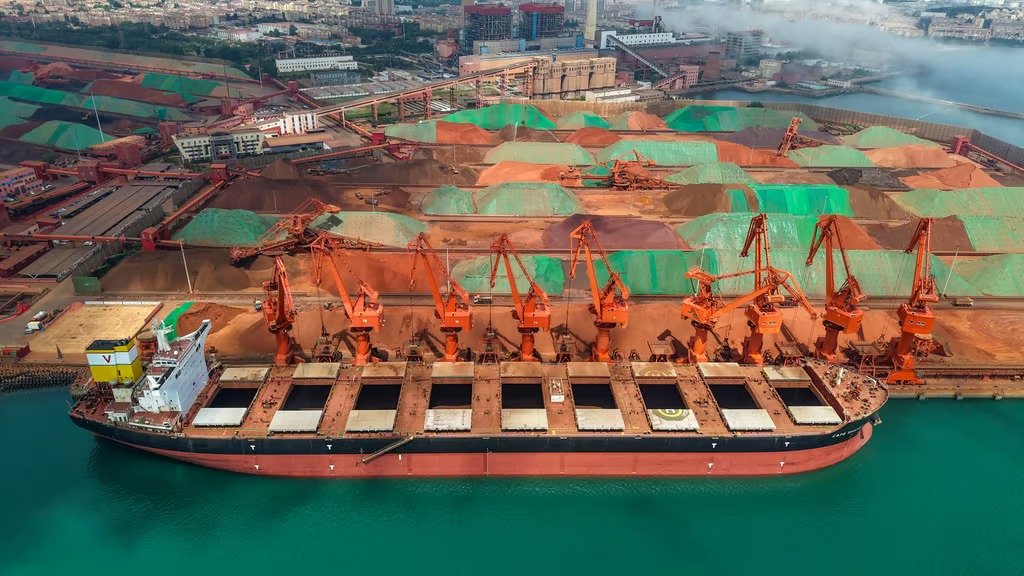
German companies are seeking to stockpile critical raw materials against the possibility that trade talks between the EU and China next month will end without agreement.
EU Trade Commissioner Maroš Šefčovič will travel to Beijing on 8-9 October to seek a breakthrough in negotiations aimed at reducing the EU’s record trade deficit with China.
Šefčovič warned that Brussels would restrict access for Chinese goods if no agreement is reached.
The risk that Beijing could retaliate by introducing new export restrictions on rare earth elements and other critical raw materials has unsettled the business community.
According to an announcement from Washington, China agreed on Wednesday to extend the suspension of a series of additional rare earth export controls for a further two months, carrying it into January.
“We are essentially trying to project power we do not possess. When doing business with certain partners, you have to assess your own position realistically,” said Matthias Rüth, chief executive of Frankfurt-based trading house Tradium, who has worked with rare earths and other technology metals for more than 25 years.
A German industry official, speaking on condition of anonymity because of the sensitivity of the issue, said companies were “very worried” and warned that manufacturing could grind to a halt:
“Companies are panicking right now and stockpiling. Some started quite early and now have several months of supplies in their inventories. But for the majority, that is not the case.”
Another industry official, who also spoke on condition of anonymity, concurred with those remarks, adding: “Tightening export controls would hit the sector hard. The situation is extremely tense.”
Export controls imposed by China in April last year on seven rare earth elements triggered acute shortages, forcing carmakers in Europe to halt several production lines while factories across other sectors lowered capacity utilization rates.
Beijing announced a further expansion of its controls on rare earth elements last October.
Those measures included restrictions on additional elements and on the technology used in their processing.
The measures were suspended for one year as part of a trade truce agreed with Washington.
Treasury Secretary Scott Bessent said on Wednesday, ahead of summit talks between President Donald Trump and Xi Jinping, that the moratorium had been extended to 10 January.
The EU is seeking to narrow a daily trade deficit of 1 billion euros with Asia’s largest economy, but to achieve that it must persuade Beijing either to import more EU goods or to curb its own exports.
In theory, this would be welcome news for Germany, the bloc’s manufacturing powerhouse, which competes with China across the automotive, machinery, and chemicals sectors.
Companies across Germany’s industrial heartlands continue to announce plant closures, citing both international competition and elevated energy costs.
Yet executives emphasize that their businesses remain inextricably tied to Chinese supply chains, including for the rare earth elements used in electric vehicles, wind turbines, data centres, and weapons systems.
Around 60% of rare earth mining and 90% of refining operations take place in China.
According to a report by the International Energy Agency, Europe and the US are the regions most exposed to Chinese export restrictions, facing potential direct losses exceeding 1.5 trillion dollars if Beijing’s rare earth export controls are fully enforced.
Bloomberg reported that Chinese exports of rare earth magnets to the US fell by roughly 20% in August compared with the previous month.
Siobhan McGarry, the European Commission’s spokesperson for industrial policy, argued that the EU has reduced its vulnerability to supply disruptions since last year’s rare earths crisis:
“If something happens tomorrow; such as export restrictions; we now have much greater awareness of where our alternative sources of supply lie. We have considerably more partnerships with other countries that require the same materials. That does not mean an export restriction would have no impact, but I believe we are now far better prepared.”
Commission President Ursula von der Leyen announced a new initiative to procure and stockpile critical minerals during her annual State of the EU address last week.
Canadian Prime Minister Mark Carney, who was in Strasbourg for the event, said his resource-rich country aimed to cooperate on critical minerals while deepening its alliance with the EU.
Despite strains with traditional allies, the US is also pursuing cooperation. In February, the Trump administration proposed a trilateral partnership among the US, the EU, and Japan under an international trade platform to break China’s dominance over key raw materials. Washington is preparing a draft text that it plans to submit to partners in the coming months.
Brussels has set 2030 targets to extract 10% of the EU’s annual consumption of strategic raw materials within its own territory and to process 40% domestically.
It has also designated 60 strategic projects, enabling them to secure faster permitting and financing.
Signs of progress have begun to emerge. Last year, a facility owned by chemicals group Solvay started producing neodymium and praseodymium, which are used in permanent magnets.
It is scheduled to begin separating dysprosium and terbium later this autumn.
Performance Materials, an Estonian company, began shipments of permanent magnets this month.
In Germany, an industry initiative led by carmaker BMW aims to establish a critical minerals trading hub to pool demand and execute joint purchases, hoping thereby to gain greater market leverage.
The Commission is also working on new rules to encourage, or even mandate, that industry diversify material sourcing beyond China, and to create a market for European critical mineral production. Šefčovič plans to present the proposal in early December.
Despite the tense environment, German policymakers are urging Europe to remain calm.
Tobias Winkler, a Bavarian lawmaker from the CSU, the sister party of Chancellor Friedrich Merz’s CDU, who focuses on the geopolitics of critical raw materials, said:
“It is important to negotiate professionally as equal partners and to place the available instruments on the table. China is also unlikely to have an interest in a trade conflict, especially if it places additional burdens on its already struggling domestic economy.”
Winkler observed that meaningfully reducing Europe’s dependencies would take years, adding: “Until then, we will need other measures to preserve market stability and ensure security of supply.”

The unipolar illusion is over, the multi-vector era has begun, Quincy’s Lieven says

Merz and five EU allies threaten veto over seven-year budget cuts

US Ambassador Guilfoyle faces backlash in Greece over alleged remarks

Canada diversifies oil and gas exports away from US

EU drafts plan to curb national vetoes in radical expansion reform
-

 Asia2 weeks ago
DeepSeek engineer warns AI will lead to communism or Cyberpunk
-

 America2 weeks ago
Big Tech profits from AI extinction hype, Ken Klippenstein says
-
 Europe6 days ago
European intelligence chiefs divide over risk of Russian attack
-
 Diplomacy1 day ago
East-West Forum in Istanbul highlights irreversible shift to multipolarity
-
 Europe1 day ago
European unions urge governments to scrap all Palantir deals
-

 Opinion2 weeks ago
Will Qatar fund Benjamin Netanyahu in this election too?
-
 Diplomacy5 days ago
East-West Forum in Istanbul to debate multipolarity and global order
-

 Europe4 days ago
Emmanuel Todd says West faces collapse amid Ukraine and Iran crises
