
Middle East
On the eve of Women Int’l Day: Rural and project women, the two separate worlds


The struggle of women in Afghanistan has two different faces; one in conference halls, international media, reports by human rights organizations, and development projects, and the other in the silent back alleys of villages, behind mud walls, among dried-up fields, and houses that are not shelters for women but prisons of tradition and oppression.
On one side are women who speak at international meetings, participate in political meetings, and sign legal reports, and on the other side are women whose names are never mentioned in any report, women who do not chant slogans, but fight every day in the most difficult conditions for their most basic human rights.
One of the biggest gaps in the struggle of Afghan women is the gap between project women and rural women. Project women are often educated, familiar with foreign languages, and affiliated with international organizations. They defend women’s rights at conferences, speak about the situation of women in the media, and explain the Afghan crisis to representatives of Western governments.
But the rural woman, even if she has heard of these meetings, does not see them as part of her life. For her, the struggle means trying to escape hunger, violence, humiliation, and restrictions that have deprived her of even the opportunity to think about human rights.
They are analysis of the banality of evil, Hannah Arendt explains how oppressive systems, without the need for direct violence, can create conditions in which oppression appears normal and unobjectionable by creating bureaucratic structures and marginalizing certain groups.
Rural Afghan women are caught in precisely such a structure; they are not only victims of Taliban repression, but their neglect and deprivation are so institutionalized in the traditional system that their condition seems to be a natural part of the social order. This is what Arendt calls everyday evil; oppression that operates without being recognized as “oppression.”
On the other hand, Susan Sontag, in her book “On the Suffering of Others,” points out how human tragedies become insignificant when they are kept out of the eyes of the media and policymakers. The Afghan rural woman is in exactly this position; while the world focuses on female political activists, journalists, and intellectuals, the rural woman, who bears the heaviest burden of violence, remains hidden from view.
On the other hand, women’s rights movements in Afghanistan have been led mainly by urban, educated women affiliated with international institutions. Although these women fight for the rights of Afghan women, they represent a specific segment of society whose lives are completely different from those of indigenous Afghan women, rather than being the true voices of rural women.
These two struggles, although seemingly waged for a common goal, in practice, take two completely different paths.
The project woman knows the language of politics, has international networks, and uses power mechanisms to advance her goals. But the rural woman has no knowledge of these concepts, no one to defend her rights, and no opportunity to even participate in local meetings. She has never been included in official statements or international campaigns, but she fights every day on an unequal battlefield to preserve her most basic rights.
The problem begins when many project women, without knowing the reality of the lives of indigenous women, prescribe for them. They speak in the language of Western concepts and with enlightened views on gender equality, but the rural woman only knows the language of survival. For the project woman, reforming the laws is important, but for the rural woman, finding a way to save her daughter from forced marriage is important. These two struggles, although seemingly waged for a common goal, in practice, take two completely different paths.
It should not go unmentioned that the suffering of rural women in Afghanistan knows no boundaries of ethnicity, lineage, or province. The Hazara woman of Daikundi, the Pashtun woman of Uruzgan, the Tajik woman of Badakhshan, and the Uzbek woman of Faryab are all caught in a cycle of oppression that has been passed down from generation to generation. Their pain is not born of ethnic differences, but is the product of a tribal and patriarchal system that has relegated women to a subordinate position.
Although local structures, regional traditions, and cultural differences can exert various forms of pressure and control on women, the essence of the story does not change; rural women, wherever they are in this land, have neither ownership of land, nor access to income, nor the freedom to decide their own destiny.
She, like other women in different regions, has experienced only one thing: being forgotten. Policymakers, international institutions, and even women’s rights movements have often failed to acknowledge the fact that the pain of rural women is not a local or ethnic issue, but a national reality that requires collective understanding and action.
The historical and social roots of rural women’s deprivation
Afghanistan has long been dominated by tribal systems in which women are considered the “property” of men. This view has not only deprived women of property rights, decision-making and economic independence, but also placed them in a position where even their bodies and lives are at the disposal of the men in the family. In these societies, forced marriages, the exchange of women in tribal conflicts and the imposition of silence on women are part of a system that has persisted for generations. Many women remain dependent on the decisions of their brothers, fathers, and sons, even after marriage.
In his theory of “Gift and Exchange in Traditional Societies,” French sociologist Marcel Mauss explains how in some societies, women are not seen as individuals but as part of a system of power exchange between men. This is particularly evident in Afghanistan, especially in the villages, where women are often seen as part of family or tribal bargaining chips, and their personal autonomy is meaningless.
One of the main reasons for this situation to persist is the lack of an effective and inclusive central government that can extend laws protecting women to the countryside. Afghan governments have always been embroiled in civil wars, widespread corruption, and weak governance, and have failed to create a unified system to protect women’s rights. Even during periods when relatively more progressive governments ruled in Kabul, reforms never reached rural and remote areas.
In his discussion of “cultural hegemony,” Marxist theorist Antonio Gramsci explains how states propagate particular ideologies in society to consolidate their power. In Afghanistan, various states have failed to establish hegemony over women’s rights in the villages because each time social reforms have been initiated, tribal structures have resisted them.
The lack of a strong and supportive national state has meant that women’s rights have never become a public issue and have remained within the purview of urban elites. Many political thinkers, including Antonio Gramsci, have argued that the absence of a “sustainable cultural hegemony” prevents social reform from reaching the depths of society.
In Afghanistan, governments have not only failed to create sustainable laws, but any changes have remained limited to urban administrative structures and have never reached the reality of rural women’s lives.
What to do?
With the Taliban closing the borders, women’s rights activists are no longer able to enter Afghanistan. But that doesn’t mean the fight is over. There are many alternative ways to reach rural women with awareness and support: A large proportion of rural women have access to mobile phones. This tool should be used to raise awareness about legal rights, ways to combat violence, and economic methods. Producing content in different formats – in local languages – can help rural women.
The second is the development of clandestine schools and informal education systems. During the early days of Taliban regime, underground schools were able to educate a new generation of girls. This model needs to be revived today. Online education, although limited, is one way to transfer knowledge to rural girls.
Another possible solution is to support small businesses run by rural women, such as carpet weaving and handicrafts, and connect them to foreign markets. Franz Fanon, in his book “The Wretched of the Earth” points out that economic independence and consciousness are two key factors in the liberation of the colonized.
Rural Afghan women will also never be able to free themselves from traditional patriarchal structures without economic independence. Therefore, developing local businesses and connecting them to the labor market can be one of the real ways to empower women.
For example, creating support and educational networks between elite women and indigenous women, and documenting rural women’s narratives can lead to the transfer of experience and knowledge from one group to another; and dozens of other things.
Yes! The Taliban have closed the borders, but they cannot cage consciousness. If rural women realize that they have the right to life, choice, education, and property, the historical chains of subordination will be broken one by one.








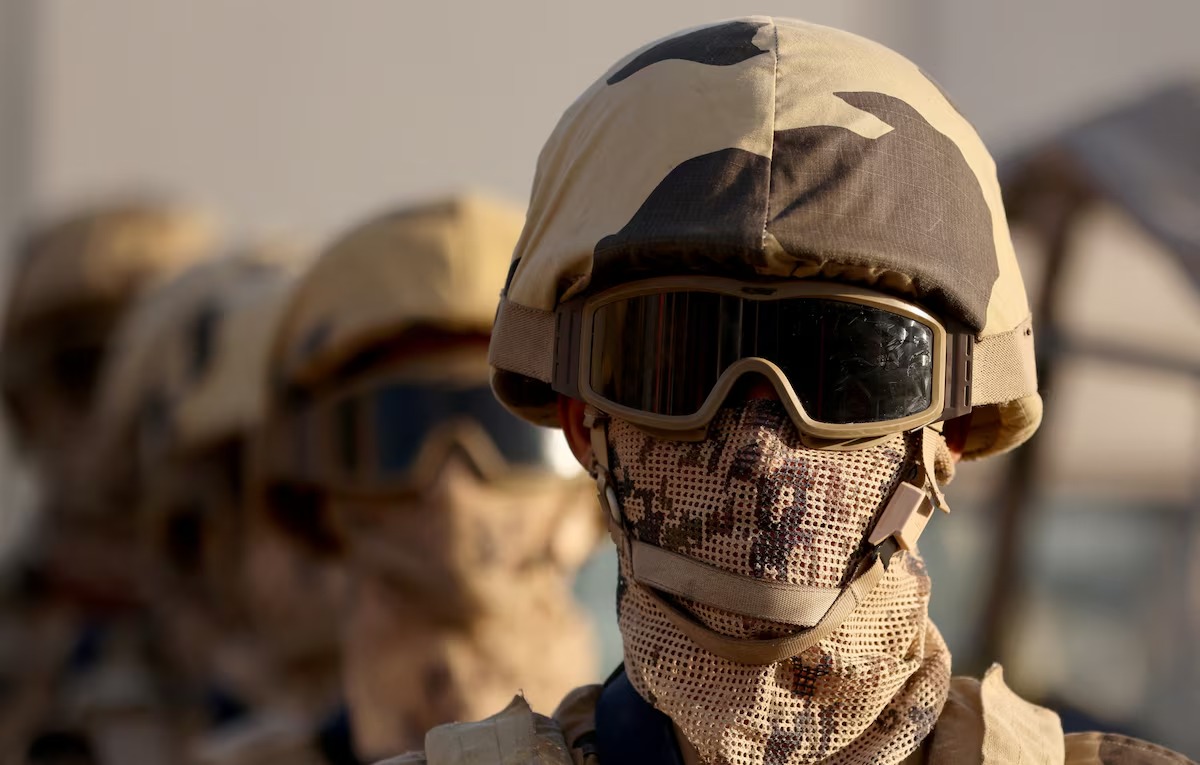
The US State Department stated that it has waived human rights conditions on more than $300 million in military aid to Egypt.
The statement emphasised that this decision was taken in consideration of Cairo’s “helpful role” since the outbreak of the war against Iran.
Egypt began receiving substantial support from the US after signing a peace treaty with Israel in 1979.
Since the late 1980s, the country has received approximately $1.3 billion annually in US military assistance.
A portion of this aid is subject to conditions related to human rights and democracy, which can be waived on national security grounds.
Withholding funds, including during the administration of former US President Joe Biden, has caused tension between Cairo and Washington in the past.
A letter dated 21 September and addressed to various congressional committees, obtained by Reuters, stated that Secretary of State Marco Rubio “decided to waive the certification requirement under the fiscal year 2025 Foreign Military Financing programme for Egypt of $320 million.”
This waiver was subsequently confirmed by the State Department.
An accompanying memorandum justifying the decision stated that this portion of military aid was “essential for counterterrorism, border security, or non-proliferation programmes, or otherwise important to the national security interests of the United States.”
The memorandum, dated 4 September and bearing Rubio’s signature, stated: “Exercising this waiver authority is critical to the US-Egypt relationship and to US national security priorities, particularly given the helpful role Egypt has played in the aftermath of Operation Epic Fury.”
“Operation Epic Fury” is the designation used by the US military for the campaign launched jointly with Israel against Iran in late February.
The State Department memorandum, whose authenticity was confirmed by two sources in Washington familiar with the letter, did not provide detailed information regarding what was termed Egypt’s “helpful role”.
The State Department’s annual decision on military aid to Egypt typically covers funds allocated for the preceding fiscal year, which ends on 30 September.
A State Department spokesperson stated that Rubio waived the certification in the interest of US national security and that the US continues to cooperate with the Egyptian government across a range of issues.
In an emailed statement, the spokesperson said: “This waiver recognizes the importance of maintaining security cooperation with Egypt at a time of significant security challenges in the region.”
The Egyptian Ministry of Foreign Affairs did not immediately comment on the matter.
The spillover effects of the Iran war have imposed a heavy toll on US security partners, including Egypt.
Owing to rising fuel prices and other disruptions, the Egyptian economy is passing through a difficult period.
Under the Biden administration, the US withheld portions of the annual military allocation on multiple occasions over Egypt’s human rights record.
In 2024, following the Hamas-led 7 October attack on Israel and the subsequent war in Gaza, the Biden administration set aside human rights conditions, disbursing the entire $1.3 billion allocation to Egypt for the first time in its tenure.
Human rights organisations have long accused Egypt, under the administration of President Abdel Fattah al-Sisi, of widespread human rights abuses, including torture and enforced disappearances.
This week, Egyptian police detained six journalists from a fact-checking and investigative media outlet, accusing them of spreading false information on behalf of the banned Muslim Brotherhood.
Egyptian authorities state that they have taken steps to address human rights issues. Sisi said stability is paramount and that the government supports human rights by working to provide for basic needs.
Britain has significantly broadened its military export restrictions targeting Israel, suspending or rejecting more than 80 licences for items the IDF could use in Gaza.
This figure is nearly triple the number affected when the policy was first introduced in September 2024.
United Kingdom Minister of State for the Middle East Stephen Doughty said that as part of what he described as a “tighter system” for assessing exports to Israel, more than 50 further export applications have been refused since approximately 30 licences were initially suspended.
Under the initial decision taken in September 2024, 30 of roughly 350 licences were suspended after the British government concluded there was a “clear risk” that certain military exports could be used to commit or facilitate serious violations of international humanitarian law in Gaza.
The affected equipment included components for military aircraft, drones, naval systems, and targeting gear.
Doughty said additional measures adopted this month established what he termed a “double safeguard” mechanism within the approvals process.
Export applications must now be assessed both against existing international humanitarian law criteria and in light of Britain’s position on the legality of Israel’s presence in the Palestinian territories.
“We have so far suspended or refused more than 80 licences,” Doughty said, adding that he had personally examined each licence.
Despite the wider restrictions, British-origin parts entering the international F-35 fighter jet supply chain continue to be largely exempt.
The UK government argues that preventing British-made components from entering the global F-35 pool could undermine the programme as a whole and have serious consequences for the security of the UK and its allies.
Direct exports of F-35 parts intended specifically for Israel remain suspended.
Doughty defended maintaining the supply of components via the international programme, arguing that halting it could have severe ramifications for the broader European and allied security architecture.
Foreign Affairs Committee Chair Emily Thornberry challenged this position, arguing that the issue was political rather than purely legal.
Thornberry suggested adopting an approach similar to the Dutch model, under which components entering the international supply chain could be flagged as “not intended for aircraft bound for Israel”.
The initial suspension was implemented in September 2024 by then Foreign Secretary David Lammy.
Lammy stressed at the time that the measure did not constitute an arms embargo and applied solely to items assessed as usable in military operations in Gaza.
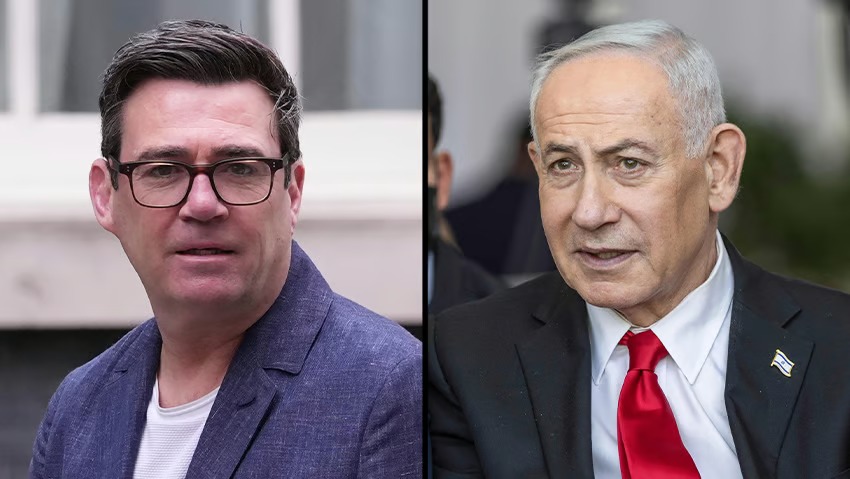
Since then, the policy has been tightened further under Prime Minister Andy Burnham.
The expanded export restrictions follow the Burnham government’s adoption of a more confrontational policy toward the Israeli government.
Foreign Secretary Ed Miliband drew sustained applause at the Labour Party’s annual conference in Liverpool after delivering a sharp critique of the Netanyahu government’s policies and defending the decision to ban trade with Israeli settlements in the West Bank.
Accusing Israel of committing war crimes in Gaza, Miliband stated that the British government heard public outrage over the conflict, telling delegates: “We hear you. You were right.”
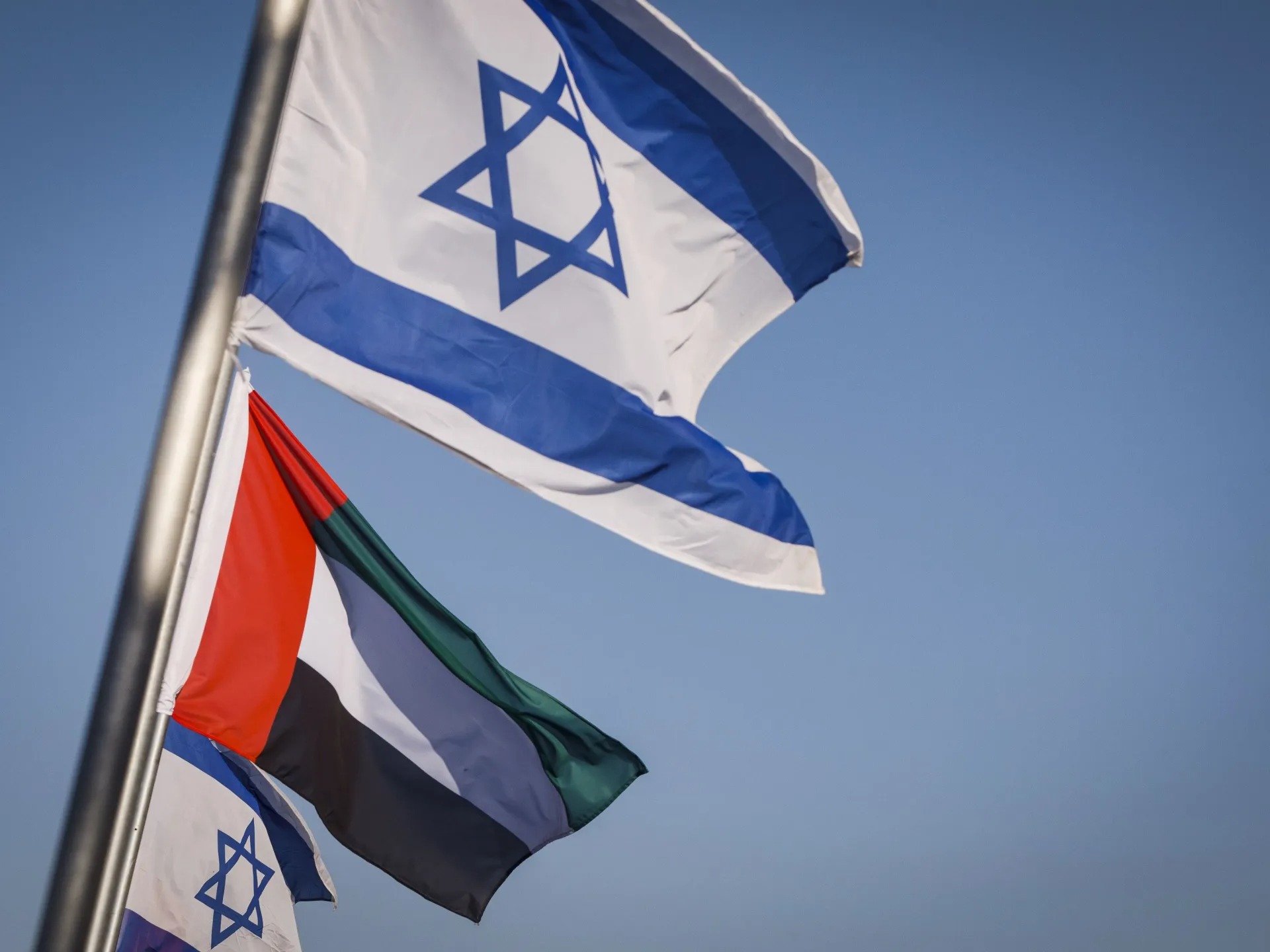
Israeli Prime Minister Benjamin Netanyahu met with representatives of Gulf and Arab nations that lack diplomatic ties with Israel, including Saudi Arabia, during his weekend visit to the United Arab Emirates.
Sources close to the gathering told the Israeli newspaper Yedioth Ahronoth on Monday that representatives from Morocco, Libya, Jordan, and Qatar also took part in the meeting.
Netanyahu made a unannounced visit to Abu Dhabi on Sunday, where he met with the country’s leader, Mohammed bin Zayed Al Nahyan.
According to Israeli media, this marked the first time the United Arab Emirates officially confirmed a visit by Netanyahu.
The meeting was arranged by Mossad Director Roman Goffman “at the request of Saudi Arabia, which asked for Israel’s assistance against Houthi attacks in the Red Sea region,” according to Yedioth Ahronoth.
The discussions addressed Iran and the Houthi militia. The newspaper added that the Arab states heard from Israel that “Israel is prepared to assist countries in the region with air defence systems, just as it aided the UAE during the conflict with Iran.”
Conflict in Yemen intensified in September when Ansarullah militiamen launched a rapid offensive that seized Yemen’s entire Red Sea coastline, including the vital maritime corridor of the Bab el-Mandeb Strait.
The Yemeni resistance also imposed a blockade on Saudi Arabia’s energy exports and staged multiple attacks against the kingdom.
Saudi Arabia reportedly sought military assistance from the US to counter Ansarullah.
Washington declined to attack the Houthis directly, but announced that it would provide intelligence and targeting support.
Reporting on the same visit, The Jerusalem Post said Netanyahu spent six hours in the UAE and that the principal subject of his discussions with MBZ was Iran.
Citing sources familiar with the matter, the newspaper added that the trip came “after Netanyahu exerted heavy pressure on the United Arab Emirates to arrange a meeting ahead of the Israeli elections on 27 October.”
Separately, the Associated Press, citing a person with direct knowledge of the meeting, reported that Netanyahu’s visit to the UAE was arranged in part to ask MBZ to deny reports that he had warned the Israeli prime minister of an impending Hamas threat prior to 7 October 2023.
According to Israeli media, Netanyahu’s office denied the AP report, issuing the following statement:
“Fake news. The visit focused solely on strengthening ties between the two countries and on regional issues.”

Germany expands North Sea military ports and plans new naval base

Musk appointed co-director of Pentagon future warfare initiative

US waives human rights terms on $320m military aid to Egypt

Putin says Russia did not start war and warns of nuclear risks

European nations unite against US pressure over strategic oil stocks
-

 Europe4 days ago
European unions urge governments to scrap all Palantir deals
-

 Diplomacy4 days ago
East-West Forum in Istanbul highlights irreversible shift to multipolarity
-

 Europe1 week ago
Emmanuel Todd says West faces collapse amid Ukraine and Iran crises
-
 Diplomacy1 week ago
East-West Forum in Istanbul to debate multipolarity and global order
-
 Europe1 week ago
European intelligence chiefs divide over risk of Russian attack
-
 Middle East1 week ago
Sharaa says 7 October must not shape Israel policy on Syria
-
 America1 week ago
Republican support for Trump’s war with Iran drops sharply in polls
-
 Middle East1 week ago
Palestinian factions confront legitimacy crisis at Istanbul talks
