
Europe
German importers await details as China signals easing of rare earth restrictions

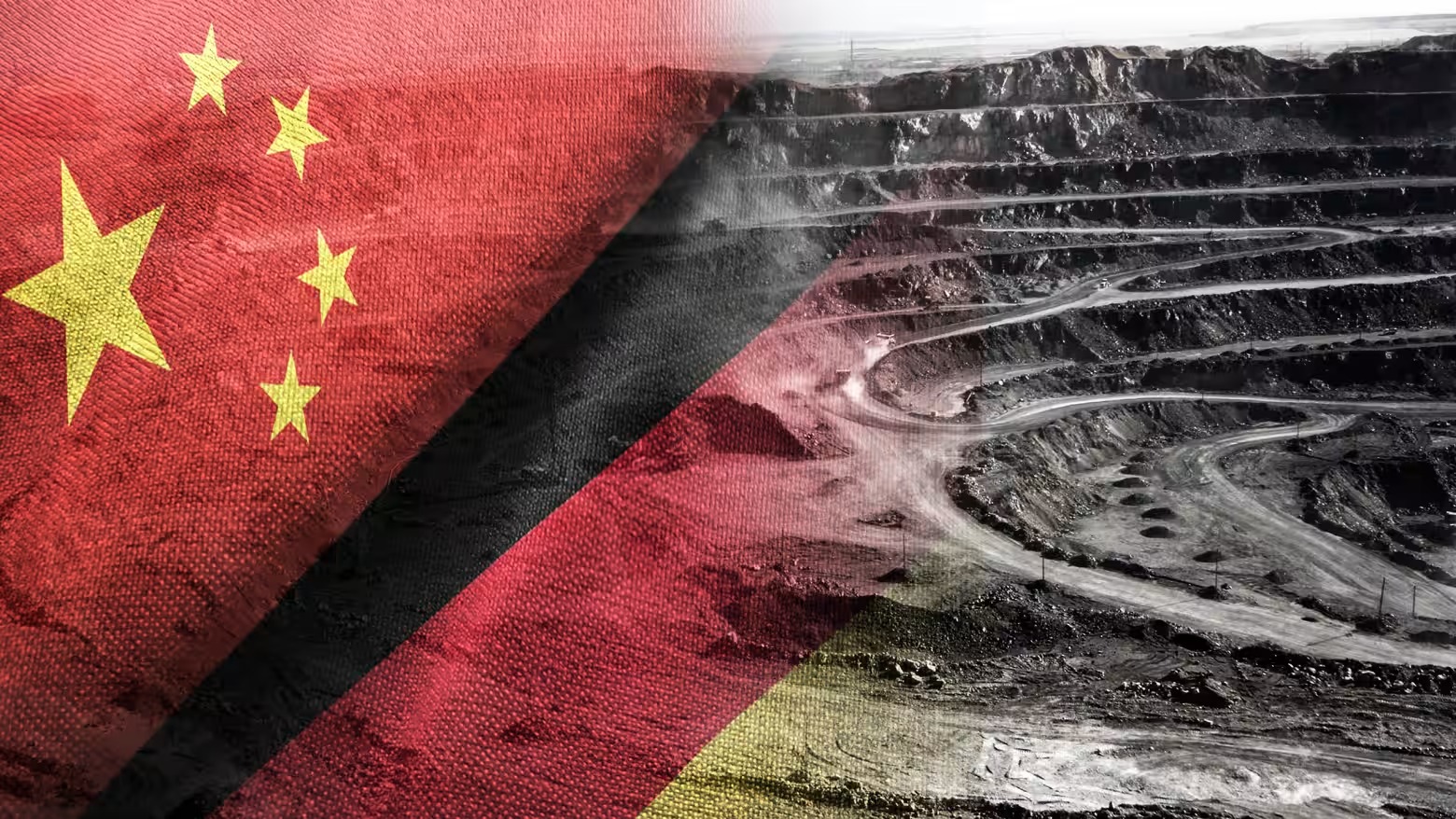
German importers of rare earth minerals and magnets are eagerly awaiting details after Beijing announced last week that it would expedite export approvals for European companies.
Two major importers told Nikkei Asia that China’s export controls on seven rare earth elements, implemented on April 4 in retaliation for Washington’s extensive trade tariffs, disrupted nearly all supplies to Germany for about two months. With China holding a near-monopoly on these commodities, some companies have depleted their inventories.
The US informed reporters on Tuesday that a dispute over China’s rare earth export restrictions had been resolved by both sides following two days of talks in London, though no specifics were provided.
Rare earths are crucial for electronics manufacturers and automakers, used in components such as electric seats, steering wheels, brakes, wipers, and even sound systems. They are also utilized in weapons manufacturing due to their ability to withstand high temperatures.
Since Beijing’s April 4 announcement, Chinese authorities have rarely granted export permits through processes that the Federation of German Industries described as lacking transparency and clarity. China is seeking to have Europe relax its technology export restrictions, particularly on semiconductor manufacturing equipment produced by the Dutch company ASML.
So far, German automakers have not been as severely affected as smaller manufacturers, such as those in the electronics sector. Companies like Volkswagen and Mercedes-Benz operate large production facilities in China and often source rare earth elements directly. Amid this turmoil, Volkswagen confirmed it had received a limited number of import permits.
The process has been much more challenging for Noble Elements, a Berlin-based importer and trader of physical raw materials.
“We ordered dysprosium, but it never left the port, so we changed the order to the light rare earth elements neodymium and praseodymium because we didn’t want to have the $100,000 we paid for it blocked there,” Managing Director Andreas Kroll told Nikkei Asia.
Dysprosium, which is almost entirely controlled by China, is one of the heavy rare earth elements subject to Beijing’s export controls. It is in high demand for permanent magnets used in electric vehicle motors and wind turbine generators. According to data from Noble Elements, its wholesale price surged by over 50% to €550 ($808) per kilogram in the two months leading up to June 4.
The prices of neodymium and praseodymium, also vital for permanent magnets, are now rising as Chinese producers increase the prices of these lighter rare earth elements to compensate for lost sales.
Kroll mentioned that Chinese officials demanded pictorial evidence of processing methods and the intended end-use to prevent the production of military equipment.
“Given [China’s recent assurances], the licensing process is now expected to become faster, but the main issue will be the proof of civilian use, which will depend on how extensively the checks are conducted,” Kroll said, adding that Beijing will consider Europe’s stance on chip technology exports.










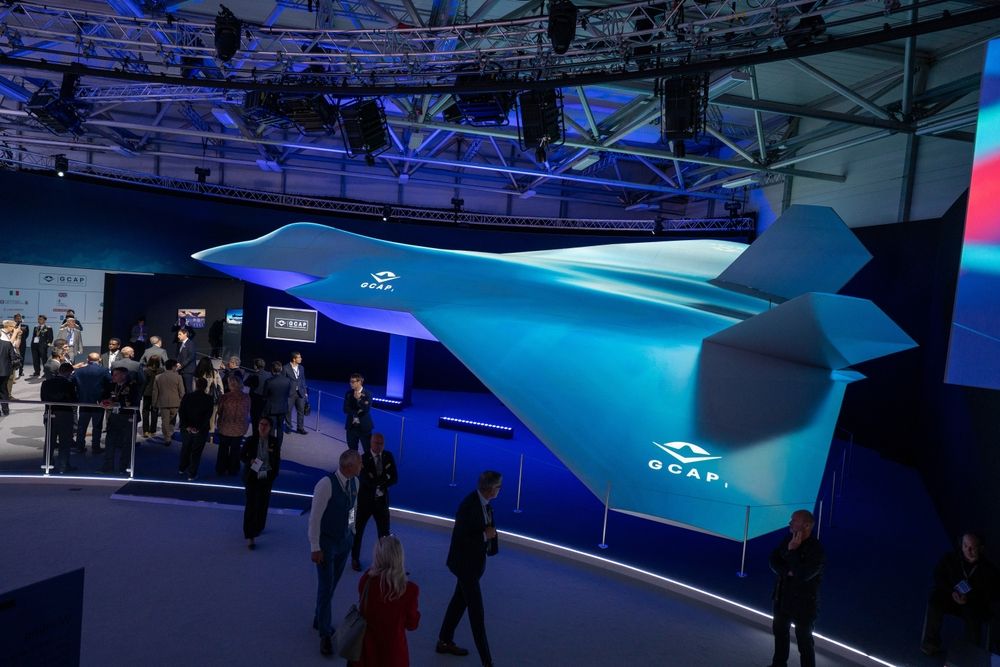
German Defence Ministry officials have advised Berlin to form a new fighter jet partnership with Sweden and Spain rather than join an existing UK-led consortium.
Internal ministry assessment notes obtained by Politico state that a trilateral arrangement among Germany, Sweden, and Spain represents a “more advantageous and promising” approach than joining the Global Combat Air Programme (GCAP) run by the UK, Italy, and Japan.
The proposal outlined in the document does not yet represent a final government decision, nor does it contain any indication that German Defence Minister Boris Pistorius has approved the recommendation.
The advice was drafted after Germany’s flagship project with France to build a next-generation fighter jet collapsed in June following years of industrial infighting.
Initiated in 2017 and later joined by Spain, the Future Combat Air System (FCAS) was conceived as a showcase initiative for European defence cooperation. The partnership aimed to develop an aircraft to replace Germany’s Eurofighter fleet starting in 2040.
However, the initiative foundered on disputes over operational control and workshare between France-based Dassault and Germany-based Airbus Defence and Space. Following unsuccessful rescue attempts at the political level, Berlin withdrew from the joint fighter project this year.
UK Prime Minister Andy Burnham raised the prospect of Germany joining GCAP during an 8 October meeting in Berlin with Friedrich Merz. The two leaders agreed that officials should continue discussions.
For Berlin, the choice carries implications that reach far beyond which model its air force will fly. The decision will determine who controls future military technology, which countries secure production contracts, and whether a new European partnership can avoid the frictions that dismantled FCAS.
Ministry assessment keeps distance from UK-partnered GCAP project
The ministry assessment listed several reservations regarding the GCAP project. The report argued that the existing programme focuses on operations beyond Germany’s capability requirements, whereas Berlin needs an aircraft better suited for missions over continental Europe.
The document also noted that German manufacturers would struggle to secure a significant share of development and production work within an already established partnership.
Invoking past experiences with the Eurofighter programme, which was developed in the 1990s and entered service in the early 2000s, the document took direct aim at British defence contractor BAE Systems.
The German Defence Ministry assessment accused BAE Systems of prioritizing exports over the development interests of Germany and Italy, warning that British dominance would prove incompatible with an equal partnership.
By contrast, the document stated that the military requirements of Germany, Sweden, and Spain align closely and that their starting positions are well balanced.
The assessment proposed an industrial partnership between aerospace giant Airbus and Sweden’s Saab, while recommending that the Saab-manufactured Gripen E fighter jet serve as a technological stepping stone until the new aircraft is developed.
The German Defence Ministry declined to comment on the matter. A separate ministry note, however, recorded British efforts to integrate Germany into GCAP as an observer or participant, asking German officials to examine potential industrial roles and military requirements.
An Airbus spokesperson said the company was “generally open to cooperation”, provided that German and Spanish industry secured a “substantial and equal role” across development, production, and operational phases.
“Purely political decisions without an industrial foundation remain insufficient,” the spokesperson said, urging authorities in Berlin and Madrid to clarify the path forward swiftly.
In an interview published in Handelsblatt on Monday, Airbus defence chief Michael Schollhorn pointed to ties with Saab, noting that the two companies have always worked well together.
A Saab spokesperson also indicated that the company is receptive to broad defence cooperation, including in fighter aircraft.
Emphasizing that large-scale collaborative projects are handled at the political level and that participation decisions rest with the respective governments, the spokesperson said: “All questions regarding potential Swedish participation should be directed to the Swedish government. Saab stands ready, as always, to support Sweden’s future fighter aircraft requirements.”
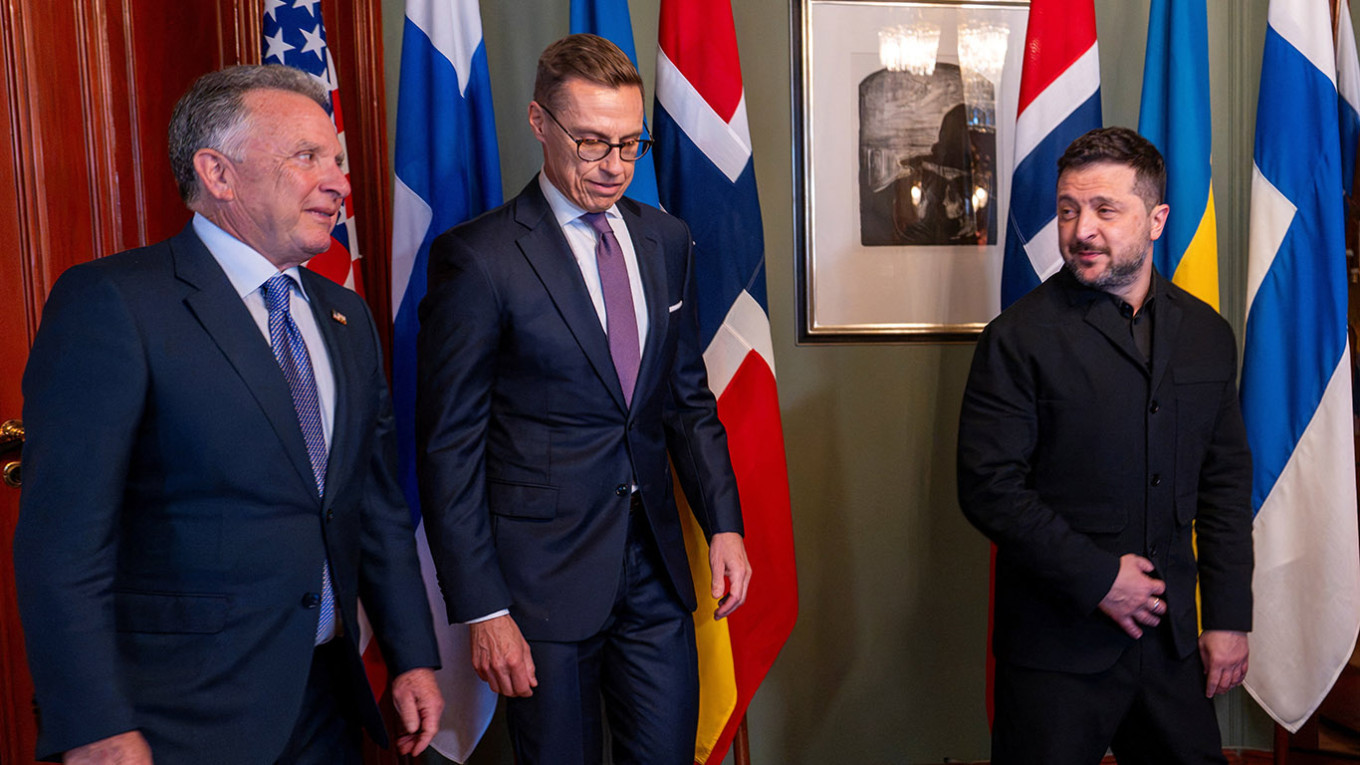
The European Union has returned to the idea of appointing an envoy to hold talks on Ukraine with Russian President Vladimir Putin.
According to sources familiar with the matter who spoke to Politico, this search gained fresh momentum following a visit to Russia by Steve Witkoff, the US special envoy.
During his trip, Witkoff proposed to Putin that Russia, the US, and Ukraine hold trilateral talks.
European countries, meanwhile, fear that Washington could accept terms unfavourable to Kyiv in negotiations that exclude them.
Sources speaking to Politico said the names being discussed for the envoy role include European Commission President Ursula von der Leyen, European Council President António Costa, and EU High Representative for Foreign Affairs and Security Policy Kaja Kallas.
Some European diplomats believe Finnish President Alexander Stubb may be the most suitable candidate for the post.
Stubb’s good relations with Trump and Finland’s experience in dealing with Russia are cited among the factors setting him apart.
An unnamed EU diplomat described Stubb as the only European politician so far to have demonstrated senior-level leadership.
Another group of diplomats argues that Costa should lead the talks. European leaders asked Costa during last week’s EU summit in Brussels whether the time had come to speak with Putin.
Politico’s source recounted that exchange: “Costa said no, saying he would not speak to Putin right now. But if we want to play a role in the negotiations, Costa still needs to initiate dialogue with Putin.”
According to an assessment by another source, the European Council president could serve as a more neutral mediator than von der Leyen or Kallas, who are seen as overly focused on supporting Ukraine.
“Three or four people cannot go there with each of us speaking on behalf of the European Union,” one of the sources told the publication. “Ultimately, the choice of who represents the EU must be based on maximum efficiency, not on a personal power struggle or someone’s narcissistic ambitions.”
Politico previously reported in January that the EU was considering appointing a special representative for Ukraine negotiations. At the time, the initiative drew support from several European leaders, including French President Emmanuel Macron and Italian Prime Minister Giorgia Meloni.
Putin said he was ready to negotiate with European countries, but asserted that Europe had “no peace agenda” and stood “on the side of war”.
The Russian leader also named former German chancellor Gerhard Schröder as Moscow’s preferred negotiator from Europe.
Kallas ruled out such an appointment, noting that Schröder was “a lobbyist for Russian state companies” and would sit “on both sides of the negotiating table”.
Stubb details obstacles to talks and Oslo diplomatic drive
Finnish President Alexander Stubb said the principal obstacle to ending the war between Russia and Ukraine was the territorial issue.
Stubb took part in talks in Oslo with US envoy Steve Witkoff, who subsequently travelled to Saint Petersburg to meet Vladimir Putin.
As reported by the newspaper Helsingin Sanomat, Stubb stated that advancing the peace process required either bilateral talks between Russia and Ukraine or trilateral negotiations involving the US.
The Finnish president listed the other major items to be addressed within a settlement as US security guarantees for Ukraine and the construction of a new European security architecture after the war ends.
Without stating it outright, Stubb implied that the core issue within this framework was Ukraine’s NATO membership. The Finnish leader pointed to monitoring the ceasefire, establishing the line of contact, ensuring energy and food security, and exchanging prisoners as practical tasks.
Stubb also detailed the talks held in Oslo on 20 October, which included Witkoff, Ukrainian President Volodymyr Zelenskyy, and Norwegian Prime Minister Jonas Gahr Støre.
The discussions, which spanned approximately eight hours across various formats, had three objectives: to lower tensions in public discourse, to convey European and Ukrainian proposals to the US envoy before his visit to Russia, and to determine the next steps toward a peaceful settlement. Stubb announced that these goals had been achieved.
Moscow ready to resume trilateral talks in November
Witkoff met Putin in Saint Petersburg on Wednesday.
Following the meeting, Russian presidential aide Yuriy Ushakov announced that Moscow was prepared to resume trilateral negotiations with the US and Ukraine during the first half of November.
Ushakov also said that the EU and NATO had begun to “take a more serious approach” to Kremlin proposals on Ukraine, adding that “matters” were moving toward an end to the conflict.
Witkoff described the meeting as “constructive”.
Sources told Bloomberg in September that Putin continued to insist the Donetsk region must come fully under Russian control, expressing confidence that the territory would be captured within the next six months.
Putin previously set conditions for ending the war, demanding that Ukraine abandon plans to join NATO, maintain a neutral and non-nuclear status, and that anti-Russian sanctions be lifted.
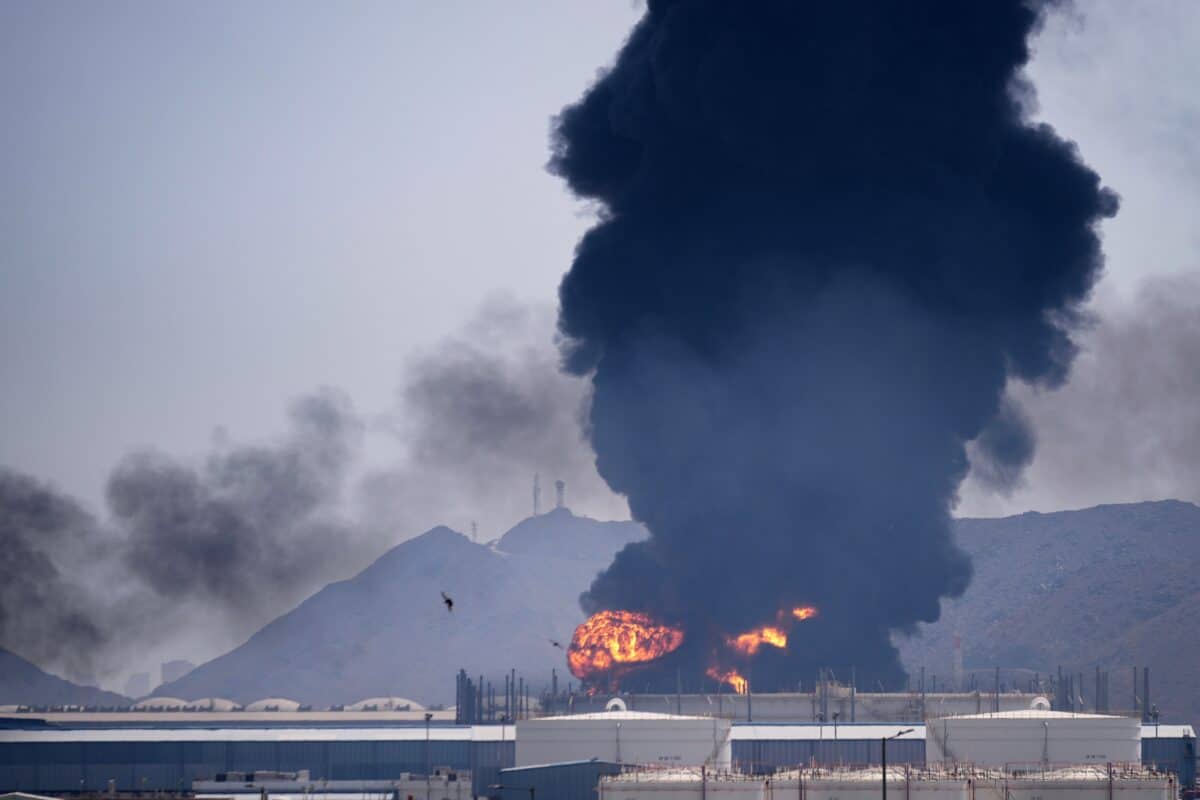
A comprehensive military operation planned by the Israeli military for 10 October did not take place because US President Donald Trump chose to avoid a broad conflict before the 3 November congressional midterm elections.
Preparations had been made on the orders of Prime Minister Benjamin Netanyahu for an aerial bombardment meant to last several days, according to a report by the Financial Times citing sources familiar with the matter.
The list of targets included nuclear facilities and locations associated with the Iranian leadership, along with power stations and other civilian infrastructure sites.
The planned strikes were projected to exceed the joint operation launched by the US and Israel in February in terms of intensity.
White House Deputy Press Secretary Anna Kelly told the newspaper: “The United States is not going to strike Iran at any point before the midterms.”
Kelly argued that the administration in Tehran was in distress both economically and militarily, adding that the blockade imposed on Iranian ports and US efforts to secure oil shipments through the Strait of Hormuz were producing results.
Speaking to the newspaper, one source addressed the possibility of strikes resuming in the coming weeks, saying: “There’s either going to be a deal or a strike.”
The same source reported that Washington aims for a comprehensive settlement that resolves the conflict over both the Strait of Hormuz and the nuclear programme, although it remained unclear whether the US would have participated directly in the cancelled operation.
Another source said the preparations for the operation might have served as leverage to pressure Tehran in negotiations, adding that the final decision on any new military step rests with the US president.
Hegseth reviews updated target list in Israel
An Israeli official said US Secretary of War Pete Hegseth visited Israel on 19 October to meet with Netanyahu and senior representatives.
Another source stated that the Israeli side presented an updated target list to its American counterparts, compiled with fresh intelligence and incorporating civilian infrastructure sites that had not been struck earlier this year.
The Pentagon did not respond to questions regarding the meetings, while Netanyahu’s office and the Israeli military declined to comment.
Despite the postponement of the operation, Trump and Netanyahu continued to issue military warnings to Iran in public.
In a video released on 19 October, Netanyahu addressed Trump, saying: “Donald, you said we need to finish this, and we will finish it together.” Speaking on speakerphone, Trump responded: “You’re a great warrior, and we’re going to prove it very soon.”
These engagements between the leaders coincide with critical election cycles in both countries.
Parliamentary elections in Israel are scheduled for 27 October, one week before the vote in the US.
Most public opinion polls in the country show the opposition bloc holding a narrow lead over Netanyahu’s coalition, though neither side commands a clear majority.
Axios, a US-based news outlet, previously reported that the Pentagon instructed military planners to finalize strike plans against Iran, though the directive specified no date and Trump had not reached a final decision.
On 15 October, CNN reported on plans to use the GBU-43/B munition, known as the “mother of all bombs”, against Iranian nuclear facilities, with US officials who spoke to the broadcaster expressing scepticism about the weapon’s ability to destroy deep bunkers.
While Tehran announced that it remains open to a diplomatic solution, it declared that any potential operation would draw a fierce response.
Iranian Foreign Minister Abbas Araghchi stressed that if its adversaries chose military conflict, the response would be “much harsher than before”.
Following the joint operation launched by the US and Israel on 28 February, Iran retaliated by striking targets across the region and restricting maritime passage through the Strait of Hormuz.
Although the parties reached an agreement in June covering a ceasefire and negotiations to lift the blockade in the strait, reciprocal strikes between the US and Iran have not ceased.

German officials urge fighter jet alliance with Sweden and Spain

US wealthy demolish multimillion-dollar mansions for land

US and Israel weigh Iran strikes after midterm vote, reports say

Pentagon plans covert spy ring for economic war on China, report says

EU reopens debate on naming envoy for Ukraine talks with Putin
-

 Europe2 weeks ago
Berlin Left Party backs Israel’s right to exist for coalition pact
-

 America2 weeks ago
How will Brazil’s presidential runoff work?
-
 Diplomacy2 weeks ago
The West is preparing for war not with Russia, but with its own people, French analyst Georges Kuzmanovic insists
-

 Russia2 weeks ago
71 EU lawmakers demand closure of Russian Houses in 15 member states
-

 Europe2 weeks ago
MI6 investigates potential leaks after former BND chief is detained
-

 Russia2 weeks ago
US and Russian figures discuss American stake in Nord Stream lines
-

 Russia2 weeks ago
Drone strike shuts down Yandex data centre in Russia’s Ryazan region
-

 America2 weeks ago
Trump weighs presidential memorandum to cut surging US diesel prices
