
Diplomacy
If diplomacy is not revived, the new world will be born through war, Prof. Diesen warns

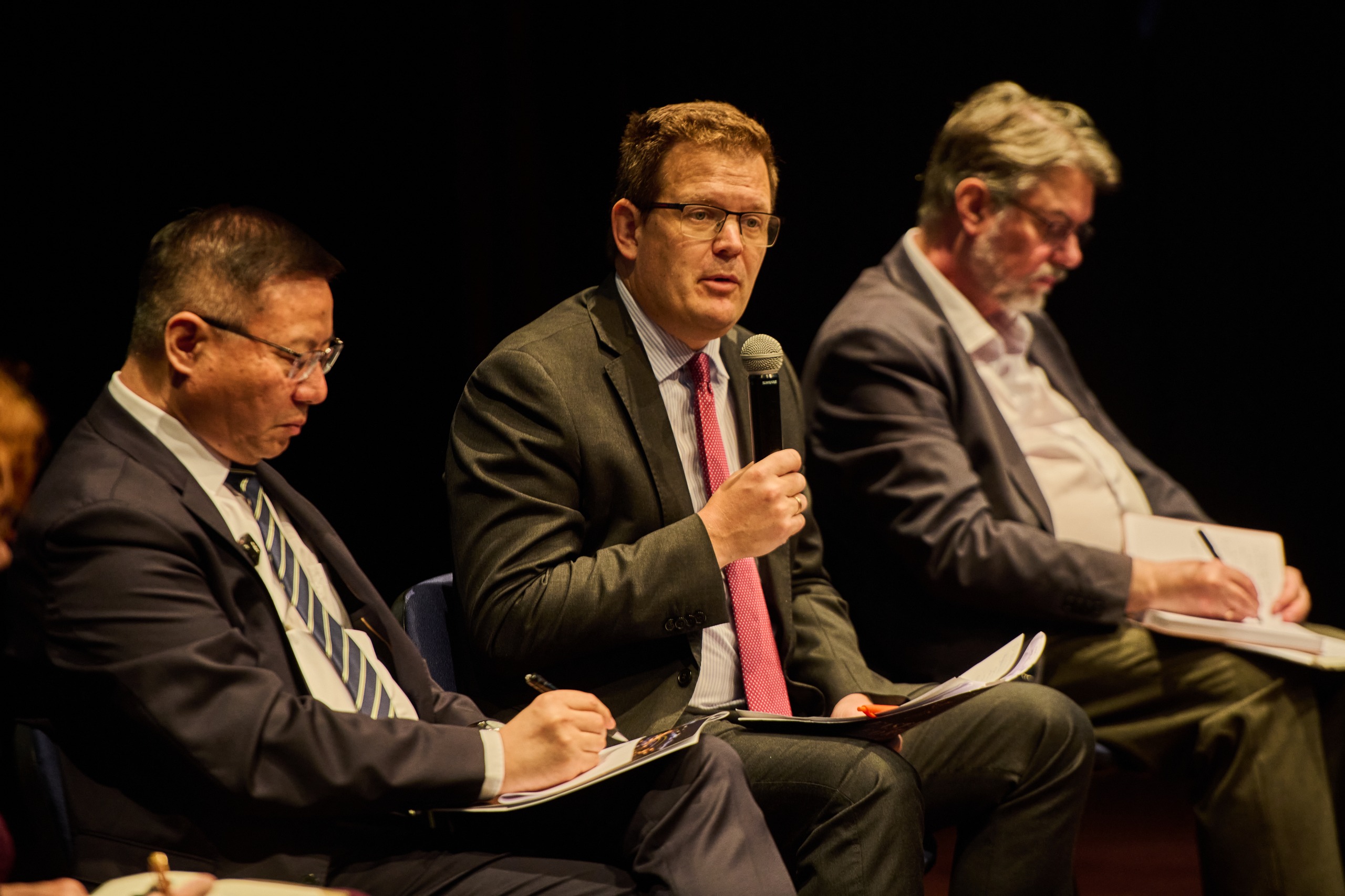
Editor’s note: In this speech delivered at the East-West Forum held in Istanbul on September 26–27, Norwegian political scientist Prof. Glenn Diesen examined the collapse of the unipolar world order and the turbulent transformation sweeping the international system. While laying bare the structural dilemmas of Western-centric hegemonic universalism, Diesen pointed out that rising powers are forging a new multipolar balance centered on civilization-states. Underlining the identity and security crisis into which Europe has plunged, Diesen warned that unless diplomacy is revived, the new global order could be shaped through war.
***
The unipolar world order has collapsed, and we should conduct a post-mortem to reflect on what went wrong and to understand the current turbulent transition of the world. In 1989, Francis Fukuyama famously published his article on the ‘End of History,’ which was largely adopted as an ideological guide by the political West. The world only had one superpower and one ideology, and the expectation was that the world would unify under US leadership and liberal democratic values. The dominance of the US would end international anarchy and security competition, as there was only one centre of power, and the US hegemon would elevate the role of liberal democracy to form an inclusive community of universal values. For more than three decades, the West produced a new generation of politicians who believed that the collective hegemony of the West was for the benefit of all mankind, and they were the administrators who would manage the transition from the chaotic world of the past to perpetual peace. So what went wrong?
The unipolar moment was always destined to be a temporary phenomenon, as the US would predictably exhaust its resources and incentivise rising powers to collectively balance the US. However, there is also an inherent contradiction in hegemonic universalism, as universal values are linked to one entity of power. A hegemon claims to represent universal values such as freedom, democracy, and human rights, albeit this universalism is promoted through a particular historical, cultural, and geopolitical order.
Universal values advocating for equality are used to institutionalise a dominant position for the US. Universal values advocating for inclusion are used to build exclusive blocs such as NATO rather than developing an inclusive pan-European security architecture. John Herz noted as early as 1950 that the more democratic states were at home, the more they seemed to insist on a dominant position in international institutions to defend liberal values from the rule of the majority. Liberal values build on the idea that tolerance is imperative, as all people and states have different ideas about the good life and their own path to development, yet the universality of values suggests that all states must develop along the same path, and the political West, as the champion of liberal democracy, is the civilizational teacher seeking to “socialize” the rest of the world. Diplomacy between sovereign equals is replaced with the ‘civilizational teachers’ rewarding or punishing the ‘civilizational students’. The hegemon will also discipline states that does not follow its values, and also punish the states that become too powerful and thus undermine its hegemonic position. Liberalism has subsequently been promoted as a hegemonic norm.
The modern world order was established with the Peace of Westphalia in 1648, in which a hegemonic system legitimised with universalist claims was replaced with a multipolar system based on the cultural distinctiveness of states.
The past 80 years have been a historical anomaly, with a bipolar system that collapsed and gave way to a unipolar system with one centre of power. The ‘normal’ situation of the world has been a multipolar Westphalian system with a power equilibrium that accommodates the cultural distinctiveness of states.
Over the past decades, hegemonic universalism transformed European states as national competencies were transferred to the US. US military dominance meant that Europe largely outsourced its security, foreign policy and strategic thinking to the US within the format of the alliance system. US economic dominance meant that the international economic architecture, with banks, currencies, payment systems, and trade agreements, was largely administered by the US. Civil society in Europe and beyond has been managed by “non-governmental organizations” financed by the US government and cooperating closely with US intelligence services.
The European political system has increasingly been premised on the idea that loyalty to international institutions is more vital and moral than national interests, as Europe’s linkage to the US within the political West is the main source of stability and prosperity.
The hegemon is now gone, and its universal claims are rejected by the wider world. A multipolar world is already here, and the rising powers are demanding a return to a Westphalian world order of sovereign equals based on civilizational distinctiveness. As Xi Jinping insists, all civilizations have their own path to development, and no aspiring hegemon has the right to tell others how to develop.
The return of rhetoric about civilizational states across the Eurasian continent signifies a rejection of unipolarity and universalism. New institutions such as the SCO and BRICS attempt to accommodate the multipolar world, yet new members are joining faster than institutional efficiency can adjust to. Although centralisation of power, standardization and universalism is understood as undesirable.
The US has reluctantly already begun adjusting to these new realities, as it recognises it cannot be everywhere and must prioritise, while the language of liberal universalism is being replaced with national interests. This could be a positive development as states pursuing strategic interests can seek mutual understanding and compromise, while states that link strategic interests to values will see competition as a struggle between good and evil where compromise is dangerous.
New political forces are rising in the US that want to scale back the empire to save the republic, as a strategic retreat would allow the US to rebuild its strength and end the collective balancing by other great powers.
What makes Europe so dangerous today is its weakness and panic due to the failure of finding a new role in the multipolar system. Security can no longer be based on the dominance of the collective West; there is no clear economic model; and the claims of representing universal values are no longer convincing. Yet, the Europeans are not willing to recognise new realities and adjust accordingly by diversifying economic and political connectivity.
The available evidence suggests that this will be a very turbulent transition from unipolar universalism to multipolar distinctiveness, and the new world will more likely be born through war unless we see a revival of diplomacy.
East-West Forum in Istanbul warns multipolarity is now irreversible






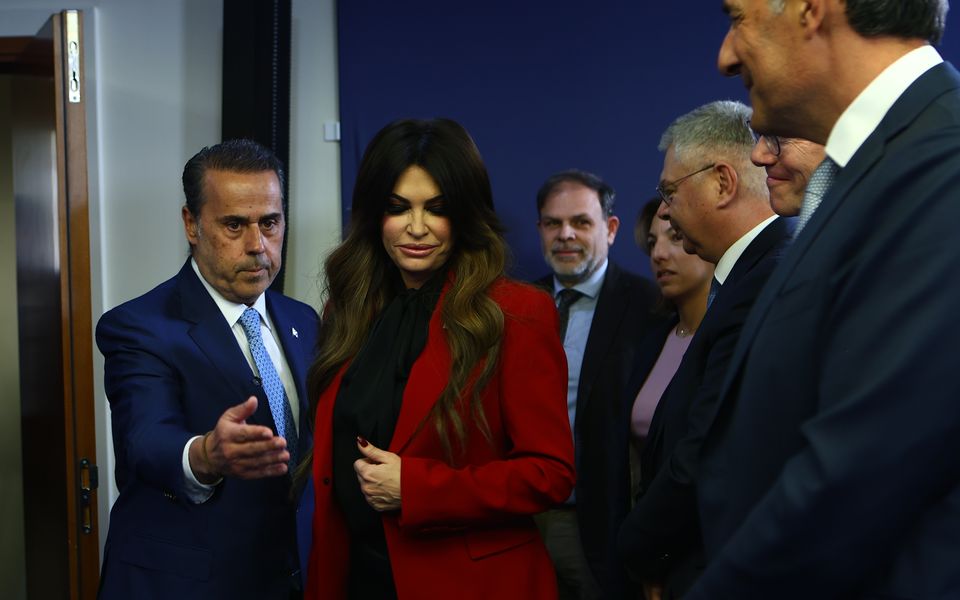
Opposition parties in Greece have demanded that the government respond to allegations raised concerning US Ambassador Kimberly Guilfoyle.
According to a report in The Wall Street Journal, the US ambassador to Greece, Guilfoyle, implied that her country played a role in the overthrow of the Romanian government and that the US could do the same in Greece.
The WSJ alleges that US Ambassador Kimberly Guilfoyle made these remarks in March during a dinner attended by Greek and American officials.
According to this account, Guilfoyle, referring to the imminent collapse of the Romanian centre-right government led by Ilie Bolojan, told Greek Energy Minister Stavros Papastavrou that the US played a role in this overthrow process and stated: “We can do this to any country we want. We can do the same here.”
According to the newspaper’s sources, Papastavrou said that the US could not change the democratically elected Greek government.
Guilfoyle’s lawyer, however, disputed the account of this exchange published in the WSJ.
The opposition PASOK party stated in a press release:
“The government, and in particular the Ministries of Foreign Affairs and Environment and Energy, are the only bodies competent to provide the necessary clarifications and evaluate the veracity of the published report. Greece is an independent and sovereign democracy and is obliged to act as such in every instance and before all parties without exception.”
The Greek Left Alliance (ELAS) stated that the alleged remarks were “unprecedented and unacceptable”, adding:
“The government neither confirms nor denies the incident; it maintains its silence. For this reason, we demand that the Mitsotakis government immediately clarify to the Greek people whether the incident in question actually took place; if it did, why it has been concealed since March; and whether the government responded to it: and how it responded.”
SYRIZA stated that the emergent allegations are “extremely serious and the government cannot remain silent…” The party said: “If true, we are faced not with a simple diplomatic incident, but with an insult to the country’s system of governance.”
SYRIZA also demanded that the government explain why it insists on supporting the Vertical Gas Corridor and “Greece becoming more dependent on American LNG.”
The Communist Party of Greece (KKE) stated that the government “bears a heavy responsibility”, particularly in light of the visit US Secretary of State Rubio is scheduled to make to Greece in a few days, which aims to further advance US plans in the region and renew the Greece-US strategic agreement.
Guilfoyle had played a significant role in promoting the Vertical Gas Corridor, a regional infrastructure project designed to transport gas from Greece via Bulgaria and Romania to Central and Eastern Europe as an alternative to Russian gas.
Greek government spokesman Pavlos Marinakis stated that this issue “was never raised” and that such conduct would not be tolerated.
Marinakis also described the relationship between Greece and the US as strategic, stressing that the partnership is based on mutual respect and shared values.
The WSJ report also examines Guilfoyle’s activities concerning American liquefied natural gas (LNG).
Guilfoyle has reportedly promoted US energy sales across South-East Europe.
A separate section of the report addresses businessman Hristos Marafatsos. Marafatsos is said to have accompanied Guilfoyle to several official meetings on behalf of the Greek construction company Aktor.
According to the report, Aktor paid Marafatsos $160,000 for lobbying activities. Marafatsos’s involvement in this process has raised suspicions regarding the mixing of private interests with diplomatic meetings.
Israel’s ruling Likud party, which has been deepening its ties with the European right for some time, is most recently seeking to strengthen relations through Austria’s FPO.
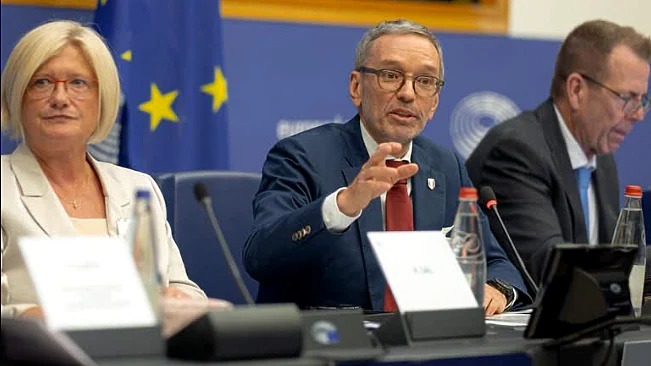
Most recently, a speech delivered at the European Parliament on 16 September by Herbert Kickl, leader of the Freedom Party of Austria (FPO), was welcomed by Israel.
Kickl caused a major stir in an address delivered at a conference on “Islamism and Antisemitism” organised by the Patriots for Europe (PfE) parliamentary group, which was also attended by representatives from Likud.
“We are the new protectors of Jewish interests,” Kickl said, urging that an “unprecedented crime against humanity” such as the Holocaust should “never be forgotten.”
Stating that in a federal government where he served as chancellor, “combating antisemitism” and “combating anti-Zionism” would form part of their political agenda, Kickl also spoke favourably regarding the de facto annexation of the West Bank.
While sharply criticising the EU for providing financial support to the Palestinians, Kickl stressed that he did not wish to “condemn Muslims as a whole.”
Nevertheless, he argued that “for many fanatical Muslims,” Islamism served as a “weapon against our way of life,” stating that this had introduced a new form of antisemitism to Europe.
Asserting that Jews required protection in many European cities, the FPO leader also expressed a desire to support the preservation of Jewish heritage in Austria and to build a vibrant, visible partnership.
In his speech, Kickl refrained from apologising to victims of National Socialism. He referred only to his “sorrow over what happened to Jewish citizens,” adding: “My thoughts are with all victims and survivors of National Socialism, their descendants, and the Jewish people.”
His address drew approval from members of the Israeli government. While Foreign Minister Gideon Sa’ar welcomed the speech, FPO Member of the European Parliament Harald Vilimsky reported that Israeli Diaspora Affairs Minister Chikli described the address as “a historic turning point in relations between the FPO, the State of Israel, and the Jewish people.”
Immediately following last year’s federal election, Chikli stated that the AfD was the party in Germany that most openly opposed support given to “anti-Israel groups.”
In his view, cooperation with that party could also become possible if it managed to distance itself from individual “voices” that, for example, trivialised the Waffen-SS.
Amid the current turmoil across the Near and Middle East, the European right views Israel as the “most reliable ally,” regarding it as a “Western outpost” in the Arab-Islamic world that must be supported at all costs.
Conversely, Israel’s Ambassador to Austria, David Roet, stated at the beginning of March this year that the State of Israel’s policy towards the FPO had not changed.
Even in January, during a visit by Vilimsky to Israel, the Yad Vashem Holocaust Memorial had emphasised: “The FPO and AfD are parties whose roots lie in National Socialism.”
Yet, even during the conference, Israeli Transport Minister Miri Regev openly welcomed this positive development. Vilimsky remarked: “All these statements show that we are on the right track.”
Vilimsky stated that the FPO wished to enter a new era with the Jewish world, noting that their objective was “to work towards good cooperation.”
However, his direct attack against the Vienna Jewish Community (IKG) provoked anger within the community. According to Vilimsky, the community’s leadership is “very, very left-wing.”
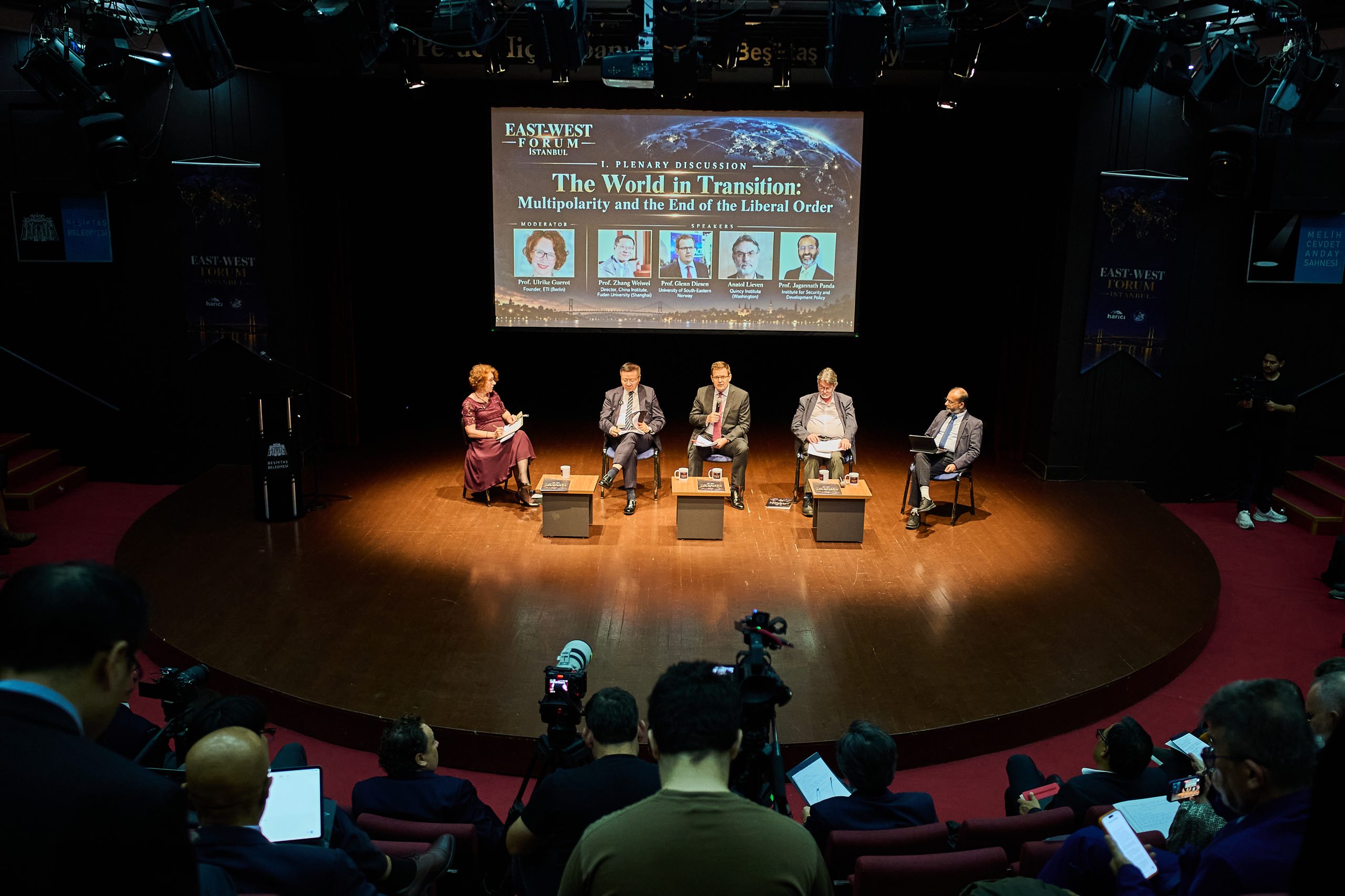
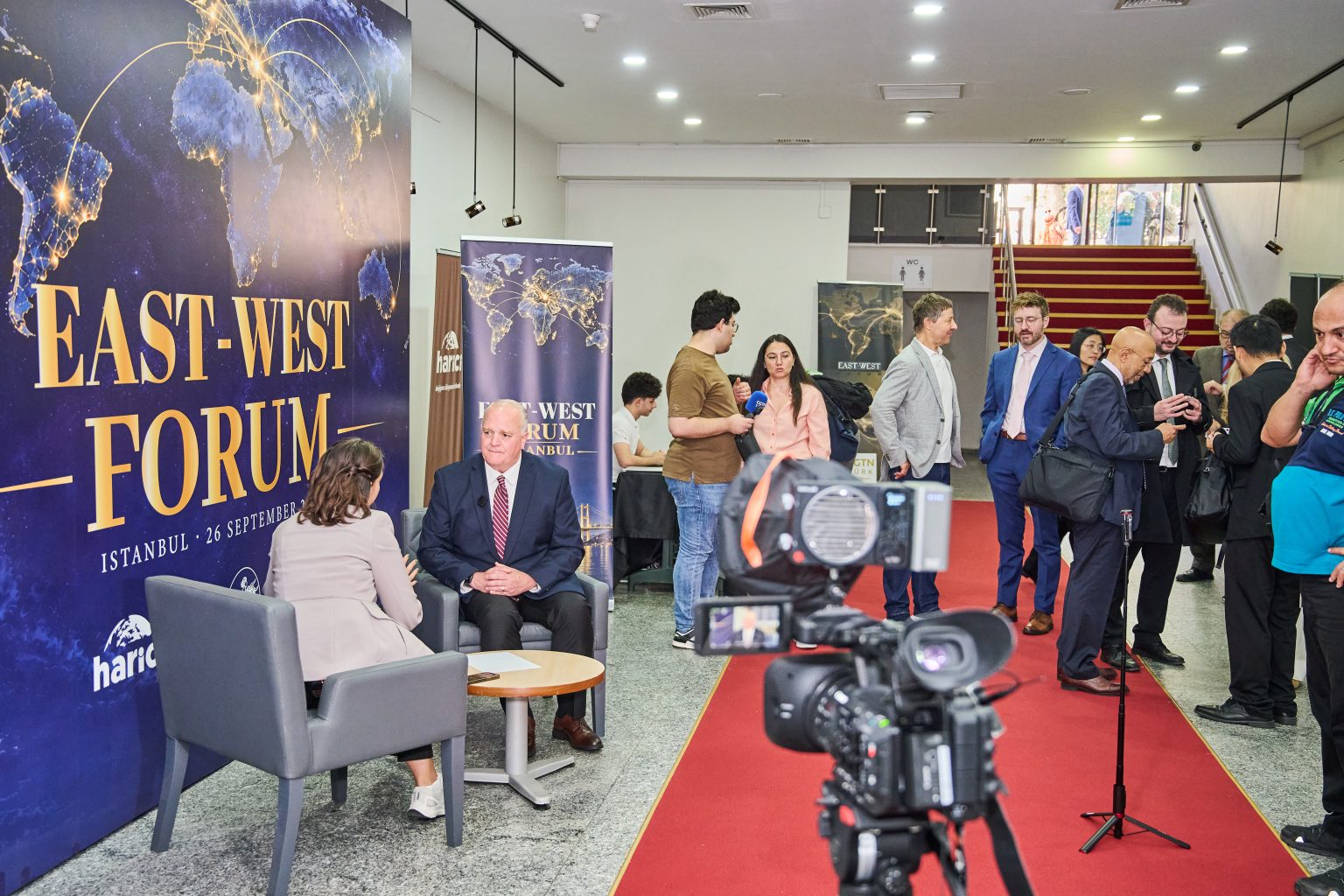
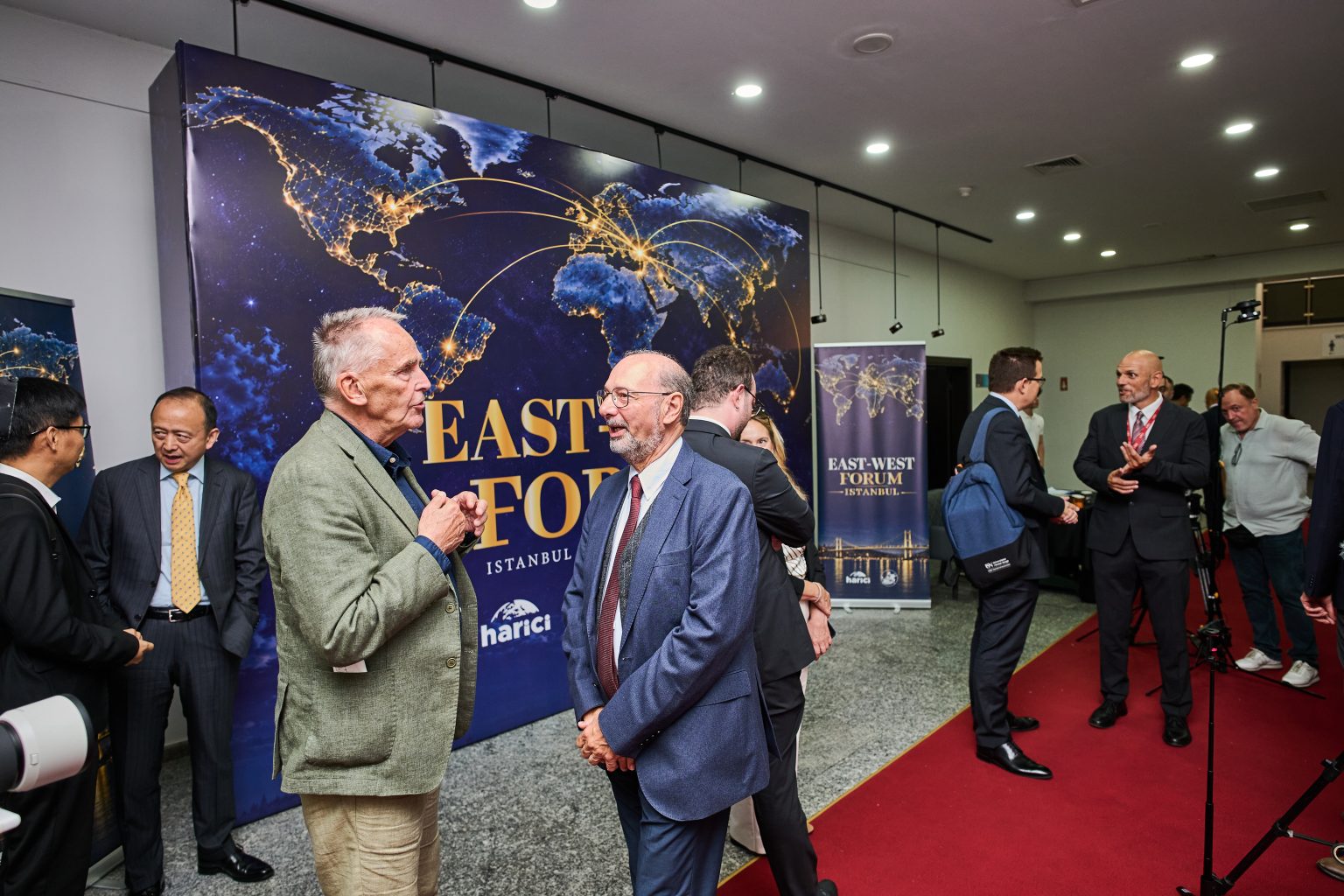
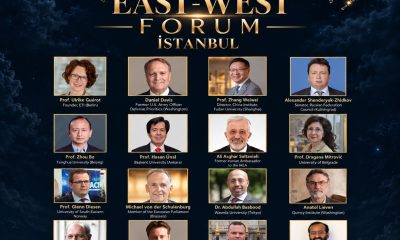
As the centre of gravity in world politics shifts, Istanbul has become a focal meeting point for debates on the emerging global order. Leading diplomats, academics, security experts, and former military officials from a wide geography extending from Washington to Beijing, Moscow to Tehran, Berlin to Cairo, and New Delhi to Rome gathered at the East-West Forum. Bringing together participants from 30 countries, the core message of the forum was clear: the Western-centric unipolar order is unravelling, and multipolarity has turned into an irreversible reality.
Held on 26 September at the Akatlar Cultural Centre, the East-West Forum, hosted by Harici Media in cooperation with the Berlin-based European Transcontinental Initiative (ETI), brought together prominent figures from different continents and across a wide range of political traditions in Istanbul. Attendees from Europe, Asia, the Middle East, and North America debated the historic shift in the global balance of power, the changing character of warfare, and the new security architecture over two days.
The predominant assessment at the forum, which featured experts from 30 countries, was that the world is rapidly moving away from the Western-centric order established after the Cold War, and that new power centres have become permanent fixtures of the global system. Participants stressed that proxy wars have lowered the threshold for direct conflict between great powers, that the risk of nuclear escalation has returned to the centre of global politics, and that artificial intelligence-enabled warfare technologies are blurring the boundaries of armed conflict.
Consequently, the East-West Forum emerged not merely as a conference discussing current crises, but with the ambition of serving as a new international platform where different centres directly shape the principles and balances of power underpinning the changing world order.
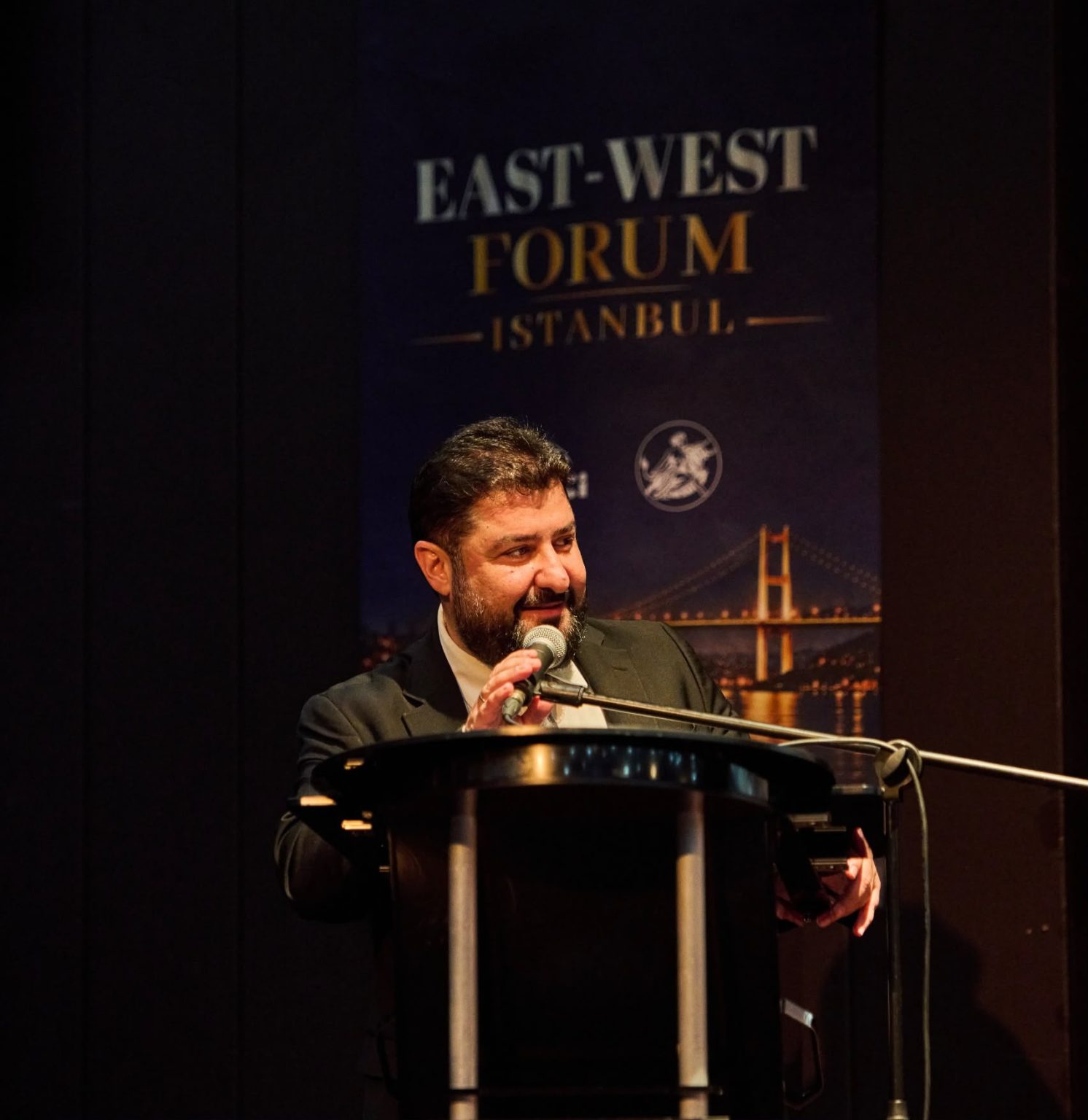
Opening the conference, Harici Media Editor-in-Chief Tunc Akkoc said the forum aims to bring disparate political and intellectual traditions together on a foundation of permanent dialogue.
“Today, together, we are making a new start,” Akkoc said. “We are establishing a platform where individuals with diverse perspectives can meet and converse. We hope this inaugural gathering evolves into a tradition that grows stronger with every passing year.”
Guerot: Crisis on continent stems from unaccepted weakness
Delivering the opening address on behalf of the European Transcontinental Initiative (ETI), of which she is a co-founder, Prof. Dr. Ulrike Guerot emphasised that the global critical community must raise its voice at a juncture when the world stands on the brink of a third world war.
Invoking Immanuel Kant’s thesis on “Perpetual Peace” and the principle that “all human beings are born free and equal,” enshrined in the 1789 Declaration of the Rights of Man and the United Nations Charter, Guerot stated that what is lacking in the 21st century is not resources or energy, but diplomacy, wisdom, political will, and love.
Contending that the social and peaceful European ideals of the Jacques Delors, Francois Mitterrand, and Helmut Kohl era have been distorted today, Guerot noted that she voices the sentiments of Europe’s silent majority, who do not want war with Russia and reject being sacrificed to US geostrategic interests.
Guerot, a German national, recalled the attack on the Nord Stream gas pipelines, observing that the German public feels deep unease after its critical infrastructure was destroyed by a former ally while its own government remained silent.
Referencing the French poet Raymond Queneau, Guerot encapsulated the nihilism into which Europe has fallen:
“Europe is dangerous; yet it is dangerous not because of its strength, but because of a weakness it refuses to accept. It prefers to escalate war rather than confront its own political failure and guilt. As the European Transcontinental Initiative, we have two foundational mottos: a Europe beyond the European Union, and a Europe for a multipolar world. In this balance, Turkiye plays a pivotal role.”
Following her opening address, Guerot announced that the forum will convene regularly in Istanbul during the third week of September each year.
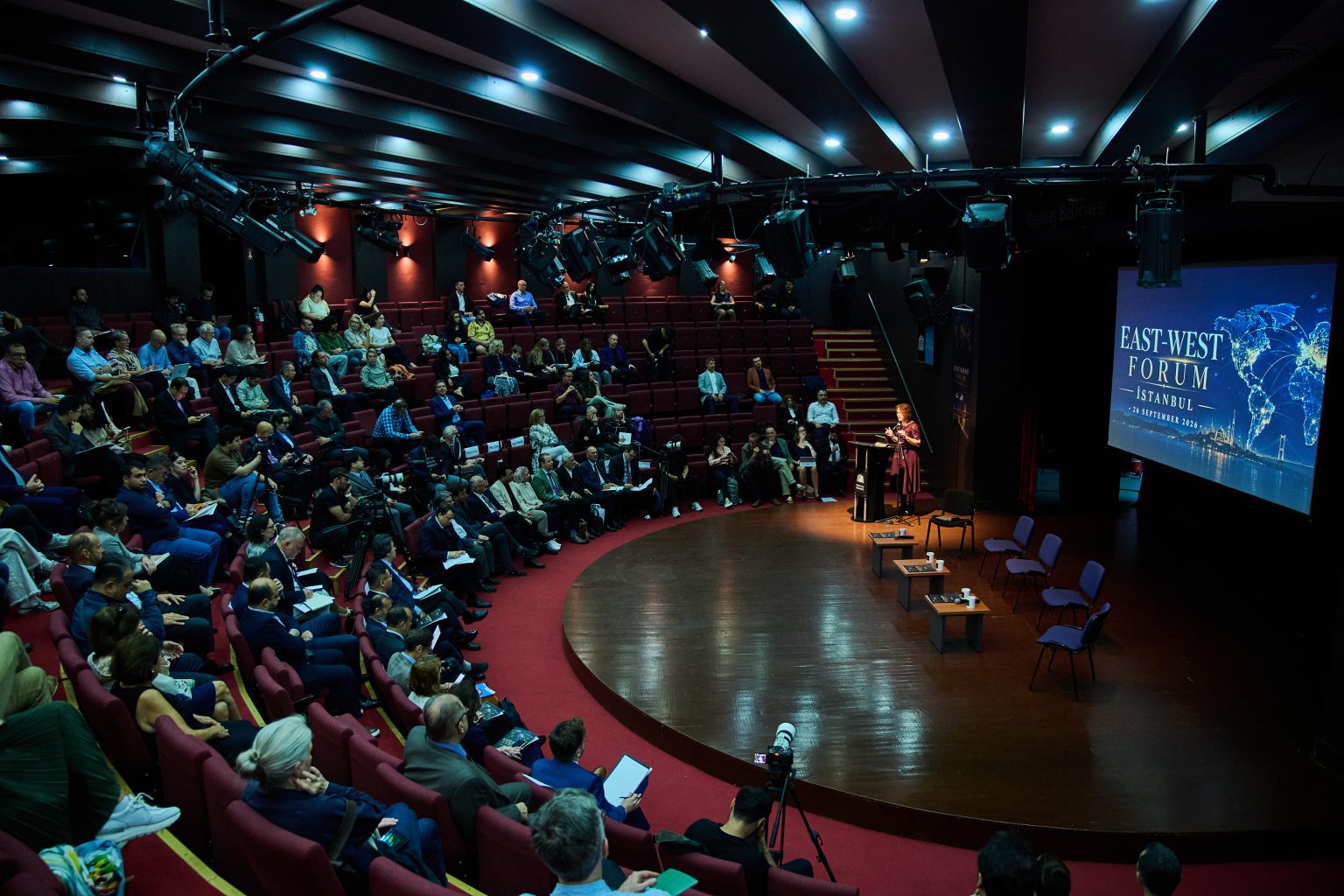
Following a address of thanks by Tunc Akkoc, the forum proceeded to its first plenary session, titled “The Transforming World: Multipolarity and the End of the Liberal Order.” Serving as moderator, Guerot opened the panel with a quotation from the newly published book “The End of the Liberal Order” by US academic Prof. Pilkington.
Guerot presented the following observation for discussion among the participants:
“Today, liberalism as an ideology is interpreted along American lines. That is, it is essentially defined through a specific variant of liberalism constructed over time in the US and developed particularly through that country’s ascendance in the post-Second World War era.”
Zhang: Five centuries of Western dominance have ended
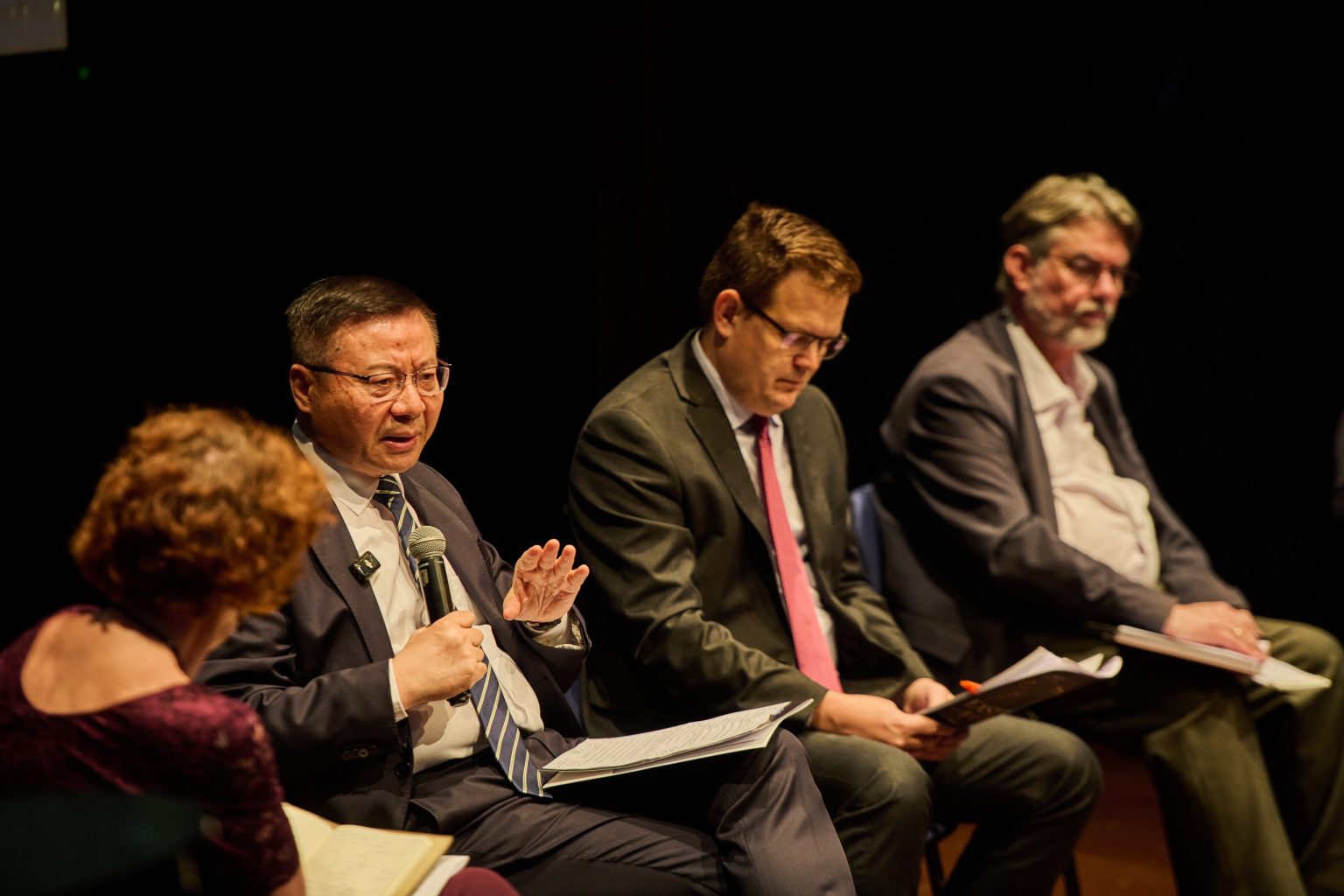
Prof. Zhang Weiwei, Director of the China Institute at Fudan University and former interpreter to China’s historic leader Deng Xiaoping, asserted that the multipolar structure has been confirmed by economic data.
Noting that the aggregate economic size of the BRICS nations in gross domestic product based on purchasing power parity has surpassed that of the G7 nations, Zhang emphasised that this indicator proves the conclusion of five hundred years of Western dominance.
“In our intellectual framework, an actor is either a friend or a potential friend,” Zhang said. “The Western dichotomy of ‘you are either a friend or a foe,’ which drives the world toward catastrophe, has no place in our worldview. Chinese diplomacy shuns military coercion; it takes harmony over hegemony and equality over imposition as its basis.”
Diesen: By ceding sovereignty, Europe became a logistics base
Prof. Dr. Glenn Diesen of the University of South-Eastern Norway said that the undivided Pan-European security architecture promised by the 1990 Charter of Paris was deliberately sacrificed for the sake of NATO’s eastward expansion. Stating that this policy excluding Russia dragged the continent into a spiral of conflict, Diesen noted that the principle of the indivisibility of security was disregarded.
Observing that European capitals surrendered their strategic responsibilities to Washington, Diesen assessed: “This approach, which destroyed its own energy pipelines, endorsed sanctions that crippled its industry, and rejected diplomacy, ceased to make Europe a global actor and turned it into a transatlantic logistics base.”
Lieven: Rules-based order is a veil for US hegemony
Anatol Lieven, Director of the Eurasia Programme at the Quincy Institute for Responsible Statecraft, said the phrase “rules-based international order,” constantly repeated by Western governments, serves as a diplomatic veil concealing US hegemony. Lieven stated that the rules are set by Washington itself and breached by Washington whenever its interests dictate, adding that this arbitrariness erodes sovereign equality.
Prof. Jagannath Panda, Head of the Stockholm Centre for South Asian and Indo-Pacific Affairs, explained that the rise of Asian powers has shaken the representative legitimacy of the United Nations Security Council.
Noting that the exclusion of a power like India, with a population exceeding 1.5 billion, from permanent decision-making processes undermines the legitimacy of the entire system, Panda remarked that New Delhi retains its strategic autonomy and that Asian nations possess the diplomatic maturity to resolve their border disputes through direct negotiations.
Unal: Independent actors like Ankara are safety valves
Moderating the forum’s second session, titled “Escalation Out of Control: Preventing a Catastrophic World War, Peacefully Institutionalising a New Order Together,” Baskent University faculty member and Director of the Centre for New World Studies Prof. Dr. Hasan Unal stressed that the liquidation of diplomacy has brought global peace to a perilous threshold.
Stating that the polarisation between the West, the Global South, and BRICS has created uncontrolled escalation, Unal said middle powers like Turkiye play a vital role in maintaining equilibrium at a time when arms control treaties have lapsed and artificial intelligence-enabled systems are being deployed.
AI algorithms accelerate the risk of nuclear confrontation
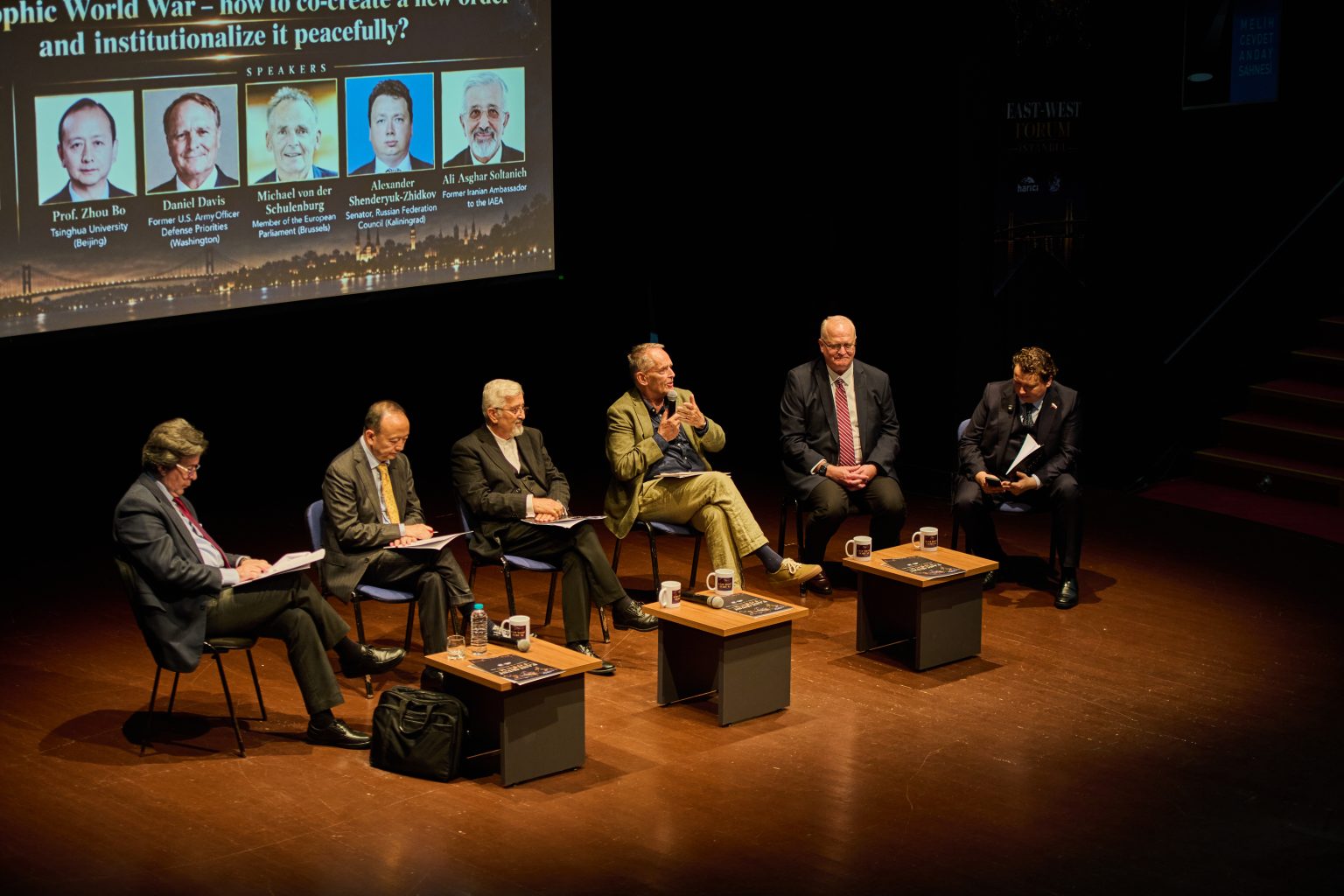
Zhou Bo, Senior Fellow at the Centre for International Security and Strategy at Tsinghua University and a retired colonel, stated that unmanned systems and artificial intelligence algorithms have reduced decision-making windows to seconds, driving the risk of military miscalculation to a maximum and lowering the nuclear threshold.
Zhou said major powers must immediately agree on rules governing modern military technologies, warning that failure to do so will result in a dystopian catastrophe.
Retired US Army Lieutenant Colonel and Defence Priorities fellow Daniel Davis stated that the security bureaucracy in Washington has succumbed to the fallacy of viewing military power as the sole solution to every problem.
Davis noted that proxy wars stretching from Ukraine to the Middle East have brought nuclear powers close to direct confrontation, pointing out that a dynamic similar to the blind diplomatic deadlock preceding the First World War is unfolding.
Davis emphasised that the US defence industry expands its budget by continuously manufacturing new enemies, that unrestrained interventionism harms the American public, and that there must be a return to the sovereign boundaries set by the UN Charter.
European Parliament Member and former United Nations Assistant Secretary-General Michael von der Schulenburg said the European Union is being drawn into a dangerous trap of military escalation, with voices advocating peace negotiations being marginalised.
Stating that the Brussels bureaucracy is militarising the continent while ignoring the popular will, Schulenburg remarked that the principles of the UN Charter must be reinforced to serve as the main pillar of a multipolar world.
Shenderyuk-Zhidkov: Sanctions turned Russia towards the East
Alexander Shenderyuk-Zhidkov, representative of the Kaliningrad Region in the Russian Federation Council and First Deputy Chairman of the Committee on Budget and Financial Markets, stated that attempts to isolate Russia from the global economy have failed, with trade routes and financial payment channels redirecting toward Asia and the Global South.
Ali Asghar Soltanieh, former representative to the International Atomic Energy Agency and President of the Vienna International International Institute for Middle East Studies, emphasised that foreign military bases in the Middle East represent the primary source of instability. Stating that regional security cannot be constructed via foreign intervention, Soltanieh noted that on the foundation of diplomatic dialogue between Tehran and Riyadh, infrastructure projects such as a Mecca Joint Defence Agreement and shared water desalination facilities could be realised.
Roger Koeppel, publisher of the Swiss magazine Die Weltwoche and a former parliamentarian, criticised Switzerland’s participation in unilateral sanctions as detrimental to its historic neutrality, arguing that peace can be safeguarded through neutral mediation mechanisms rather than arms shipments.
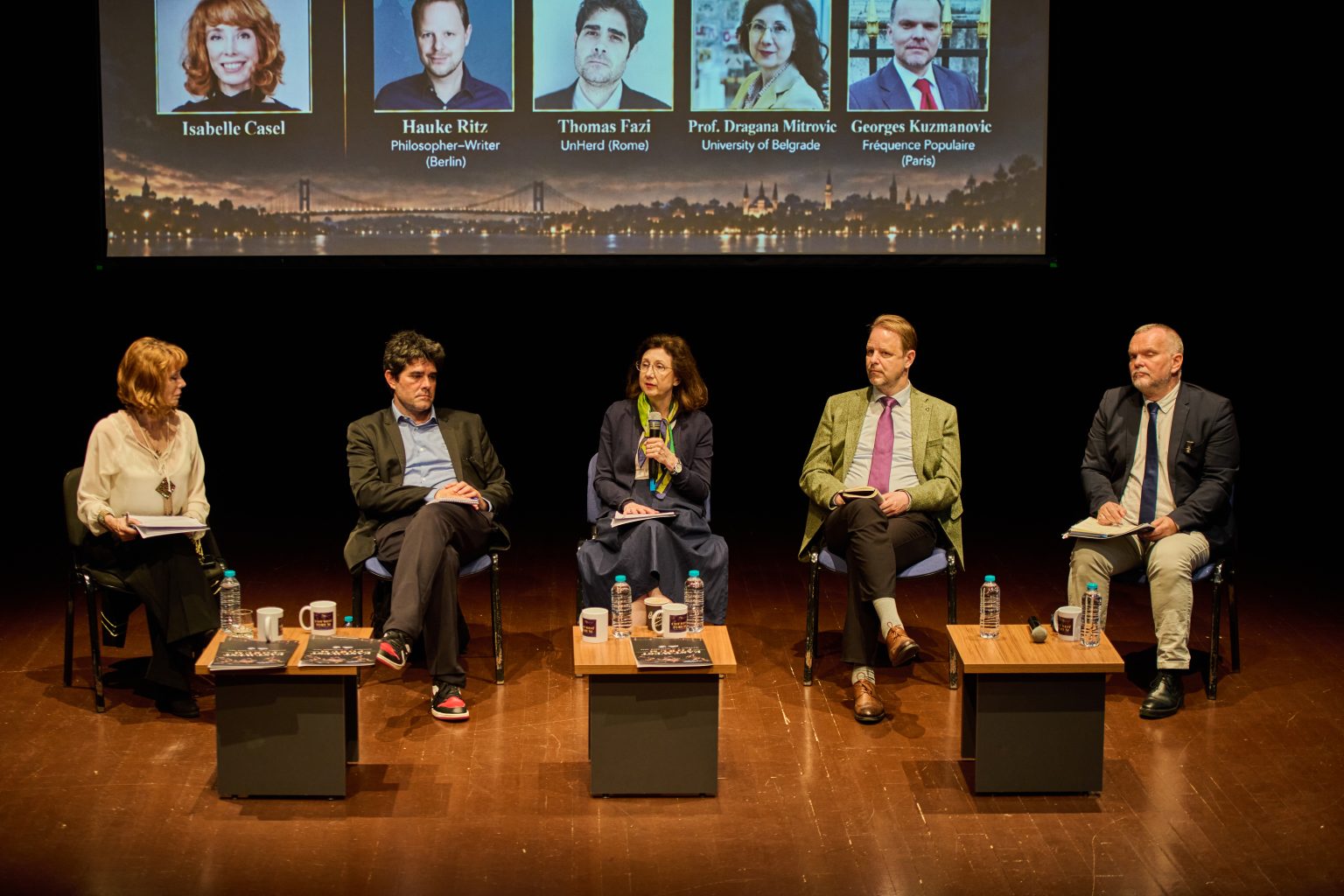
Europe severed from its philosophical roots and sovereignty
Researcher Isabelle Casel moderated the third session, titled “Europe Beyond the EU and Its Philosophical Foundations: Atlanticism, Eurasia and Strategic Autonomy.” Philosopher of history Dr. Hauke Ritz said European civilisation has drifted from the ideals of humanism and the Enlightenment, surrendering to the absolute dominance of markets and technology.
Ritz noted that uncontrolled artificial intelligence and genetic engineering can be curbed only if Eastern wisdom converges with European humanism.
Economist Thomas Fazi argued that the European Union has dismantled the mixed-economy model based on the welfare state to serve capital dominance, with institutions centred in Brussels and Frankfurt transforming into oligarchic mechanisms that override democratic will.
Fazi stated that genuine strategic autonomy will become possible only when the state reclaims its economic sovereignty.
Prof. Dr. Dragana Mitrovic of the University of Belgrade emphasised that East Asia has become the focal point of global manufacturing and trade, with China’s Belt and Road Initiative linking to Europe via the Balkans, underscoring that Brussels must dismantle ideological barriers.
French analyst Georges Kuzmanovic said France has drifted from its Gaullist tradition of independence, becoming entirely reliant on US logistics in the defence domain.
He stated that Europe, having surrendered its data and communications infrastructure to US tech corporations, cannot make autonomous decisions without establishing digital sovereignty. Discussant Walter Komarek added that Eurasian energy pipelines and railway networks represent tangible guarantees of peace.
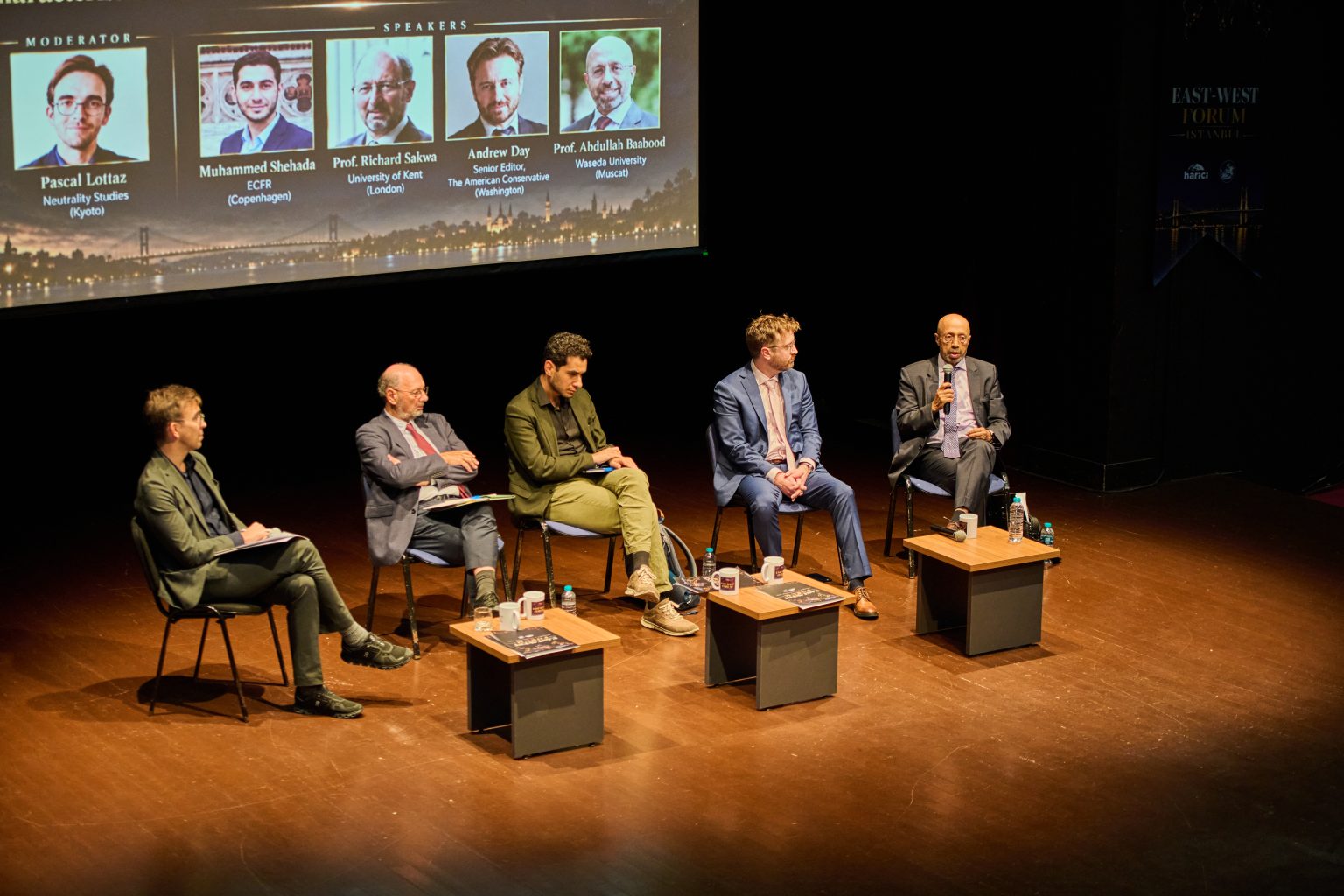
Shehada: Gaza heralds the rule-free warfare of the future
The final session of the forum, moderated by Dr. Pascal Lottaz, addressed regional proxy wars.
Gaza-born researcher and human rights advocate Muhammad Shehada stated that the destruction in the region exceeds the scope of a localised conflict, remarking: “The genocide in Gaza is not an isolated event. We serve as the canary in the coal mine, warning the entire world of who will come next and how future wars will be waged.”
Pointing out that artificial intelligence-driven targeting and surveillance systems in Gaza target the entire civilian population, Shehada said the Israeli military tracks cellular signals of young children to eliminate whole families.
Addressing double standards among Western governments, Shehada recalled a senior European official telling him: “In the morning we send food and bandages to the people of Gaza; in the afternoon we supply bombs to the Israelis to drop on civilian residential areas.”
Emeritus Professor Richard Sakwa of the University of Kent noted that contemporary crises stem from the unresolved contradictions of 1945, observing that the Second Cold War is far more dangerous because it lacks ideological clarity and rules.
Andrew Day, senior editor at The American Conservative, said the American public does not endorse the Washington elite’s endless military interventions, particularly war policies directed at Iran.
Prof. Abdullah Baabood, Chair at Waseda University, stated that Gulf nations can establish their own indigenous security framework without foreign intervention, adding that normalisation between Tehran and Riyadh constitutes a vital step toward that end.
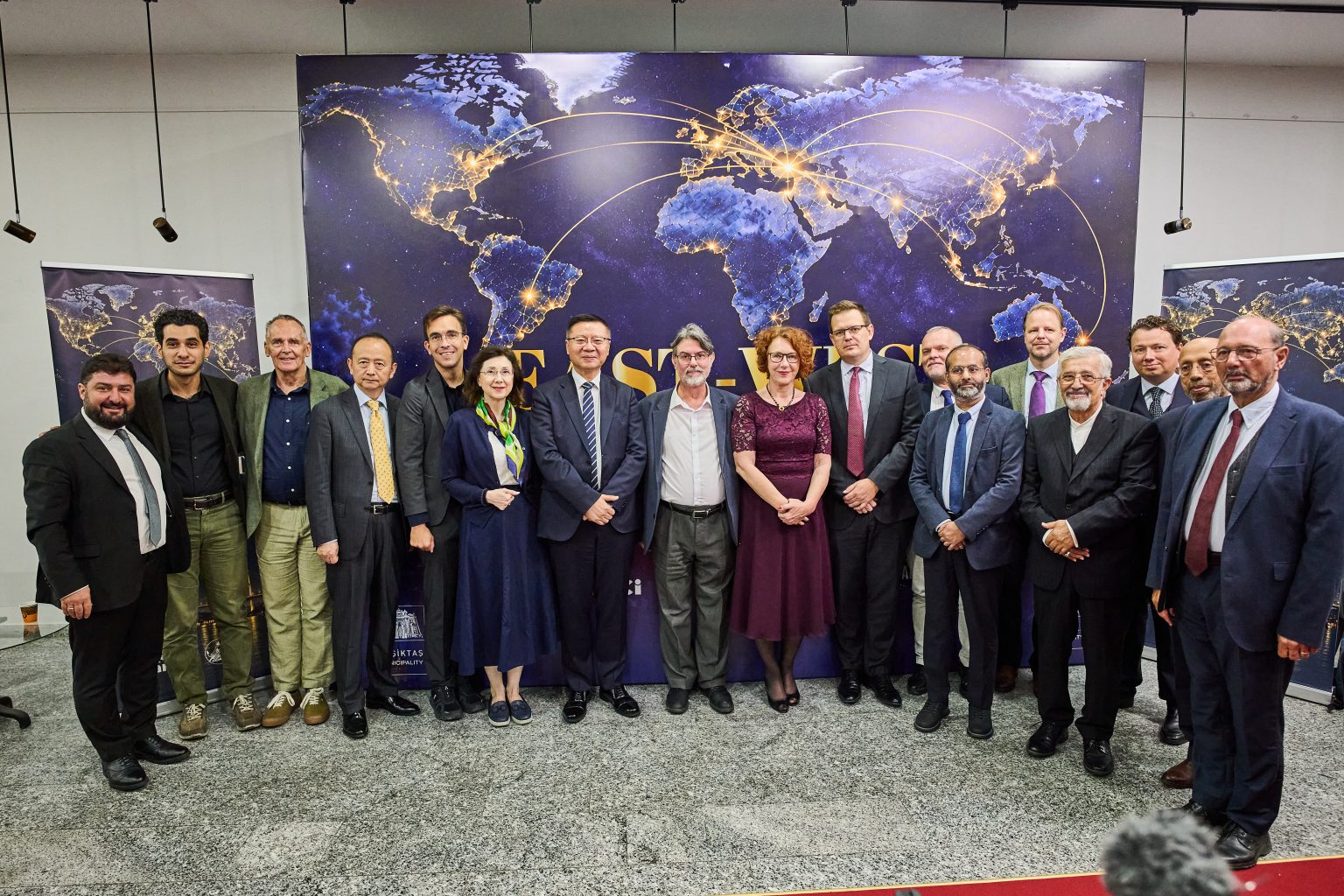
East-West Forum adopts five core institutional resolutions
Following the conclusion of the forum, participants met at a working breakfast on the morning of 27 September and agreed to transform the initiative into a permanent international network. A five-point action plan was announced to the public:
First, the East-West Forum will convene regularly in Istanbul during the third week of September each year as a permanent council of ideas tracking and documenting the multipolar paradigm shift.
Second, conference proceedings and strategic reports will be compiled annually into books and distributed internationally under the leadership of Germany-based Westend Publishing House.
Third, specialised working groups convening on a quarterly basis will be established across the areas of security architecture, artificial intelligence governance, economic sovereignty, and diplomacy.
Fourth, the “EWF Network” will be launched, encompassing independent intellectuals, experts, and researchers who oppose unipolar approaches and military escalation.
Fifth, an “EWF Business Council” will be founded, bringing together productive sectors, economic actors, and independent commercial initiatives across the multipolar world.

Merz and five EU allies threaten veto over seven-year budget cuts

US Ambassador Guilfoyle faces backlash in Greece over alleged remarks

Canada diversifies oil and gas exports away from US

EU drafts plan to curb national vetoes in radical expansion reform

Likud deepens ties with Austria’s FPO as European right courts Israel
-
 Asia2 weeks ago
DeepSeek engineer warns AI will lead to communism or Cyberpunk
-

 America2 weeks ago
Big Tech profits from AI extinction hype, Ken Klippenstein says
-
 Europe6 days ago
European intelligence chiefs divide over risk of Russian attack
-
 Diplomacy1 day ago
East-West Forum in Istanbul highlights irreversible shift to multipolarity
-
 Opinion2 weeks ago
Will Qatar fund Benjamin Netanyahu in this election too?
-
 Europe24 hours ago
European unions urge governments to scrap all Palantir deals
-
 Diplomacy5 days ago
East-West Forum in Istanbul to debate multipolarity and global order
-
 America6 days ago
Republican support for Trump’s war with Iran drops sharply in polls
