
Diplomacy
The unipolar illusion is over, the multi-vector era has begun, Quincy’s Lieven says

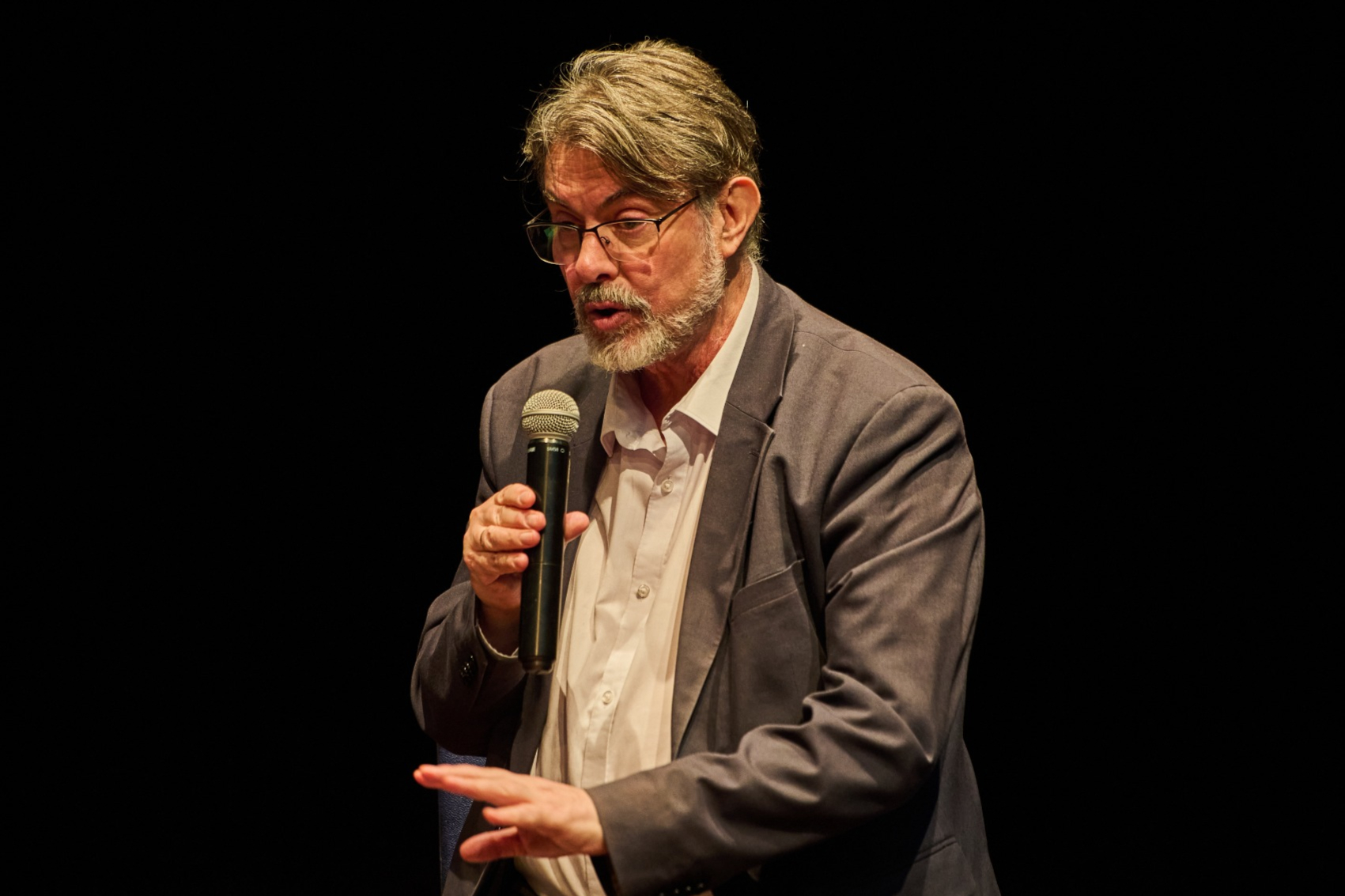
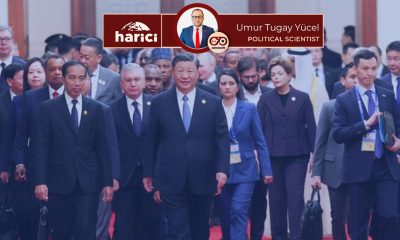
Editor’s note: Anatol Lieven, Eurasian Program Director of the Washington-based think tank Quincy Institute, made striking assessments regarding the future of the international system at the East-West Forum held in Istanbul on September 26-27. Stating that Western elites believe in the illusions they have built themselves, Lieven expressed that the “rules-based order” discourse is actually just a cover masking American hegemony. Reminding that the Cold War years were not a period of stability for the peoples of the global south, but rather experienced as a nightmare, the experienced expert emphasized that the policies pursued largely by Washington lie behind the conflicts in the Middle East and Ukraine.
***
As a Brit, I have to say I would have no objection to such a merger if it were run by King George and his descendants. The problem is that unfortunately the balance has shifted a bit since those days. Though I have to say, if you were to listen to the British establishment, you wouldn’t always realize that we live in many ways—in America above all, but in Europe too—in a weird world of illusions now. And one of the most dangerous things is that a great many people believe their own illusions. And that brings me to the infamous phrase “rules-based order,” which of course is on the one hand simply a euphemism for American global hegemony, with the Europeans as American satraps or lieutenants.
It is nonetheless a myth in which, unfortunately, a large part of the Western establishment genuinely believes; they have convinced themselves that this is true. One of the key ways in which they underpin this belief—and belief in its necessity—is to claim, and no doubt to believe, that without this American-run rules-based order (with rules made by America and broken by America whenever it sees an interest in doing so), one of two things would happen. First, that without a global ruler, the world would fall into chaos and new conflicts would break out everywhere if America were not there to suppress or mediate them. The second belief is that if the world is not ruled by the United States—once again, with Europe acting as its lieutenant—it will be ruled by China in the same way America has tried to rule the world.
If China did simply imitate America’s hegemonic policies, that would not be an advantage for anybody, including perhaps most of all the Chinese themselves. Fortunately, I see no signs that that is going to happen. Behind this also is an almost totally false picture of the supposed stability and peace preserved by the United States when it was the non-communist pole of a partially bipolar world with the Soviet Union, supposedly in what Americans—and somewhat bizarrely, Europeans too—called the “free world.” This preserved peace and stability to a considerable degree in Western Europe, but it would come as a very considerable surprise to the Koreans, the Vietnamese, the Algerians, the Arab world, Angolans, many South Americans, and so on. From their point of view, the Cold War was not a period of stability and peace; it was in many ways a nightmare. And many areas tormented by Cold War conflicts are in fact today much more peaceful and stable. Where there are really serious conflicts going on, above all in the Middle East, these are very largely the result of the policies of the United States and its local allies—and I would say that of the Ukraine War as well.
I won’t speak much about China because we have much better people to talk about that. It does seem to me undoubtedly clear that China is aiming at global economic predominance, as indeed Britain did before (though also through military means). There are no signs to me as yet that China is aiming at the kind of militarized global primacy that America has sought. And as we just heard, that is a very good thing, because if China had produced somebody like Donald Trump—or I would add, Hillary Clinton or George Bush II—the world would indeed probably have been destroyed by now. But this does not seem to be the case. Indeed, there is a case, I would say, for China playing a much more active role politically—not militarily, of course, but politically—in certain parts of the world.
Above all, I am not entirely happy with the term “multipolarity,” because if you go back to the notion of bipolarity or unipolarity, it suggests, perhaps unconsciously, that other countries have to attach themselves closely to one or other pole and have no alternative. That is still very much true in certain parts of the world, but it doesn’t seem to me that this is what most countries are aiming at, or what will be possible in the future for poles to enforce. Having spent a great deal of time in the countries of the former Soviet Union—I was in Uzbekistan in the summer—I have often heard them express their policies not in terms of multipolarity, but of a multi-vector policy: trying to maintain decent working relations with all other states, including their own neighbors.
In a unipolar, bipolar, or rigid multipolar world, subordinate countries often prioritize relations with the hegemon over their closest neighbors, sometimes even conducting regional relations through the hegemon rather than directly. That is ceasing to be the case. Countries are increasingly aiming to diversify their relations and avoid the American approach—the constant insistence that “you are with us or against us,” that you must be completely with America, and if you’re not, you are an enemy. This has been carried to grotesque extents by Donald Trump, but he is only exaggerating something we heard very often before from American leaders.
When it comes to an anarchic world—that is, a world without a ruler—it is a staple of anthropology that an anarchic system does not have to be a chaotic system. Anarchic systems can also generate their own mechanisms and traditions to resolve or minimize conflicts and pursue common aims. That is what we must hope for, not only to minimize the risk of conflict, but also because there are huge challenges that America, despite claiming to be the global hegemon for the good of humanity, has totally failed to address, and in many ways acted as an actively malignant actor—above all regarding climate change, artificial intelligence, and the protection of secure international trade.
Our anarchic system must hope for arrangements that will help us overcome this. But even if we fail, I doubt that many people around the world will look back to American primacy with much nostalgia. Thank you.






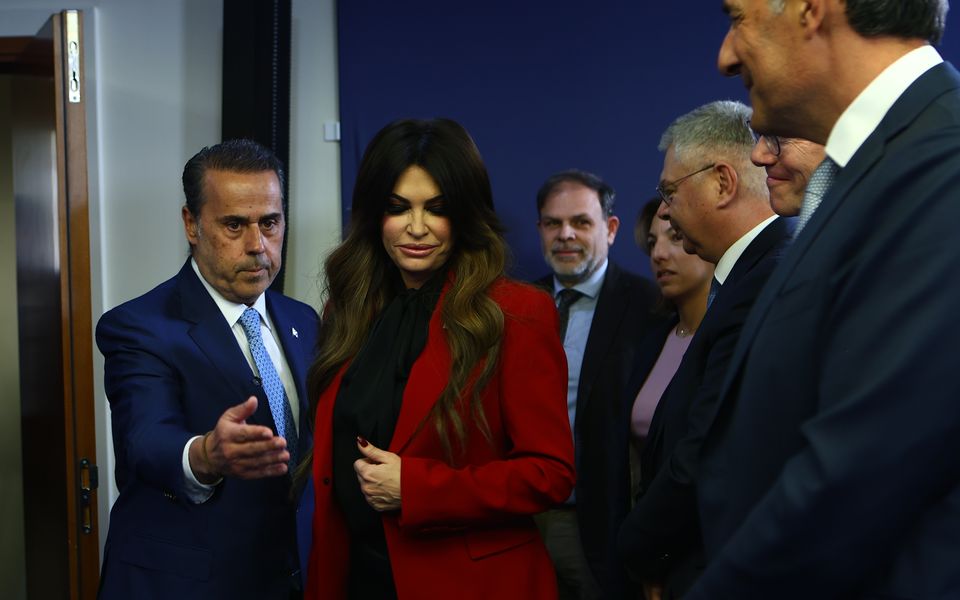
Opposition parties in Greece have demanded that the government respond to allegations raised concerning US Ambassador Kimberly Guilfoyle.
According to a report in The Wall Street Journal, the US ambassador to Greece, Guilfoyle, implied that her country played a role in the overthrow of the Romanian government and that the US could do the same in Greece.
The WSJ alleges that US Ambassador Kimberly Guilfoyle made these remarks in March during a dinner attended by Greek and American officials.
According to this account, Guilfoyle, referring to the imminent collapse of the Romanian centre-right government led by Ilie Bolojan, told Greek Energy Minister Stavros Papastavrou that the US played a role in this overthrow process and stated: “We can do this to any country we want. We can do the same here.”
According to the newspaper’s sources, Papastavrou said that the US could not change the democratically elected Greek government.
Guilfoyle’s lawyer, however, disputed the account of this exchange published in the WSJ.
The opposition PASOK party stated in a press release:
“The government, and in particular the Ministries of Foreign Affairs and Environment and Energy, are the only bodies competent to provide the necessary clarifications and evaluate the veracity of the published report. Greece is an independent and sovereign democracy and is obliged to act as such in every instance and before all parties without exception.”
The Greek Left Alliance (ELAS) stated that the alleged remarks were “unprecedented and unacceptable”, adding:
“The government neither confirms nor denies the incident; it maintains its silence. For this reason, we demand that the Mitsotakis government immediately clarify to the Greek people whether the incident in question actually took place; if it did, why it has been concealed since March; and whether the government responded to it: and how it responded.”
SYRIZA stated that the emergent allegations are “extremely serious and the government cannot remain silent…” The party said: “If true, we are faced not with a simple diplomatic incident, but with an insult to the country’s system of governance.”
SYRIZA also demanded that the government explain why it insists on supporting the Vertical Gas Corridor and “Greece becoming more dependent on American LNG.”
The Communist Party of Greece (KKE) stated that the government “bears a heavy responsibility”, particularly in light of the visit US Secretary of State Rubio is scheduled to make to Greece in a few days, which aims to further advance US plans in the region and renew the Greece-US strategic agreement.
Guilfoyle had played a significant role in promoting the Vertical Gas Corridor, a regional infrastructure project designed to transport gas from Greece via Bulgaria and Romania to Central and Eastern Europe as an alternative to Russian gas.
Greek government spokesman Pavlos Marinakis stated that this issue “was never raised” and that such conduct would not be tolerated.
Marinakis also described the relationship between Greece and the US as strategic, stressing that the partnership is based on mutual respect and shared values.
The WSJ report also examines Guilfoyle’s activities concerning American liquefied natural gas (LNG).
Guilfoyle has reportedly promoted US energy sales across South-East Europe.
A separate section of the report addresses businessman Hristos Marafatsos. Marafatsos is said to have accompanied Guilfoyle to several official meetings on behalf of the Greek construction company Aktor.
According to the report, Aktor paid Marafatsos $160,000 for lobbying activities. Marafatsos’s involvement in this process has raised suspicions regarding the mixing of private interests with diplomatic meetings.
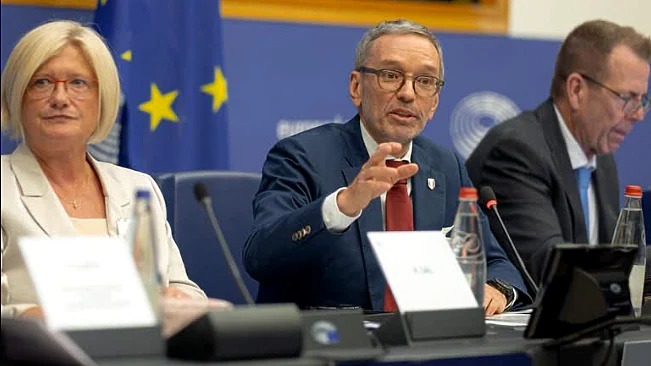
Israel’s ruling Likud party, which has been deepening its ties with the European right for some time, is most recently seeking to strengthen relations through Austria’s FPO.
Most recently, a speech delivered at the European Parliament on 16 September by Herbert Kickl, leader of the Freedom Party of Austria (FPO), was welcomed by Israel.
Kickl caused a major stir in an address delivered at a conference on “Islamism and Antisemitism” organised by the Patriots for Europe (PfE) parliamentary group, which was also attended by representatives from Likud.
“We are the new protectors of Jewish interests,” Kickl said, urging that an “unprecedented crime against humanity” such as the Holocaust should “never be forgotten.”
Stating that in a federal government where he served as chancellor, “combating antisemitism” and “combating anti-Zionism” would form part of their political agenda, Kickl also spoke favourably regarding the de facto annexation of the West Bank.
While sharply criticising the EU for providing financial support to the Palestinians, Kickl stressed that he did not wish to “condemn Muslims as a whole.”
Nevertheless, he argued that “for many fanatical Muslims,” Islamism served as a “weapon against our way of life,” stating that this had introduced a new form of antisemitism to Europe.
Asserting that Jews required protection in many European cities, the FPO leader also expressed a desire to support the preservation of Jewish heritage in Austria and to build a vibrant, visible partnership.
In his speech, Kickl refrained from apologising to victims of National Socialism. He referred only to his “sorrow over what happened to Jewish citizens,” adding: “My thoughts are with all victims and survivors of National Socialism, their descendants, and the Jewish people.”
His address drew approval from members of the Israeli government. While Foreign Minister Gideon Sa’ar welcomed the speech, FPO Member of the European Parliament Harald Vilimsky reported that Israeli Diaspora Affairs Minister Chikli described the address as “a historic turning point in relations between the FPO, the State of Israel, and the Jewish people.”
Immediately following last year’s federal election, Chikli stated that the AfD was the party in Germany that most openly opposed support given to “anti-Israel groups.”
In his view, cooperation with that party could also become possible if it managed to distance itself from individual “voices” that, for example, trivialised the Waffen-SS.
Amid the current turmoil across the Near and Middle East, the European right views Israel as the “most reliable ally,” regarding it as a “Western outpost” in the Arab-Islamic world that must be supported at all costs.
Conversely, Israel’s Ambassador to Austria, David Roet, stated at the beginning of March this year that the State of Israel’s policy towards the FPO had not changed.
Even in January, during a visit by Vilimsky to Israel, the Yad Vashem Holocaust Memorial had emphasised: “The FPO and AfD are parties whose roots lie in National Socialism.”
Yet, even during the conference, Israeli Transport Minister Miri Regev openly welcomed this positive development. Vilimsky remarked: “All these statements show that we are on the right track.”
Vilimsky stated that the FPO wished to enter a new era with the Jewish world, noting that their objective was “to work towards good cooperation.”
However, his direct attack against the Vienna Jewish Community (IKG) provoked anger within the community. According to Vilimsky, the community’s leadership is “very, very left-wing.”
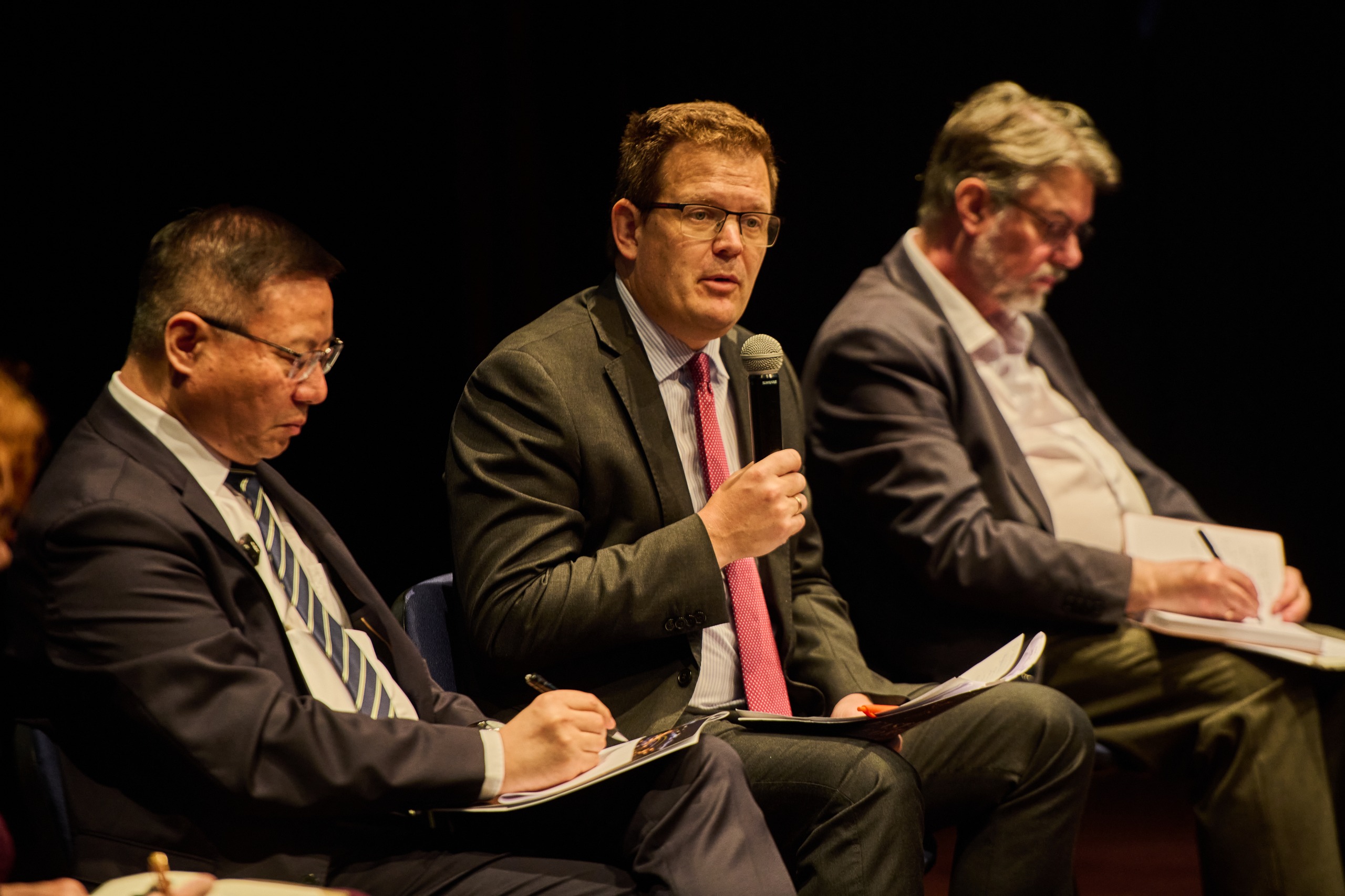
Editor’s note: In this speech delivered at the East-West Forum held in Istanbul on September 26–27, Norwegian political scientist Prof. Glenn Diesen examined the collapse of the unipolar world order and the turbulent transformation sweeping the international system. While laying bare the structural dilemmas of Western-centric hegemonic universalism, Diesen pointed out that rising powers are forging a new multipolar balance centered on civilization-states. Underlining the identity and security crisis into which Europe has plunged, Diesen warned that unless diplomacy is revived, the new global order could be shaped through war.
***
The unipolar world order has collapsed, and we should conduct a post-mortem to reflect on what went wrong and to understand the current turbulent transition of the world. In 1989, Francis Fukuyama famously published his article on the ‘End of History,’ which was largely adopted as an ideological guide by the political West. The world only had one superpower and one ideology, and the expectation was that the world would unify under US leadership and liberal democratic values. The dominance of the US would end international anarchy and security competition, as there was only one centre of power, and the US hegemon would elevate the role of liberal democracy to form an inclusive community of universal values. For more than three decades, the West produced a new generation of politicians who believed that the collective hegemony of the West was for the benefit of all mankind, and they were the administrators who would manage the transition from the chaotic world of the past to perpetual peace. So what went wrong?
The unipolar moment was always destined to be a temporary phenomenon, as the US would predictably exhaust its resources and incentivise rising powers to collectively balance the US. However, there is also an inherent contradiction in hegemonic universalism, as universal values are linked to one entity of power. A hegemon claims to represent universal values such as freedom, democracy, and human rights, albeit this universalism is promoted through a particular historical, cultural, and geopolitical order.
Universal values advocating for equality are used to institutionalise a dominant position for the US. Universal values advocating for inclusion are used to build exclusive blocs such as NATO rather than developing an inclusive pan-European security architecture. John Herz noted as early as 1950 that the more democratic states were at home, the more they seemed to insist on a dominant position in international institutions to defend liberal values from the rule of the majority. Liberal values build on the idea that tolerance is imperative, as all people and states have different ideas about the good life and their own path to development, yet the universality of values suggests that all states must develop along the same path, and the political West, as the champion of liberal democracy, is the civilizational teacher seeking to “socialize” the rest of the world. Diplomacy between sovereign equals is replaced with the ‘civilizational teachers’ rewarding or punishing the ‘civilizational students’. The hegemon will also discipline states that does not follow its values, and also punish the states that become too powerful and thus undermine its hegemonic position. Liberalism has subsequently been promoted as a hegemonic norm.
The modern world order was established with the Peace of Westphalia in 1648, in which a hegemonic system legitimised with universalist claims was replaced with a multipolar system based on the cultural distinctiveness of states.
The past 80 years have been a historical anomaly, with a bipolar system that collapsed and gave way to a unipolar system with one centre of power. The ‘normal’ situation of the world has been a multipolar Westphalian system with a power equilibrium that accommodates the cultural distinctiveness of states.
Over the past decades, hegemonic universalism transformed European states as national competencies were transferred to the US. US military dominance meant that Europe largely outsourced its security, foreign policy and strategic thinking to the US within the format of the alliance system. US economic dominance meant that the international economic architecture, with banks, currencies, payment systems, and trade agreements, was largely administered by the US. Civil society in Europe and beyond has been managed by “non-governmental organizations” financed by the US government and cooperating closely with US intelligence services.
The European political system has increasingly been premised on the idea that loyalty to international institutions is more vital and moral than national interests, as Europe’s linkage to the US within the political West is the main source of stability and prosperity.
The hegemon is now gone, and its universal claims are rejected by the wider world. A multipolar world is already here, and the rising powers are demanding a return to a Westphalian world order of sovereign equals based on civilizational distinctiveness. As Xi Jinping insists, all civilizations have their own path to development, and no aspiring hegemon has the right to tell others how to develop.
The return of rhetoric about civilizational states across the Eurasian continent signifies a rejection of unipolarity and universalism. New institutions such as the SCO and BRICS attempt to accommodate the multipolar world, yet new members are joining faster than institutional efficiency can adjust to. Although centralisation of power, standardization and universalism is understood as undesirable.
The US has reluctantly already begun adjusting to these new realities, as it recognises it cannot be everywhere and must prioritise, while the language of liberal universalism is being replaced with national interests. This could be a positive development as states pursuing strategic interests can seek mutual understanding and compromise, while states that link strategic interests to values will see competition as a struggle between good and evil where compromise is dangerous.
New political forces are rising in the US that want to scale back the empire to save the republic, as a strategic retreat would allow the US to rebuild its strength and end the collective balancing by other great powers.
What makes Europe so dangerous today is its weakness and panic due to the failure of finding a new role in the multipolar system. Security can no longer be based on the dominance of the collective West; there is no clear economic model; and the claims of representing universal values are no longer convincing. Yet, the Europeans are not willing to recognise new realities and adjust accordingly by diversifying economic and political connectivity.
The available evidence suggests that this will be a very turbulent transition from unipolar universalism to multipolar distinctiveness, and the new world will more likely be born through war unless we see a revival of diplomacy.
East-West Forum in Istanbul warns multipolarity is now irreversible

The unipolar illusion is over, the multi-vector era has begun, Quincy’s Lieven says

Merz and five EU allies threaten veto over seven-year budget cuts

US Ambassador Guilfoyle faces backlash in Greece over alleged remarks

Canada diversifies oil and gas exports away from US

EU drafts plan to curb national vetoes in radical expansion reform
-

 Asia2 weeks ago
DeepSeek engineer warns AI will lead to communism or Cyberpunk
-

 America2 weeks ago
Big Tech profits from AI extinction hype, Ken Klippenstein says
-

 Europe1 day ago
European unions urge governments to scrap all Palantir deals
-
 Diplomacy1 day ago
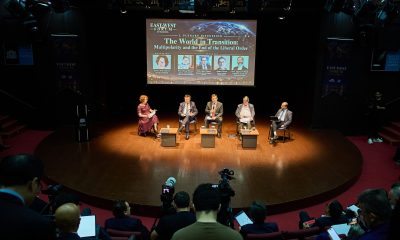
East-West Forum in Istanbul highlights irreversible shift to multipolarity
-
 Europe6 days ago
European intelligence chiefs divide over risk of Russian attack
-

 Europe4 days ago
Emmanuel Todd says West faces collapse amid Ukraine and Iran crises
-
 Diplomacy5 days ago
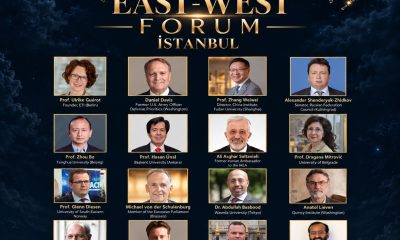
East-West Forum in Istanbul to debate multipolarity and global order
-
 America6 days ago
Republican support for Trump’s war with Iran drops sharply in polls
