
Middle East
Epstein served as secret diplomatic bridge between Israel and UAE elites, leaked emails reveal

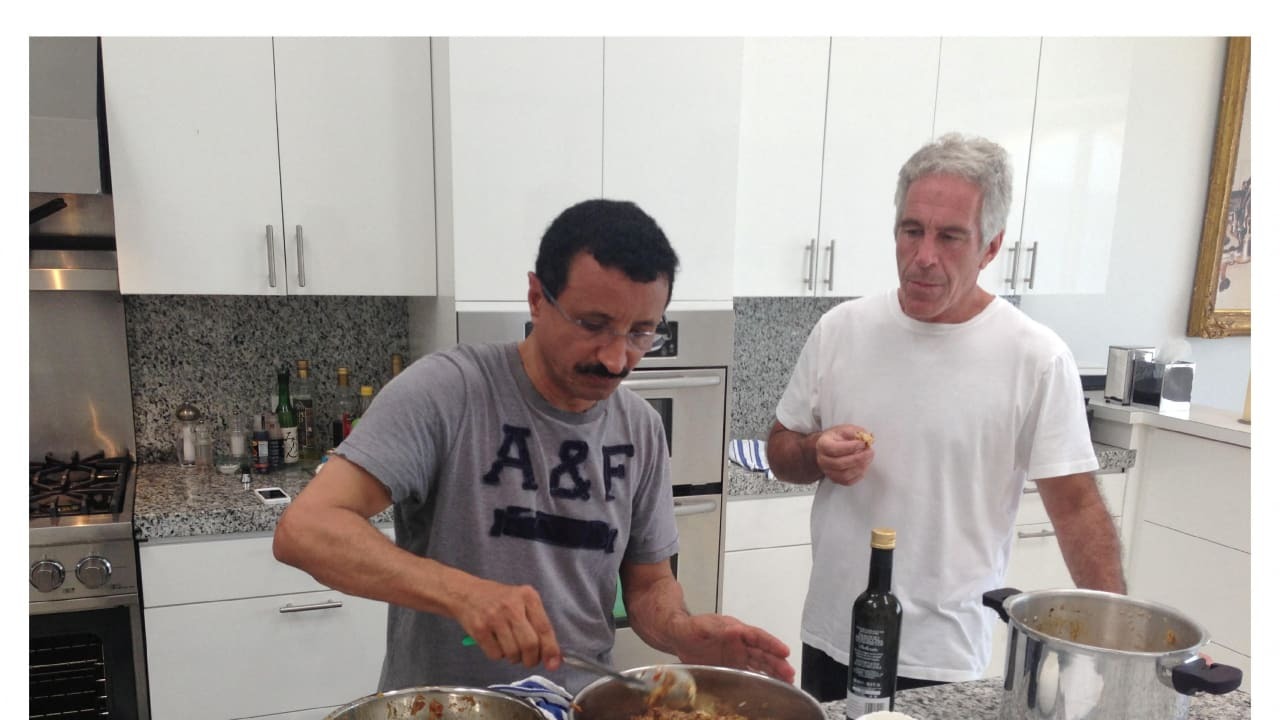
Jeffrey Epstein played a pivotal role in mentoring United Arab Emirates (UAE) elites and establishing the foundational relationship between Israel and the UAE.
Based on over a decade of private correspondence, the investigative outlet Drop Site has detailed the intimate relationship between Epstein and Sultan Ahmed bin Sulayem, the powerful chairman of the Dubai Ports World (DP World) financial empire, who maintains close ties to the UAE’s ruling families.
According to the report, this narrative helps uncover the clandestine background of the Abraham Accords, which were signed a year after Epstein’s death.
DP World plays a significant role in both UAE and Israeli foreign policy. On December 26, 2025, Israel became the first country to recognize the Republic of Somaliland as an independent state. This surprise diplomatic announcement followed months of public campaigning by Dubai’s DP World, one of Somaliland’s most prominent foreign investors.
At a conference in October, the company’s chairman argued for the recognition of Somaliland, highlighting the hundreds of millions of dollars the firm has invested in the Port of Berbera.
The official recognition of Somaliland strengthens the UAE’s logistics hub in Berbera. Meanwhile, Israel is reportedly constructing a military base in the region to protect its maritime interests in the Red Sea from drone and missile attacks launched by the Yemeni resistance.
The strategic move in Somaliland marks a new chapter in the deepening relations between Tel Aviv and Abu Dhabi. Over the final two decades of his life, American financier Jeffrey Epstein served as an informal diplomatic bridge between Israel and the Emirates through Sultan Ahmed bin Sulayem, the chairman of DP World and a close friend of the ruler of Dubai.
Epstein showed great interest in DP World, which controls the Jebel Ali Free Zone (JAFZA) in Dubai—a vital logistics hub for trade passing through the Persian Gulf and one of the world’s largest container terminal operators.
JAFZA is the foreign port most frequently visited by the US Navy, and the US maintains more vessels in UAE ports than in any other ports outside the US.
In 2009, after serving his first prison sentence for child prostitution offenses, Epstein boasted of his relationship with the “owner of the Djibouti deep-water port in the Horn of Africa, a smuggler’s paradise.” At the time, the Port of Djibouti was DP World’s largest container terminal in Africa. Epstein claimed his relationship with Sulayem was so close that he was “essentially in charge” of the port.
While Epstein’s comments about the port sounded like hyperbolic boasting, his claim of a close friendship with Sulayem has now been corroborated by emails released by the House Oversight Committee, a US federal court case, and the hacked inbox of former Israeli Prime Minister Ehud Barak.
The conversations reveal that Epstein shared an extraordinarily close bond with Sulayem from at least 2006 until his death in 2019. This timeframe aligns with the dates of the emails obtained from a leaked Yahoo! account.
Epstein was a trusted friend and advisor to Sulayem, but his network appeared to span all levels of the UAE’s ruling class. A journalist who visited Epstein in 2013 noted a photograph displayed in the foyer of his New York mansion showing Epstein alongside Abu Dhabi Crown Prince Mohammed bin Zayed, both dressed in beachwear and snorkeling gear.
In early 2006, the UAE leadership felt “humiliated” when US politicians blocked DP World’s acquisition of six major US ports, turning the proposal into a massive national security scandal.
After the company was forced to withdraw, Sheikh Mohammed bin Zayed Al Nahyan, then the Crown Prince of Abu Dhabi, vowed that the country would never be caught off guard in Washington again.
Following the scandal, as DP World withdrew from its US operations, Sultan Ahmed bin Sulayem emailed Jeffrey Epstein to arrange a meeting in New York in November 2006. Epstein looked forward to the meeting, urging Sulayem to “come sooner.” The following year, Sulayem was appointed chairman of DP World to lead the company’s international expansion and stabilize its relations with Washington.
Beyond business, Epstein and Sulayem shared a close personal relationship. In November 2007, a few months after Epstein was charged with sexual abuse in Florida, he told Sulayem he had heard a “funny story” from a woman they both knew. Sulayem replied: “Yes, after several attempts over a few months, we managed to meet in New York. There is a misunderstanding; she wanted a JOB! I just WANTED A WOMAN!” Epstein responded: “Thank God there are still people like you.”
In early 2007, while advising on DP World’s anticipated initial public offering (IPO), Epstein reviewed unpublished English translations of a book written by Dubai’s ruler, Mohammed bin Rashid Al Maktoum, which Sulayem had sent to him. Epstein provided feedback on the translation to ensure the book would be better received abroad.
The pair remained in regular contact, discussing business strategies, organizing meetings with high-level business and political leaders, and arranging vacations at Epstein’s private island, Little St. James.
Following an enjoyable trip together in March 2007, Epstein wrote to Sulayem:
“I hope you had fun; I am happy to count you as a friend. You are the only person I’ve met who is as crazy as I am.”
After Epstein’s death, the Miami Herald discovered that the neighboring island, Great St. James, had been purchased in 2016 in Sulayem’s name. An aide to Sulayem told the newspaper that he had not given Epstein permission to use his name on the property deed. The island was later sold to a private investment firm.
Following Epstein’s return to public life in 2010, a second set of emails from Ehud Barak’s hacked inbox shows that the relationship between Epstein and Sulayem continued to flourish as Epstein launched a concerted effort to strengthen ties between elites in Israel and the UAE.
In the mid-2010s, Epstein arranged several meetings between Barak and Sulayem, presenting them as an opportunity for Barak to get closer to the ruler of Dubai and promote Israel’s diplomatic and security interests abroad. On June 18, 2013, Epstein wrote to Barak: “I think you should meet. He is Maktoum’s right hand.”
The relationship brokered by Epstein continued to evolve. On August 5, 2018, Sulayem sent Epstein an email regarding Carbyne, an Israeli cybersecurity company funded by Epstein and chaired by Barak. The technology allows emergency responders and security services to receive precise location data and live video/audio streams from phones.
In his message to Epstein and Barak, Sulayem informed the financier that he planned to invest in the company and had discussed with Carbyne’s founder, Amir Elichai, how the technology could be used for “Dubai 911” and personnel security at ports operated by DP World.
Epstein forwarded an email from Elichai, a senior member of Israel’s Unit 8200 signal intelligence unit, suggesting Sulayem’s participation in Carbyne’s Series B funding round that year. Peter Thiel also invested in the round after meeting with Epstein and Barak.
While Epstein helped Barak establish relationships with high-level security officials in Mongolia, he also introduced Barak and Elichai to one of Thiel’s venture capital funds. These discussions culminated in a formal security agreement between Israel and Mongolia in 2017, which included the integration of Carbyne into Mongolian emergency services.
Drop Site could not confirm whether Carbyne was ultimately utilized in Dubai or in DP World-linked port operations. However, subsequent public reports indicate that UAE investors became rapidly involved with Carbyne following the normalization of relations under the 2020 Abraham Accords.
In 2009, Epstein introduced Sulayem to his friend Jes Staley, then the CEO of JPMorgan. The goal was to strengthen JPMorgan’s position in the Persian Gulf, where the royal family had long preferred Swiss banks.








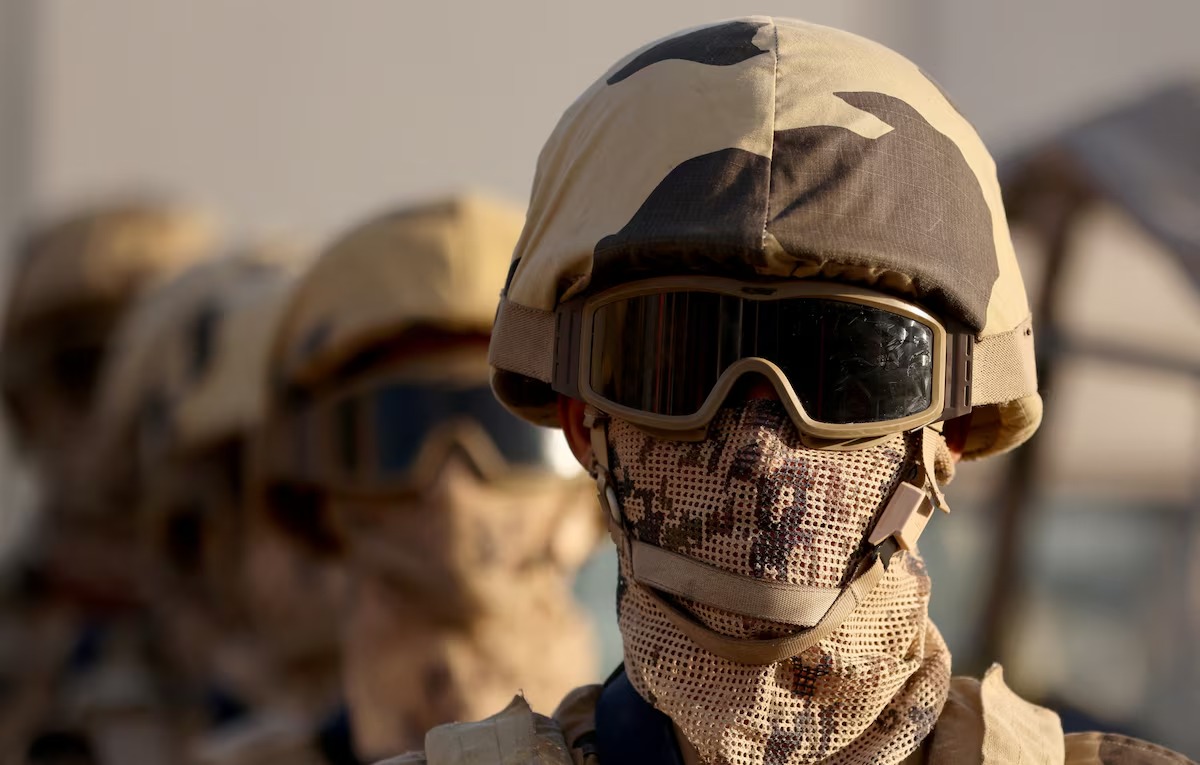
The US State Department stated that it has waived human rights conditions on more than $300 million in military aid to Egypt.
The statement emphasised that this decision was taken in consideration of Cairo’s “helpful role” since the outbreak of the war against Iran.
Egypt began receiving substantial support from the US after signing a peace treaty with Israel in 1979.
Since the late 1980s, the country has received approximately $1.3 billion annually in US military assistance.
A portion of this aid is subject to conditions related to human rights and democracy, which can be waived on national security grounds.
Withholding funds, including during the administration of former US President Joe Biden, has caused tension between Cairo and Washington in the past.
A letter dated 21 September and addressed to various congressional committees, obtained by Reuters, stated that Secretary of State Marco Rubio “decided to waive the certification requirement under the fiscal year 2025 Foreign Military Financing programme for Egypt of $320 million.”
This waiver was subsequently confirmed by the State Department.
An accompanying memorandum justifying the decision stated that this portion of military aid was “essential for counterterrorism, border security, or non-proliferation programmes, or otherwise important to the national security interests of the United States.”
The memorandum, dated 4 September and bearing Rubio’s signature, stated: “Exercising this waiver authority is critical to the US-Egypt relationship and to US national security priorities, particularly given the helpful role Egypt has played in the aftermath of Operation Epic Fury.”
“Operation Epic Fury” is the designation used by the US military for the campaign launched jointly with Israel against Iran in late February.
The State Department memorandum, whose authenticity was confirmed by two sources in Washington familiar with the letter, did not provide detailed information regarding what was termed Egypt’s “helpful role”.
The State Department’s annual decision on military aid to Egypt typically covers funds allocated for the preceding fiscal year, which ends on 30 September.
A State Department spokesperson stated that Rubio waived the certification in the interest of US national security and that the US continues to cooperate with the Egyptian government across a range of issues.
In an emailed statement, the spokesperson said: “This waiver recognizes the importance of maintaining security cooperation with Egypt at a time of significant security challenges in the region.”
The Egyptian Ministry of Foreign Affairs did not immediately comment on the matter.
The spillover effects of the Iran war have imposed a heavy toll on US security partners, including Egypt.
Owing to rising fuel prices and other disruptions, the Egyptian economy is passing through a difficult period.
Under the Biden administration, the US withheld portions of the annual military allocation on multiple occasions over Egypt’s human rights record.
In 2024, following the Hamas-led 7 October attack on Israel and the subsequent war in Gaza, the Biden administration set aside human rights conditions, disbursing the entire $1.3 billion allocation to Egypt for the first time in its tenure.
Human rights organisations have long accused Egypt, under the administration of President Abdel Fattah al-Sisi, of widespread human rights abuses, including torture and enforced disappearances.
This week, Egyptian police detained six journalists from a fact-checking and investigative media outlet, accusing them of spreading false information on behalf of the banned Muslim Brotherhood.
Egyptian authorities state that they have taken steps to address human rights issues. Sisi said stability is paramount and that the government supports human rights by working to provide for basic needs.
Britain has significantly broadened its military export restrictions targeting Israel, suspending or rejecting more than 80 licences for items the IDF could use in Gaza.
This figure is nearly triple the number affected when the policy was first introduced in September 2024.
United Kingdom Minister of State for the Middle East Stephen Doughty said that as part of what he described as a “tighter system” for assessing exports to Israel, more than 50 further export applications have been refused since approximately 30 licences were initially suspended.
Under the initial decision taken in September 2024, 30 of roughly 350 licences were suspended after the British government concluded there was a “clear risk” that certain military exports could be used to commit or facilitate serious violations of international humanitarian law in Gaza.
The affected equipment included components for military aircraft, drones, naval systems, and targeting gear.
Doughty said additional measures adopted this month established what he termed a “double safeguard” mechanism within the approvals process.
Export applications must now be assessed both against existing international humanitarian law criteria and in light of Britain’s position on the legality of Israel’s presence in the Palestinian territories.
“We have so far suspended or refused more than 80 licences,” Doughty said, adding that he had personally examined each licence.
Despite the wider restrictions, British-origin parts entering the international F-35 fighter jet supply chain continue to be largely exempt.
The UK government argues that preventing British-made components from entering the global F-35 pool could undermine the programme as a whole and have serious consequences for the security of the UK and its allies.
Direct exports of F-35 parts intended specifically for Israel remain suspended.
Doughty defended maintaining the supply of components via the international programme, arguing that halting it could have severe ramifications for the broader European and allied security architecture.
Foreign Affairs Committee Chair Emily Thornberry challenged this position, arguing that the issue was political rather than purely legal.
Thornberry suggested adopting an approach similar to the Dutch model, under which components entering the international supply chain could be flagged as “not intended for aircraft bound for Israel”.
The initial suspension was implemented in September 2024 by then Foreign Secretary David Lammy.
Lammy stressed at the time that the measure did not constitute an arms embargo and applied solely to items assessed as usable in military operations in Gaza.
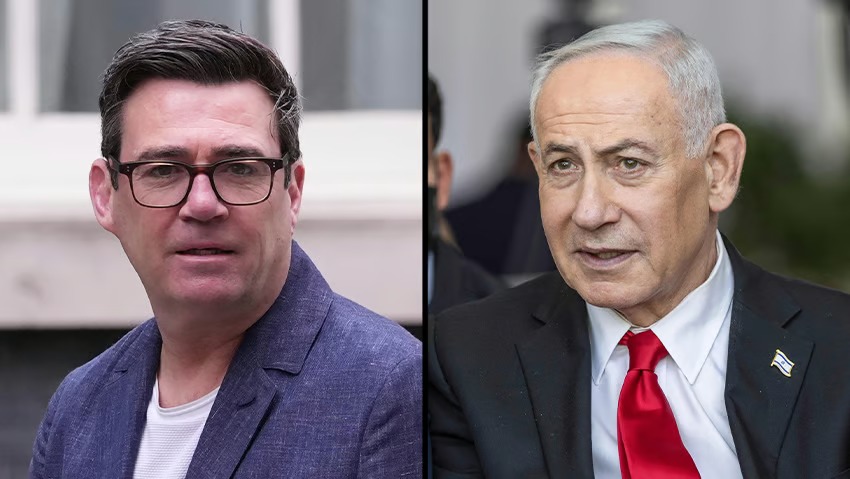
Since then, the policy has been tightened further under Prime Minister Andy Burnham.
The expanded export restrictions follow the Burnham government’s adoption of a more confrontational policy toward the Israeli government.
Foreign Secretary Ed Miliband drew sustained applause at the Labour Party’s annual conference in Liverpool after delivering a sharp critique of the Netanyahu government’s policies and defending the decision to ban trade with Israeli settlements in the West Bank.
Accusing Israel of committing war crimes in Gaza, Miliband stated that the British government heard public outrage over the conflict, telling delegates: “We hear you. You were right.”
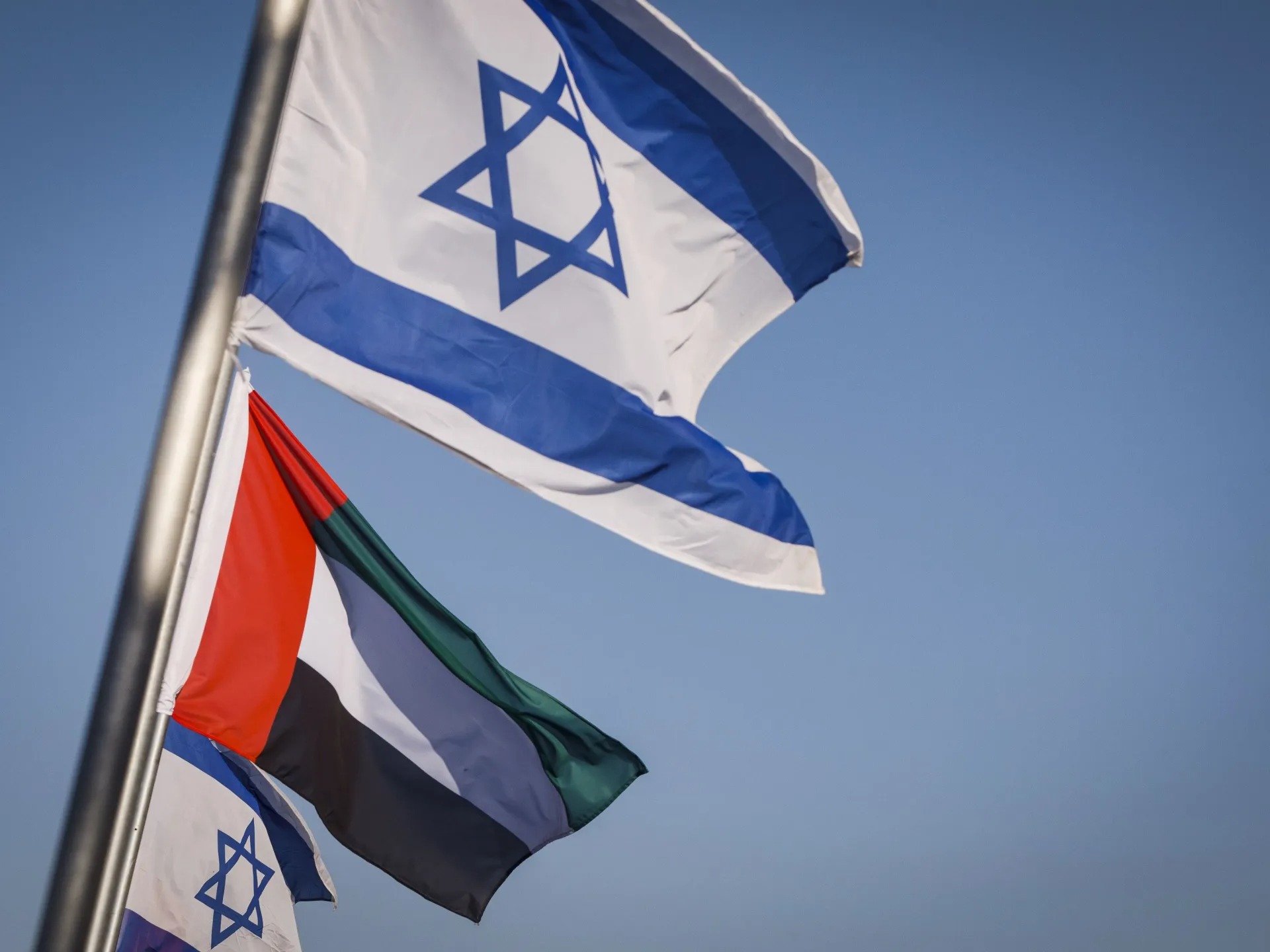
Israeli Prime Minister Benjamin Netanyahu met with representatives of Gulf and Arab nations that lack diplomatic ties with Israel, including Saudi Arabia, during his weekend visit to the United Arab Emirates.
Sources close to the gathering told the Israeli newspaper Yedioth Ahronoth on Monday that representatives from Morocco, Libya, Jordan, and Qatar also took part in the meeting.
Netanyahu made a unannounced visit to Abu Dhabi on Sunday, where he met with the country’s leader, Mohammed bin Zayed Al Nahyan.
According to Israeli media, this marked the first time the United Arab Emirates officially confirmed a visit by Netanyahu.
The meeting was arranged by Mossad Director Roman Goffman “at the request of Saudi Arabia, which asked for Israel’s assistance against Houthi attacks in the Red Sea region,” according to Yedioth Ahronoth.
The discussions addressed Iran and the Houthi militia. The newspaper added that the Arab states heard from Israel that “Israel is prepared to assist countries in the region with air defence systems, just as it aided the UAE during the conflict with Iran.”
Conflict in Yemen intensified in September when Ansarullah militiamen launched a rapid offensive that seized Yemen’s entire Red Sea coastline, including the vital maritime corridor of the Bab el-Mandeb Strait.
The Yemeni resistance also imposed a blockade on Saudi Arabia’s energy exports and staged multiple attacks against the kingdom.
Saudi Arabia reportedly sought military assistance from the US to counter Ansarullah.
Washington declined to attack the Houthis directly, but announced that it would provide intelligence and targeting support.
Reporting on the same visit, The Jerusalem Post said Netanyahu spent six hours in the UAE and that the principal subject of his discussions with MBZ was Iran.
Citing sources familiar with the matter, the newspaper added that the trip came “after Netanyahu exerted heavy pressure on the United Arab Emirates to arrange a meeting ahead of the Israeli elections on 27 October.”
Separately, the Associated Press, citing a person with direct knowledge of the meeting, reported that Netanyahu’s visit to the UAE was arranged in part to ask MBZ to deny reports that he had warned the Israeli prime minister of an impending Hamas threat prior to 7 October 2023.
According to Israeli media, Netanyahu’s office denied the AP report, issuing the following statement:
“Fake news. The visit focused solely on strengthening ties between the two countries and on regional issues.”

Germany expands North Sea military ports and plans new naval base

Musk appointed co-director of Pentagon future warfare initiative

US waives human rights terms on $320m military aid to Egypt

Putin says Russia did not start war and warns of nuclear risks

European nations unite against US pressure over strategic oil stocks
-

 Europe5 days ago
European unions urge governments to scrap all Palantir deals
-
 Diplomacy5 days ago
East-West Forum in Istanbul highlights irreversible shift to multipolarity
-

 Europe1 week ago
Emmanuel Todd says West faces collapse amid Ukraine and Iran crises
-
 Europe1 week ago
European intelligence chiefs divide over risk of Russian attack
-
 Diplomacy1 week ago
East-West Forum in Istanbul to debate multipolarity and global order
-
 Middle East1 week ago
Sharaa says 7 October must not shape Israel policy on Syria
-
 America1 week ago
Republican support for Trump’s war with Iran drops sharply in polls
-
 Middle East1 week ago
Palestinian factions confront legitimacy crisis at Istanbul talks
