
Europe
The “German Problem” returns

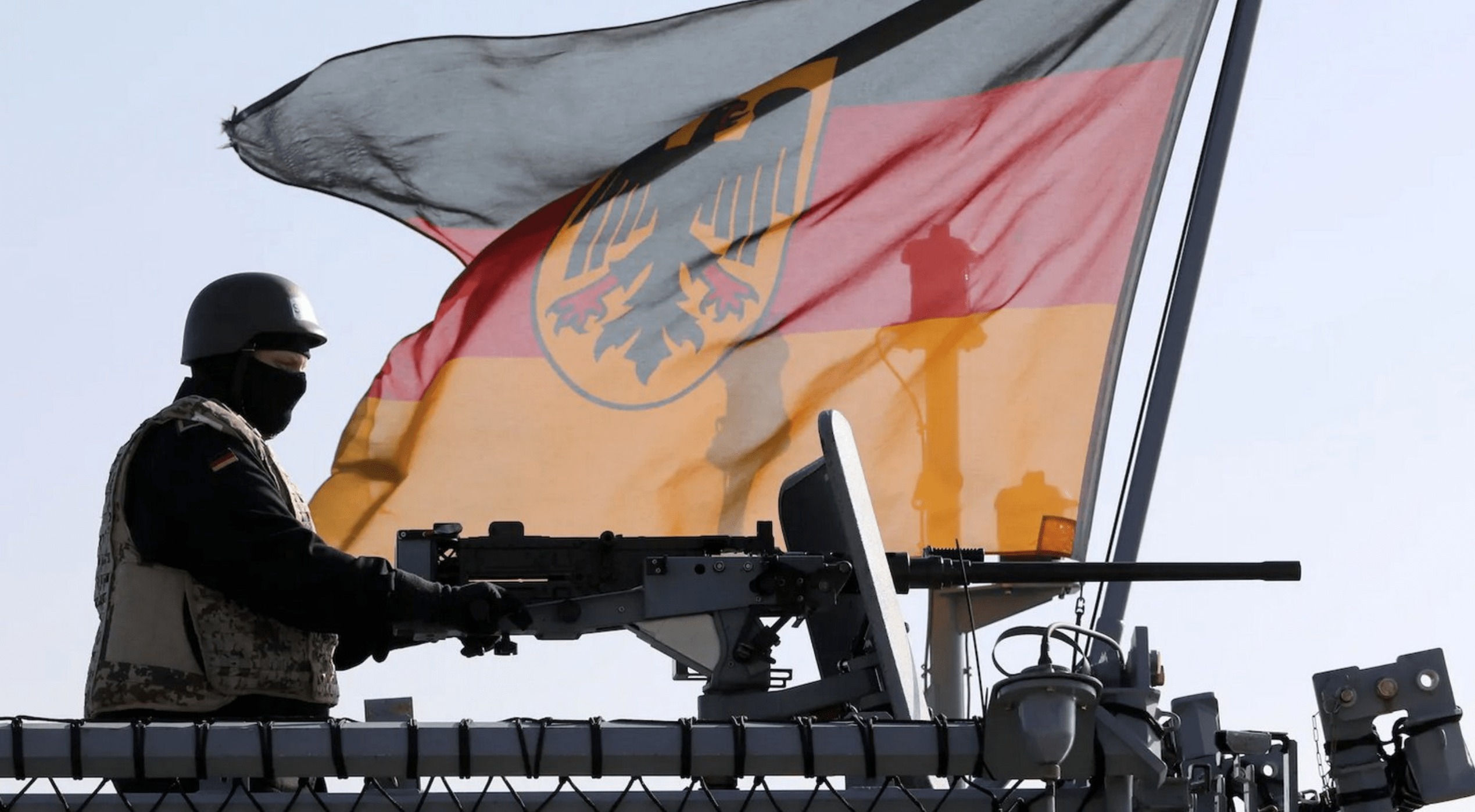
Export champion, Europe’s largest economy, the engine of growth on the Old Continent, a classic industrial giant… Germany, once known by these titles, is now entering the public agenda associated with falling behind, deindustrialization, job losses, inflation, political infighting, and, in short, stagnation.
Everyone is talking about Germany’s weakness. The automotive sector, which showed signs of crisis even before the pandemic, is considered one of the most symbolic indicators of the country’s decline. The crisis in automotive is followed by energy costs stemming from the disruption of cheap gas flows due to sanctions following the Ukraine war, and the downturn experienced in sectors such as chemicals and machinery production.
Concerns about the future are growing due to the technical recession across the economy. The new CDU-SPD grand coalition set out with the goal of changing this mood but has not yet succeeded. The coalition narrowly avoided the pension package vote turning into a crisis that threatened the government’s existence. Many believe that the days of the government under Chancellor Friedrich Merz are numbered.
Bearing all this in mind, despite everything, I argue that the German state will re-emerge—and indeed has already emerged—as a problem in Europe. I state this not only in the context of the massive militarization trend in Germany but also within the scope of the international restructuring centered around the US.
Question marks regarding the US military presence in Europe are moving towards a plan where Germany is being pushed from behind by the Trump administration itself. Militarily, Germany is being forced, by the US itself, to take the leadership of the Continent. Merz is already preparing for this. Moreover, unlike Europeans who are panicking due to the new US National Security Strategy (NSS), he is able to display a self-confidence that says, “You may write off Europe, but at least establish your relationship through Germany.”
Handelsblatt writer Moritz Koch also draws attention to this point. According to him, precisely while these discussions of weakness are ongoing, the country is experiencing a “historic increase in power.” Koch writes, “It is not Germany’s decline that will shape the next decade politically. On the contrary, it is the Federal Republic becoming Europe’s dominant power.”
Koch reminds us of the “turning point” (Zeitenwende) announced by Olaf Scholz after the Ukraine war, believing that this has changed the balance of power on the continent and that the US departing from its role as “security guarantor” has accelerated this trend.
His answer to the question “Who will protect Europe in the future?” does not include the British or the French; these countries are “chronically cash-strapped.” The only country that can financially bear this burden is Germany; the resources necessary for significant rearmament are gathering here:
“The world has rarely looked so threatening, and Europe has never looked so lonely. In this extraordinary situation regarding security policy, Germany has been assigned the role of lead nation. In the long run, a well-equipped Bundeswehr [German Armed Forces] could make a significant contribution to deterring Russia and at least fill the conventional void left when America turns its back on Europe.”
In this context, debates on conscription(1), a giant rearmament budget of 108 billion euros (defense spending is expected to reach 153 billion euros annually by 2029), the mobilization of “civilian” sectors within the scope of state and military restructuring (with sounds of “planning” being heard here and there), the reorganization of the labor market in line with the needs of the defense industry, and the adoption of next-generation defense technologies and the venture capital involved in this package(2) are all part of the new government’s policy set.
It appears that Europe has also set its sights on Germany; at the very least, promotional activities for it to undertake this role are intensifying. The Financial Times conducted a poll of 88 economists. The result of the poll indicates that for Europe to enter a stable growth path, the Germans’ debt-fueled $1 trillion defense infrastructure investments must succeed.
Both the European Central Bank and the FT economists foresee growth in the Eurozone slowing down to 1.2 percent in 2026. They expect private consumption and defense spending to provide a surprise. There is no harm in predicting the “Americanization” of the Eurozone economy: A consumption boom driven by the richest 10 percent of the population and a production increase pumped by militarization. While “monetary policy,” one of the creeds of the neoliberal era, is sidelined, “fiscal policies” will come to the fore. And of course, there are the “structural reforms” to strengthen the German economy, the “sick man” of Europe.
It is worth remembering that support for this comes from the Americans, provided that Britain and France are added to the mix. The American Edward Luttwak, known for his books on coups d’état, argued in an article penned last May that “superpower” competition has returned and that Europe needs a new superpower:
“Whatever the differences between the three governments, they can act with much greater agility than NATO can as a whole. The tripartite agreement is clearly easier than dealing with dozens of European NATO members from Estonia to Norway and Spain.”
Luttwak says that in a military context, Germany will focus on armored forces, which is still its “area of expertise,” while the British and French will complement this with light infantry and commando units. This trio can counter Russia in the air and at sea; this is the author’s claim.
Let’s return to Koch. Koch claims that Germany’s European neighbors responded “with satisfaction” to the Chancellor’s announcement that he wanted to build “Europe’s strongest conventional army” and to Defense Minister Boris Pistorius’s call for “war-ready” armed forces. Yet he reminds us, “But will this remain so? The German question has shaped European history. Now this question is being asked again.” From the 19th-century debates on German unity to the Anschluss, from the problem of German-speaking communities on the Continent to the two camps of the Cold War, the “German Question” has always been a source of anxiety for non-Germans; Koch implies this.
The author calls on the current German government, and those to come, to behave humbly and attentively towards “large and small partner countries.” If Berlin does not act in line with “European interests” and displays a “stubborn or even nationalist attitude,” distrust will poison Europe, old conflict lines will re-emerge, and rivalries thought to be long overcome will flare up again.
Europe must learn to protect itself, and Germany’s military power can make a significant contribution to this; Koch sings this familiar tune of the German ruling class. But he adds: “This power must never again fall into the wrong hands.”
The wrong power, as can be guessed, is the Alternative for Germany (AfD). Backed by the support of the Trump administration, the AfD is closing 2025 with great progress. First place in the polls is added to electoral success. But more importantly, in a manner that is not exactly quiet, a fierce war of attrition is being waged against the “Easterner” (read: “pro-Russia”) wing of the party, led by Co-Chair Alice Weidel, who came out of financial giants like Goldman Sachs, Credit Suisse, and Allianz to enter politics. Weidel and her supporters in the party seem to have taken control and, by throwing the AfD into a new transatlantic alliance system, have articulated it into the “national-conservative” international centered on Trump and the Conservative Political Action Conference (CPAC). Close relations with “sister parties” in Hungary and Austria point to the formation of a new Central European sphere of influence.
This articulation means that holes are being opened in the “firewall” domestically as well. The AfD rightly believes that the CDU/CSU is pursuing policies inspired by its own program, and therefore, the time has come for an AfD-CDU coalition. The junior partner of the previous coalition, the Free Democrats (FDP), has almost melted away. It is worth remembering, though forgotten today, that the founders of the AfD were economists who broke away from the FDP during the Greek crisis, arguing that Germany should not bear the financial burden of the Eurozone.
In the economy, especially in what we call Mittelstand companies (family-owned SMEs), the tendency to cooperate with the AfD is increasing, and it is not surprising that the first shot in this regard was fired by the FDP’s Marie-Christine Ostermann. In the SME sector, for example in Saxony, one in every two entrepreneurs now sympathizes with the AfD; especially because it displays a friendly attitude towards the business world, just as the FDP once did.(3)
Therefore, the German Question in 2026 tends to take on much more frightening dimensions with the de facto division of the AfD. In the AfD, which clings ambitiously to the new transatlantic alliance, the voices of those advocating for their country to obtain the atomic bomb, arguing that one must stay in NATO “as long as it lasts,” and believing that relations with Russia should not be established as warmly as before, are becoming louder.
It is obvious that the AfD will also play a role in this “turning point” (Zeitenwende). But one should expect the process to be full of ups and downs. German militarism will penetrate society and Europe not in a sharp (“revolutionary”) way, but in a more spread-out, evolutionary manner that transforms the mood. The government, under increasing pressure to take on a greater security role in Europe, also has to struggle with the constraints of a strategic culture that has viewed military service as a risk since World War II.
On the other hand, the most important output of the US asking Germany to assume the leadership role in the event of its withdrawal from the Continent should be expected to be the intertwining of German-American defense industry connections rather than the sudden expansion of the German army. While the German arms sector is experiencing a major revival, transatlantic cooperation, especially regarding new technology drones, maritime, and air defense, is growing increasingly. Partnerships intensifying in 2025 between Anduril and Rheinmetall, Lockheed and Diehl, and Northrop Grumman and MBDA provide a significant signal.(4)
More critically, the Mittelstand companies, which were cut off from Russia’s cheap energy after the Ukraine war, are recovering through this cooperation: The German defense industry includes approximately 1,350 medium-sized companies that frequently serve as suppliers to US defense industry manufacturers. Research by INSS on the German defense industry determines that for some of these specialized firms (in 2023), 50 percent of sales consisted of exports to the US military; sales to the Bundeswehr were only around 7 percent. Indeed, Germany’s National Security and Defense Industry Strategy admits that the domestic market is insufficient to protect and expand value chains and to encourage innovation in the long term.(5)
On the other hand, militarization certainly encourages a kind of “domestic consumption”: The 100-billion-euro special fund (Sondervermögen) shifted the focus of many firms to domestic contracts. For example, the electronics firm Rohde & Schwarz, whose products were 90 percent export-based, sees its domestic business rising to 30-35 percent following the Zeitenwende. This capital flow also supports domestic infrastructure, such as the new ammunition factory Rheinmetall opened in Unterlüß at a cost of 300 million euros.
Therefore, the withdrawal of the American shadow from Europe and Germany being pushed from behind to lead are two parallel processes; the greatest proof is that the cooperation between the German defense industry and the US increases German domestic consumption. Consequently, those looking forward to the day American boots leave the Continent need to be alert about whether they will get German panzers in return. Europeans, and we on the edge of Europe, face the risk of waking up to the German Question once again on New Year’s morning.
(1) The new bill aims to close the personnel gap in the German Armed Forces through a “selective service framework”: All 18-year-old men will complete a questionnaire and medical screening to assess their willingness and suitability for service, while women can participate voluntarily. The registration process will begin on January 1, 2026, for men born in 2008 and later. The law also envisages better pay and social rights for volunteers, as well as incentives for long-term service. Initially focusing on voluntary recruitment, the law leaves open the option of reintroducing compulsory service if the number of volunteers remains insufficient.
(2) According to a report published on CNBC this month, the United Kingdom and Germany stand out as key hubs for a new wave of artificial intelligence defense startups. German AI drone manufacturers Helsing and Quantum Systems reached valuations of 12 billion and 3 billion euros respectively this year following investment rounds worth hundreds of millions of euros. Stark, founded in 2024, produces drones for attack and reconnaissance purposes and has secured $100 million in funding from investors including Sequoia Capital, Peter Thiel’s Thiel Capital, and the NATO Innovation Fund. According to recent market research by the Ministry for Economic Affairs and Climate Action, more than 6,600 AI startups employing 149,000 people have been founded in Germany since 1995.
(3) German thinker Wolfgang Streeck argues that most AfD members are “middle-class Poujadists,” adopting an anti-state and pro-neoliberal stance. The movement (UDCA) founded by Pierre Poujade in France in the 1950s mobilized mainly the lower middle classes, shopkeepers, artisans, and peasants in the south.
(4) The Anduril-Rheinmetall partnership will produce military drones for Europe. While Lockheed and Diehl cooperate on maritime air defense systems, Northrop Grumman and MBDA have signed a memorandum of understanding to develop air defense systems connected to Germany’s Integrated Air and Missile Defense Battle Command System (IBCS). To this, the Patriot production cooperation between Raytheon (RTX) and MBDA should be added.
(5) More than 135,000 skilled workers are employed in the German defense sector. These positions usually require high-level technical expertise, such as specialized welding and the production of complex systems like tank gun barrels. In terms of financial impact, German defense companies generate approximately $30 billion in annual revenue. Germany’s arms export licenses have also reached record levels recently: They were worth 12.2 billion euros in 2023 and 13.2 billion euros in 2024.







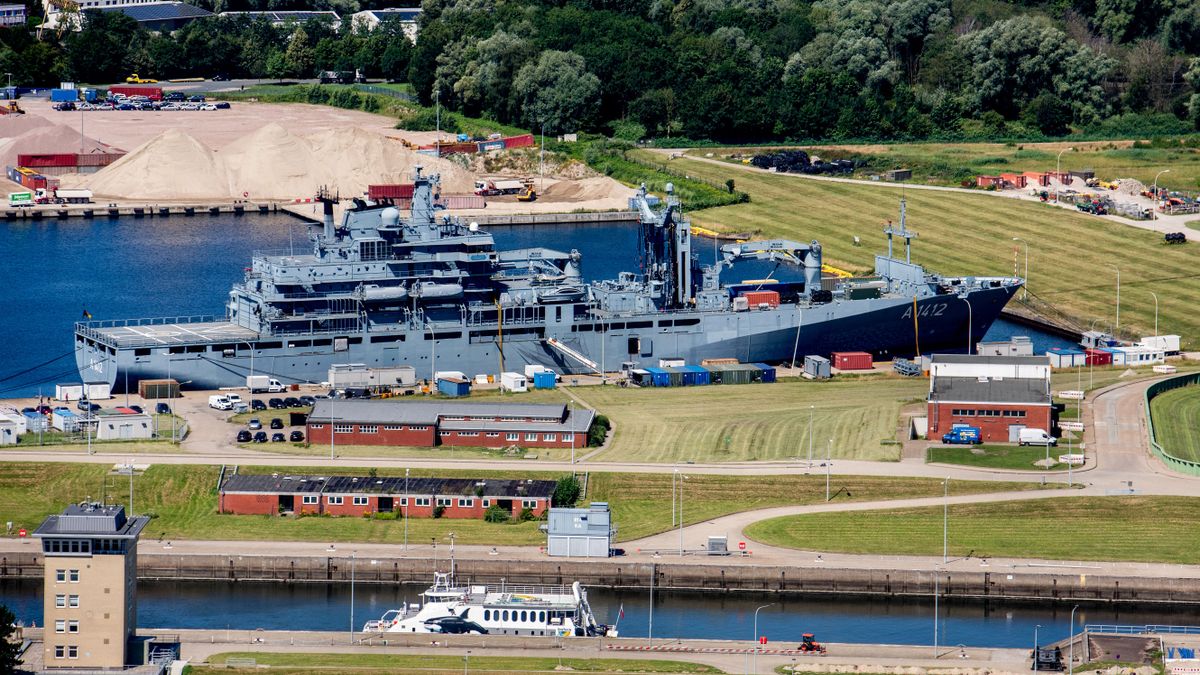
With the transformation of the port of Bremerhaven into a high-capacity military hub and the prospective establishment of a fifth German naval base in Emden, the federal government is accelerating the militarisation of the German coastline.
According to German Foreign Policy, the logistics infrastructure in Bremerhaven will be modernised and expanded to unload massive volumes of weapons and ammunition as quickly as possible and transport them onward to potential battlefields in Eastern Europe.
This is set out in a memorandum of understanding signed this week between the Ministry of Defence and municipal authorities in Bremen.
The federal government is providing up to 1.35 billion euros for this purpose, while the federal state of Bremen is contributing more than 212 million euros.
Bremen has the highest poverty risk and the highest child poverty rate of any federal state in the country.
The allocation of hundreds of millions of euros to expand military logistics rather than tackle poverty is also supported by senators from the Left Party (Die Linke) who sit in the state government.
Modernisation intensifies in Bremerhaven
Bremerhaven, Germany’s second-largest port in maritime freight handling behind Hamburg and ahead of Wilhelmshaven, is regarded as ideal for handling military cargo.
The port possesses significant capacity for offloading not only containers but also vehicles, alongside heavy-lift areas capable of handling even heavy military hardware such as main battle tanks. Moreover, because it can be accessed without passing through locks, access is substantially easier and faster.
Finally, it has good links to roads and particularly to railways, which is vital for the rapid transport of weapons and ammunition in the event of a crisis or war.
The port’s particular suitability as a military transshipment hub also stems from its history: it has been used by US forces since the end of the Second World War.
During the Cold War, it served as the central transshipment port in the Federal Republic of Germany and was expanded accordingly.
After 1990, it lost its significance for the US; however, with the escalation of the conflict in Ukraine, the US presence increased once more.
US activity escalated initially under exercises such as Defender Europe 2020 and subsequently from 2022 onwards in the context of the war in Ukraine.
As early as 2023, experts noted that Bremerhaven was operating as “an arms hub just like in the old days”.
Ports optimised for military logistics
The federal government is currently working to further increase the port’s military logistics capacity.
For instance, harbor basins will reportedly be dredged, and road and rail connections will be expanded.
Container facilities will be modernised and adapted to carry heavier loads.
This applies to both cranes and storage areas, with plans also in place to expand these storage areas into new zones.
A spokesperson for the port operating company Bremenports was quoted as saying: “The efficient transport of military hardware is no longer limited to tanks alone.”
Today, weapons and ammunition are also delivered in containers, which would need to be rapidly unloaded and forwarded in the event of war.
To ensure this, plans are also being made to build a new railway swing bridge at the Kaiserhafen. According to reports, the existing bridge is described as a “bottleneck” that slows down the movement of military equipment unnecessarily.
In addition, the heavy focus on military logistics demands costly security measures.
For example, not only will new fencing and privacy screens be erected, but drone defence systems will also be installed and cybersecurity measures implemented.
Left Party senators back armaments
The federal government is allocating approximately 1.35 billion euros through 2031 to optimise military logistics in Bremerhaven and, in conjunction with this, adapt Bremen Airport more effectively to the needs of the Bundeswehr.
According to the Mayor of Bremen, Andreas Bovenschulte, this represents the largest grant the German government has ever provided for a project in the federal state of Bremen.
The state of Bremen is contributing an additional 212 million euros to the “Bremerhaven 2031 Deployment Hub” project.
While large sums are being funnelled from Bremen’s state budget into war preparations in this manner, approximately 25.9% of the state’s population was classified as at risk of poverty in 2024, with 28.6% of all children living in poverty.
This makes Bremen the federal state with the highest poverty risk and the highest rate of child poverty.
Approval for funding military logistics in Bremerhaven with hundreds of millions of euros from the state budget also came from two Bremen senators belonging to the Left Party.
The Left Party’s Senator for Economic Affairs and Ports, Kristina Vogt, praised the “pragmatism” of “improving our infrastructure, which is already used for civilian purposes, for military ends” rather than constructing new facilities.
North Sea joins Baltic Sea militarisation
With the expansion of the Bremerhaven military hub, the militarisation of Germany’s coasts is progressing.
Until now, the focal point of Germany’s naval infrastructure has been the Baltic Sea coast. This was partly because during the Cold War, the naval activities of the Federal Republic of Germany were directed against the Soviet Union and Warsaw Pact states.
Alongside several training facilities, the German Navy primarily operates three major naval bases here, situated in Eckernfoerde, Kiel, and Rostock-Warnemuende, as well as the Naval Command based in Rostock.
In the North Sea, these are complemented by the naval base in Wilhelmshaven and the Naval Air Command at Nordholz near Cuxhaven.
The Naval Air Command is the third major unit of the German Navy, alongside Flotilla 1 based in Kiel and Flotilla 2 based in Wilhelmshaven.
At present, approximately 16,000 soldiers and 1,800 civilian staff from the Bundeswehr are stationed at the Navy’s main bases and various smaller installations.
As in other branches of the armed forces, the German Navy aims to expand its personnel numbers.
Germany’s fifth naval base to be built
In addition to the four existing naval bases and the Bremerhaven military hub, the federal government plans shortly to announce the construction of a fifth naval base, also located on the North Sea.
According to reports, Emden has been selected as the site for the base. Defence Minister Boris Pistorius and Lower Saxony’s State Minister Olaf Lies are scheduled to outline the next steps regarding a potential new naval base there on Monday.
Emden previously hosted a naval base during the Cold War, but the facility was closed in 1997.
According to reports, one argument in Emden’s favour is that it holds the largest unused area among Lower Saxony’s North Sea ports.
Discussions have been ongoing for some time over how to utilise this disused land reasonably, although these debates previously centred on civilian use.
According to the German Navy’s plans, the new naval base will accommodate seven frigates, ten minesweepers, and ten tugs, alongside a four-digit number of Bundeswehr soldiers and civilian personnel.
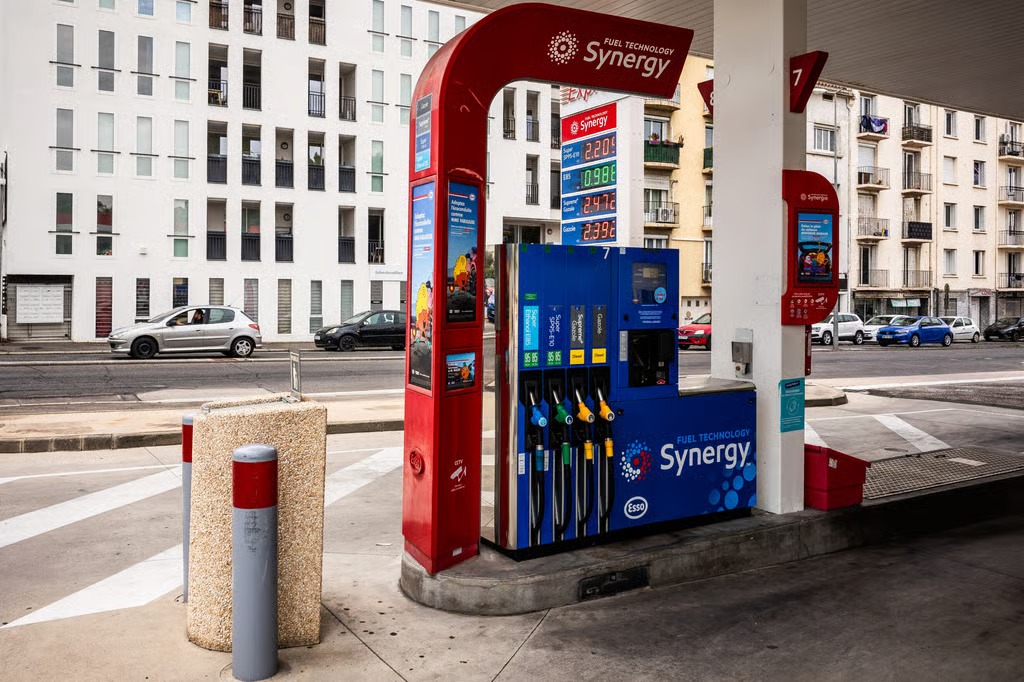
Five European countries have agreed to respond with “one voice” to mounting pressure from the US government to release their oil reserves.
Three European officials told Politico that France, Germany, Britain, Italy, Ireland, and the European Commission participated in talks to determine how to respond to pressure from Washington to draw down their oil reserves or face a ban on US diesel exports.
Two of these sources stated that all of these countries were placed under covert pressure by the US to run down their oil reserves or face a ban on diesel exports from the US.
According to the sources, these countries, together with the EU executive, agreed on three points: responding to the pressure with a “coordinated voice”, ensuring that “any decision on releasing stocks is brought to the IEA [International Energy Agency] level”, and seeking to “de-escalate tension in talks with the US”.
The Paris-based IEA coordinates energy policy among wealthy countries and oversaw the release of oil reserves earlier this year following the closure of the Strait of Hormuz.
One of the sources said the objective was to “de-escalate”:
“Being somewhat firm yet positive in communication… When you are facing a hungry lion, you do not necessarily have to play dirty with it.”
The source added that a wider group of countries, some of which have faced pressure from the Trump administration, would discuss how to react at a meeting scheduled for Friday.
Politico previously reported that US Energy Secretary Chris Wright had demanded the release of oil reserves into the market as an alternative to an export ban on which the EU heavily relies.
As a consequence of the wars in Ukraine and Iran, diesel prices in the US are soaring, placing significant pressure on US President Donald Trump to lower prices ahead of critical midterm elections.
The president is not ruling out an export ban, despite fierce opposition from the US oil industry.
Regarding the export ban, Trump said at an Oval Office event: “I am considering it. I speak to [Energy Secretary] Chris [Wright] and [Interior Secretary] Doug [Burgum] about this often. They think it would help diesel prices, but it could also raise the prices of other products.”
The EU wants to leverage its immense public spending power to bolster European industry through a “Made in Europe” initiative.
Deep divisions remain, however, over what should genuinely count as European-made.
According to a report by Politico, the European Parliament and member state governments are trying to establish their positions on the Industrial Accelerator Act (IAA), which forms part of Brussels’ effort to turn the “Made in Europe” slogan into an industrial strategy.
The initiative aims to use tenders and subsidies to create a guaranteed market for products of European origin.
Yet doing so requires answering politically contentious questions, such as how “European” a product must be to qualify, and how much more governments and consumers should be prepared to pay to buy domestic goods.
Disagreements are playing out not only between Parliament and the Council, but also among national governments and even between political allies from different countries.
Unveiled by the European Commission in March, the IAA seeks to channel public expenditure on green technology, energy-intensive industries, and motor vehicles towards European firms, helping them compete with dominant Chinese exporters.
Six months on, it is becoming increasingly clear how difficult it is to turn that objective into workable legislation.
Opposing sides broadly agree on the need to strengthen Europe’s industrial base, accelerate permitting procedures, and reduce strategic dependencies.
However, sharp divisions persist over how extensively the EU should support European manufacturing and how much flexibility national governments should retain.
Politico has identified five issues that will dominate negotiations through 2027.
The first issue is the debate over what qualifies as “Made in Europe”.
Defining EU origin is the most politically sensitive topic in the talks. With public procurement accounting for 15% of the bloc’s GDP—equivalent to roughly 3 trillion euros a year—the sums at stake are enormous.
If the threshold defining how European a product must be is drawn too narrowly, Brussels risks alienating close trading partners and disrupting supply chains.
Conversely, if drawn too broadly, the “Made in Europe” preference risks becoming meaningless.
Parliament is pressing for stricter anti-circumvention rules and demanding that at least 50% of a product’s value be created within the EU.
This condition would also make it harder for goods or components from third countries to be treated as equivalent to EU-origin items.
Lawmakers also aim to impose tighter conditions, including reciprocity, economic security measures, climate commitments, labour standards, and human rights safeguards.
The Council is more open to treating content from countries covered by the WTO Agreement on Government Procurement or relevant free trade agreements as equivalent to EU-origin content under specified conditions, including certain reciprocity principles.
Yet EU member states are still debating their positions and putting forward various conflicting proposals.
Ireland, which holds the Council presidency, plans to submit a fresh compromise proposal featuring the “Made in Europe” designation by mid-October.
Another issue is Foreign Direct Investment (FDI) screening.
Parliament wants a more comprehensive and stringent system to screen foreign investment in strategic sectors.
Underpinning this demand is the concern that, despite the EU spending billions to develop strategic industries, subsidized or otherwise state-backed foreign investors could acquire the very companies and assets the EU helped build.
Lawmakers want to lower the review threshold from the proposed 100 million euro investment figure to 50 million euros, bring affiliates of foreign investors under the rules, and lower the control threshold that triggers mandatory notification.
They also want to give the Commission a stronger role, granting it the power to block investments in critical raw materials when EU funds are involved.
The Council’s position is narrower: it broadly retains the 100 million euro FDI threshold and the 30% control threshold set out in the Commission’s original proposal, while granting national authorities greater flexibility in managing the approval process.
The two institutions are at odds not only over the scope of screening, but also over the institutional balance of power between Brussels and national capitals.
The third issue centres on the scope of tenders and subsidies.
Both sides want public tenders and state support to drive demand for European-made, low-carbon goods.
However, opinions diverge on how broadly the rules should apply.
This is where political goals collide directly with public purse strings. Requiring governments to purchase European-made goods could spur demand for domestic manufacturers, but it could also force taxpayers to pay more when cheaper imported alternatives are available.
Parliament wants various requirements—such as green, social, or “Made in EU” criteria—to cover up to 90% of state aid or subsidy programmes, compared with 45% in the Council text.
It also proposes tighter social and labour conditions, relocation curbs, and stricter verification and enforcement mechanisms.
The Council favours broader exemptions where suitable products are unavailable, excessively costly, or technically unviable.
This posture reflects governmental concerns over higher public spending or project delays linked to reliance on imported components.
The fourth issue is the divergence over sectoral targets.
Parliament generally seeks higher and more granular European-origin content requirements for batteries, solar panels, wind turbines, electrolysers, nuclear technologies, and electric vehicles.
Electric cars illustrate how complex the “Made in Europe” concept can become in practice.
A vehicle assembled within the EU may contain a battery and raw materials sourced through supply chains spanning the globe.
Parliament plans to raise the required EU-origin share for non-battery vehicle components from the 70% proposed by the Commission to 75%.
Requirements governing battery materials, binders, and strategic raw materials would also be introduced.
The Council’s stance, by contrast, is less prescriptive and allows for a more phased implementation.
The dispute is not over whether strategic sectors should receive support, but whether the IAA should impose binding content targets that could push up costs for manufacturers and consumers.
The fifth and final debate concerns the sectors covered by the Industrial Accelerator Act.
The argument centres on whether the IAA should remain a targeted response to strategic dependencies or become a broader vehicle for EU industrial policy.
Parliament wants to expand the legislation to cover areas such as maritime manufacturing, materials recovery, and certain plastic products used in construction.
It also wants sectors such as fertilizers, rolling stock, robotics, and aerospace considered in future reviews.
The Council text focuses more tightly on sectors already identified, including energy-intensive industries, automotive, net-zero technologies, and critical raw materials.
The debate reflects wider friction over how far the EU should extend “Made in Europe” preferences.
When public procurement and subsidies are deployed in certain strategic sectors to shield domestic manufacturing, other industries gain a strong incentive to argue that they too should benefit.
According to a separate report by Politico, Brussels is prepared to grant candidate countries access to its single market, provided they agree to align with the bloc against “hostile states” and industrial competitors.
Under the draft plan, candidate countries would receive unprecedented “gradual integration” into the single market while their accession bids are assessed, including frictionless trade and access to research programmes.
An assessment of “pre-enlargement” benefits to be offered to candidate nations states: “The single market is the primary driver of economic convergence.”
The draft states:
“Earlier integration will create opportunities for businesses across the Union, strengthen European value chains, and reduce strategic dependencies. The Commission will identify sectors where verified regulatory alignment and enforcement capacity allow for deeper participation in research, innovation, and industrial cooperation, as well as broader market access. Priority should be given to opportunities that advance accession preparations and address shared economic and strategic needs.”
Overseen by Alexandre Adam, top adviser to Ursula von der Leyen and former aide to French President Emmanuel Macron, the review would fundamentally transform the EU’s approach to neighbouring countries.
At present, almost all the economic advantages of closer cooperation remain reserved for member states.
No new country has joined the EU since Croatia’s accession in 2013.
As part of Adam’s package of measures, Ukraine, Moldova, Albania, and Montenegro are set to receive “roadmaps” designed to accelerate their accession process in the coming years.
For other nations, including North Macedonia, Kosovo, Bosnia and Herzegovina, Serbia, and Türkiye, the process continues to drag on amid mounting fears that they could drift away from the EU or draw closer to Russia or China.
Under the Commission’s blueprint, economic benefits extended to candidate countries would depend on their backing of EU foreign policy goals.
Single market access would hinge on candidate states not sharing key technologies with hostile governments and commercial rivals.
The review document notes:
“As industrial and market integration deepens, participation in sensitive sectors must go hand in hand with cooperation on investment screening, export controls, sanctions enforcement, and the protection of sensitive technologies. Access assessments must consider strategic alignment, critical dependencies, and the capacity to manage risks to infrastructure and supply chains. Where these conditions are not met, the scope of participation should be recalibrated under the relevant regulatory framework.”
Areas being considered for closer cooperation include semiconductors, quantum technologies, biotechnology, artificial intelligence, and space.
According to the review, full EU membership must remain the ultimate goal for candidate countries.
“Yet accession takes time: candidate countries must complete a rigorous, merit-based process and deliver comprehensive, enduring reforms,” the report notes. “This period must be fully exploited strategically, both to prepare the Union for a wider membership and to deepen gradual integration in areas of mutual interest.”
The benefits gained, however, will be contingent on countries fulfilling their obligations:
“Where these commitments are not honoured, integration must be reversible. The accession process should be suspended or rolled back where deemed necessary.”

Germany expands North Sea military ports and plans new naval base

Musk appointed co-director of Pentagon future warfare initiative

US waives human rights terms on $320m military aid to Egypt

Putin says Russia did not start war and warns of nuclear risks

European nations unite against US pressure over strategic oil stocks
-

 Europe5 days ago
European unions urge governments to scrap all Palantir deals
-

 Diplomacy5 days ago
East-West Forum in Istanbul highlights irreversible shift to multipolarity
-

 Europe1 week ago
Emmanuel Todd says West faces collapse amid Ukraine and Iran crises
-
 Europe1 week ago
European intelligence chiefs divide over risk of Russian attack
-
 Diplomacy1 week ago
East-West Forum in Istanbul to debate multipolarity and global order
-
 Middle East1 week ago
Sharaa says 7 October must not shape Israel policy on Syria
-
 America1 week ago
Republican support for Trump’s war with Iran drops sharply in polls
-

 Middle East1 week ago
Palestinian factions confront legitimacy crisis at Istanbul talks
